What Is Peppermint Oil? A Complete Beginner's Guide
Peppermint oil shows up everywhere: on candle labels, in shampoo bottles, tucked into a diffuser on someone's desk. But if you've never bought a bottle yourself, the basic question is easy to overlook. What is peppermint oil, actually, and how is it different from the peppermint flavoring in your gum or toothpaste? This guide walks through peppermint oil explained from the plant up: where it comes from, how it's extracted, what's inside the bottle, and how people use it in daily routines. Consider it a peppermint essential oil guide built for someone starting from zero.
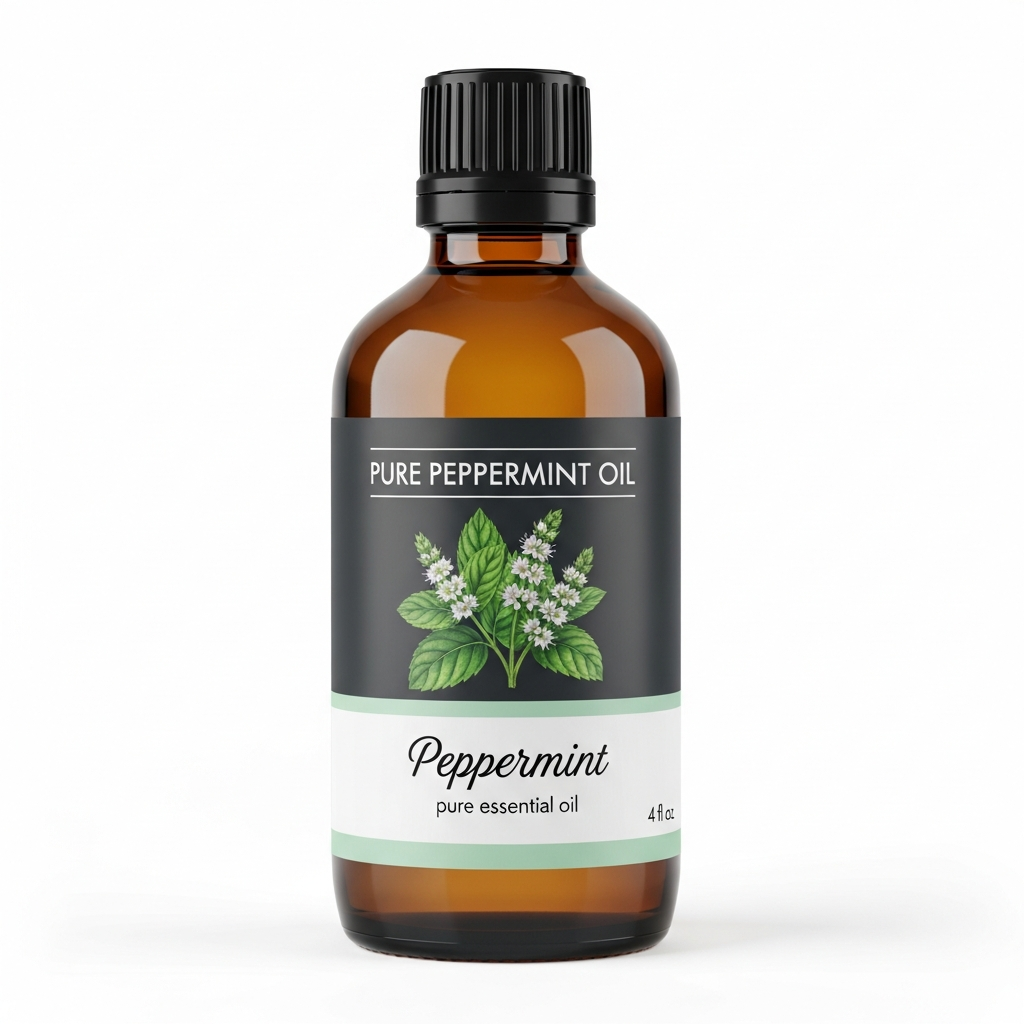 Peppermint Essential Oil
Our own Peppermint Essential Oil, in sizes from 0.5 oz to bulk. From $8.84.
Shop Now →
Peppermint Essential Oil
Our own Peppermint Essential Oil, in sizes from 0.5 oz to bulk. From $8.84.
Shop Now →
Table of Contents
- What Is Peppermint Oil, Exactly?
- From Plant to Bottle: Origins and Distillation
- Inside the Bottle: Peppermint Oil's Natural Chemistry
- How People Use Peppermint Oil
- Peppermint Oil vs. Spearmint and Other Mint Oils
- How to Choose a Quality Peppermint Oil
- Safety Basics for Beginners
- Frequently Asked Questions
Key Takeaways
- Peppermint oil is a concentrated aromatic liquid steam distilled from the leaves and flowering tops of Mentha piperita, a natural hybrid of watermint and spearmint.
- Its signature cooling sensation and sharp scent come mainly from menthol and menthone, two naturally occurring compounds.
- People use it aromatically, in diluted cosmetic applications, and as a food flavoring, but it is not a substitute for guidance from a healthcare provider.
- Quality varies widely between bottles. Look for the Latin botanical name, the country of origin, and independent purity testing before you buy.
- Peppermint oil is highly concentrated and should always be diluted before it touches skin.
What Is Peppermint Oil, Exactly?
Peppermint oil is an essential oil, meaning it's a volatile aromatic compound extracted directly from a plant rather than a synthetic fragrance built in a lab. It comes from Mentha piperita, a perennial herb that is itself a natural cross between watermint and spearmint. The plant has been cultivated for its scent and flavor for centuries, and the essential oil form we buy today is simply a more concentrated version of what you'd smell by crushing a fresh peppermint leaf between your fingers.
One important distinction for beginners: essential oil is not the same thing as the peppermint extract sold in the baking aisle. Extracts are typically diluted in alcohol or another carrier and are formulated for measured amounts in recipes. Pure peppermint essential oil is far more concentrated, meant to be used in small, diluted quantities, and is not interchangeable with kitchen extract on a drop-for-drop basis.
From Plant to Bottle: Origins and Distillation
Where the Plant Grows
Peppermint favors temperate climates with rich, moist soil, which is why major growing regions include the Pacific Northwest of the United States, parts of India, and areas of Europe with similar growing conditions. Soil quality, rainfall, and harvest timing all influence the character of the final oil, which is one reason two bottles labeled simply "peppermint oil" can smell noticeably different from each other.
How the Oil Is Extracted
Nearly all commercial peppermint oil is produced through steam distillation. Freshly harvested peppermint leaves and stems are packed into a still, and steam is passed through the plant material. The heat releases the plant's volatile aromatic compounds, which travel with the steam into a cooling chamber. As the vapor condenses back into liquid, the oil naturally separates from the water, since oil and water don't mix, and rises to the top for collection. That separated water, often called peppermint hydrosol, is sometimes bottled on its own as a much lighter, milder product.
It typically takes a substantial volume of raw peppermint plant material to yield a relatively small amount of essential oil, which is part of why pure essential oils are priced the way they are compared to synthetic fragrance alternatives.
Inside the Bottle: Peppermint Oil's Natural Chemistry
What makes peppermint oil smell and feel the way it does comes down to its chemical makeup. The two most prominent naturally occurring compounds are menthol and menthone.
- Menthol typically makes up the largest share of the oil's composition and is responsible for the sharp, cooling sensation people associate with peppermint on the skin and in the nose.
- Menthone contributes to the oil's fresh, slightly sweet top notes and rounds out the overall scent profile.
The exact ratio of these compounds, along with dozens of minor constituents, shifts depending on where and how the plant was grown, when it was harvested, and how it was distilled. This is why reputable suppliers often test each batch and can provide a breakdown of its chemical profile on request. A bottle with an unusually low menthol percentage may have been diluted, blended with a cheaper mint, or distilled from lower-quality plant material.
How People Use Peppermint Oil
Peppermint oil shows up across a few broad categories of everyday use. None of the following is medical guidance, and none of it should replace input from a qualified healthcare provider.
Aromatic Use
Many people add a few drops to a diffuser to fill a room with a crisp, invigorating scent, particularly during a work session, a morning routine, or any moment they want a brighter atmosphere. A drop on a tissue or cotton ball tucked into a car vent is a simple, low-effort version of the same idea.
Cosmetic and Personal Care Use
Diluted into a carrier oil like jojoba or fractionated coconut oil, peppermint oil is a common addition to scalp oils, foot soaks, and homemade lip balms, where its natural cooling sensation is part of the appeal. It also appears as an ingredient in commercial shampoos, soaps, and lotions in small, formulated percentages.
Culinary Flavoring
Food-grade peppermint oil is used commercially as a natural flavoring agent in candies, beverages, and baked goods, always in extremely small, carefully measured amounts. This is a specialized use case distinct from the essential oil most people buy for aromatic or cosmetic purposes, and not every bottle on the market is labeled or produced for food use.
Household Use
Because of its clean, sharp scent, peppermint oil is a popular addition to DIY surface sprays, closet sachets, and natural air fresheners, often blended with white vinegar or witch hazel as a base.
Peppermint Oil vs. Spearmint and Other Mint Oils
Peppermint often gets grouped with spearmint since both come from the mint family, but they are distinct plants with distinct oils. Spearmint (Mentha spicata) contains far less menthol and instead carries carvone as its dominant compound, which gives it a softer, sweeter, less intensely cooling scent than peppermint. Spearmint is often preferred in blends meant to feel gentler, including some formulations intended for use around children under adult guidance.
Other mint family oils, like cornmint or peppermint's parent plant watermint, are sometimes substituted into cheaper products because they are less expensive to produce. They can smell similar at first sniff but tend to lack the balanced, rounded character of true peppermint oil. Checking the Latin name on the label (Mentha piperita for true peppermint) is the simplest way to confirm what's actually in the bottle.
| Oil | Botanical Name | Dominant Compound | Scent Character |
|---|---|---|---|
| Peppermint | Mentha piperita | Menthol | Sharp, intensely cooling |
| Spearmint | Mentha spicata | Carvone | Soft, sweet, mild |
| Cornmint | Mentha arvensis | Menthol (variable) | Harsher, less rounded |
How to Choose a Quality Peppermint Oil
Not all peppermint oil on the shelf is created equal. A few practical checks can help a beginner tell a well-sourced bottle from a mass-market one.
Read the Label Closely
Look for the full Latin botanical name (Mentha piperita), the country of origin, and the word "pure" or "100 percent essential oil" rather than "fragrance oil" or "peppermint scent," which usually signal a synthetic product with no plant material at all.
Ask About Testing
Reputable producers routinely run gas chromatography and mass spectrometry, commonly shortened to GC/MS, on each batch to confirm its chemical profile and check for contaminants or dilution. Brands confident in their sourcing are usually willing to share a batch report or summary when asked.
Notice the Price
Peppermint oil is not the most expensive essential oil on the market, since the plant is relatively abundant and easy to grow, but a bottle priced far below the going rate for pure oil is worth a second look. It may be cut with a carrier oil, blended with a cheaper mint variety, or otherwise diluted.
Check the Bottle Itself
Pure essential oils are typically sold in dark amber or cobalt glass, which protects the oil from light degradation. Oil sold in clear glass or plastic has likely lost some of its original character by the time it reaches the shelf.
Safety Basics for Beginners
Peppermint oil is potent, and a little goes a long way. A few habits make a real difference for anyone using it for the first time.
- Always dilute before skin contact. Peppermint oil should be mixed into a carrier oil, such as jojoba, sweet almond, or fractionated coconut oil, before it touches skin. A common starting ratio for adults is one to two drops of essential oil per teaspoon of carrier oil, though preferences and tolerance vary.
- Patch test first. Apply a small diluted amount to the inner forearm and wait 24 hours before using it more broadly, watching for any redness or irritation.
- Keep it away from the eyes and other sensitive areas. The cooling sensation that makes peppermint oil pleasant on the skin can be sharply uncomfortable near the eyes or mucous membranes.
- Be extra cautious with children and pets. Peppermint oil is generally not recommended for young children or animals without guidance from a qualified professional familiar with their specific situation.
- Talk to a healthcare provider if you're pregnant, nursing, or under a provider's care. Get personalized guidance before adding any essential oil to your routine.
- Store it properly. Keep the bottle tightly capped, away from direct sunlight and heat, to preserve its scent and chemical profile over time.
Frequently Asked Questions
Is peppermint oil the same as peppermint extract?
No. Peppermint extract sold for baking is diluted in alcohol and formulated for cooking measurements. Pure essential oil is far more concentrated and is not meant to be substituted directly in a recipe calling for extract.
How long does a bottle of peppermint oil last?
Stored properly in a cool, dark place with the cap tightly closed, most peppermint oil retains its quality for one to two years. Over time, exposure to air, heat, and light will gradually dull its scent.
Can peppermint oil be applied directly to skin without dilution?
This is generally not recommended. Peppermint oil is highly concentrated, and undiluted application can cause skin irritation for many people. Diluting it in a carrier oil first is the standard practice.
What does "100 percent pure" actually mean on a label?
It should mean the bottle contains only distilled peppermint oil with no added carrier oils, synthetic fragrance, or filler ingredients. Since labeling standards vary between brands, batch testing documentation is a more reliable way to confirm purity than the label claim alone.
Why do peppermint oil prices vary so much between brands?
Price differences usually come down to growing region, harvest practices, distillation quality, and whether the producer conducts independent purity testing. Oils that are blended, diluted, or sourced from lower-quality plant material tend to cost less.