Peppermint Oil and Children: The Face Rule, the Shelf Rule
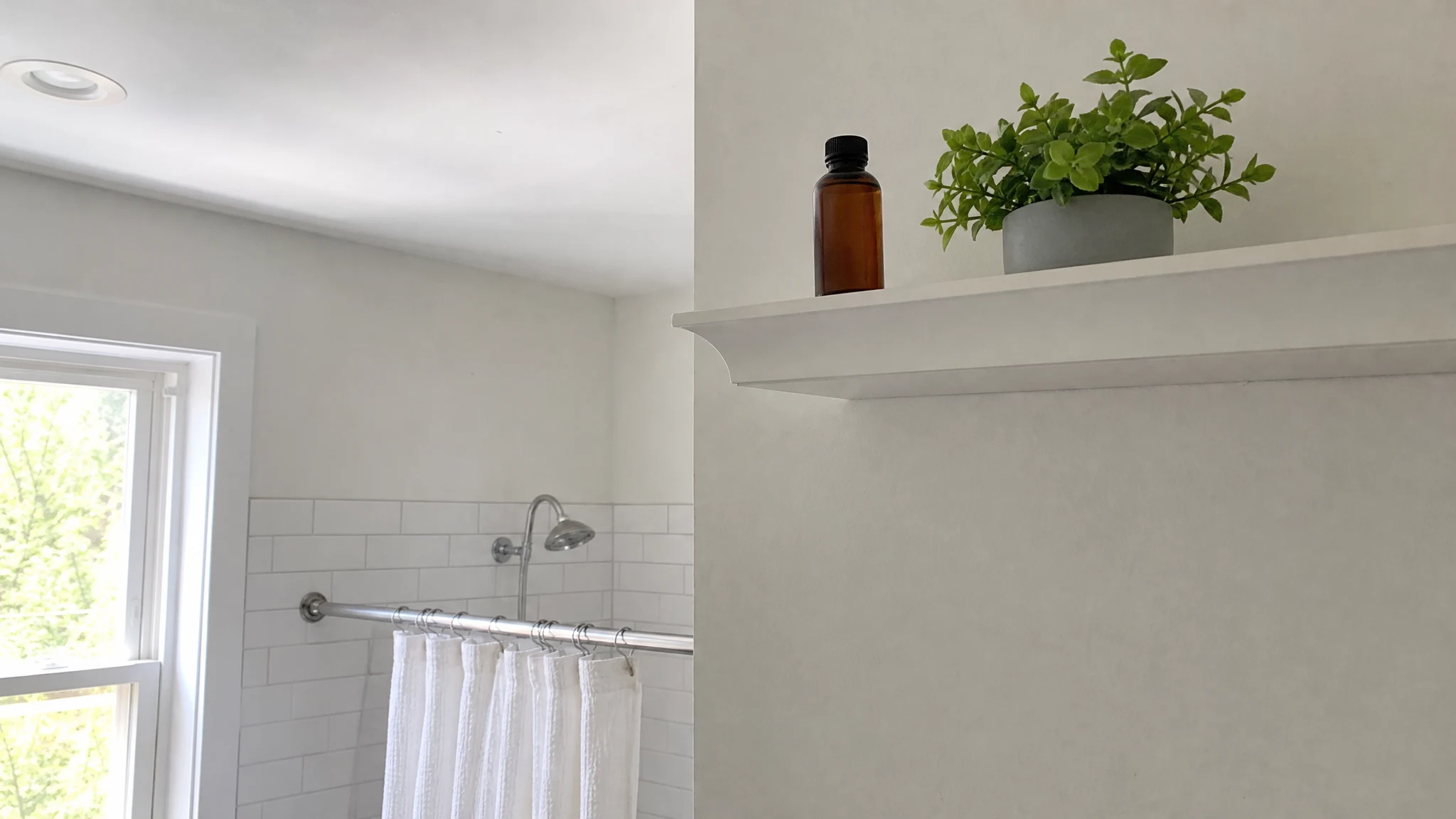
If you remember one rule about peppermint oil and children, make it this one: do not put concentrated menthol on or near the face of an infant or young child. The second rule is about where the bottle lives. Our distillation page says not to apply our oil near an infant's or young child's face, "where concentrated menthol can affect breathing," and this page lays out the evidence behind that sentence, including what the evidence does not show. We give no dilution table for children, because we have no basis for one.
Peppermint Essential Oil
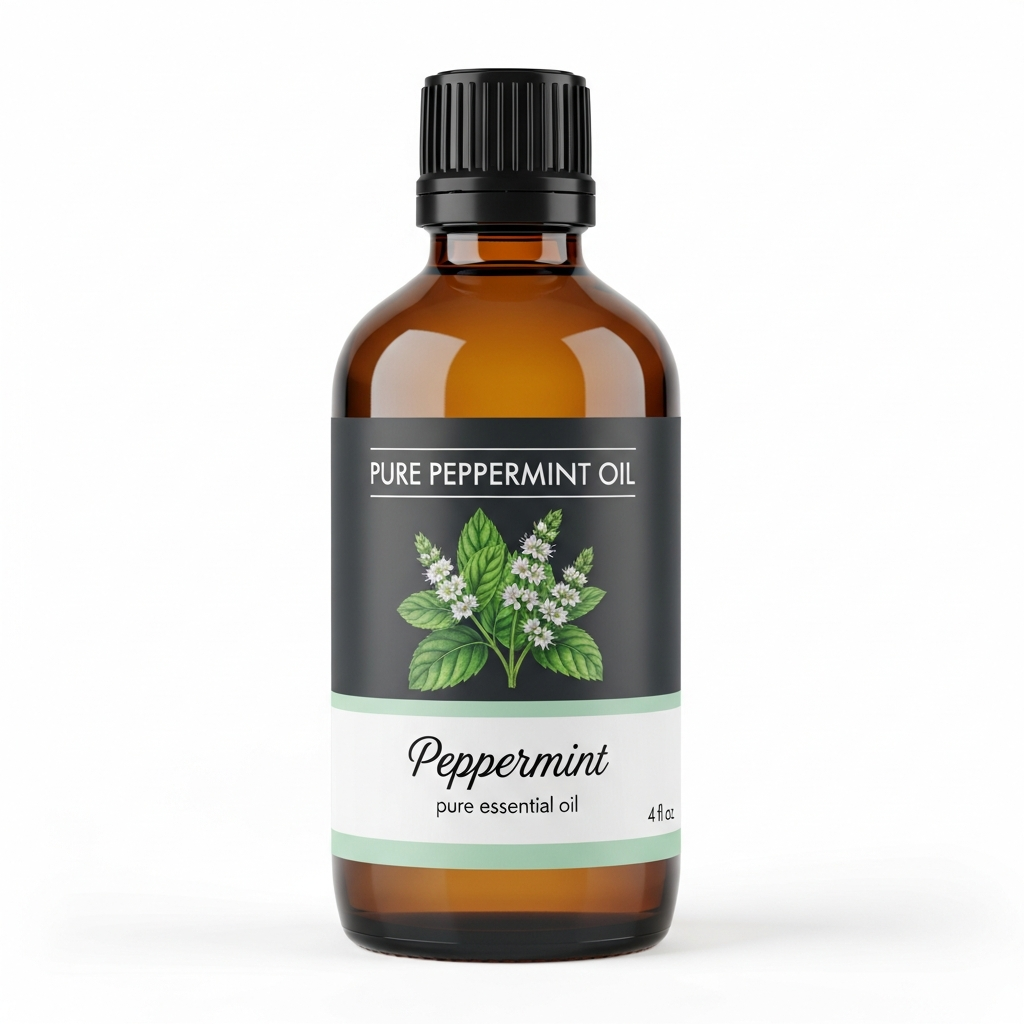
Our own Peppermint Essential Oil, in sizes from 0.5 oz to bulk.
From $10.99
Shop Now →What the authorities actually wrote
The National Center for Complementary and Integrative Health (NIH) says, on a page last updated May 2025, that "menthol, which is in peppermint oil, should not be inhaled by or applied to the face of an infant or small child" because it "may negatively affect their breathing" (NCCIH, 2025). Read it literally: inhaled as well as applied. Whether that extends to a diffuser running in a baby's room is a question for a pediatrician; the page does not say, and we will not guess.
The Tisserand Institute's discussion page shows how the aromatherapy side puts it. A commenter in July 2019 quotes Robert Tisserand's book Essential Oil Safety for oils high in 1,8-cineole and menthol: "Do not apply to or near the face of infants or children." Tisserand replied on 8 August 2019 that this "doesn't mean that the advice in the book is wrong or no longer applies," and Hana Tisserand wrote on 21 April 2022 that the caution for peppermint oil "is because it can potentially slow breathing in small children" (Tisserand Institute). Those are comments on a web page, not a study, and the book quote reaches us through a commenter.
The mechanism, and its limit
Gavliakova, Buday, Shetthalli and Plevkova reviewed the side effects of menthol in respiratory treatment (Open J Mol Integr Physiol, 2013). We could read only the abstract. It says menthol can cause "potentially respiratory failure, mainly in children," that adverse effects "could also be due to consequences of reflexes induced by the menthol action on trigeminal afferents," and that menthol "should be avoided in children under 2 years." The reflex story is the plausible mechanism for why a cooling sensation near a small child's nose and mouth is different from the same sensation on an adult. The abstract does not give case numbers, and the case details usually cited from that paper could not be verified here, so we do not repeat them.
What an over-the-counter menthol label says
A menthol product with a drug label shows how seriously this is taken at known strengths. The DailyMed label for a lavender-scented chest ointment (revised October 2026) lists menthol 2.6%, camphor 4.7% and eucalyptus oil 1.2%, and says "children under 2 years: do not use," do not use "in nostrils," and "avoid contact with eyes" (DailyMed).
Our arithmetic with a published range: the Cosmetic Ingredient Review lists menthol at 30% to 55% in peppermint oil (CIR, 2018). A 1% blend of such an oil would carry 0.3% to 0.55% menthol, and a 2% blend 0.6% to 1.1%. Those sit below that label's 2.6%, and the label still excludes children under two. A weaker blend is therefore not a loophole; if anything, the label shows the line is drawn by age and by location, not by percentage. That range is a general figure for Mentha x piperita oil. We publish no menthol figure for either of our oils, and our GC-MS report covers the cornmint oil at chemical-family level only, so do not apply it to a bottle of ours.
Why storage is the second rule
Poison centers describe what happens in homes. An Australian review (Lee, Harnett and Cairns, Med J Aust 2019, via University of Sydney) covered 4,412 essential oil exposures reported to the NSW Poisons Information Centre between July 2014 and June 2018. Of those, 2,790 (63%) involved children under 15, about 80% were accidental, and 31% of callers had symptoms when they called. Eucalyptus accounted for 46.4% of exposures, tea tree 17%, lavender 6.1%, clove 4.1% and peppermint 3.5%. Our arithmetic: 3.5% of 4,412 is about 154 exposures, over four years in one Australian state. The shares are of all essential oil calls, not just children's, and the page we could read does not give outcomes by oil.
Poison Control (poison.org) adds the risk shape: children "have thin skin and immature livers," which "might make them more susceptible to toxic effects than adults"; "aspirating an essential oil can cause pneumonia"; and bottles should be "locked up, out of the sight and reach of children and pets" (poison.org). If someone swallows an essential oil, use the webPOISONCONTROL tool or call 1-800-222-1222, which the page describes as free, confidential and available around the clock. For a child who is struggling to breathe or unresponsive, call emergency services first.
Do not assume the closure is child-resistant. The federal rule on special packaging, 16 CFR 1700.14, lists specific substances: liquids with more than 5% methyl salicylate by weight, and household products with 10% or more hydrocarbons by weight and a viscosity under 100 SUS at 100 F. Essential oils are not listed as a class (16 CFR 1700.14, Cornell LII). We make no statement about the caps on our bottles, so keep the oil in a high, locked place regardless.
What we will not tell you
- An age-based dilution. We found no authority table we can verify for peppermint oil on a child's body, so we give none. Our copy for adults is 0.5% to 2% in a carrier with a patch test first; it is not a children's figure.
- That any essential oil is child-appropriate. Ask your pediatrician or pharmacist, who can see the child.
- Any use of our oils for a child's illness. We sell fragrance materials, not a remedy for any condition, and our pages say the oils are not intended to diagnose, treat, cure or prevent disease.
Never give a child peppermint oil to swallow. Our label says not for internal use, and poison.org lists aspiration pneumonia among the risks. For skin reactions, mention the product to your pediatrician and stop using it; for adults, the dilution page and safety basics cover handling. Related questions have their own pages: pregnancy and breastfeeding and why the label says no to swallowing.
A short household checklist
- Store the bottle locked or out of reach, capped, in a cool dark place, as our own storage copy says.
- Keep it, and anything scented with it, away from an infant's or young child's face and sleeping area unless a pediatrician says otherwise.
- Know the number: 1-800-222-1222.
- Wash off and stop if skin reacts, then ask a doctor.
We sell Mentha piperita and Mentha arvensis peppermint oils for adults who make fragrance, soap, candles and home blends, and the one rule that matters for the people they share a house with is the first one on this page.
Peppermint Essential Oil
Peppermint Essential Oil from our own shop, in sizes from 0.5 oz to bulk.
From $10.99
Shop Now →Sources & Further Reading
- NCCIH (NIH), May 2025. Peppermint Oil: Usefulness and Safety. nccih.nih.gov/health/peppermint-oil
- Tisserand Institute. Kids and inhalation safety (comments 2019 to 2022). tisserandinstitute.org/kids-inhalation-safety
- Gavliakova S, Buday T, Shetthalli VM, Plevkova J, 2013. Analysis of pathomechanisms involved in side effects of menthol treatment in respiratory diseases (abstract). Open J Mol Integr Physiol 3:21-26. scirp.org/OJMIP_2013021914073686
- DailyMed (NLM), label revised October 2026. Menthol, camphor and eucalyptus oil ointment (SPL 0a3086b7). dailymed.nlm.nih.gov
- Cosmetic Ingredient Review, 2018. Safety Assessment of Mentha piperita (Peppermint)-Derived Ingredients. cir-safety.org/pepper032018rep.pdf
- University of Sydney, 2019. Essential oil poisoning calls on the rise, children most affected (Lee, Harnett, Cairns, Med J Aust 212). sydney.edu.au news
- Poison Control (poison.org). Essential Oils. poison.org/articles/essential-oils
- US CPSC via Cornell LII. 16 CFR 1700.14, substances requiring special packaging. law.cornell.edu/cfr/text/16/1700.14