Is Peppermint Oil Safe for Cats? A Careful Guide for Cat Households
Peppermint oil is one of the most beloved essential oils in any home collection. Its crisp, clean scent lifts a room instantly, and it earns a permanent spot in countless personal care routines. But if you share your home with a cat, one question comes before any diffuser gets switched on: is peppermint oil safe for cats?
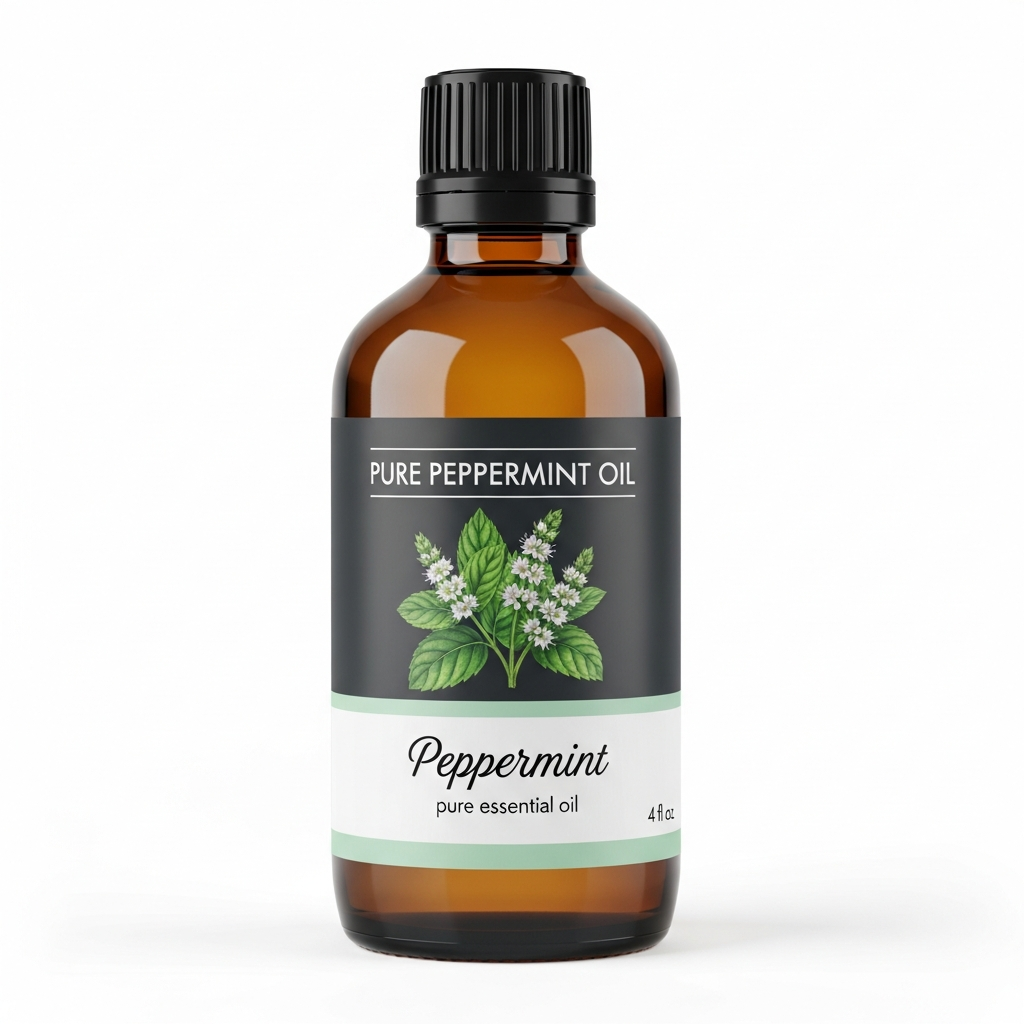
Peppermint Essential Oil
Our own Peppermint Essential Oil, in sizes from 0.5 oz to bulk.
From $10.99
Shop Now →The short answer is no, not safely. Cats and essential oils are a complicated combination, and peppermint oil sits near the top of the list of oils that veterinary professionals flag as problematic for felines. This guide walks through the most common questions cat owners ask, with clear and honest answers grounded in what veterinary science currently understands.
If you want to learn more about what peppermint oil actually is before diving into cat safety specifics, our complete guide to peppermint oil covers the botanical background, chemical profile, and global sourcing story in full detail.
Why Cats and Essential Oils Are a Different Conversation
Q1: Why are cats more sensitive to essential oils than humans or dogs?
Cats lack a liver enzyme called glucuronyl transferase, which is central to how mammals process and eliminate many plant-based compounds. Without it, certain substances that humans metabolize quickly can accumulate to problematic levels in a cat's body. This is not a minor metabolic quirk. It is a fundamental physiological difference that makes the essential-oil-plus-cat equation genuinely risky.
Q2: What makes peppermint oil specifically concerning for cats?
Peppermint oil contains high concentrations of menthol, menthone, and related phenolic compounds. These are the very molecules that give the oil its signature cool intensity. For cats, those same compounds are difficult to process safely, and exposure (whether through skin contact, inhalation, or accidental ingestion) may lead to signs of distress that warrant immediate veterinary attention.
Q3: Does this apply to all essential oils, or just peppermint?
Many essential oils raise concern when cats are involved, including tea tree, eucalyptus, cinnamon, clove, citrus oils, and several others. Peppermint is consistently listed among the higher-risk options. If you are curious about which oils tend to be discussed more freely in pet-present households, your veterinarian is the best source for current guidance.
Exposure Routes: How Cats Encounter Essential Oils
Q4: Can diffusing peppermint oil in my home affect my cat?
Yes, diffusing is a real exposure route. When a diffuser disperses oil molecules into the air, cats breathe those particles in. Their respiratory systems are sensitive, and prolonged exposure to heavily diffused essential oils in an enclosed space may cause noticeable discomfort. Signs that a cat may be reacting include watering eyes, drooling, coughing, or appearing unsteady.
Q5: What about diluted peppermint oil on my skin? Can my cat be affected if I use a lotion or scalp product?
Skin-to-fur contact is a route worth taking seriously. If you apply a product containing peppermint oil to your scalp or skin and then your cat rubs against you or grooms an area that came into contact with you, small amounts of oil can transfer to their coat. Cats groom constantly, so anything on their fur is likely to be ingested. For anyone exploring peppermint-based scalp routines, our step-by-step scalp routine guide focuses on human cosmetic use, but keeping pets away while products are fresh on skin is a sensible precaution.
Q6: Is it dangerous if my cat simply walks through a room where I used peppermint oil on a surface?
Cats walk on surfaces and then lick their paws. A cat walking across a floor or counter that was wiped down with an undiluted or heavily concentrated peppermint solution could pick up residue on paw pads. This is one of the less obvious exposure routes that cat owners sometimes overlook when assessing their household routines.
Q7: What if my cat only smells the bottle briefly?
A momentary sniff of a closed or briefly open bottle is far less concerning than prolonged or repeated exposure. That said, most cats will react visibly to peppermint oil's intensity and simply walk away, which is their instinct doing its job. The greater risks come from ongoing environmental exposure or direct contact, not a passing encounter with a sealed bottle.
Recognizing Reactions in Cats
Q8: What signs might indicate my cat has had a problematic exposure to peppermint oil?
Common signs that veterinary professionals associate with essential oil exposure in cats include excessive drooling, pawing at the mouth or face, watery eyes, vomiting, lethargy, difficulty walking, muscle tremors, and labored breathing. Not all reactions are immediate, and severity can range widely depending on the amount and route of exposure. If you observe any of these signs, contact your veterinarian or an animal poison control line right away.
Q9: How quickly might a reaction appear?
This varies. Some cats show signs within minutes of direct contact with a concentrated oil. Others may take longer, particularly if the exposure was lower-level and occurred through inhalation over time. There is no reliable window after which you can assume everything is fine. When in doubt, reach out to a veterinary professional promptly.
Q10: My cat seems fine after brief exposure. Should I still be concerned?
A cat appearing outwardly fine does not confirm that no internal processing burden occurred. Some effects of toxic compound accumulation are not immediately visible. This is not meant to cause alarm about a single minor incident, but it is a reason not to dismiss brief exposures as entirely consequence-free, and to discuss the situation with your vet if you have any uncertainty.
Using Peppermint Oil Responsibly in a Cat Household
Q11: Can I ever use peppermint oil safely if I have cats?
Many cat owners do continue using peppermint oil for personal care, but they do so with deliberate precautions: using products in well-ventilated spaces, keeping cats out of rooms where diffusing occurs, storing oils securely out of reach, and applying skin products in areas where cat contact is unlikely. None of this eliminates all risk, but it reflects a more thoughtful approach. Your veterinarian can help you assess what level of caution makes sense for your specific household and cat.
Q12: How should I store peppermint oil to keep my cats safe?
Store peppermint oil in a sealed bottle inside a closed cabinet or drawer, well out of reach of curious paws. Cats are agile and investigative, and a bottle knocked off a shelf can become a real hazard if it breaks or leaks. A cool, dark storage spot also happens to be ideal for preserving oil quality, so this is a tip that serves both safety and the longevity of your product.
Q13: Are peppermint-scented cleaning products or candles safer than pure essential oil?
Synthetic peppermint fragrances in candles or household cleaners present a different chemical profile than pure essential oil, but they are not necessarily safe for cats either. Many synthetic fragrance compounds also carry risks for feline health. The safest position for cat households is to research any scented product before use and to prioritize ventilation and access restriction regardless of whether the scent is natural or synthetic.
Q14: What about peppermint oil in pet products? I have seen peppermint listed in some dog shampoos and grooming sprays.
Some products formulated for dogs do include small amounts of peppermint, and dog physiology differs enough from cat physiology that this is sometimes considered lower-risk for canines. It is critical to never assume a product labeled for dogs is appropriate for cats. Always read labels carefully and consult your vet before applying any scented product to a cat.
Peppermint Oil as a Cat Deterrent: A Common Question
Q15: I have read that peppermint oil repels cats. Is that true, and is it safe to use for that purpose?
Many cats do find the scent of peppermint oil unpleasant and will avoid areas where it is present. However, using peppermint oil as a deterrent creates the same exposure risks described throughout this guide. A cat avoiding a scent does not mean the cat is safe from it. Using concentrated oil on surfaces a cat might contact is not a recommended approach, and there are safer deterrent options worth discussing with a veterinary behaviorist.
Q16: What are safer alternatives for deterring cats from specific areas?
Veterinary behaviorists and cat care professionals often suggest physical barriers, double-sided tape on surfaces, motion-activated deterrent devices, or commercially formulated pet-safe deterrent sprays that have been tested for feline safety. These approaches address the behavioral goal without introducing chemical exposure risks. Your vet or a certified animal behavior consultant can offer guidance tailored to your specific situation.
Product Quality and Sourcing: Why It Matters Even More Around Pets
Q17: Does oil quality or purity level change the risk for cats?
Higher purity means higher concentrations of the active compounds that are problematic for cats. A pure, high-quality peppermint oil is not safer for cats than a diluted or adulterated one. In fact, from a feline risk standpoint, a more concentrated oil poses a greater concern. Quality and purity are important values for human cosmetic use, but they do not translate to being pet-friendly. To understand what goes into producing a truly pure oil, our article on how peppermint oil is made walks through the full process from field to bottle.
Q18: Are "natural" or "organic" labels meaningful for cat safety?
No. Organic and natural certifications speak to agricultural practices and ingredient sourcing, not to safety for feline physiology. A certified organic peppermint oil is still chemically the same oil. The naturalness of a substance does not determine how a cat's liver can or cannot process it.
Talking to Your Vet and Getting Help
Q19: Should I tell my vet that I use essential oils at home?
Yes, absolutely. This is genuinely useful information for your veterinarian. Knowing what scents and products exist in a cat's environment helps a vet form a complete picture of the animal's health context. Many pet owners forget to mention household products during vet visits, but scented items are worth bringing up.
Q20: Where can I call if I think my cat has been exposed to peppermint oil?
Contact your veterinarian immediately. You can also reach the ASPCA Animal Poison Control Center at (888) 426-4435 (a consultation fee may apply) or the Pet Poison Helpline at (855) 764-7661. Do not wait to see if signs develop on their own. Early contact with a professional gives the best outcome.
Q21: My vet seems unfamiliar with essential oil risks. What should I do?
Veterinary toxicology is a specialized field, and not every general practice vet will have deep expertise in essential oil exposure. If your primary vet is uncertain, ask for a referral to a veterinary toxicologist or contact one of the animal poison control lines listed above. They maintain up-to-date resources on compound-specific risks.
Quick Reference Summary
| Scenario | Risk Level | Recommended Action |
|---|---|---|
| Diffusing in a shared room | Higher concern | Keep cats out; ventilate well |
| Applying to skin before cat contact | Moderate concern | Wait for absorption; minimize contact |
| Direct application to cat's fur or skin | High concern | Never do this; consult vet immediately if it occurs |
| Stored bottle, closed and out of reach | Minimal concern | Store securely in closed cabinet |
| Peppermint-scented surface cat walks on | Moderate concern | Avoid oiled surfaces; restrict access while wet |
| Cat has visible symptoms after any exposure | Urgent | Call vet or poison control immediately |
The information in this guide is educational and does not replace the advice of a licensed veterinarian. Every cat is different, and a vet familiar with your animal's health history is always the right first call when questions arise about household product safety.
Living with cats and loving essential oils can coexist, but it calls for genuine care and informed choices. Knowing why peppermint oil poses concerns for felines, understanding the exposure routes that matter most, and keeping your vet in the loop are the foundations of a safer home for every member of your household, two-legged and four-legged alike.