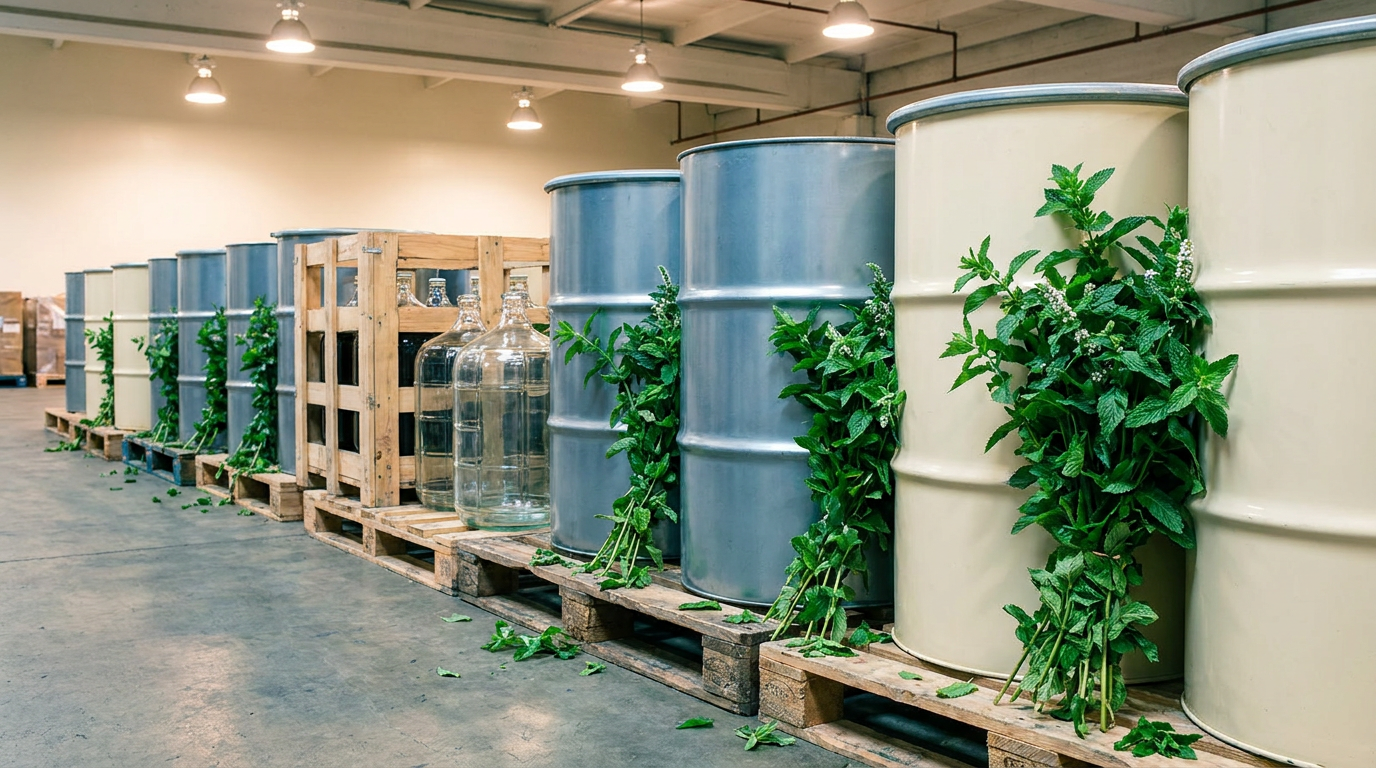
Peppermint essential oil is one of the most widely sourced botanicals in wholesale cosmetics and home-fragrance production, which also makes it one of the most widely cut and mislabeled. This guide walks through what genuine, steam-distilled Mentha piperita actually is, how to document it, and how to size an order from a first bench test up through a standing drum account.
Compare every size from a half-ounce sample to a four-hundred-pound drum before you commit.
Peppermint essential oil is steam distilled from the leaves and flowering tops of Mentha piperita, a naturally occurring hybrid of watermint and spearmint. The distillation itself is straightforward in principle but exacting in practice, and the field-to-bottle process determines much of what ends up in the finished bottle, from menthol concentration to how sharp or soft the aroma reads.
Grading in this category isn't formal the way it is for some botanicals; there's no universal certification body stamping peppermint oil the way there is for, say, coffee. What buyers actually rely on is a combination of Latin-name labeling, a batch-matched Certificate of Analysis, and independent purity checks, all of which a proper quality and value guide walks through in more depth than any single spec sheet can.
Price is where the grading gap shows up most. A drum priced well under the market rate for genuine, undiluted Mentha piperita almost always means something has been cut, stretched, or mislabeled, a pattern our price guide breaks down category by category.
| Sold as | What it actually is | How to recognize it |
|---|---|---|
| "100% pure peppermint essential oil" | A single-botanical, steam-distilled extract of Mentha piperita with nothing blended in | The ingredient statement names one Latin binomial, and the seller can produce a batch-specific Certificate of Analysis on request |
| "Peppermint fragrance oil" or "peppermint aroma oil" | A synthetic or partly synthetic compound built to smell like peppermint, with little or no natural menthol | The label says "fragrance" or "parfum" rather than Mentha piperita, and the scent reads flat and one-note instead of sharp and layered |
| "Peppermint extract" | A food-flavoring product built on alcohol or glycerin rather than distilled oil, meant for baking and drinks rather than diffusing or topical blending | It's sold in the grocery baking aisle in small dropper bottles and lists alcohol as a primary ingredient, a distinction covered in our extract-versus-essential-oil breakdown |
| "Cut" or stretched peppermint oil | Genuine peppermint oil diluted with a cheap carrier or a lower-cost mint oil to lower the per-bottle cost without saying so on the label | Aroma is thin and fades quickly, viscosity feels watery, and the price sits well below what the market supports for the claimed volume |
Origin also shapes what lands in a drum: peppermint grown in the Yakima Valley, Oregon's Willamette Valley, and India each carries a slightly different menthol balance and aroma character, a distinction covered in our origin comparison, and worth asking about before a supplier relationship is locked in.
The sourcing trap that catches the most buyers isn't a fake bottle, it's a real one sold without paperwork. Purity claims without a batch-matched Certificate of Analysis are just marketing copy; treat any bulk quote that can't produce one as a starting point for more questions, not a final answer.
Wholesale peppermint buyers rarely fit one mold. Candle and wax melt producers building seasonal lines, cold-process soap studios, pest-deterrent and home-fragrance brands, and hair-care formulators all draw from the same drum for very different finished products, and our guide for heavy users walks through how those draw-down rates differ in practice.
What they share is a need for consistency across every reorder rather than a single great-smelling sample. A private-label brand repackaging into dozens of small retail bottles needs the batch in month six to smell like the batch in month one, which is why choosing the right first size to test against matters as much as the eventual bulk order.
Before committing to a drum-sized order, a few checks separate a dependable supplier from a risky one.
A Certificate of Analysis that isn't tied to a batch number on the bottle in your hand isn't proof of anything, it's a PDF. Our own published Certificate of Analysis is the standard we'd want a supplier to hold us to, and it's worth asking any vendor for the same before a drum-sized order ships.
Sizing a first order is less about guessing volume and more about testing before committing. A half-ounce or one-ounce bottle is enough to run bench tests and confirm aroma and performance against a formulation, while a four-ounce or eight-ounce bottle covers a small pilot batch.
Once a formulation is locked, the jump to five pounds or twenty-five pounds covers most production runs, and one hundred pounds or four hundred pounds suits standing wholesale accounts. Full pricing across the ladder lives on the bulk order page, and the complete retail-to-drum lineup is in the shop.
Start with a half-ounce or one-ounce bottle to confirm aroma, color, and performance in your own formulation before any volume commitment.
Cross-check the sample against the published Certificate of Analysis and the quality checks in our quality and value guide before scaling up.
Move to five pounds or twenty-five pounds for a pilot production run, then step up to one hundred pounds or four hundred pounds once the formulation and packaging are finalized, priced through the bulk page.
Set a standing cadence through contact so repeat batches arrive on schedule and match the aroma profile of the batch that passed your original bench test.
The application-specific guides below break down what each category of wholesale buyer should know before placing a drum-sized order.
Producers scenting soy or paraffin candles and wax melts with peppermint, especially holiday and seasonal lines.
Read the sourcing guide →Small-batch soap makers and cosmetics studios scaling a peppermint bar or balm from a test batch to a wholesale line.
Read the sourcing guide →Brands formulating sprays, sachets, and around-the-home deterrent products built around peppermint's reputation as a natural pest discourager.
Read the sourcing guide →Brands building diffuser blend lines, signature scent kits, and everyday home-fragrance products around a bright, energizing top note.
Read the sourcing guide →Spa and body-care brands formulating cooling foot soaks, body mists, and warm-weather products around peppermint's icy sensation.
Read the sourcing guide →Brands formulating scalp treatments, shampoos, and hair oils around peppermint's tingling sensation on the scalp.
Read the sourcing guide →Brands repackaging peppermint oil into retail-size bottles and assembling DIY project kits that depend on a consistent bulk source.
Read the sourcing guide →Wholesale pricing, lead times, and standing orders are one message away.
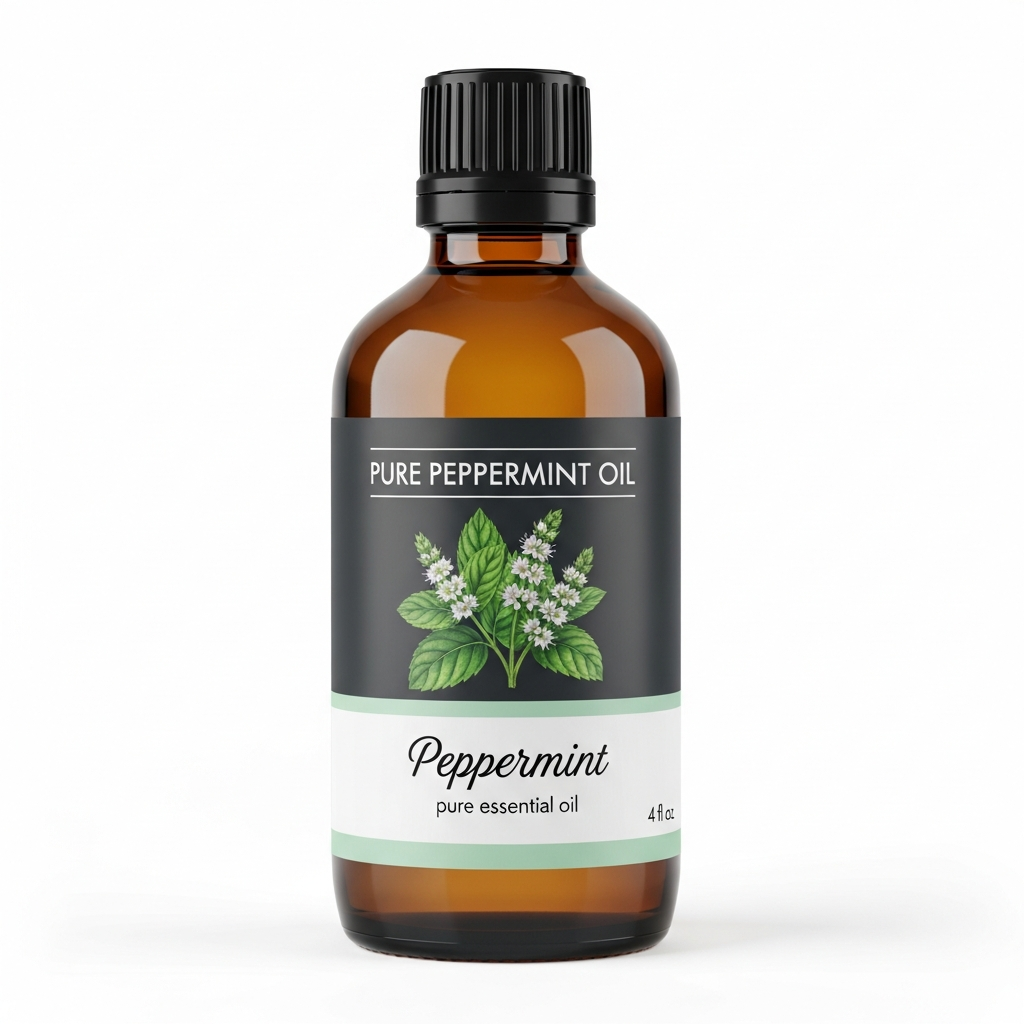
Our own Peppermint Essential Oil, in sizes from 0.5 oz to bulk.
From $10.99
Shop Now →