
Yakima, Willamette, and India: How Origin Shapes the Peppermint in Your Bottle
Pick up two bottles of pure peppermint oil and hold them side by side. The labels may look nearly identical. The price tags might be close. But uncap them, and you will notice something immediately: they do not smell the same. One is sharper, almost electric. Another is rounder, sweeter at the edges. The third has a raw, intensely cool punch that lingers on the air for a long time.
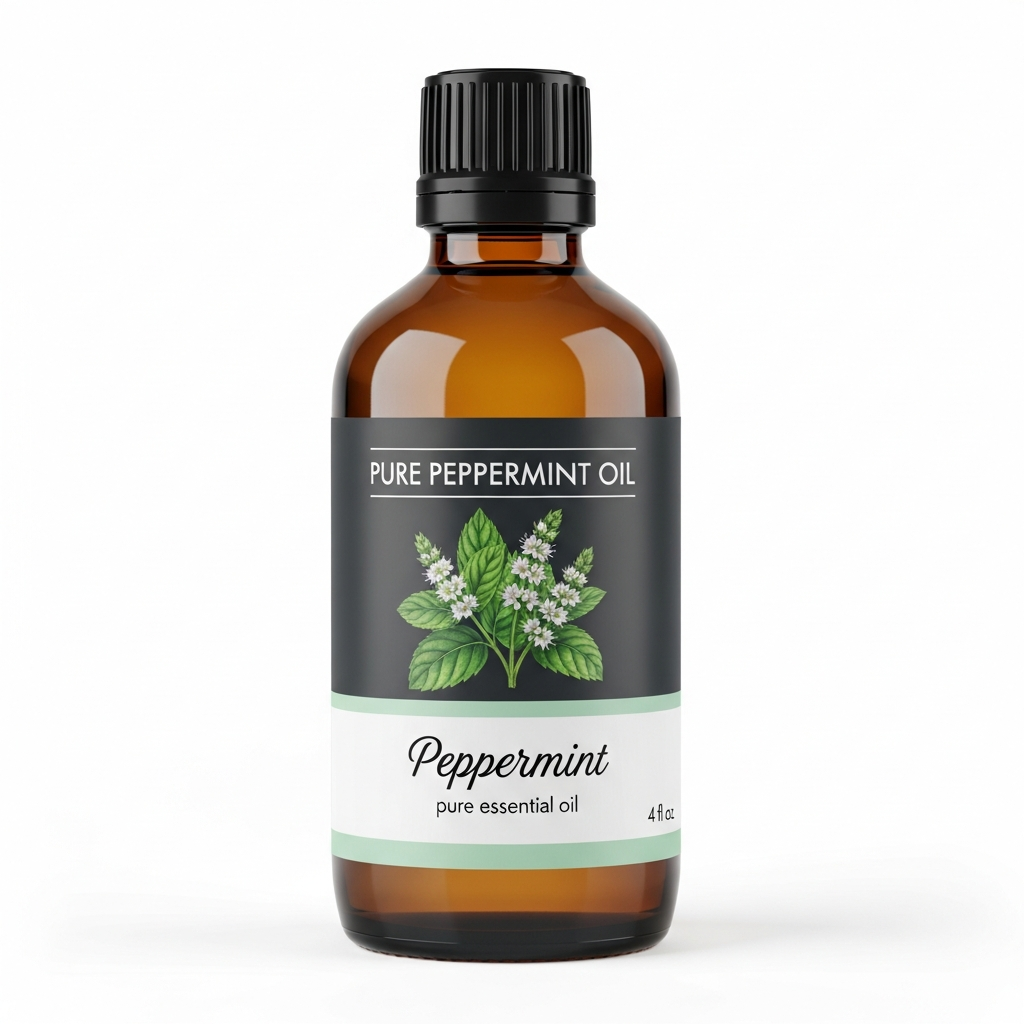
Peppermint Essential Oil
Our own Peppermint Essential Oil, in sizes from 0.5 oz to bulk.
From $10.99
Shop Now →That difference comes down to one thing: where the plant grew. Soil chemistry, elevation, rainfall patterns, and harvest timing all leave a fingerprint on the finished oil. If you are shopping for american peppermint oil or comparing it against imported options, understanding peppermint oil origin is the most useful thing you can do before you buy. This post breaks down three of the most commercially significant sources: the Yakima Valley in Washington State, the Willamette Valley in Oregon, and the northern plains of India.
A Quick Note on How Origin Affects the Oil
Peppermint (Mentha x piperita) is a hybrid plant. It does not produce seeds; it spreads through runners, and the cuttings used to establish new crops carry the genetic character of their parent stock. What changes from region to region is how that genetics expresses itself in response to its environment. Soil pH, day length, temperature swings between day and night, and the mineral content of local water all influence which volatile compounds the plant produces in greatest abundance.
The compounds aromatherapists and formulators pay closest attention to include menthol (the source of that signature cool sensation), menthone (which adds a fresh, slightly camphor-like sharpness), menthyl acetate (responsible for floral, fruity sweetness), and isomenthone. The ratio of these compounds shapes the oil's scent profile, its behavior in formulations, and its overall character.
For a deeper look at what to look for on a certificate of analysis before purchasing, see our guide on how to buy pure peppermint oil: the ultimate quality guide.
The Yakima Valley, Washington
The Yakima Valley sits in the rain shadow of the Cascade Mountains, and that geography is everything. The valley receives abundant sunshine, relatively low humidity, and rich volcanic soils deposited over thousands of years. Irrigation from snowmelt-fed rivers keeps the crops hydrated on a controlled schedule. Nights are cool even in summer, which slows the plant's metabolism at the critical phase when essential oil compounds are accumulating in the leaf glands.
Yakima peppermint is considered by many in the industry to be the benchmark for American peppermint oil. The oil typically carries high menthol content, often landing between 40 and 55 percent, alongside a relatively clean, bright menthone level. The result is a scent that is assertive, crisp, and very recognizably "classic peppermint." It coats the senses without heavy sweetness or green, grassy undertones.
Production in the Yakima Valley is well-established and largely mechanized, which supports consistent batch quality from year to year. Growers here have been cultivating mint for well over a century, and that accumulated knowledge shows in the reliability of the finished product.
Yakima: Pros and Cons
- Pro: High menthol content with a clean, consistent scent profile
- Pro: Long-standing agricultural tradition supports reliable quality standards
- Pro: Domestic sourcing, which simplifies supply chain transparency
- Pro: Well-suited for cosmetic formulations that need a recognizable, assertive peppermint note
- Con: Premium pricing reflects the cost of domestic labor and land
- Con: Drought years can affect crop yields and, occasionally, oil character
- Con: Availability can tighten during poor harvest seasons
The Willamette Valley, Oregon
Travel west across the Cascades and the climate shifts dramatically. The Willamette Valley is wetter, greener, and more temperate than Yakima. Maritime air from the Pacific keeps temperatures mild, rainfall is more frequent, and the valley floor is blanketed in deep, fertile alluvial soil.
Oregon has historically been one of the largest mint-producing states in the United States, and the Willamette Valley accounts for a significant portion of that output. The climate here tends to produce an oil with a slightly different aromatic character compared to Yakima. Menthol levels are still strong, often in a similar range, but many distillers and buyers note that Willamette oils can carry a softer, slightly more rounded quality. The higher moisture environment during the growing season may contribute to a marginally elevated menthyl acetate percentage, which introduces that subtle sweetness.
The practical implication for formulators: Willamette peppermint often blends a little more smoothly into skin care bases and aromatic products where a sharp, dominant mint note might overpower other ingredients. It is still unmistakably peppermint. The edge is simply a touch less angular.
Willamette: Pros and Cons
- Pro: Slightly softer, more rounded scent profile works well in blended formulations
- Pro: Established domestic production with good traceability
- Pro: Strong regional agricultural infrastructure and quality oversight
- Con: Premium domestic pricing, comparable to Yakima
- Con: Wet seasons can complicate harvest timing and affect oil composition year to year
- Con: Less widely available as a single-origin designation in retail packaging
India (Primarily Uttar Pradesh)
India is now the world's largest producer of peppermint oil by volume, with most cultivation concentrated in Uttar Pradesh in the northern part of the country. The variety most commonly grown there is Mentha arvensis-derived cornmint, which is processed to create a dementholized oil (often labeled as peppermint oil in commercial contexts), or fields of Mentha x piperita proper, depending on the buyer's specification.
When the crop is true Mentha x piperita, Indian-origin peppermint oil can be extraordinarily high in menthol, sometimes exceeding 55 percent. The growing conditions, including intense summer heat, broad sun exposure, and multiple harvests per season, push menthol accumulation to striking levels. The scent profile that results is powerful and very cool, with a more medicinal sharpness that some describe as slightly rougher around the edges compared to American-origin oils.
The volume advantage is real. India's scale of production keeps prices significantly lower than domestic American sources. For buyers working at high volume, the cost difference can be substantial. The trade-off is that quality varies more widely across Indian suppliers, and sourcing due diligence matters considerably more. Third-party testing, gas chromatography analysis, and supplier verification are not optional at this price point; they are essential.
It is also worth distinguishing Indian peppermint oil from peppermint extract if you are crossing between aromatic and kitchen applications. Those are very different products. For clarity on that distinction, our article on peppermint essential oil vs. peppermint extract in the kitchen covers the key differences.
India: Pros and Cons
- Pro: Very high menthol content in quality batches, delivering intense cooling character
- Pro: Significantly lower price per milliliter, especially at volume
- Pro: Wide availability through major ingredient suppliers globally
- Con: Quality is highly variable; rigorous third-party testing is non-negotiable
- Con: Supply chain transparency can be harder to verify without an established supplier relationship
- Con: Scent profile can skew sharper and less refined compared to American-origin oils
- Con: Longer shipping distances increase the risk of heat or light exposure during transit
Comparison at a Glance
| Attribute | Yakima, WA | Willamette, OR | India (UP) |
|---|---|---|---|
| Typical Menthol Range | 40 to 55% | 38 to 53% | 45 to 60%+ |
| Scent Character | Crisp, clean, assertive | Rounded, slightly sweet | Intense, sharp, very cool |
| Batch Consistency | High | High | Variable (supplier-dependent) |
| Price Point | Premium | Premium | Budget to mid-range |
| Supply Chain Transparency | Strong | Strong | Requires active verification |
| Best Volume Tier | Small to medium | Small to medium | Medium to large |
| Blending Behavior | Dominant, anchoring | Integrates smoothly | Dominant, can overpower blends |
Best For: Matching Origin to Use Case
For Personal Aromatic Use and Small-Batch Diffusing
Yakima or Willamette peppermint oil is a strong choice here. The consistency and refined character of American-origin oils make every session predictable. You know what you are getting when you uncap the bottle. Yakima's brightness tends to fill a room with a vivid, energizing note; Willamette works especially well when you are layering peppermint with other botanicals in a blend.
For Skin and Hair Care Formulations
Willamette peppermint's slightly rounder profile integrates gracefully into lotions, scalp rinses, and balms where a softer mint note is preferable. Yakima also performs well here, particularly when the formulator wants peppermint to be the dominant aromatic character. With any origin, dilution in a carrier oil or cosmetic base is necessary before skin contact. Always perform a patch test before wider application.
For High-Volume Commercial Blending
Indian-origin peppermint oil becomes the practical choice at significant volumes, provided you work with a reputable supplier who provides full gas chromatography and mass spectrometry documentation. The cost savings at scale are real. The commitment to quality testing has to match that scale.
For Gifts, Starters, and Everyday Household Use
Any of these origins can work beautifully here, and the choice often comes down to budget and bottle size. If you are trying peppermint oil for the first time or gifting it, a smaller bottle of Yakima or Willamette peppermint oil is a satisfying introduction to what high-quality American peppermint oil can smell like. For guidance on choosing the right quantity, see our piece on best peppermint oil bottle sizes: which one should you order.
The Verdict
There is no universally superior origin. What matters is matching the oil's character to your specific purpose, your budget, and your standards for traceability.
If you prioritize the cleanest possible aromatic experience and a well-documented supply chain, Yakima peppermint oil is difficult to beat. It has earned its reputation over more than a century of cultivation, and the scent it produces is the one most people picture when they think of classic American peppermint.
If you blend frequently and want a mint note that cooperates with other botanicals rather than competing with them, Willamette peppermint deserves a trial. Its slightly softer edges are an asset in complex formulations.
If volume and value are the primary drivers, Indian-origin peppermint oil can deliver excellent quality at a meaningfully lower price per milliliter. The key is doing the sourcing work upfront: request certificates of analysis, verify menthol and menthone percentages against the GC/MS report, and establish a relationship with a supplier who is transparent about their testing protocols.
Peppermint oil origin is not just a marketing detail. It is geography, climate, agricultural tradition, and plant chemistry all pressed into every drop. Understanding those differences gives you confidence when you choose your bottle, and it makes the moment you uncap it that much more satisfying.