
Peppermint Essential Oil vs Peppermint Extract: Kitchen Bottle or Diffuser Bottle?
Both bottles smell unmistakably like peppermint. Both sit on shelves at grocery stores, health food shops, and online retailers. And yet, grabbing the wrong one for the wrong job can ruin a batch of cookies, irritate your skin, or simply waste good money. This guide breaks down exactly what separates peppermint oil vs peppermint extract, where each one shines, and how to decide which one you actually need to buy.
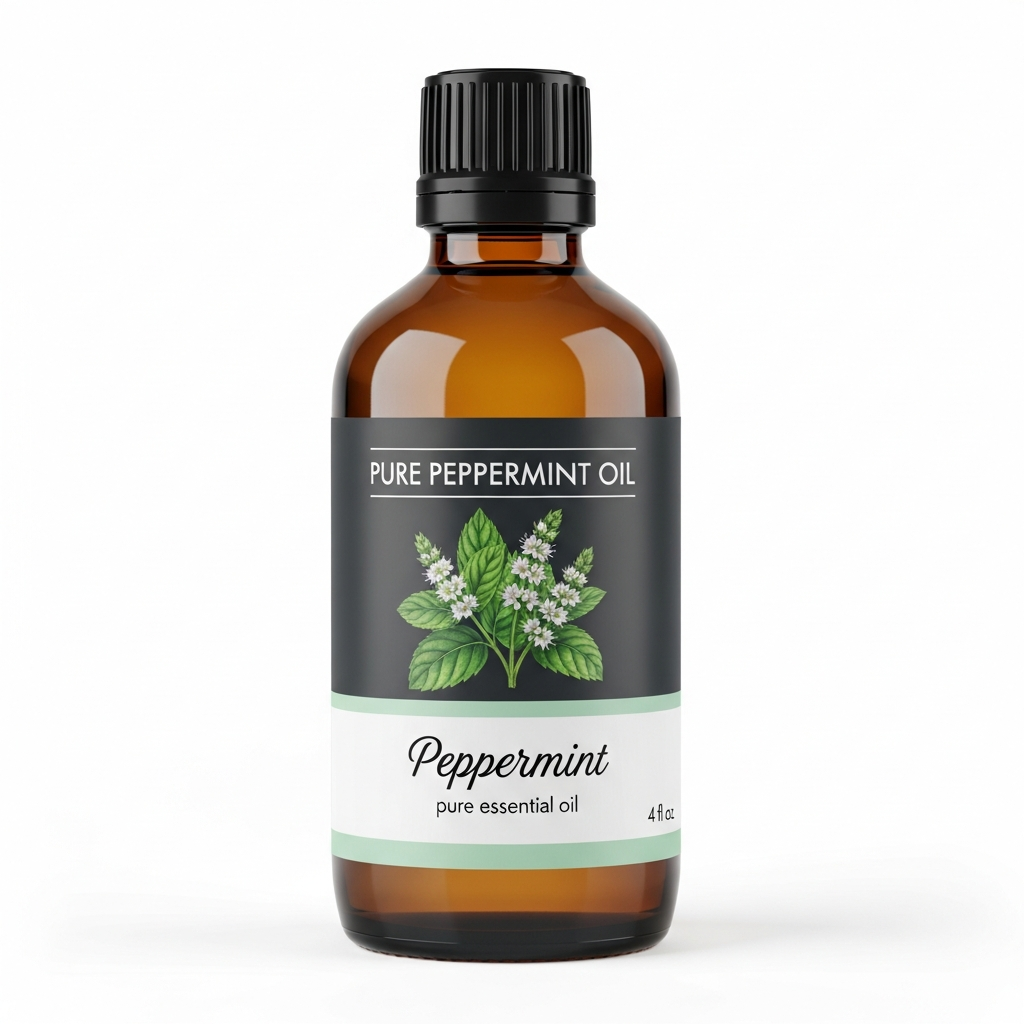
Peppermint Essential Oil
Our own Peppermint Essential Oil, in sizes from 0.5 oz to bulk.
From $10.99
Shop Now →What Is Peppermint Essential Oil?
Pure peppermint essential oil is produced through steam distillation of the Mentha piperita plant. Steam passes through harvested peppermint leaves, vaporizes the volatile aromatic compounds, and then condenses back into liquid. What remains is a highly concentrated oil composed almost entirely of those aromatic compounds, with menthol typically making up 35 to 55 percent of the total profile.
Because no carrier liquid dilutes it, a single drop of quality peppermint essential oil carries an intense, sharp, almost electric coolness. The aroma is bright and complex, with green herbal top notes beneath that signature icy freshness. It is not a food-grade product in its undiluted form, and it is not meant to be consumed directly.
Peppermint essential oil is made for aromatic and cosmetic use: diffusers, personal care formulations, room sprays, bath products, and topical blends (always properly diluted in a carrier oil before skin contact).
If you want to dig into what separates a quality bottle from a substandard one, the guide on how to buy pure peppermint oil covers sourcing, testing, and red flags to watch for.
What Is Peppermint Extract?
Peppermint extract is a food product. It is made by soaking peppermint leaves (or sometimes adding peppermint oil) in a base of food-grade alcohol, usually ethanol, to create a diluted, shelf-stable flavoring liquid. The FDA classifies it as a food flavoring, and it is formulated to be safe for consumption in the small quantities used in baking and cooking.
Standard peppermint extract sold in grocery stores typically contains around 35 percent alcohol and a relatively low concentration of peppermint. Imitation peppermint extract replaces natural peppermint with synthetic menthol and other compounds, which delivers a flatter, one-dimensional flavor profile compared to the real thing.
For peppermint oil for baking purposes, some recipes call for a food-grade peppermint oil, which is a separate category entirely. These products are heavily diluted, explicitly labeled as safe for consumption, and regulated as food flavorings. They are not the same as the essential oil you'd put in a diffuser.
The Core Difference: Concentration and Purpose
This is the heart of the whole comparison. Peppermint essential oil is concentrated aromatic chemistry, optimized for scent and cosmetic application. Peppermint extract is a diluted food flavoring, optimized for safe ingestion in culinary quantities.
Think of it this way: a bottle of pure essential oil might require a single drop to scent an entire room. That same drop, consumed directly, would be far too potent and potentially irritating to mucous membranes. Peppermint extract, on the other hand, has been calibrated so that a teaspoon in a batch of brownies delivers pleasant mint flavor without overwhelming the palate or causing irritation.
Swapping them is almost never a good idea in either direction.
Head-to-Head Comparison Table
| Attribute | Peppermint Essential Oil | Peppermint Extract |
|---|---|---|
| Primary use | Aromatic and cosmetic | Culinary and food flavoring |
| Safe to ingest? | No (undiluted) | Yes, in culinary quantities |
| Concentration | Very high (near 100% actives) | Low (diluted in alcohol base) |
| Production method | Steam distillation | Alcohol extraction or oil dilution |
| Aroma complexity | High, full aromatic profile | Moderate, flattened by dilution |
| Shelf life | 2 to 3 years properly stored | 3 to 4 years |
| Typical bottle size | 5 ml to 30 ml | 1 oz to 4 oz (or larger) |
| Price per ml | Higher | Lower |
| Skin contact (topical)? | Yes, diluted in carrier oil only | Not intended for topical use |
| Diffuser use? | Yes | No |
| Baking use? | Only if food-grade and labeled for consumption | Yes |
| Regulated as | Cosmetic ingredient | Food flavoring (FDA GRAS) |
Pros and Cons: Peppermint Essential Oil
Pros
- Exceptional aroma depth and intensity, well-suited for diffusing and room scenting
- Versatile in cosmetic formulations: lotions, scrubs, hair rinses, lip balms
- A little goes a very long way, so small bottles have real value
- Pure, single-ingredient product with no alcohol or additives
- Pairs beautifully with other essential oils for blending
Cons
- Cannot be used in food or beverages unless specifically labeled as food-grade
- Requires careful dilution before any skin contact (typically 1 to 2 percent in a carrier oil for adults)
- Quality varies considerably across brands; sourcing matters
- Must be kept away from children and pets
- Higher upfront cost per bottle compared to extract
Pros and Cons: Peppermint Extract
Pros
- Safe and approved for culinary use in standard recipe quantities
- Easy to measure with kitchen spoons without worrying about over-concentration
- Widely available at grocery stores and online
- Longer shelf life than most essential oils
- Affordable for everyday kitchen use
Cons
- Alcohol base can affect texture or flavor in some delicate recipes
- Weaker, less complex aroma compared to pure essential oil
- Imitation versions use synthetic compounds that some bakers find noticeably inferior
- Not suitable for diffusing, cosmetic use, or skin application
- Larger bottle format can feel wasteful if you bake infrequently
Best For: Use-Case Recommendations
Choose Peppermint Essential Oil If You Want To:
- Diffuse for atmosphere. Nothing compares for filling a room with a crisp, invigorating peppermint scent. A few drops in an ultrasonic or nebulizing diffuser during a morning routine or afternoon focus session delivers a noticeably fresh atmosphere.
- Make cosmetic products. Body scrubs, foot soaks, shampoo bars, lip balms, and cooling massage blends all rely on peppermint essential oil as a core ingredient. Just observe proper dilution ratios.
- Create room and linen sprays. Combined with water and a small amount of alcohol or solubilizer, peppermint essential oil makes an excellent natural linen mist or room freshener.
- Blend with other essential oils. Peppermint's sharp top note pairs well with lavender, eucalyptus, lemon, and rosemary for more complex aromatic compositions.
Choose Peppermint Extract If You Want To:
- Bake and cook. Peppermint extract is the right call for chocolate cookies, peppermint bark, frosting, hot cocoa, and ice cream. It disperses evenly into batters and creams without the potency risks of undiluted oil.
- Flavor beverages. A few drops in a homemade cocktail, mocktail, or flavored water is straightforward and safe.
- Keep things simple in the kitchen. No calculations, no dilution math. A measured teaspoon delivers reliable flavor every time.
A Note on Food-Grade Peppermint Oil for Baking
Some specialty baking retailers sell products labeled as food-grade peppermint oil or peppermint flavoring oil. These are distinct from aromatherapy-grade essential oil. If you want to use peppermint oil for baking because you prefer a more concentrated mint flavor than standard extract delivers, look specifically for products labeled food-safe and intended for consumption. Use them in the tiny quantities the product label specifies. The standard aromatherapy bottle on your nightstand is not a substitute.
The Verdict
The question of peppermint oil vs peppermint extract really comes down to one simple question: are you eating it or smelling it?
For your diffuser, your cosmetic formulations, and your scent blending projects, pure peppermint essential oil is the right product. Its aromatic complexity and concentration make it genuinely irreplaceable in those contexts. It is worth investing in a quality bottle from a transparent source. The guide on which peppermint oil bottle size to order can help you figure out how much to buy based on how you plan to use it.
For baking, cooking, and flavoring food and drinks, peppermint extract is the appropriate choice. It exists specifically for that purpose, it has been formulated and regulated with safe ingestion in mind, and it performs reliably in culinary applications.
Some households genuinely need both: one bottle for the kitchen and one bottle for the diffuser. They serve different purposes for different moments in the day, and neither one is a shortcut for the other.
If you are ready to stock a quality bottle for your aromatic and cosmetic routines, check out the advice on where to buy peppermint oil online to find reputable sources that offer third-party testing documentation and transparent sourcing information. Your nose (and your baked goods) will thank you for making the right call.