
What Is Peppermint Oil? The Complete Guide to the World's Most Useful Mint
Key Takeaways
- Peppermint oil is a steam-distilled essential oil sourced from Mentha piperita, a hybrid mint plant with a centuries-long history in perfumery, cosmetics, and home care.
- Its signature cool sensation comes from menthol, the dominant compound that makes up roughly 35 to 55 percent of the oil's chemical profile.
- Pure peppermint essential oil is highly concentrated. Proper dilution in a carrier oil is essential before any skin contact.
- Quality varies enormously between brands. Knowing what to look for on a label protects your purchase.
- Peppermint oil is not safe for everyone. Children under two, pregnant individuals, and pets require special caution.
- This guide covers botanical background, chemistry, production, safety, and everyday uses to give you a complete picture.
What Is Peppermint Oil, Exactly?
Peppermint oil is the volatile essential oil extracted from the leaves and flowering tops of the peppermint plant. The formal botanical name is Mentha piperita, and the oil is sometimes listed on ingredient labels as Mentha piperita oil or mentha piperita oil. That name matters when you're shopping, because dozens of mint species exist, and only true peppermint delivers the crisp, high-menthol character most people recognize.
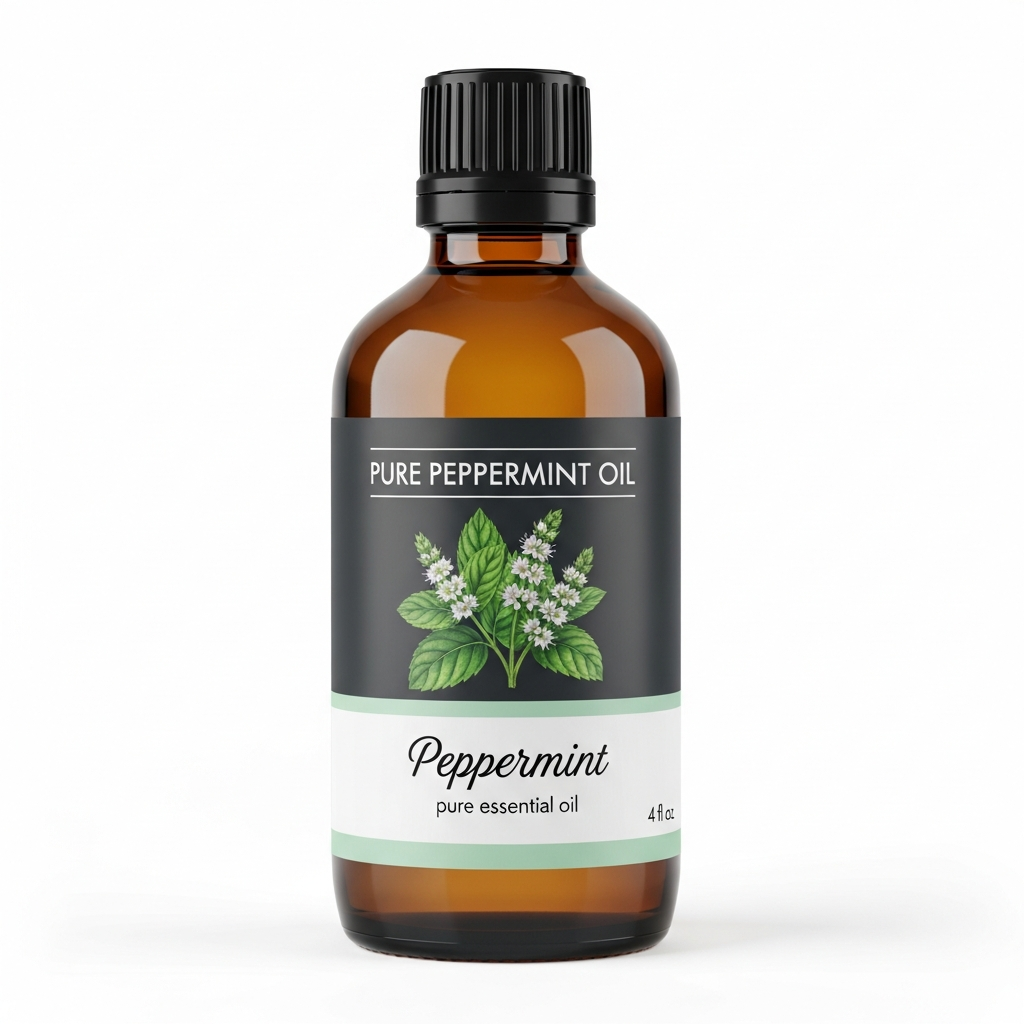
Peppermint Essential Oil
Our own Peppermint Essential Oil, in sizes from 0.5 oz to bulk.
From $10.99
Shop Now →The word "essential" in essential oil does not mean the oil is especially important or indispensable. It refers to the oil carrying the "essence" of the plant: its characteristic scent compounds and volatile constituents. When you crush a fresh peppermint leaf and the cool, sharp fragrance hits your nose, you're smelling those same compounds in their natural home. Distillation captures and concentrates them into a liquid you can work with.
Concentration is the key word. A single pound of finished peppermint essential oil typically requires somewhere between 100 and 250 pounds of plant material, depending on the harvest quality and distillation method. That ratio explains why pure peppermint essential oil is potent enough to cause skin irritation if you apply it undiluted, and why a small bottle goes a surprisingly long way.
Peppermint Oil vs. Peppermint Extract vs. Peppermint Fragrance
These three products share a name and a scent family, but they are not interchangeable.
| Product | What It Is | Primary Uses | Key Difference |
|---|---|---|---|
| Peppermint Essential Oil | Steam-distilled volatile oil from Mentha piperita | Aromatherapy, cosmetics, home care | Highly concentrated; not for internal use in consumer context |
| Peppermint Extract | Peppermint oil diluted in alcohol | Food flavoring and baking | Food-grade; much lower concentration than pure essential oil |
| Peppermint Fragrance Oil | Synthetic or blended scent compound | Candles, soaps, home fragrance | Not a plant extract; chemical composition is entirely different |
When this guide refers to peppermint oil, it means pure steam-distilled peppermint essential oil. The safety guidelines, dilution ratios, and sourcing advice here do not apply to extracts or fragrance oils.
The Botanical Story: Meet Mentha Piperita
A Plant That Couldn't Exist Without Human Help
Mentha piperita is a naturally occurring hybrid. It crossed between two parent species: watermint (Mentha aquatica) and spearmint (Mentha spicata). Because it's a hybrid, peppermint is sterile. It produces little to no viable seed. Every peppermint plant you've ever encountered was grown from a cutting or root division, which means the world's commercial peppermint crop is, in a very real sense, an extended family of clones tracing back to a relatively small number of original plant lines.
That fact has big implications for consistency. When a grower selects a high-menthol variety and propagates it from cuttings, they can reliably reproduce that chemical profile across thousands of acres. Reputable producers take advantage of this to maintain predictable oil quality from harvest to harvest.
Where Peppermint Grows Best
Mentha piperita likes cool climates, moist soil, and plenty of sun. The Pacific Northwest of the United States, particularly the Willamette Valley in Oregon and parts of Washington and Idaho, became the dominant global source of peppermint oil during the twentieth century. At its peak, the U.S. supplied the majority of the world's peppermint oil. India, particularly the Uttar Pradesh region, later became a major producer as well, and today both origins appear commonly in the supply chain.
Other growing regions include parts of Europe (especially England, which gave peppermint some of its earliest commercial cultivation history) and Australia. Each origin produces oil with slightly different chemical nuances. American-grown peppermint tends toward high menthol content and a clean, bright character. Indian-grown peppermint often contains more menthone alongside the menthol, giving a slightly warmer, earthier edge to the scent.
Peppermint Through History
Mint has been part of human culture for thousands of years. Dried mint leaves have been found in Egyptian tombs dating to around 1000 BCE. Greek and Roman writers documented mint's presence in gardens, bathing rituals, and perfumery. The specific hybrid we now call peppermint was formally described in botanical literature by John Ray in 1696, with large-scale cultivation for distillation beginning in Mitcham, Surrey, England in the early 1700s.
By the 1800s, peppermint had become one of the most commercially significant aromatic crops in Europe and North America, valued for its oil's applications in confectionery, personal care products, and household preparations. That commercial legacy is why today's peppermint essential oil industry is one of the most mature and well-documented sectors in the entire aromatics trade.
Cultivars and Varieties
Not all Mentha piperita plants are identical. Over centuries of cultivation, distinct cultivars emerged with different chemical profiles and growth characteristics. A few worth knowing about:
- Black Mitcham Peppermint: The English heritage variety, named for the Mitcham district. Darker stems, traditionally regarded as producing fine-quality oil with excellent aroma complexity.
- Todd's Mitcham: A popular high-yielding American cultivar widely grown in the Pacific Northwest, prized for its reliable high menthol output.
- Cornmint (Mentha arvensis): Technically a different species, but worth mentioning because its oil is sometimes used to produce synthetic menthol or sold as a lower-cost alternative to true peppermint oil. Labels should specify Mentha piperita for the genuine article.
How Peppermint Oil Is Made
For a detailed walkthrough of the full production process from field to bottle, see our dedicated article on how peppermint oil is made. Here is a solid overview to ground your understanding.
The Harvest
Timing matters enormously. Peppermint is harvested just as the plant reaches early flowering stage, typically before the flowers fully open. At that moment, the oil glands in the leaves are producing maximum quantities of volatile compounds. Harvest too early and the yield drops. Harvest too late and menthol content begins to decline as the plant redirects energy toward seed production (even if viable seeds rarely result).
Modern commercial harvests use specialized cutting equipment that chops the plant close to the ground. The cut material is often partially wilted in the field before distillation to reduce water content and improve efficiency, though some producers prefer fresh distillation for particular aromatic results.
Steam Distillation
Steam distillation is the industry-standard production method for peppermint essential oil. Here's the core process:
- Plant material is loaded into a large still vessel called a retort or still pot.
- Steam is passed through the plant material, either from below (direct steam) or through a separate steam inlet.
- The heat causes the plant's oil glands to rupture, releasing volatile aromatic compounds.
- Those compounds rise with the steam through a condenser, where cooling water causes the steam to return to liquid form.
- The resulting liquid separates in a collection vessel called a Florentine flask. Because peppermint oil is lighter than water, it floats on top and can be drawn off.
- The water that remains is aromatic peppermint hydrosol, also known as peppermint hydrolate, which has its own cosmetic applications.
The distillation time affects quality. A shorter distillation run captures the lightest, most volatile top notes. Longer runs pull heavier compounds from the plant. Skilled distillers manage timing carefully, sometimes separating early-run fractions from later ones to achieve different aromatic profiles or to meet specific buyer specifications.
Cold Expression: Not Used for Peppermint
You may have seen cold-pressed or cold-expressed citrus oils in shops. That method physically presses oil from the peel of citrus fruits. It does not work for peppermint because the oil is held in microscopic glands in the leaf tissue, not in a thick outer layer. Steam distillation is the appropriate and essentially universal method for peppermint essential oil production.
CO2 Extraction
A smaller segment of the market offers CO2-extracted peppermint oil, produced using supercritical carbon dioxide as a solvent. The resulting oil is sometimes described as having a particularly full, fresh aromatic profile that closely resembles the live plant. CO2-extracted peppermint oil remains a niche product and commands a price premium, but it is worth knowing exists if you encounter it.
Inside the Bottle: The Chemistry of Peppermint Essential Oil
What gives peppermint oil its distinctive character is a specific blend of chemical compounds, most of them in a class called terpenoids. Gas chromatography and mass spectrometry (GC-MS) testing allows chemists to identify and quantify each compound in a given oil sample. Reputable producers make GC-MS reports available to buyers, and understanding the key compounds helps you interpret those reports.
Menthol: The Star Compound
Menthol is the most abundant and most recognizable compound in peppermint essential oil, typically accounting for 35 to 55 percent of the total composition in high-quality oil. It is a cyclic monoterpenoid alcohol, and its structure includes a hydroxyl group that interacts with cold-sensitive receptors in the skin and mucous membranes. That interaction is what creates the characteristic cooling sensation without any actual change in temperature.
Menthol exists in eight possible structural forms (stereoisomers), but the naturally occurring form in peppermint is l-menthol (also written as (-)-menthol), which is the most potently cooling version. Synthetic menthol used in commercial products can be a mixture of forms. When you see "natural menthol" on a cosmetic label, it usually means it was derived from peppermint or cornmint oil rather than synthesized in a laboratory.
The cooling effect of menthol has made it a sought-after ingredient in cosmetics and personal care products for well over a century. Lip balms, scalp tonics, foot creams, shaving products, and bath preparations all commonly feature menthol or peppermint oil specifically for that sensory quality.
Menthone
Menthone is typically the second most abundant compound in peppermint oil, usually present at 15 to 30 percent. It is a ketone closely related to menthol and contributes a slightly herbal, less sharply cool character to the overall scent. A higher menthone-to-menthol ratio gives an oil a somewhat warmer, mintier depth. Some fragrance applications specifically seek oils with elevated menthone content for blending purposes.
Menthyl Acetate
Present at roughly 3 to 10 percent in most commercial peppermint oils, menthyl acetate is an ester that contributes a softly fruity, slightly floral top note. It's part of what gives freshly distilled peppermint oil its bright, almost sweet edge before the sharper menthol character takes over. Oils with higher menthyl acetate content are often described as "rounder" or "smoother" in scent evaluations.
Other Notable Compounds
| Compound | Typical Range | Aromatic Contribution |
|---|---|---|
| Menthol | 35 to 55% | Sharp, cool, classic mint |
| Menthone | 15 to 30% | Herbal, slightly warm mint |
| Menthyl Acetate | 3 to 10% | Soft, fruity, floral lift |
| 1,8-Cineole (Eucalyptol) | 3 to 8% | Fresh, camphoraceous, slightly medicinal |
| Isomenthone | 2 to 5% | Minty, slightly different character from menthone |
| Menthofuran | 1 to 5% | Sweet, herbaceous; elevated levels may indicate poor quality |
| Pulegone | Less than 4% | Minty, slightly camphor-like; should be low in quality oil |
| Beta-Pinene | 1 to 3% | Fresh, woody, piney |
Industry standards, such as those published by the International Organization for Standardization (ISO 856) and the Essential Oil Association (EOA), specify acceptable ranges for these compounds in genuine peppermint oil. GC-MS testing is how adulteration is detected when producers add synthetic menthol, cheaper cornmint oil, or other materials to bulk out or cheaply boost the apparent quality of a batch.
Why the Chemistry Matters for Everyday Use
You don't need a chemistry degree to use peppermint oil well. But understanding the basic composition helps in a few practical ways. It explains why the oil feels cooling on the skin. It helps you evaluate quality certificates from suppliers. And it clarifies why two bottles labeled "peppermint oil" can smell noticeably different: origin, cultivar, harvest timing, and distillation method all shift the compound ratios within the natural range.
How to Judge Quality and Read a Label
The essential oil market has no single mandatory quality certification that all producers must meet. That puts the responsibility on the buyer to know what signals to look for. Here's a practical checklist.
What a Good Label Tells You
- Botanical name: Should read Mentha piperita. If it just says "peppermint oil" with no Latin name, that's a gap in transparency.
- Country of origin: USA (Pacific Northwest), India, or other named regions. Vague listings like "product of multiple countries" are less ideal for quality tracking.
- Part of plant used: Should be aerial parts, leaves, or flowering tops. Whole plant or unspecified listings are less informative.
- Extraction method: Should state steam distillation.
- Lot or batch number: Allows traceability back to a specific distillation run.
- Volume and concentration: Pure undiluted oil versus a pre-diluted blend should be clearly indicated.
GC-MS Testing and Certificates of Analysis
A Certificate of Analysis (COA) is a document from a third-party laboratory reporting the chemical composition of a specific batch of oil. Reputable suppliers make these available by batch number, either on request or published directly on their website. A COA for peppermint oil should show menthol as the dominant compound in the expected range, along with the other key compounds listed above.
If a supplier cannot provide a COA or directs you to a generic document not linked to a specific lot number, that's worth noting. It doesn't necessarily mean the oil is poor quality, but it does mean less accountability in the supply chain.
Packaging
Pure peppermint essential oil should always be sold in dark glass bottles, either amber or cobalt blue. Ultraviolet light degrades volatile compounds over time, and dark glass significantly slows that process. An oil sold in a clear glass bottle or, worse, a plastic container is either poorly packaged or (in the case of plastic) potentially contaminated by the packaging itself, since peppermint oil's solvent properties can interact with certain plastics.
Price as a Quality Signal
Genuinely pure peppermint essential oil costs money to produce. A half-ounce bottle priced at a dollar or two almost certainly contains adulterated or synthetic oil, a heavily diluted blend, or cornmint oil misrepresented as peppermint. That said, extremely high prices don't automatically signal higher quality. A mid-range price from a transparent, well-documented supplier is usually your best indicator of value.
Certifications Worth Knowing
- USDA Organic: Certifies that the plant material was grown without synthetic pesticides or fertilizers. Worth looking for if sourcing matters to you, though it has no bearing on the oil's aromatic quality per se.
- ISO: International Organization for Standardization publishes specifications for peppermint oil composition. An oil meeting ISO 856 standards falls within the expected natural compound range.
- Non-GMO: Since peppermint is propagated vegetatively, GMO is not currently a real concern in this crop, but some buyers prefer the verification anyway.
What People Use Peppermint Oil For
The range of ways people incorporate peppermint essential oil into daily life is genuinely broad. For a full list of creative applications, see our article on 25 fresh ideas for using peppermint oil at home and for hair. This section covers the main categories.
Aromatherapy and Home Atmosphere
Peppermint oil's sharp, invigorating scent profile makes it one of the most popular choices in home diffusers. A few drops added to an ultrasonic diffuser or a steam diffuser fills a room with a clean, energizing aroma that many people associate with focus and mental freshness. Some people run a diffuser with peppermint oil in a home office during long work sessions, reporting that the scent keeps the space feeling alert and ventilated rather than stale.
Blending is where diffuser use gets interesting. Peppermint pairs well with eucalyptus for a crisp, spa-like atmosphere. It complements citrus oils like lemon and sweet orange for a bright, uplifting blend. With lavender, it creates a contrast that some find more complex and less sharply cool than peppermint alone. With rosemary, the combination feels intensely herbal and focused.
"Peppermint in a diffuser is like cracking open a window in a room that's been closed all week. Instant freshness." A common description from essential oil users, and one that captures exactly what the scent does to a space.
Hair and Scalp Care
This is one of the most popular personal care applications for peppermint essential oil, and it has genuine science behind the experience (if not yet the clinical outcomes). The menthol in peppermint oil produces a pronounced tingling sensation on the scalp when properly diluted in a carrier oil, and many people find this sensation stimulating and refreshing as part of a weekly scalp routine.
Some research in cosmetic science has explored peppermint oil's potential to support scalp circulation and hair follicle environment. The findings are early and observational, but they have generated significant interest. For a detailed, step-by-step routine, see our guide on peppermint oil for hair and scalp.
A standard starting point for a scalp application is 2 to 3 drops of peppermint essential oil per tablespoon of carrier oil (such as jojoba or fractionated coconut oil). Always perform a patch test first. The tingle is expected; a burning sensation means the dilution is too high or a sensitivity is present.
Skin and Body Care
Properly diluted peppermint oil appears in a wide range of cosmetic products, from foot creams and body scrubs to cooling mists and muscle rubs (used for their sensory, not structural, effects). The cooling sensation makes it a natural fit for products designed to feel refreshing after exercise or during warm weather.
DIY cosmetic makers often add peppermint oil to homemade lip balms, foot soaks, and body lotions. The key rule is consistent: dilute properly, patch test first, and don't exceed recommended usage rates. For cosmetic skin applications, most formulation guidelines suggest keeping peppermint oil at 1 percent or below in leave-on products, with up to 3 percent sometimes used in rinse-off products. Some individuals with sensitive skin may need even lower concentrations.
Home Cleaning and Freshening
Outside of personal care, peppermint oil has a long history of use in household cleaning and freshening preparations. Its crisp, clean scent makes it effective at masking odors in trash areas, laundry rooms, and pet spaces. Adding 10 to 15 drops to a spray bottle with water and a small amount of witch hazel creates a surface spritz that leaves a clean, minty scent.
A few drops on cotton balls placed in closets, drawers, or near entry points is a traditional approach for making indoor spaces smell fresh. Some people place a drop or two on a damp cloth run through the dryer (on a cool setting) to give laundry a clean scent boost.
Bath and Shower Rituals
A small amount of peppermint oil in a bath (always diluted first in a dispersant like unscented liquid castile soap or full-fat milk before adding to bathwater) creates a noticeably invigorating bathing experience. The steam amplifies the aromatic effect, making it a popular choice for a morning wake-up bath ritual.
For shower use, a few drops on the floor of the shower (away from where you stand directly, to avoid foot contact with undiluted oil) releases a burst of minty steam as hot water activates the volatile compounds. This is an easy, effective way to turn an ordinary shower into a more sensory experience.
Important note: avoid adding undiluted peppermint oil directly to bathwater. The oil doesn't disperse in water and can concentrate on sensitive skin areas, causing significant irritation. Always dilute in a dispersant first.
Candles, Soaps, and Crafting
For candle and soap makers, peppermint essential oil is a perennial favorite. Its strong throw in soy and beeswax candles fills a room effectively. In cold-process and melt-and-pour soap, it retains its scent reasonably well and produces a pleasant cooling sensation on skin contact. Usage rates vary by application and base material; follow established formulation guidelines for soap and candle making to achieve a safe and stable finished product.
Safety First: Who Should Be Careful
Peppermint essential oil is well-loved, but it commands respect. Its high concentration of active compounds means careless use can lead to skin reactions, respiratory irritation, or complications for vulnerable individuals. This section covers the essentials. For a comprehensive breakdown, see our dedicated article on peppermint oil safety basics including dilution and patch testing.
Dilution Is Non-Negotiable
Never apply undiluted ("neat") peppermint essential oil directly to skin. Even people with no known sensitivities can develop skin reactions from undiluted essential oil contact, and repeated exposure to undiluted oil can cause sensitization, making you react to lower and lower concentrations over time.
General dilution guidelines for adults, following IFRA and industry standards:
- Face: 0.5 to 1 percent dilution (1 to 2 drops per tablespoon of carrier oil)
- Body leave-on products: 1 to 2 percent dilution (2 to 4 drops per tablespoon of carrier oil)
- Rinse-off body products: up to 3 percent in some formulations
- Scalp application: 2 to 3 percent for short-contact routines (see scalp guide for full protocol)
- Diffuser: 3 to 5 drops per 100ml of water as a starting point, in a ventilated room
Patch Testing
Before using any diluted peppermint preparation on a larger skin area, perform a patch test. Apply the diluted blend to a small area inside the forearm, cover lightly, and wait 24 hours. If no redness, burning, or itching occurs, the preparation is likely suitable for that individual at that concentration. Patch testing should be repeated whenever you change your dilution ratio or carrier oil.
Children Under Two
Peppermint essential oil is not recommended for use on or around children under two years of age. The menthol content poses specific concerns for very young children. For older children, dilutions should be significantly lower than adult concentrations. Always consult a qualified healthcare provider before using essential oils with children of any age.
Pregnancy and Nursing
Peppermint essential oil use during pregnancy and nursing is a topic where individual circumstances vary. The general guidance is to exercise caution and consult a qualified healthcare provider before using peppermint oil aromatically or topically during these periods. Diffuser use in a well-ventilated space is generally considered lower risk than topical application, but professional guidance is always the right first step.
Sensitivity and Pre-Existing Skin Conditions
Individuals with sensitive skin, reactive skin, or certain pre-existing skin concerns should begin with very low dilutions and patch test carefully. Peppermint oil is a known potential sensitizer for some people. Discontinue use if any irritation occurs and consult a healthcare provider if the reaction is significant.
Eyes and Mucous Membranes
Keep peppermint essential oil well away from the eyes, inner ears, and other mucous membrane areas. Even diluted preparations can cause intense irritation in these areas. If contact with eyes occurs, flush immediately with a carrier oil (not water, which won't displace an oil-based compound) and seek medical attention if discomfort persists.
Pets: A Separate and Important Concern
Peppermint oil requires particular caution in homes with pets. Dogs and cats metabolize aromatic compounds very differently from humans, and what is safe for a person can be a concern for an animal. For full, species-specific guidance, see our dedicated articles on peppermint oil safety for dogs and peppermint oil safety for cats. The short version: ensure good ventilation, keep neat oil completely out of reach, and consult your veterinarian before diffusing essential oils in a home with pets.
Always Consult a Healthcare Provider
Nothing in this guide constitutes medical advice. If you have specific health concerns or are managing any condition, speak with a qualified healthcare professional before adding essential oils to your routine.
Buying, Storing, and Getting the Most from Your Bottle
Where to Buy
Peppermint essential oil is available through health food retailers, specialty aromatherapy shops, online marketplaces, and direct from distilleries or importers. Each channel has trade-offs.
- Direct from a distiller or specialty importer: Best transparency, often best value for quality. You can typically access full documentation including GC-MS reports.
- Health food and natural grocery stores: Convenient, curated selection, usually from established brands. Less opportunity to review documentation before purchase.
- Online marketplaces: Wide selection and competitive pricing, but requires more due diligence. Look for brands with accessible batch documentation and clear labeling.
- Discount or general retail: Proceed with caution. Extremely low prices almost always indicate either adulteration or a completely different product category (fragrance oil, not essential oil).
Bottle Sizes and Cost Efficiency
Peppermint essential oil is typically sold in sizes ranging from 5ml (roughly 100 drops) to 1 ounce to 4 ounces for consumer use, with larger bulk sizes available for professional or high-volume buyers. A 5ml or 10ml bottle is a sensible starting size for a first purchase, particularly before you know how a specific oil's scent profile works for your preferences. If you use peppermint oil regularly for diffusing, hair care, and cleaning preparations, a 1-ounce bottle is usually more cost-effective per drop.
How to Store Peppermint Essential Oil
Stored correctly, peppermint essential oil has a relatively good shelf life compared to some other essential oils. The high menthol content offers some stability. Here's how to maximize the life of your oil:
- Keep it dark and cool. A cupboard or drawer away from light and heat is ideal. Avoid windowsills, countertops near the stove, or anywhere that sees direct sunlight.
- Seal it tightly. Volatile compounds evaporate. After each use, close the cap firmly. Oxidized peppermint oil smells flatter and may be more likely to cause skin reactions.
- Store upright. Keeping the bottle upright reduces contact between the oil and the dropper insert or cap components, which can degrade over time with prolonged oil contact.
- Consider the refrigerator for long-term storage. For bottles you don't plan to use frequently, refrigerator storage significantly extends shelf life. Allow the bottle to come to room temperature before opening to prevent condensation from entering.
Shelf life for properly stored peppermint essential oil is typically two to three years from distillation date, and sometimes longer. If your oil starts smelling noticeably different from when you first opened it, flatter or more harsh, that's a sign it has begun to oxidize. Oxidized oil is not suitable for skin application and should be retired to a diffuser-only role, or discarded.
Getting the Most from Each Bottle
A few practical habits extend your bottle's value:
- Use a dropper insert rather than pouring from the bottle directly. This reduces the amount of air introduced during each use and gives better control over the number of drops dispensed.
- If you're blending for skincare or hair applications, mix only what you'll use within a reasonable timeframe (a week or two for fresh preparations) rather than making large batches that might oxidize before use.
- Keep a small dedicated bottle for your most-used application (say, a scalp blend already mixed at the right dilution) rather than opening and closing your pure stock bottle every time. This preserves the stock oil longer.
Building a Peppermint Oil Practice
The most satisfying approach to working with peppermint essential oil is a gradual one. Start with diffusing, where the stakes are lowest and the sensory reward is immediate. Once you understand how the oil smells and behaves, move into topical applications beginning at conservative dilution ratios and patch testing at each step. Over time, you'll develop a clear sense of which applications you genuinely use and value, which makes future purchasing decisions far more purposeful.
Peppermint essential oil rewards attentiveness. The difference between a batch sourced from high-altitude Oregon fields and one from the hot plains of Uttar Pradesh is something you can actually detect in the bottle once your nose is trained. That's one of the pleasures of working with pure, unadulterated plant materials: the natural world's variation is part of the experience.
Putting It All Together
Peppermint oil occupies a genuinely unique position in the world of botanical extracts. It combines a centuries-long cultivation and distillation history with a well-documented chemical profile, a scent that is almost universally recognizable, and a range of everyday applications that span cosmetics, home atmosphere, and creative crafting. Very few single-source botanical ingredients are as versatile in as many different contexts.
That versatility comes with responsibility. This is a concentrated, biologically active material. Respecting its potency through proper dilution, careful storage, and thoughtful application is what separates a rewarding experience from an unpleasant one. The more you understand about what's actually in the bottle and where it came from, the better equipped you are to use it confidently and well.
We've covered a lot of ground here. To go deeper on any specific topic, the internal links throughout this guide lead to detailed articles on sourcing, production, hair care routines, pet safety, and dilution protocols. Start where your curiosity is strongest, and build from there.