Peppermint Oil Uses: 25 Fresh Ideas for Home, Hair, and Everyday Energy
Pure peppermint essential oil is one of the most versatile botanicals you can keep on your shelf. Its crisp, cool scent comes from a naturally high menthol content, and that distinctive character opens the door to dozens of practical applications around the house, in your hair care routine, and throughout your day. If you've ever wondered what peppermint oil is good for beyond a passing whiff, this list is your answer.
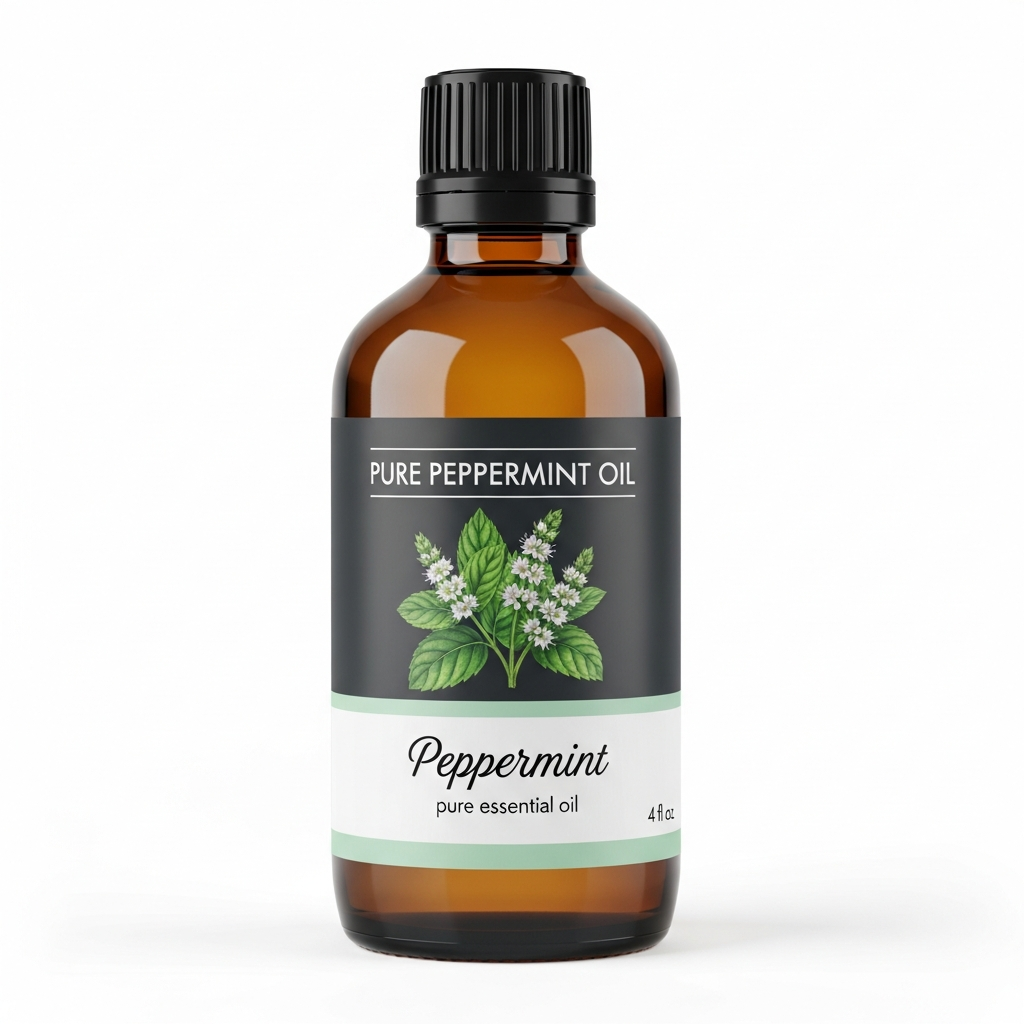
Peppermint Essential Oil
Our own Peppermint Essential Oil, in sizes from 0.5 oz to bulk.
From $10.99
Shop Now →Before diving in, a quick note on safety. Peppermint essential oil is highly concentrated. It should always be diluted in a carrier oil before skin contact, kept away from young children and infants, and used with care around pets. For a thorough grounding in the basics, visit our complete guide to peppermint oil. Now, let's get into the good stuff.
Home Uses
1. Diffuse It for a Crisp Morning Atmosphere
Adding five to seven drops of peppermint essential oil to an ultrasonic diffuser fills a room with a clean, invigorating scent that makes any morning feel more intentional. The cool menthol note cuts through stale overnight air and sets a focused, alert tone before the day begins.
Diffusing works best in smaller rooms where the mist can circulate fully. Run the diffuser for 30 to 60 minutes rather than continuously, which gives the scent room to breathe and prevents olfactory fatigue.
Practical takeaway: Start with 5 drops in a standard 200 ml diffuser and adjust from there. Less is often more with peppermint.
2. Create a Focused Work Environment
Many people find that the scent of peppermint oil supports a sense of mental clarity during work or study sessions. Anecdotal evidence suggests it helps people feel more present and attentive, which is why it has become a popular choice for home offices and creative studios.
You don't need a diffuser for this one. Place a drop or two on a small piece of unbleached wool felt and set it near your keyboard. The scent releases gradually without overpowering your space.
Practical takeaway: Swap peppermint into your work-from-home scent rotation a few times a week to keep the effect feeling fresh.
3. Freshen Fabric and Upholstery
A simple linen spray made with distilled water, a small amount of witch hazel, and 15 to 20 drops of peppermint essential oil per 4-ounce bottle can refresh sofa cushions, curtains, and throw blankets between washes. Shake before each use and mist lightly from about 12 inches away.
Peppermint's naturally clean scent profile layers well with other botanical oils if you want more complexity. Try combining it with spearmint or eucalyptus for a spa-adjacent atmosphere.
Practical takeaway: Always test on a hidden section of fabric first. Some delicate fibers can be sensitive to even diluted botanical sprays.
4. Deodorize the Kitchen Naturally
Kitchens collect scents fast. Garlic, fish, and yesterday's takeout all linger in ways that synthetic air fresheners only mask. A few drops of peppermint essential oil on a cotton ball tucked near the trash can or placed inside a cabinet works differently: the cool, green scent genuinely competes with and neutralizes odor molecules in the air.
You can also add a drop of peppermint to your dishcloth rinse water for a light, clean fragrance that carries through to wiping down counters. It leaves surfaces smelling noticeably fresher.
Practical takeaway: Replace cotton balls every two to three days for continuous freshness.
5. Scent Your Cleaning Routine
Peppermint essential oil pairs beautifully with simple homemade cleaning solutions. Add 10 drops to a spray bottle with white vinegar and water for a surface spray that smells genuinely pleasant rather than clinical. The scent motivation alone can make cleaning feel like less of a chore.
Note that vinegar-based cleaners are not recommended for natural stone surfaces like marble or granite. Stick to water and a small amount of castile soap on those.
Practical takeaway: Keep a labeled spray bottle pre-mixed so cleaning is one less barrier to overcome.
6. Refresh Your Car Interior
Car air fresheners from the shop tend to run sweet and synthetic. A small clay diffuser disc or a few drops on a wooden clothespin clipped to a vent gives your car a clean, brisk scent that feels more considered. Peppermint holds up well in warm environments, making it particularly effective in a sun-heated vehicle.
Rotate scents occasionally so the effect stays noticeable. Our noses adapt quickly to consistent smells, so a break of a week or two keeps the freshness perceptible.
Practical takeaway: Two to three drops on a clay disc lasts approximately three to four days of regular driving.
7. Scent Homemade Candles and Wax Melts
If you make candles at home, peppermint essential oil is a reliable scent choice that performs well in soy and beeswax bases. Add it at the proper fragrance load for your wax type, typically around 6 to 10 percent, and allow a full cure time of 48 hours before burning for the cleanest scent throw.
Peppermint can be tricky in candles because menthol is volatile. Consider blending it with a slightly heavier botanical note like cedarwood or vanilla to give it staying power through the burn cycle.
Practical takeaway: Always follow candle-making safety guidelines and research the flash point of any essential oil before adding it to wax.
8. Elevate Your Yoga or Meditation Space
A pre-session diffusion of peppermint creates a sense of arrival in your practice space. The scent signals a shift in mental gear, which many people find supports focus during breathwork or movement sequences. It's particularly popular for morning yoga flows.
Keep the diffusion brief and light for this application. Peppermint is stimulating rather than settling, so heavier use before a restorative or evening practice may feel counterproductive to a wind-down intention.
Practical takeaway: Use peppermint for energizing morning practices and switch to softer scents like lavender for evening sessions.
Hair and Scalp Uses
9. Add It to Your Shampoo
One of the most popular peppermint essential oil uses in personal care is adding it directly to shampoo. Two to three drops per wash, mixed into a palm-sized amount of your regular shampoo, creates a tingly, cooling scalp sensation that feels genuinely refreshing under a warm shower.
The menthol creates a gentle cooling effect on the scalp by stimulating cold receptors in the skin. It doesn't change the temperature of the water; it changes how the scalp perceives it. This makes morning showers feel more bracing and wake-up-worthy.
Practical takeaway: Do not add peppermint oil directly into the full shampoo bottle unless you know the dilution ratio stays under 1 percent. It's safer to add per wash.
10. Create a Pre-Shampoo Scalp Massage Oil
Blending two to three drops of peppermint essential oil into a tablespoon of jojoba or fractionated coconut oil makes a lightweight scalp massage blend. Work it in with fingertip circles for five minutes before shampooing, then wash out as normal.
Some research suggests that regular scalp massage (regardless of the oil used) may support circulation to the follicle area. Adding peppermint layers in the sensory experience and makes the ritual genuinely enjoyable rather than purely functional.
Practical takeaway: Always patch test any new oil blend on your inner arm before applying to the scalp, particularly if your skin runs sensitive.
11. Refresh a Dry Shampoo Application
Commercial dry shampoos often smell powdery or starchy. Adding a tiny drop of peppermint oil to the roots after a dry shampoo application lifts the scent profile considerably and gives the impression of freshness between washes. Use sparingly: a single drop distributed through fingertips is usually sufficient.
This approach works especially well for people with fine hair who find heavy dry shampoos weigh their roots down. Peppermint oil is light enough that a minimal amount doesn't add noticeable texture or residue.
Practical takeaway: Rub the drop between your palms first to warm it slightly, then press gently at the roots rather than dragging through lengths.
12. Blend Into a Deep Conditioning Mask
Rich conditioning masks benefit from a peppermint boost. Stir two drops into a tablespoon of your mask before applying, and the tingling sensation keeps the experience lively during the 10 to 20 minute wait time. It also helps counterbalance the heavy, sometimes sweet scent of most commercial masks.
Keep the blend away from eyes and the hairline area if your skin tends to react to menthol. The cooling sensation is pleasant on the scalp but can be intense on thinner facial skin.
Practical takeaway: Limit this to once a week maximum to avoid overloading the scalp with oil-based products.
13. Scent a DIY Hair Rinse
A final cool-water rinse is a classic hair care step for sealing the cuticle and adding shine. Drop five drops of peppermint essential oil into a 16-ounce cup of cold water for a lightly scented rinse that amplifies the cool sensation and leaves hair smelling clean and botanical.
This works particularly well after a rich conditioning treatment when you want to close the cuticle and remove any residual heaviness. The scent lingers softly once hair dries.
Practical takeaway: Shake the cup immediately before pouring to distribute the oil as evenly as possible through the water.
Everyday Energy and Personal Ritual Uses
14. Morning Shower Steam Ritual
Dropping two to three drops of peppermint essential oil onto the shower floor just before stepping in creates an instant steam diffusion effect. The hot water releases the menthol into the air and the shower becomes a brief sensory experience rather than just a practical task.
This is one of the simplest peppermint oil uses with a high reward-to-effort ratio. No equipment needed. The effect lasts for the full duration of a typical shower and rinses away completely.
Practical takeaway: Place the drops near the drain, not directly underfoot, to avoid any skin contact with undiluted oil.
15. DIY Cooling Body Spray
A body mist made with distilled water, aloe vera juice, and properly diluted peppermint essential oil (staying at or below 1 percent dilution for body spray use) makes a refreshing mid-day spritz. People particularly enjoy it after outdoor activities or during warm weather.
The menthol creates that cooling signal on the skin, which makes the spray feel genuinely refreshing even when the air is warm. Shake well before each use since oil and water always need redistribution.
Practical takeaway: Avoid spraying near the face, eyes, or any sensitive areas. Store in a cool, dark place for best shelf life.
16. Aromatherapy Inhaler for On-the-Go Freshness
Personal aromatherapy inhalers (small cotton-wick tubes available from most natural product suppliers) are one of the most portable and practical peppermint essential oil uses. Add 10 to 15 drops to the cotton wick, seal the tube, and carry it in a bag or pocket for a quick scent moment whenever you need a mental reset.
These are commonly used before presentations, during long commutes, or at any moment when you want a sensory signal to shift gears. The scent stays potent for several weeks before the wick needs refreshing.
Practical takeaway: Label your inhaler with the date it was made so you know when to refresh it.
17. Elevate Your Foot Soak
A warm foot soak with five to eight drops of peppermint essential oil stirred into the water (always mix into a carrier like Epsom salts first to help disperse the oil) creates a noticeably refreshing experience. The cooling effect of menthol on the feet is one of the more satisfying sensations in any home spa ritual.
This is a simple indulgence that works well as an end-of-day wind-down for people who are on their feet all day. The scent in the rising steam adds an aromatic dimension beyond just the water temperature.
Practical takeaway: Blend peppermint drops into a tablespoon of carrier oil or a cup of Epsom salts before adding to the water to avoid direct skin contact with undiluted oil.
18. Scent a DIY Lip Balm
Peppermint essential oil is a classic choice for homemade lip balms. At a very low dilution (around 0.5 to 1 percent in a finished balm), it adds a familiar tingle and a clean botanical scent that most people find appealing. A standard beeswax-and-shea-butter base takes peppermint beautifully.
The lips are sensitive, so staying at the low end of the dilution range is important. More peppermint does not mean better results; it means a higher chance of irritation. For children, skip peppermint entirely in lip products.
Practical takeaway: For a 10 ml lip balm batch, start with just two drops and adjust upward slowly across batches until you find your preferred strength.
19. Add to a Roll-On Perfume Blend
Peppermint essential oil works well as a top note in botanical perfume blends. Its crispness brightens earthy base notes like vetiver or sandalwood and adds lift to heart notes like rose or jasmine. A 10 ml roller bottle filled with jojoba oil and a custom blend that includes peppermint makes a genuinely unique personal fragrance.
Start with a ratio of roughly 10 to 15 total drops of essential oil in a 10 ml roller for a skin-safe dilution, with peppermint making up no more than two to three of those drops so it accents rather than dominates.
Practical takeaway: Apply roll-ons to pulse points but avoid the face, underarms, and any sensitive areas for most botanical blends.
20. Make a Scented Drawer Sachet
Placing a few drops of peppermint essential oil on a small square of fabric or into a sachet filled with dried botanicals keeps dresser drawers smelling clean and fresh. This is particularly appealing for linen drawers, where the cool green scent complements white cotton and muslin beautifully.
Refresh the drops every two to four weeks as the scent fades. The dried botanical base (lavender buds or cedar chips work well alongside peppermint) helps absorb and slowly release the oil over time.
Practical takeaway: Keep sachets away from direct contact with silk or any delicate dyed fabric, as undiluted oil can leave a mark.
21. Scent a DIY Beard Oil
For those who use beard oil, adding one to two drops of peppermint essential oil per tablespoon of a carrier like argan or sweet almond oil creates a fresh, botanical scent profile that's notably different from the cedar-and-spice mainstream. The scalp-like sensation also carries a mild cooling feel to the skin underneath the beard.
Keep dilutions conservative for facial skin, which is generally more reactive than body skin. One drop per tablespoon is a safe starting point before deciding whether to adjust.
Practical takeaway: Patch test on the neck before applying to the full beard area, particularly for those with reactive skin.
22. Layer Into a Hand Lotion
Adding one or two drops of peppermint essential oil to a pump of unscented hand lotion before applying creates a cooling, refreshing hand-care moment that feels quite different from a standard moisturizing routine. It's a small sensory upgrade with very little effort.
The menthol evaporates relatively quickly from the skin's surface, so the cooling sensation is a brief and pleasant one rather than a lingering intensity. Most people find it perfectly pleasant; those with very sensitive skin may prefer to skip or reduce further.
Practical takeaway: Never add essential oils to leave-on products at more than 1 percent dilution for general use on the hands and body.
23. Scent a Homemade Exfoliating Scrub
A simple sugar or salt scrub made with coconut oil, granulated sugar, and five to eight drops of peppermint essential oil per 4-ounce batch makes a cost-effective body scrub with a refreshing scent payoff. The physical exfoliation combined with the menthol sensation creates a noticeably invigorating experience in the shower.
Keep these scrubs away from the face and any broken or abraded skin. Sugar scrubs melt quickly in a wet shower, so store them in a wide-mouth jar with a lid that's easy to open with wet hands.
Practical takeaway: Use within four weeks for best freshness when using fresh coconut oil as a base.
24. Pet Area: Proceed With Careful Research
Peppermint oil appears in a lot of DIY home blogs as a general-purpose addition to pet bedding or living areas. The reality is more nuanced. Cats and dogs have very different sensitivities to essential oils, and peppermint specifically warrants real caution.
Before using any essential oil in a space shared with animals, read up carefully. Our guide on peppermint oil safety for dogs and our separate resource on peppermint oil safety for cats cover the specific concerns in detail. Always consult your veterinarian before introducing any new aromatic product into a pet's environment.
Practical takeaway: When in doubt, keep peppermint oil diffusion and application in rooms your pets do not access.
25. Build a Seasonal Scent Ritual
Peppermint essential oil has an almost universal association with cool weather and the winter holiday season. Leaning into this in your home scenting practice, layering peppermint with warm notes like cinnamon leaf, clove bud, or balsam fir in a diffuser blend, creates a genuinely evocative seasonal atmosphere that feels crafted rather than generic.
Conversely, using peppermint on its own or with citrus in summer positions it as a cooling, bright counterpoint to warm weather. It's a year-round oil when you let the supporting notes do the seasonal work.
Practical takeaway: Keep a small notebook of blend ratios you enjoy so you can recreate your favorites without guesswork each season.
A Few Words on Sourcing and Quality
Not all peppermint essential oils are created equal. What is peppermint oil good for ultimately depends on whether you're starting with a quality product. Look for oils that list the botanical name (Mentha x piperita) on the label, come in dark glass bottles, and have a clearly stated country of origin. GC/MS testing (gas chromatography-mass spectrometry) from a third-party lab is a strong indicator of purity and is worth seeking out.
Adulterated peppermint oils are more common than many buyers realize. Synthetic menthol, corn mint oil, and diluted carriers can all be passed off as pure peppermint oil to the untrained nose. Buying from a supplier who is transparent about their sourcing and testing is the single most important decision you can make when exploring any of the peppermint essential oil uses on this list.
With a quality bottle on your shelf, these 25 ideas are just a starting point. Peppermint oil is one of those rare botanicals that earns its place in a daily routine not because it does one thing well, but because it does so many ordinary things in a way that feels genuinely fresh.
Safety reminder: Always dilute peppermint essential oil before skin application. Keep away from infants, young children, and pets unless you have confirmed with a qualified professional that use is appropriate. If you are pregnant, nursing, or managing any health condition, consult a qualified healthcare provider before using essential oils.