
Peppermint Oil and IBS: The Studied Capsule Is Not a Bottle
The peppermint oil that has been tested for irritable bowel syndrome is a capsule made to open lower in the gut, taken by adults under study conditions, and it is not the same thing as a bottle of essential oil. Our oils are sold neat, are labelled not for internal use, and we sell no capsules. Whether any peppermint product has a place in a person's IBS plan is a decision for a doctor or gastroenterologist.
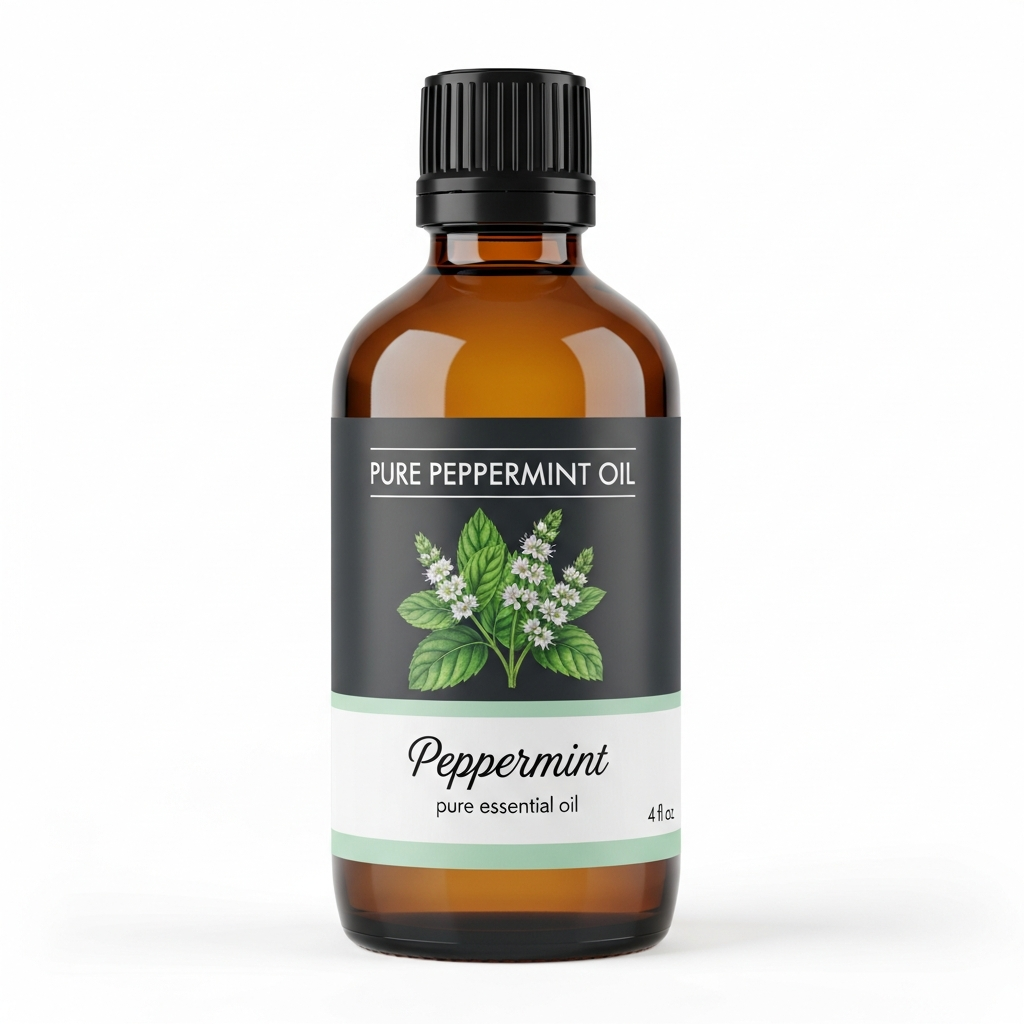
Peppermint Essential Oil
Our own Peppermint Essential Oil, in sizes from 0.5 oz to bulk.
From $10.99
Shop Now →What the guideline says, as reported
NCCIH, May 2025 reports that the 2021 American College of Gastroenterology guideline "recommended the use of peppermint oil for relief of overall IBS symptoms", and that enteric-coated formulations might help with acid reflux and indigestion side effects. NCCIH's own phrasing is that peppermint oil in enteric-coated capsules may improve IBS symptoms in adults. We attempted to read the guideline's peppermint statement directly, and the journal page and the college's own site would not open, so we could not verify its wording or its strength of recommendation, so we pass on only what NCCIH says it says. "Enteric-coated" means the capsule shell is built to resist stomach acid and release its contents further down. The shell is the point: it is the reason the capsule is a different product from the oil in a dropper bottle.
What the two meta-analyses counted
Alammar and colleagues, 2019, in BMC Complementary and Alternative Medicine, pooled 12 randomized trials with 835 adults, all of enteric-coated peppermint oil. For global symptom improvement, seven trials (253 patients on peppermint, 254 on placebo) gave a risk ratio of 2.39 (95% CI 1.93 to 2.97), with an NNT of about 3 (NNT is the number of patients who need the capsule for one extra person to improve; a lower number means a larger effect). For abdominal pain, six trials gave 1.78 (1.43 to 2.20). Adverse events occurred in 9.3% of peppermint patients (32 of 344) and 6.1% of placebo patients (20 of 327), a difference that was not statistically significant (RR 1.40, 0.87 to 2.26); reported events were mostly mild, with heartburn the most common. The trials ran 2 to 12 weeks. The review's own limits: six of the 12 studies lost more than 10% of participants, two were industry-funded and rated high risk of bias, randomisation and allocation concealment were unclear in most, and several did not use validated IBS diagnostic criteria.
Ingrosso and colleagues, 2022, in Alimentary Pharmacology & Therapeutics, updated an earlier analysis, searching to April 2022 and finding 10 trials with 1,030 patients. Peppermint oil beat placebo on global symptoms (risk of not improving 0.65, NNT 4) and on abdominal pain (0.76, NNT 7). Adverse events were more frequent with peppermint oil (RR 1.57, 95% CI 1.04 to 2.37). The authors rated the evidence quality as very low and called for adequately powered trials.
| Alammar 2019 | Ingrosso 2022 | |
|---|---|---|
| Trials / patients | 12 / 835 | 10 / 1,030 |
| Global symptoms | NNT about 3 | NNT 4 |
| Abdominal pain | RR improving 1.78, NNT about 4 | NNT 7 |
| Adverse events | not significantly different | more frequent with peppermint (RR 1.57) |
| Evidence rating | GRADE high for global symptoms, moderate for pain, low for adverse events | "very low" quality |
These two reviews disagree about harm and about how sure to be. Both used capsules, and both pooled trials in adults. That disagreement, three years apart, is a good reason not to read either number as a promise.
Why the capsule is not the bottle
- It is a medicine product. The NHS describes peppermint oil capsules as an antispasmodic medicine for stomach cramps and bloating, especially in IBS, bought from a pharmacy or on prescription, and says capsules should be kept two hours apart from indigestion medicines. The labelled dose on a licensed capsule is for that capsule; we do not repeat a dose here because it does not transfer to anything else.
- Delivery. NCCIH, May 2025 says capsules are often enteric-coated to reduce the likelihood of heartburn, and lists heartburn, nausea, abdominal pain and dry mouth as possible side effects of oral peppermint oil. Our reasoning from that: neat oil without a coating releases in the stomach and mouth, which is where those side effects would show up. This is inference from the coating's stated purpose, not a trial result.
- Different oil, different label. Our shop copy says "not for internal use" and "never take internally". Our certificate of analysis is a single refractive index for a piperita sample, and the GC-MS report is for the cornmint oil in chemical-family totals. Neither is a specification for something to swallow, and we publish no pulegone figure for either oil.
- Interactions. NCCIH advises talking to your health care provider if you take any medicine. That advice is general, not specific to us, and applies to oral use.
What to do with an IBS question
The NHS IBS symptoms page lists tummy pain or cramping, bloating, diarrhoea and constipation as the main symptoms. It says to see a GP if you think you may have IBS and symptoms have lasted more than four weeks, so they can check and rule out other conditions. It says to ask for an urgent GP appointment or call 111 if you have lost a lot of weight for no reason, are bleeding from the bottom or have bloody diarrhoea, find a hard lump or swelling in your tummy, or have shortness of breath, noticeable heartbeats or unusually pale skin. Those are the signs a bottle of anything should not be standing in for.
If a clinician suggests a peppermint oil capsule, they will name a product, a dose and a duration, and they can account for your other medicines and for reflux. That conversation is the whole point. The correct purchase is the product they name, from a pharmacy.
If you have swallowed essential oil or a child has, call Poison Help at 1-800-222-1222. On our side, we can talk about oils for fragrance, soap and candles, and we make no medical claims about them.
For related reading: why we say never to swallow essential oil, what the nausea trials measured, peppermint oil safety basics, and an honest look at claimed benefits.
One practical note for anyone who makes or sells products with our oils: an IBS or digestive claim on a label, a web page or a social post is an intended-use statement, and the FDA says intended use is what separates a cosmetic from a drug. A product-safety attorney or regulatory consultant, not a supplier, is the person to ask about a label.
The capsule studied for IBS and the bottle on a shelf share a plant and not much else.
Peppermint Essential Oil
Peppermint Essential Oil from our own shop, in sizes from 0.5 oz to bulk.
From $10.99
Shop Now →Sources & Further Reading
- Alammar N, Wang L, Saberi B, et al, 2019. The impact of peppermint oil on the irritable bowel syndrome: a meta-analysis of the pooled clinical data. BMC Complement Altern Med 19:21. pmc/PMC6337770
- Ingrosso MR, Ianiro G, Nee J, et al, 2022. Systematic review and meta-analysis: efficacy of peppermint oil in irritable bowel syndrome. Aliment Pharmacol Ther 56(6):932-941 (abstract record via Europe PMC, PMID 35942669). europepmc/35942669
- National Center for Complementary and Integrative Health, May 2025. Peppermint Oil: Usefulness and Safety (reporting the 2021 ACG IBS guideline). nccih.nih.gov
- NHS. About peppermint oil. nhs.uk/medicines/peppermint-oil
- NHS. Irritable bowel syndrome (IBS): symptoms. nhs.uk/conditions/ibs
- U.S. Food and Drug Administration. Is It a Cosmetic, a Drug, or Both? (Or Is It Soap?). fda.gov/cosmetics