
Food Grade vs Cosmetic Grade Peppermint Oil: What the Labels Really Mean
Walk the essential oil aisle at any health store and you will find peppermint oil labeled half a dozen different ways. "Food grade peppermint oil." "Cosmetic grade." "Therapeutic grade." "100% pure." These phrases sound meaningful, but some are regulated terms with real teeth, and others are marketing language with no official definition behind them. Knowing which is which saves you money and keeps you from buying the wrong product for your purpose.
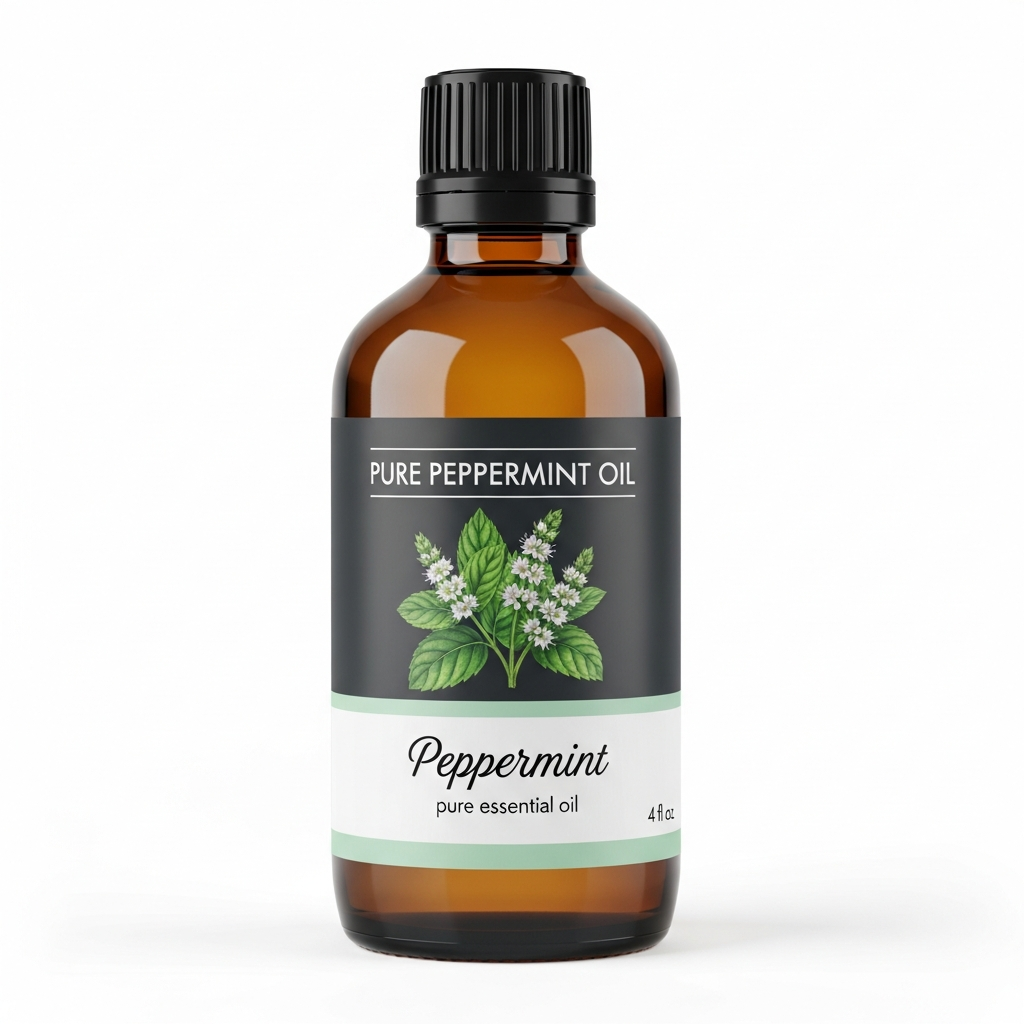
Peppermint Essential Oil
Our own Peppermint Essential Oil, in sizes from 0.5 oz to bulk.
From $10.99
Shop Now →This guide breaks down what peppermint oil grades actually mean, what quality indicators matter on a label, and how to match the right grade to what you are actually planning to do with it.
The Grade System: Regulated vs. Marketing Terms
Start here, because this distinction shapes every buying decision that follows.
Food Grade: A Real Regulatory Category
"Food grade" is not a phrase a company made up to sound premium. In the United States, peppermint oil intended for use in food or beverages must meet standards set by the Food and Drug Administration (FDA) and is classified as Generally Recognized as Safe (GRAS) when used in specified applications. The Food Chemicals Codex (FCC) publishes detailed purity specifications for food-grade peppermint oil, including acceptable ranges for menthol content, specific gravity, refractive index, and the absence of adulterants such as synthetic menthol or carrier oils.
Food grade oils are also subject to Good Manufacturing Practice (GMP) requirements. That means documented sourcing, testing protocols, and traceable batch records. When a brand sells a peppermint oil labeled food grade, they are making a claim that carries regulatory weight. If the product does not meet those standards, they are exposed to serious legal risk.
For consumers, this matters because food grade peppermint oil has undergone a level of third-party scrutiny that cosmetic grades are not always required to meet.
Cosmetic Grade: High Quality, Different Focus
Cosmetic grade peppermint oil is formulated and tested for use in personal care products: lotions, balms, scrubs, shampoos, soaps, and similar applications. The standards here are set by the cosmetics industry and, in the US, fall under FDA oversight for cosmetic products rather than food products.
A good cosmetic grade oil is still pure and high quality. The difference is in what it has been tested for. Cosmetic grade testing typically focuses on skin safety, absence of heavy metals, and microbial limits relevant to topical use. It is not necessarily tested against FCC purity specifications for ingestible use.
This does not make cosmetic grade inferior for its intended purpose. A peppermint oil blended into a lip balm or a scalp scrub does not need to meet the same specifications as one used to flavor peppermint candy. The grades reflect different end uses, not a simple quality hierarchy.
"Therapeutic Grade": A Marketing Term, Not a Standard
No government agency, no independent standards body, and no scientific organization defines or certifies "therapeutic grade" essential oils. The term was coined and trademarked by individual companies and has since been widely adopted as a marketing phrase across the industry.
That does not mean every oil labeled this way is poor quality. Some brands that use the term also invest in rigorous third-party testing. The problem is that the term itself tells you nothing verifiable. When evaluating any peppermint oil labeled "therapeutic grade," look past the phrase to the actual quality documentation behind the product.
What to Look for on a Peppermint Oil Label
A well-designed label from a reputable brand communicates specific, verifiable information. Here is what to look for, and what to read carefully.
Botanical Name
The label should list the full botanical name: Mentha x piperita. This is the standard hybrid species used for peppermint oil production. If a label lists only "peppermint oil" with no botanical name, that is a minor yellow flag. It is not necessarily a dealbreaker, but reputable brands almost always include this detail.
Country of Origin
Peppermint oil origin shapes the chemical profile of the finished oil significantly. The Pacific Northwest of the United States (particularly the Yakima Valley in Washington and the Willamette Valley in Oregon) produces oil with a bright, clean menthol character that many perfumers and flavor houses prefer. Indian peppermint oil tends to be higher in menthol content overall, which suits certain flavor applications. For a deeper look at how geography shapes quality, see our guide on Yakima, Willamette, and India: how origin shapes peppermint oil character.
Extraction Method
Pure peppermint oil should be steam distilled. This is the gold standard method for capturing the volatile aromatic compounds in the plant without chemical solvents. If a label does not specify extraction method, contact the brand and ask. The answer matters.
Batch-Specific Testing and Certificate of Analysis
This is the single most important quality indicator for peppermint oil at any grade. A Certificate of Analysis (COA) is a document from an independent laboratory that reports the actual chemical composition and purity metrics for a specific production batch. For peppermint oil, key markers include:
- Menthol content (typically 35 to 55 percent in quality oils, though this varies by origin and application)
- Menthone content
- 1,8-Cineole (eucalyptol) levels
- Specific gravity and refractive index (for food grade, these must fall within FCC ranges)
- Absence of synthetic adulterants or carrier oil additions
- Heavy metals testing (especially relevant for cosmetic grade)
- Microbial testing results
Brands that publish COAs by batch number, or make them available on request, are the ones worth trusting. This is non-negotiable for food grade purchasing and strongly recommended for cosmetic grade as well.
GC/MS Testing
Gas chromatography/mass spectrometry is the analytical method used to identify and quantify individual chemical compounds in an essential oil. A GC/MS report confirms that what is in the bottle matches what the label claims. Reputable suppliers provide GC/MS data as part of their COA or as a separate document. If a brand has never heard of GC/MS testing, that tells you something.
Key Features to Compare When Shopping
| Feature | Food Grade | Cosmetic Grade |
|---|---|---|
| Regulatory standard | FDA GRAS, FCC specifications | FDA cosmetics regulations, industry standards |
| Primary testing focus | Purity, identity, ingestibility | Skin safety, microbial limits, heavy metals |
| COA availability | Standard expectation | Varies by brand; ask for it |
| GC/MS data | Typically required | Best practice; not always provided |
| Typical use | Flavor formulation, food products | Skin care, hair care, candles, soaps |
| Price point | Often higher due to testing burden | Ranges widely |
| Packaging norms | Dark glass, nitrogen-flushed | Dark glass preferred; plastic common at low end |
Top Picks at Different Price Points
Rather than recommending specific brands (which change formulations and sourcing over time), here is a framework for evaluating options at different spend levels.
Budget Range: Under $15 for 1 oz
At this price point, you will find plenty of options, and quality varies enormously. The oils most likely to be worth buying in this range come from suppliers who offer a COA on request, list botanical name and origin on the label, and use dark glass packaging. Avoid any bottle that does not specify "100% pure" and lists no extraction method. Many budget oils at this tier are diluted with fractionated coconut oil or synthetic menthol without disclosure. The price alone is not a red flag; the missing documentation is.
Mid Range: $15 to $35 for 1 oz
This is where you start finding oils with published GC/MS data, origin-specific sourcing, and both food grade and cosmetic grade options clearly distinguished. Mid-range brands in this tier often provide batch-traceable COAs on their websites. For home cosmetic formulation (lip balms, scrubs, hair rinses), a well-documented mid-range cosmetic grade peppermint oil is usually the right call. For food or flavor applications, confirm the FCC compliance explicitly.
Professional and Bulk Supply: $35 and Up
Professional-grade suppliers serving the flavor, fragrance, and cosmetic manufacturing industries sell peppermint oil with full specification sheets, origin certification, and often multiple grades available to order. Prices at this level reflect the documentation and consistency guarantees that commercial formulators require. For serious home crafters or small batch producers, buying from a professional supplier can actually be more cost-effective per ounce than retail, and the quality documentation is significantly more thorough.
For a detailed breakdown of how pricing reflects sourcing and testing investment, our peppermint oil price guide covers the full spectrum.
Red Flags to Avoid
These are the signals that should make you put a product back on the shelf.
- No botanical name on the label. A brand that cares about their product lists Mentha x piperita. Omitting it is a corner cut.
- "Fragrance oil" or "nature-identical" language. These are synthetic or partially synthetic products, not pure plant-derived essential oils.
- Unusually low price for a large volume. Pure peppermint oil requires significant plant material to produce. A 4-ounce bottle priced at $5 is almost certainly adulterated.
- No COA available. If the brand cannot produce a COA when you ask, do not buy.
- Plastic packaging for undiluted oil. Undiluted essential oils can leach compounds from plastic. Reputable suppliers use amber or cobalt glass.
- Vague origin claims. "Sourced globally" or "from nature" tells you nothing. Push for a specific country or region.
- Proprietary blends labeled as single oils. Some brands blend multiple mint species or add carrier oils without disclosure. The ingredient list should read: "Mentha x piperita (peppermint) oil." Nothing else.
Where to Buy Peppermint Oil by Grade
Retail and Online Marketplaces
Major online platforms carry peppermint oil from hundreds of sellers, which means the range in quality is enormous. The convenience is real, but so is the risk of counterfeits and mislabeled products. If you buy from a marketplace, stick to brands with established direct websites where you can verify COA availability independently. Do not rely solely on marketplace reviews to assess purity.
Specialty Essential Oil Retailers
Dedicated essential oil retailers (online and brick-and-mortar) typically carry better-documented products than general health food stores. Many publish GC/MS reports for every batch directly on their product pages. This is the most convenient way for home formulators to access well-tested cosmetic grade oils.
Flavor and Fragrance Industry Suppliers
For food grade peppermint oil specifically, purchasing from an established flavor ingredient supplier is often the most reliable route. These suppliers serve commercial food manufacturers and maintain documentation standards that meet FDA GMP requirements. Many accept small-batch orders from serious home formulators or small businesses.
Direct from Distillers
Some peppermint farms in the Pacific Northwest sell oil directly, either through farm websites or at regional markets. Buying direct can mean exceptional freshness and the opportunity to ask detailed questions about growing and distillation practices. The tradeoff is that small farms may not always provide formal COA documentation. Ask before you buy.
For a complete walkthrough of evaluating any peppermint oil purchase from start to finish, the ultimate guide to buying pure peppermint oil covers sourcing, testing, and storage in detail.
Matching the Grade to Your Use
The practical summary is straightforward.
If you are formulating lip balms, scrubs, soaps, shampoos, or any other leave-on or rinse-off personal care product, a well-documented cosmetic grade peppermint oil is appropriate. Confirm skin safety testing, check the COA for heavy metals and microbial results, and dilute properly before any skin contact. Pure peppermint oil is potent and should always be diluted in a carrier oil or formulation base before topical use. Patch testing before wider application is strongly recommended.
If you are working with food or beverage formulations, food grade peppermint oil with FCC compliance documentation is the right starting point. Confirm this with your supplier in writing, and review any applicable regulatory requirements for your specific food product category.
If you are using peppermint oil for fragrance, diffusion, candle-making, or soap (rinse-off), a high-quality cosmetic grade with a published COA will serve you well. Full GC/MS documentation is still worth requesting, because scent performance and consistency are directly tied to chemical profile.
The label on a peppermint oil bottle is the start of the conversation, not the end of it. The brands worth buying from prioritize their documentation as a feature, not an afterthought. Ask for the COA. Check the origin. Verify the botanical name. That is how you cut through the label noise and find oil that actually delivers what it promises.