
Peppermint Oil vs Spearmint Oil: Menthol, Sweetness, and Best Uses Compared
Walk into any well-stocked aromatherapy shop and you will find both peppermint and spearmint oils sitting side by side, often with little explanation of what separates them. The bottles look similar. The plants are botanical cousins. Yet once you open the caps, the difference is immediate and distinct. One hits with a sharp, icy intensity. The other greets you with something softer, almost candy-like.
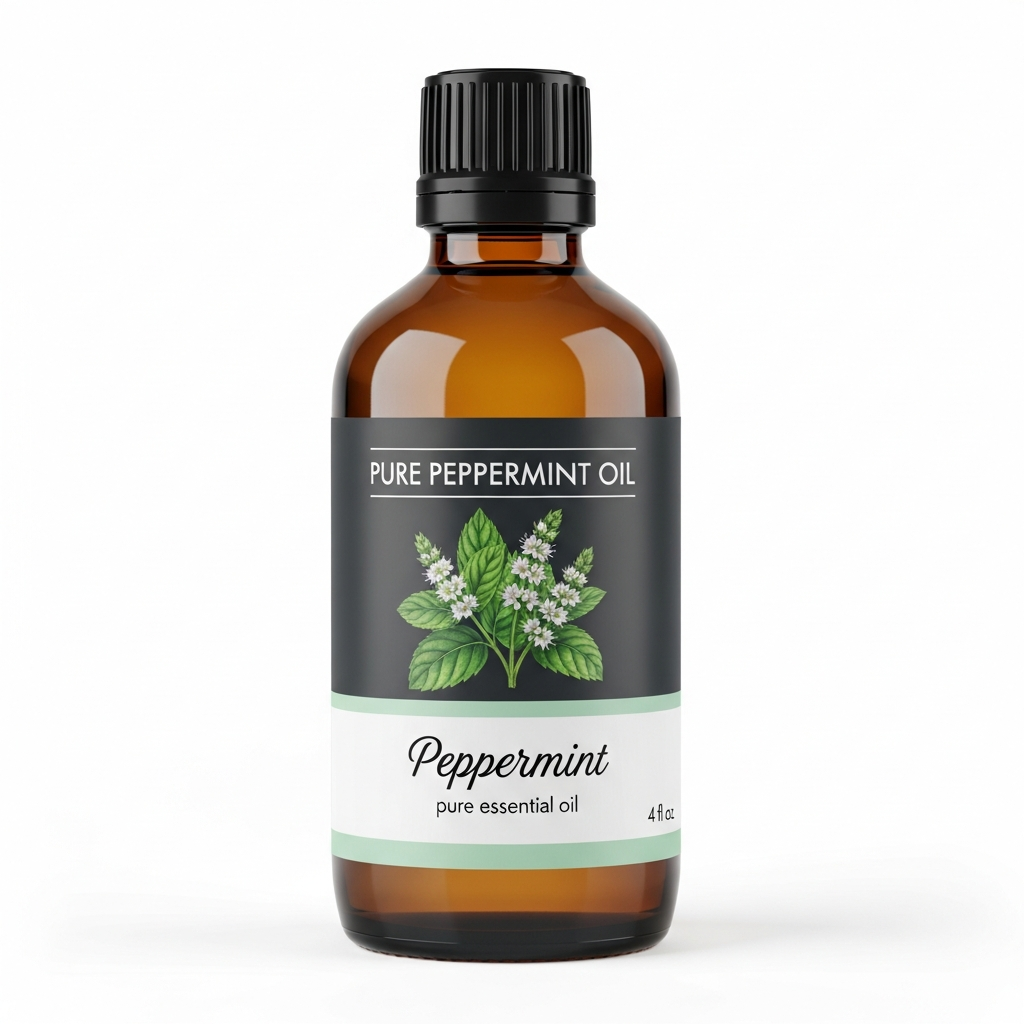
Peppermint Essential Oil
Our own Peppermint Essential Oil, in sizes from 0.5 oz to bulk.
From $10.99
Shop Now →This mint oil comparison is for anyone who wants to make a genuinely informed choice. We will look at the chemistry, the scent character, the sourcing considerations, and the practical applications where each oil earns its place. No guesswork, just a clear-eyed look at two plants that deserve individual attention.
A Quick Botanical Introduction
Peppermint (Mentha piperita) is itself a natural hybrid, a cross between watermint and spearmint. It was first documented in England in the late seventeenth century and has been cultivated commercially ever since. The Pacific Northwest of the United States, particularly Idaho and Oregon, produces a significant share of the world's peppermint oil, alongside regions in India and Europe.
Spearmint (Mentha spicata) is the older of the two plants. It grows across Europe, Asia, and North America, and its use in cooking and cosmetics stretches back thousands of years. Morocco has become one of the leading producers of spearmint oil for the global market, with a growing reputation for quality.
Understanding where each oil comes from matters. Soil composition, altitude, climate, and harvest timing all shape the final chemical profile. If you are shopping for either oil, our guide on how to buy pure peppermint oil covers the quality markers worth checking before you purchase.
The Chemistry: Where the Real Difference Lives
The peppermint vs spearmint oil conversation starts and ends with one molecule: menthol.
Peppermint oil is rich in menthol, typically between 35 and 55 percent by volume depending on origin and distillation method. Menthol is responsible for that signature cooling sensation. It activates cold-sensitive receptors in the skin and mucous membranes, which is why peppermint oil feels physically cool even at room temperature. This is a sensory effect, not a change in actual temperature.
Spearmint oil contains very little menthol, often less than one percent. Its primary constituent is carvone, which makes up anywhere from 55 to 75 percent of the oil. Carvone is the compound that gives spearmint its rounded, sweet character. It is the same molecule responsible for the scent of caraway seeds, though in spearmint the overall profile reads as distinctly minty rather than spiced.
Peppermint also contains menthone, menthyl acetate, and 1,8-cineole in varying amounts. These secondary compounds influence the sharpness and brightness of the final scent. Spearmint's supporting cast includes limonene and dihydrocarvone, which round out its softer edges.
This chemistry gap is not subtle. It shapes every downstream use case.
Scent Profile Comparison
Describing scent in words is always an approximation, but it helps to have reference points.
Peppermint oil smells sharp and clean, with a bright top note that some people describe as almost medicinal in its clarity. The cooling sensation follows immediately. There is very little sweetness. The scent lingers but does not linger heavily. It reads as crisp, focused, and strong.
Spearmint oil smells rounder and notably sweeter. Most people find it gentler on first impression. If peppermint is a cold glass of water on a hot day, spearmint is closer to a warm cup of mint tea. Both are unmistakably minty, but the mood each one creates is quite different.
In blending, peppermint tends to dominate. It requires careful measuring because a single drop can overpower other oils in a diffuser blend. Spearmint is more cooperative in a blend. It contributes minty character without bulldozing the other notes.
Structured Comparison Table
| Attribute | Peppermint Oil (Mentha piperita) | Spearmint Oil (Mentha spicata) |
|---|---|---|
| Primary constituent | Menthol (35-55%) | Carvone (55-75%) |
| Menthol content | High | Very low (under 1%) |
| Scent character | Sharp, icy, clean, bright | Sweet, soft, rounded, mild |
| Cooling sensation | Intense and immediate | Minimal |
| Blending behavior | Dominant; use sparingly | Cooperative; blends easily |
| Skin sensitivity risk | Higher (high menthol content) | Generally lower |
| Common sources | USA (Idaho, Oregon), India, UK | Morocco, China, India |
| Typical price point | Moderate to moderately high | Moderate |
| Diffuser performance | Strong, room-filling | Lighter, subtler |
| Best cosmetic applications | Scalp care, foot products, cooling balms | Lip products, facial mists, sensitive blends |
Peppermint Oil: Pros and Cons
Pros
- Unmistakable cooling sensation. The high menthol content delivers an immediate, distinctive sensory experience that spearmint simply cannot replicate.
- Strong diffuser presence. A small amount goes a long way. In a room diffuser, peppermint oil creates a fresh, invigorating atmosphere that many people associate with focus and alertness during the day.
- Versatile in cosmetic formulation. It works well in scalp rinses, foot soaks, cooling body mists, and muscle rub bases (always properly diluted in a carrier oil).
- Widely available and well-researched. Peppermint has been studied extensively, and high-quality sourcing is relatively straightforward if you know what to look for.
- Pairs well with eucalyptus, rosemary, and citrus oils. It anchors fresh blends without muddying the overall character.
Cons
- High menthol content increases skin sensitivity risk. Peppermint oil should always be diluted before skin contact. A typical safe dilution is 1 to 2 percent in a carrier oil for most adults. Patch testing is essential.
- Not suitable for young children. Products containing high levels of menthol are not appropriate for use on or near the faces of children under a certain age. Always check current safety guidance from qualified aromatherapy organizations.
- Can be overpowering in blends. Even experienced formulators add peppermint last and in small quantities.
- Price can vary significantly. Origin, extraction method, and grade all influence cost. Our peppermint oil price guide explains why the range is so wide and what drives genuine quality differences.
Spearmint Oil: Pros and Cons
Pros
- Gentler scent profile. The lower menthol and higher carvone content makes spearmint approachable for people who find peppermint too intense.
- More forgiving in blending. It plays well with florals, citrus, and woody notes without taking over.
- Suitable for products aimed at sensitive skin formulations. Its lower menthol content means it is often a more comfortable choice for facial skincare applications, always with appropriate dilution.
- Sweet character suits lip and oral care products. Spearmint's rounded scent is a natural fit for lip balms, tooth-whitening blends, and breath-freshening products.
- Generally less costly. Spearmint oil tends to sit at a slightly lower price point than premium peppermint, though quality still varies by source.
Cons
- Lacks the cooling sensation. If you want that icy, menthol-driven experience, spearmint will not deliver it. This is neither good nor bad, just a matter of what you need.
- Weaker diffuser presence. You may find yourself using more oil to achieve a similar room-filling effect.
- Less studied than peppermint. The body of published research on spearmint essential oil is smaller, which means there is less documentation to draw on when evaluating claims.
- Quality variation is real. As with any essential oil, adulteration and inconsistent sourcing affect the market. Synthetic carvone is inexpensive and can be used to spike or replace genuine spearmint oil.
Best-for Recommendations by Use Case
Diffusing for a Morning Wake-Up Atmosphere
Choose peppermint. The sharp, clarifying scent is well-suited to morning routines when you want to set an alert, energized mood. Start with two or three drops and adjust from there.
Diffusing for an Evening Wind-Down
Choose spearmint. Its softer character is less stimulating and blends easily with lavender or chamomile for a calm, pleasant evening atmosphere.
Scalp and Hair Care Products
Choose peppermint. The cooling sensation makes it a long-favored addition to scalp rinses and shampoos. Dilute carefully, and always perform a patch test before wider use.
Lip Balms and Oral Care Blends
Choose spearmint for a sweeter character; choose peppermint for intensity. Many commercial lip products use spearmint for everyday wear and peppermint for a more pronounced tingle. Both work well, but they produce very different user experiences.
Facial Mists and Sensitive Skin Products
Choose spearmint. The lower menthol concentration is less likely to cause sensitivity reactions on delicate facial skin. Dilution ratios and patch testing remain important regardless of which oil you use.
Foot Soaks and Cooling Body Products
Choose peppermint. The menthol-driven cooling sensation is a natural fit for tired-foot soaks and after-sport cooling sprays.
Candle and Soap Making
Both work well, depending on the scent goal. Peppermint produces a bolder, more recognizable mint fragrance. Spearmint yields something more nuanced. Many crafters blend the two to build depth.
A note on grades: if you are making cosmetic products, confirm that the oil you are using is cosmetic grade and sourced accordingly. Our breakdown of food-grade vs cosmetic-grade peppermint oil explains what those label distinctions actually mean in practice.
A Word on Quality and Sourcing
In any spearmint essential oil or peppermint oil purchase, the quality of the starting material shapes everything downstream. Look for oils that are steam-distilled from the aerial parts of the plant, produced by suppliers who can provide GC/MS (gas chromatography/mass spectrometry) reports on request. These reports confirm the chemical profile and help identify adulteration.
Country of origin matters more than many buyers realize. Idaho-grown peppermint oil, for example, tends to have a notably high menthol content thanks to the region's climate and agricultural practices. Moroccan spearmint is prized for a particularly clean, consistent carvone profile. Neither guarantees quality on its own, but origin gives you a useful starting point for asking better questions of your supplier.
Pricing is a reliable signal, though not a perfect one. Very cheap oils from unknown sources are frequently diluted or synthesized. That said, very high prices do not automatically mean superior quality either. A mid-range price from a transparent supplier with verifiable testing tends to offer the best value. If you want a deeper look at what drives price differences, the peppermint oil price guide covers the topic in full.
Safety Reminders for Both Oils
Essential oils are potent plant extracts. Both peppermint and spearmint oils require proper handling.
- Always dilute in a carrier oil before skin application. A 1 to 2 percent dilution is a standard starting point for most adult skin applications.
- Perform a patch test on a small area of skin and wait 24 hours before broader use.
- Keep both oils away from eyes and mucous membranes.
- Store in dark glass bottles away from heat and direct light to preserve their chemical integrity.
- Consult a qualified healthcare provider before using essential oils if you are pregnant, nursing, or managing any health condition.
- Keep out of reach of children and pets.
The Verdict
This peppermint vs spearmint oil comparison does not have a single winner, because the two oils serve different purposes well.
Peppermint is the stronger, sharper, more intense oil. It is the right choice when you want an unmistakable cooling sensation, a powerful diffuser scent, or a distinctive cosmetic character. Its high menthol content gives it a specific, recognizable identity that many products are built around.
Spearmint is the more versatile blender, the gentler option for sensitive skin applications, and the better fit when you want mint character without dominance. Its sweetness makes it the preferred choice for products where peppermint might feel too sharp or stimulating.
Many experienced formulators and home users keep both on hand. They are not interchangeable, but together they cover a wide range of cosmetic and aromatic applications that neither one could handle alone. Start by identifying your primary use case, choose the oil that fits that brief, and expand from there as your confidence with each scent grows.