
Inside Peppermint Oil: Menthol and the Chemistry of Cool
Crack open a bottle of pure peppermint oil and something immediate happens. The scent lands before you've even brought the cap to your nose, sharp and green and unmistakably cool. That sensation is chemistry at work. Specifically, it's the result of a remarkably complex molecular profile that researchers and perfumers have been studying for well over a century. Understanding peppermint oil chemistry helps you make smarter choices about what you buy, how you use it, and what to realistically expect from it.
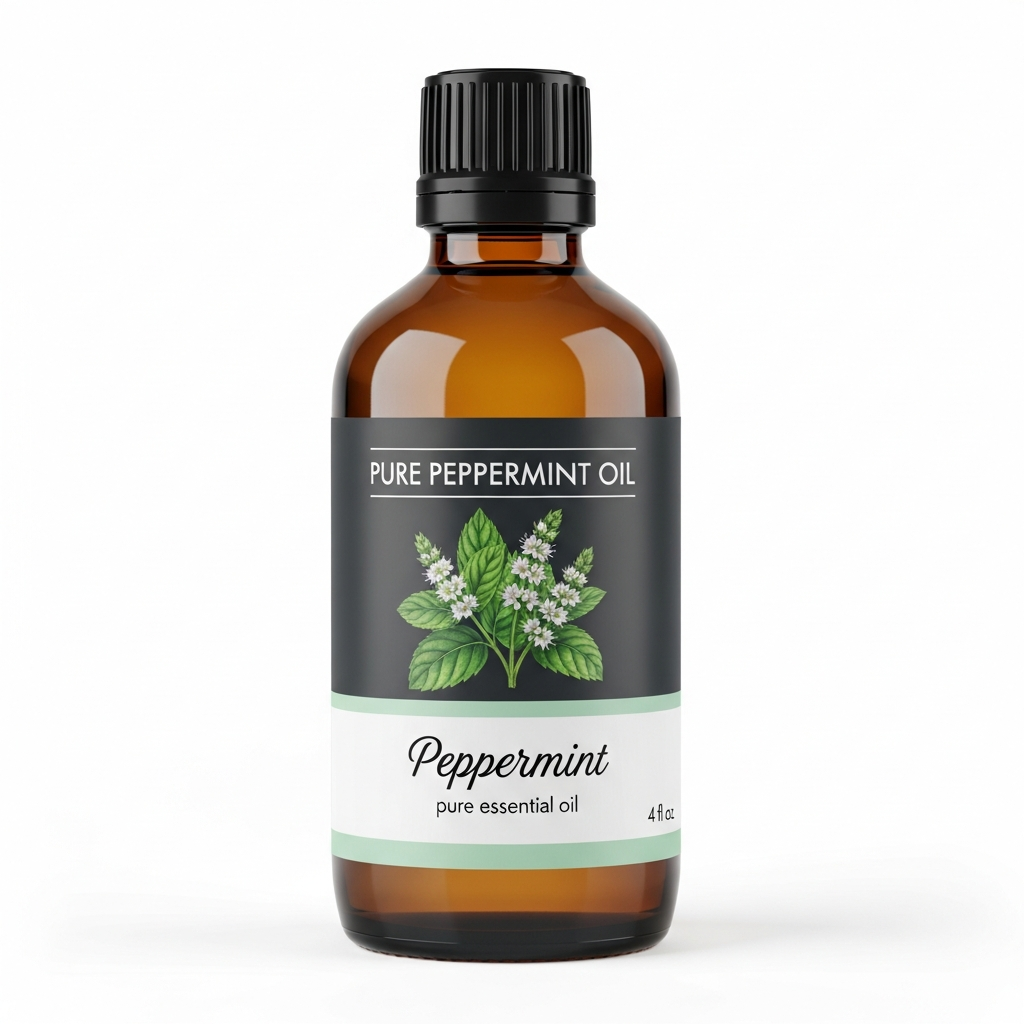
Peppermint Essential Oil
Our own Peppermint Essential Oil, in sizes from 0.5 oz to bulk.
From $10.99
Shop Now →This piece focuses on the science: the compounds, the research observations, the quality markers, and the safety considerations that any informed user should know. For a broader introduction to the oil itself, start with our complete guide to peppermint oil.
Where Peppermint Oil Comes From (Before the Chemistry Begins)
Peppermint (Mentha x piperita) is a hybrid. It's a cross between watermint (Mentha aquatica) and spearmint (Mentha spicata), and its hybrid nature is part of what makes its chemistry so distinctive. The plant produces essential oil in tiny glandular trichomes on the surface of its leaves. When steam distillation breaks those structures open, the volatile compounds carry over into the condensate, separating from the water as the familiar pale yellow oil.
The chemical profile of the resulting oil isn't fixed. It varies based on the cultivar, growing region, harvest timing, and distillation method. This is why two bottles labeled "peppermint essential oil" can smell noticeably different and why gas chromatography testing matters so much for quality assurance.
The Primary Compounds in Peppermint Oil
Peppermint oil is not a single molecule. It contains somewhere between 40 and 50 identifiable compounds, though a handful dominate the profile. The percentages below reflect ranges commonly cited in analytical chemistry literature and can shift based on origin and processing.
Menthol: The Dominant Player
Menthol in peppermint oil typically accounts for 35 to 55 percent of the total composition. It's the compound most people associate with the oil's character, and for good reason. Menthol is a cyclic monoterpenoid alcohol. Its molecular structure allows it to interact with cold-sensitive receptors in the skin (specifically TRPM8 receptors), producing that well-known cooling sensation without any actual change in temperature.
This is not a trivial detail. The cooling effect of menthol is a sensory phenomenon, not a thermal one. When you apply a diluted peppermint oil blend to your temples or the back of your neck, the skin doesn't get colder. The nerves simply respond to menthol as though it did. Research suggests this receptor interaction is responsible for the refreshing, alert quality that people associate with peppermint-based cosmetics and aromatherapy products.
Menthol exists in eight stereoisomeric forms, but l-menthol (the naturally occurring left-handed form) is the one found in Mentha x piperita and is considered to have the characteristic coolness profile. Synthetic menthol is also common in commercial products; it can be racemic, meaning it contains multiple isomers. One quality marker for genuine peppermint oil is the predominance of l-menthol confirmed through chiral GC analysis.
Menthone: The Backbone Compound
After menthol, menthone is typically the next most abundant compound, often ranging from 14 to 32 percent. Menthone is a ketone and a biosynthetic precursor to menthol in the plant's metabolic pathway. It contributes a slightly herbaceous, minty character that's less sweet than menthol alone.
The menthol-to-menthone ratio is one of the most useful quality indicators in peppermint oil analysis. Oils with very high menthone and relatively low menthol may have been harvested early, before the plant has had time to convert menthone into menthol. A well-timed harvest from mature leaves generally yields a more menthol-forward profile.
Menthyl Acetate: The Floral, Fresh Top Note
Menthyl acetate contributes somewhere between 2 and 10 percent of the oil in most quality samples. It's an ester formed when menthol reacts with acetic acid within the plant. Even at low concentrations, esters have an outsized influence on scent. Menthyl acetate adds a fresh, slightly fruity quality that softens the sharpness of raw menthol and menthone. Perfumers and aromatherapists often describe it as the compound that gives high-quality peppermint oil its brightness.
1,8-Cineole (Eucalyptol): The Camphorous Element
Present at roughly 3 to 7 percent in most samples, 1,8-cineole is also the dominant compound in eucalyptus oil. In peppermint, it contributes a clean, slightly camphorous note. At low percentages it blends seamlessly with the menthol character. At elevated percentages (which can happen with adulterated or misidentified species), it can make an oil smell more eucalyptus-like than peppermint.
Isomenthol, Neomenthol, and Menthofuran: The Minor Players
Several minor compounds round out the peppermint oil chemistry picture. Isomenthol and neomenthol are structural relatives of menthol with subtly different sensory profiles. Menthofuran is a compound of particular interest to quality analysts because elevated levels (above roughly 8 percent) may indicate suboptimal distillation or plant stress and is associated with reduced quality ratings in international pharmacopoeia standards.
Pulegone, another minor constituent, also appears in some analyses. It's worth noting because research has raised observations about its presence at high concentrations; quality-focused suppliers monitor for it, and standards organizations set upper limits accordingly.
What Research Suggests (and What It Doesn't Prove)
Peppermint oil and its primary compounds have been the subject of considerable scientific interest. It's important to read this research carefully. Observations from in vitro studies (cells in dishes), animal models, and small human trials don't translate directly into established conclusions for everyday use.
Menthol and Sensory Response
Some research suggests that menthol's activation of TRPM8 receptors may support a subjective sense of coolness and refreshment, which is consistent with the widespread use of peppermint-based cosmetics in cooling mists, scalp products, and after-sun formulations. The sensory science here is reasonably well-documented, even if specific outcome claims for any product remain outside what the current body of evidence supports with certainty.
Aromatic Use and Perceived Alertness
Several small studies have explored how peppermint aroma affects cognitive measures like alertness and reaction time. Some research suggests that people report feeling more focused or alert after exposure to peppermint scent. These findings are preliminary and based largely on self-reported perception. They're interesting as a foundation for further inquiry, not as established fact. The aromatherapy community has long used peppermint in diffuser blends intended to support an energized, focused atmosphere, which aligns loosely with these early observations.
Topical Research Observations
Research exploring topically applied diluted peppermint oil (particularly for scalp and muscle applications) is ongoing. Some observations suggest that the menthol component may support circulation at the surface of the skin, producing the familiar warming-after-cooling sensation. This is distinct from any claim about systemic effects. Cosmetic formulators use this sensory property deliberately in cooling gels, massage blends, and scalp serums.
For a practical look at how these properties translate into everyday applications, our article on 25 fresh ideas for using peppermint oil at home covers a wide range of cosmetic and aromatic uses.
Safety Profile and Key Contraindications
Understanding the chemistry of peppermint oil also means understanding where it demands caution. This oil is concentrated. A single milliliter contains the volatile output of a very large quantity of plant material, and its potency deserves respect.
Dilution Is Non-Negotiable
For topical use, peppermint oil should always be diluted in a suitable carrier oil (such as fractionated coconut oil, jojoba, or sweet almond oil). Industry guidelines from organizations like IFRA (International Fragrance Association) and aromatherapy safety authorities generally suggest staying within a 1 to 3 percent dilution for most body applications. That translates to roughly 6 to 18 drops of essential oil per ounce of carrier oil for adults.
Undiluted application can cause significant skin irritation, sensitization, and in some cases localized reactions that may persist. Always conduct a patch test before using any new dilution on a larger area of skin.
Children and Infants: A Clear Boundary
Peppermint oil is widely considered inappropriate for use on or near young children, particularly infants and toddlers. The menthol content poses specific concerns related to respiratory response in very young children. Most safety authorities recommend keeping peppermint oil products away from children under the age of six entirely, and consulting a qualified healthcare provider before any use with older children.
Pregnancy and Nursing
Pregnant and nursing individuals should consult a qualified healthcare provider before using peppermint oil aromatically or topically. The research on essential oil safety during pregnancy is limited, and a cautious approach is always appropriate.
Sensitivity and Sensitization Risk
Repeated use of poorly diluted peppermint products can increase the risk of sensitization, where the immune system begins to react to a previously tolerated compound. Once sensitization occurs, reactions can become more pronounced over time. This is a reason to use proper dilution consistently, not just occasionally.
Eye and Mucous Membrane Avoidance
Even well-diluted peppermint preparations should be kept away from the eyes and mucous membranes. The menthol content is highly irritating to these tissues. If contact occurs, flush thoroughly with a carrier oil (not water, which can spread oil-based compounds) and seek guidance from a healthcare provider if irritation persists.
Sourcing and Quality Indicators
Not all peppermint oils are created equal, and the chemistry makes this clear. Here's what to look for when evaluating a bottle.
Gas Chromatography and Mass Spectrometry (GC/MS) Testing
A reputable supplier will make GC/MS test results available for each batch. This analysis identifies the specific compounds present and their percentages, allowing you to verify the menthol and menthone ratios, confirm the absence of adulterants, and check for any anomalous markers like elevated menthofuran or pulegone. If a supplier can't provide batch-specific test data, that's a meaningful quality signal.
Country of Origin
Peppermint oil is produced in several regions, with the United States (particularly the Pacific Northwest and Indiana), India, and China being significant producers. American-grown peppermint (often called Willamette Valley or Yakima Valley peppermint) is widely regarded for its clean, bright, high-menthol profile. Indian peppermint oil can vary considerably in quality. Regardless of origin, batch testing matters more than geography alone.
Botanical and Latin Name Verification
A quality label will list the full Latin name (Mentha x piperita) along with the plant part used (aerial parts or leaves) and the extraction method (steam distillation). Labels that only say "peppermint oil" without this information are harder to verify.
Color and Viscosity
Pure peppermint essential oil is typically pale yellow to nearly colorless. It has a very thin viscosity, similar to water. A green-tinted oil may indicate the presence of chlorophyll from a low-quality first distillate or an adulterated product. Some very high-quality oils can have a very faint greenish tint, but vivid green is a warning sign.
Packaging
Essential oils are volatile and light-sensitive. Quality peppermint oil should be packaged in dark glass (amber or cobalt blue) bottles with tight-fitting caps. Plastic containers are not appropriate for long-term storage of any essential oil.
Reading the Composition Table
For reference, here's a general overview of what a quality peppermint oil GC/MS profile might show. These are typical ranges; individual batches vary.
| Compound | Typical Range | Role in the Oil |
|---|---|---|
| Menthol | 35-55% | Primary cooling sensation, signature character |
| Menthone | 14-32% | Herbal backbone note, biosynthetic precursor to menthol |
| Menthyl acetate | 2-10% | Fresh, floral brightness in the top note |
| 1,8-Cineole | 3-7% | Clean, camphorous character |
| Menthofuran | 1-8% | Quality marker; elevated levels flag concern |
| Isomenthol / Neomenthol | 1-5% combined | Subtle sensory modifiers |
| Pulegone | Below 4% | Monitored; upper limits set by standards bodies |
Putting the Chemistry to Practical Use
Knowing the composition of peppermint oil changes how you shop for it and how you work with it. When you see a supplier advertising "high menthol" oil, you now know what that means chemically and why it matters for scent intensity and sensory performance. When you read about menthofuran limits in pharmacopoeia standards, you understand the reasoning behind the number.
The compounds in peppermint oil aren't just trivia. They're the reason this particular essential oil behaves the way it does in a diffuser blend, a scalp serum, or a cooling body mist. Good sourcing, proper testing, and careful dilution aren't optional extras. They're what separates an oil that performs consistently from one that disappoints or, in the case of poor dilution practices, causes harm.
If you have more questions about selecting and using peppermint oil safely, our peppermint oil FAQ covers fifteen of the most common questions in plain language. As always, if you have specific health concerns or questions about safe use for your individual situation, a qualified healthcare provider is the right resource.