
Peppermint Oil for Ants and Spiders: A Room-by-Room Deterrent Plan
If you've noticed a trail of ants marching across your kitchen counter or spotted an unwelcome spider in the corner of your bathroom, you're probably looking for a solution that doesn't involve harsh chemical sprays. Peppermint oil has become a popular go-to in natural home care circles, and for good reason. Its sharp, cooling scent is simply not inviting to many crawling insects and arachnids.
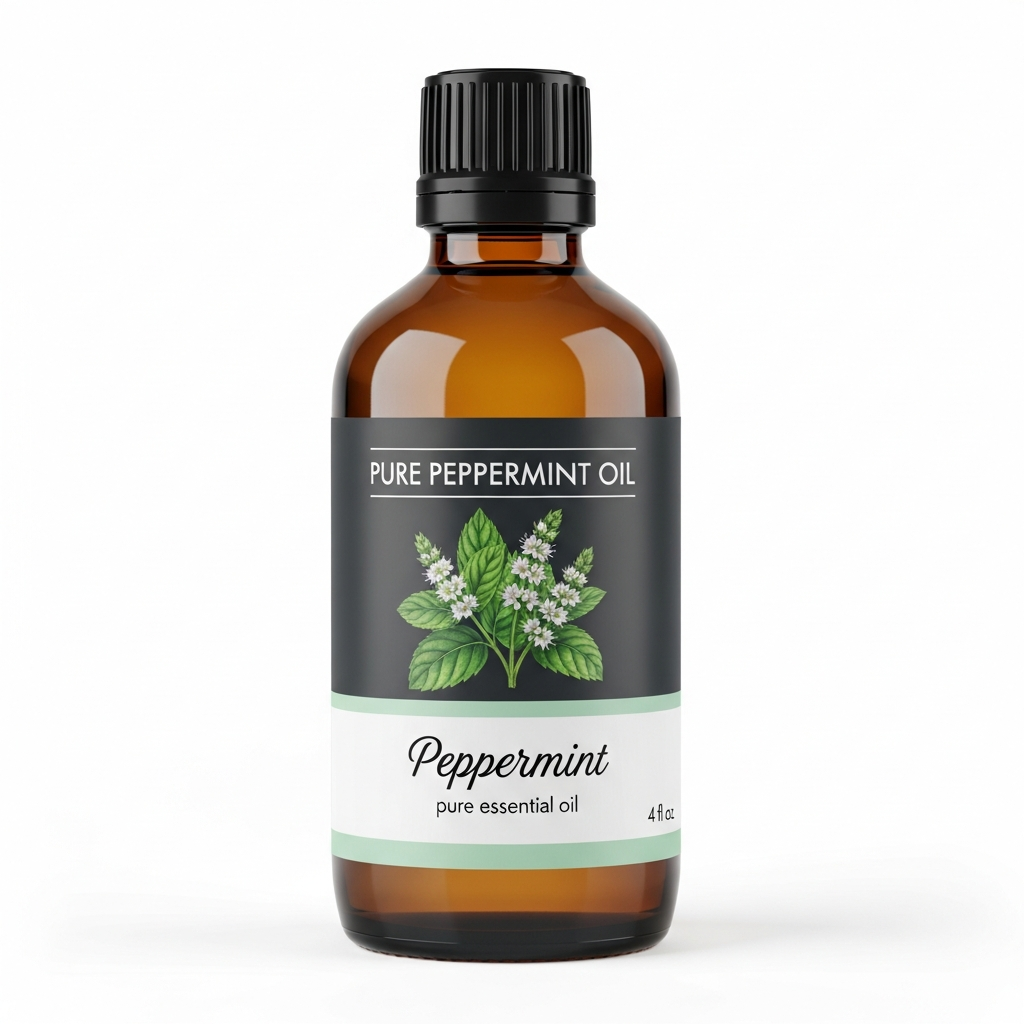
Peppermint Essential Oil
Our own Peppermint Essential Oil, in sizes from 0.5 oz to bulk.
From $10.99
Shop Now →This guide walks you through a practical, room-by-room plan using peppermint oil for ants and spiders. You'll find specific spray formulas, placement strategies, and honest notes on what this approach can and cannot do. Think of it as a freshness-forward deterrent routine rather than a guaranteed fix.
For a broader look at using peppermint oil throughout your home, see our guide to peppermint oil around the house. And if you're dealing with other unwanted visitors beyond ants and spiders, our article on peppermint oil for roaches and other bugs covers additional scenarios.
Why Peppermint Oil and Crawling Insects Don't Mix Well
Peppermint oil's primary active compound is menthol, and at higher concentrations it produces a scent that many insects appear to find disorienting or repellent. Ants navigate largely by scent trails, and some research suggests that strong aromatic compounds can interfere with those chemical signals. Spiders, while not insects, are similarly sensitive to concentrated plant-based volatiles and may avoid areas where the scent is strong.
The key phrase throughout this article is "may deter." Peppermint oil is not a pesticide. It will not eliminate an established colony or a significant infestation. What it can do is make entry points and common pathways far less inviting, which is genuinely useful as part of a consistent home-care routine.
What You'll Need Before You Start
Gather these materials before beginning any room:
- Pure peppermint essential oil (look for 100% pure, no carrier oils or additives added)
- A 4-ounce or 8-ounce glass spray bottle (glass is preferred since high-concentration oils can degrade plastic over time)
- Distilled or filtered water
- A small amount of liquid castile soap or grain alcohol (to help the oil disperse in water)
- Cotton balls or cotton rounds
- Isopropyl alcohol or white vinegar (for wiping existing ant trails before application)
- A small funnel and measuring spoons
- Gloves (optional but recommended for sensitive skin)
A note on oil quality: The effectiveness of any aromatic deterrent depends heavily on the concentration of active compounds in the oil. A diluted or adulterated peppermint oil will produce a faint scent that dissipates quickly. Choose an oil with a sharp, immediate cooling note when you open the bottle.
The Basic Peppermint Spray Formula
This is the foundational recipe you'll adapt for each room.
- Start with your dispersant. Add 1 teaspoon of liquid castile soap or 1 tablespoon of isopropyl alcohol to your spray bottle first. This step is important. Essential oils do not mix with water on their own, and skipping this creates an uneven spray that deposits most of the oil in one spot.
- Add the peppermint oil. For a standard deterrent spray, use 20 to 25 drops of pure peppermint oil per 4 ounces of water. That's roughly a 2.5% concentration. You can go up to 30 drops for high-traffic entry points, but keep in mind that a stronger solution has a more potent scent indoors.
- Fill with water. Top the bottle with distilled water. Distilled water extends the shelf life of your blend by removing minerals that can encourage microbial growth.
- Shake before every use. Even with a dispersant, the oil will separate as it sits. A vigorous shake just before spraying keeps the concentration consistent.
You can also find a slightly different version of this recipe with room-freshening variations in our DIY peppermint oil spray guide.
Room-by-Room Deterrent Plan
Kitchen
The kitchen is almost always where ants appear first. They are drawn to food residue, moisture, and accessible entry points around window frames, pipe gaps, and baseboards.
Step 1: Clear the trail first. Before applying peppermint oil, wipe existing ant pathways with a cloth dampened with white vinegar or diluted isopropyl alcohol. This removes the chemical trail markers they leave behind. Spraying over an active trail without removing it is one of the most common mistakes people make. The scent markers are persistent and will attract more ants even if your spray is fresh.
Step 2: Identify entry points. Look along baseboards, under the sink, around the dishwasher, and where pipes enter the wall. These are primary targets.
Step 3: Spray and soak cotton balls. Apply the spray along baseboards and around window ledges. For gaps around pipes, place peppermint-soaked cotton balls directly at the opening. The cotton holds the scent longer than a spray on a hard surface.
Step 4: Refresh every 5 to 7 days. The scent dissipates, especially in warm rooms or near heat sources. Replace cotton balls weekly and re-spray surfaces at the same interval.
Kitchen safety note: Avoid spraying directly onto food preparation surfaces, open food, or near pet food and water bowls. Peppermint oil at concentrated levels is not safe for cats or dogs to ingest. Always allow sprayed surfaces to dry fully before using them.
Bathroom
Bathrooms attract spiders more than ants in many homes, largely because the moisture draws small insects that spiders then follow. The question of whether peppermint oil repels spiders comes up constantly, and the honest answer is: many people report that consistent use in corners and along baseboards seems to discourage spider activity, though results vary.
Step 1: Focus on corners and ceiling junctions. Spiders favor undisturbed high corners. Lightly spray along the ceiling-to-wall junction, behind the toilet, and under the vanity.
Step 2: Place soaked cotton balls behind fixtures. Behind the toilet tank and under the sink cabinet are good locations. These spots are rarely disturbed, which means the cotton can sit and release scent steadily.
Step 3: Address the window frame. Spiders and small insects often enter through bathroom windows. A light application of spray on the interior frame and sill can help.
Step 4: Refresh weekly. Bathrooms with good ventilation lose scent faster. In a humid bathroom, you may need to replace cotton balls every 5 days.
Entryways and Hallways
The front door, back door, and garage entry are the primary highways for both ants and spiders moving indoors, especially in warmer months.
Step 1: Spray the door threshold. Apply your peppermint spray along the bottom of door frames on the interior side. Pay attention to the corners where the door frame meets the floor.
Step 2: Address any visible gaps. Where weather stripping has gaps or where the door frame doesn't seal tightly, push a small peppermint-soaked cotton ball into the gap.
Step 3: Consider the exterior step. Some people also apply a light spray to the exterior threshold and the sides of the door frame outside. Dilute slightly more for exterior use since the scent will dissipate faster outdoors and you want to avoid concentrating oil on a surface where pets might walk and then groom themselves.
Living Room and Bedrooms
These rooms tend to be lower priority for ants unless there is a food source present. Spiders are the more common visitor here, often found behind furniture, along baseboards, and in closet corners.
Step 1: Move furniture away from walls periodically. Spray along the baseboards behind sofas, beds, and large furniture pieces. These are exactly the undisturbed spots spiders prefer to nest.
Step 2: Place cotton balls in closets. A single peppermint-soaked cotton ball in each closet corner discourages spiders from settling in. Replace monthly in these lower-traffic spots.
Step 3: Use a lighter hand in bedrooms. A concentrated peppermint scent in a sleeping space can feel overpowering. Use fewer drops (12 to 15 per 4 ounces) for bedroom sprays, and apply only along baseboards rather than into the middle of the room.
Bedroom safety note: Avoid using peppermint oil spray near infants or very young children, and never apply it to skin or bedding directly. If anyone in the household is sensitive to strong scents, start with a highly diluted formula and assess before increasing concentration.
Basement and Garage
These are the highest-activity zones for both ants and spiders, and they require a more intensive approach.
Step 1: Inspect for structural entry points. Gaps around utility pipes, foundation cracks, and gaps under garage doors are all common entry points. Note each one.
Step 2: Use undiluted oil on cotton for cracks. For foundation gaps and pipe penetrations in a basement, a cotton ball with 3 to 5 drops of undiluted peppermint oil can be tucked directly into the gap. This is one of the few situations where a higher concentration makes sense, because the space is unoccupied and the goal is to scent a structural gap rather than a living area.
Step 3: Spray perimeter baseboards and corners generously. In a basement or garage, you can use a slightly stronger spray (up to 30 drops per 4 ounces) and apply it more liberally than in living areas.
Step 4: Refresh every 3 to 4 days initially. During peak season (late spring through early fall), refresh more frequently. Once activity seems to taper off, extend to weekly maintenance.
Common Mistakes to Avoid
- Skipping the trail removal step in the kitchen. Applying peppermint oil over an active ant trail without wiping it first is the single most common reason people feel this approach isn't working.
- Using a low-quality or diluted oil. If the scent is faint when you open the bottle, the deterrent effect will be minimal. Pure, high-quality peppermint oil has an immediate, sharp cooling note.
- Applying once and expecting lasting results. Scent dissipates. Consistency matters far more than a single heavy application.
- Spraying near pets, especially cats. Cats are particularly sensitive to certain plant compounds. Keep sprayed areas off-limits until fully dry, and consult a veterinarian if you have concerns about your pets' exposure.
- Neglecting the exterior perimeter. Interior application works best when paired with attention to the points where insects actually enter the structure.
What to Realistically Expect
People who use peppermint oil for ants consistently report that scout ants seem to avoid freshly treated areas. Some research suggests aromatic compounds can interfere with scent-trail navigation, which may explain why ants appear to reroute away from treated baseboards. Results, however, are not universal and depend heavily on the species of ant, the degree of existing activity, and how consistently the routine is maintained.
On the question of whether peppermint oil repels spiders, anecdotal evidence is fairly widespread and positive, though controlled research in home settings is limited. Many homeowners report noticeably fewer spiders in consistently treated areas over a season of use.
This approach works best as a preventive measure and as part of a broader home-maintenance habit. Sealing structural gaps, keeping surfaces clean, and managing moisture sources all work alongside the peppermint routine. No aromatic deterrent performs well in isolation if the underlying conditions that invite insects are still present.
A Simple Weekly Maintenance Schedule
| Room | Refresh Frequency | Primary Targets |
|---|---|---|
| Kitchen | Every 5 to 7 days | Baseboards, under sink, pipe gaps |
| Bathroom | Every 5 to 7 days | Corners, behind toilet, window frame |
| Entryways | Every 7 days | Door thresholds, frame gaps |
| Living room / Bedrooms | Every 10 to 14 days | Baseboards, closet corners |
| Basement / Garage | Every 3 to 5 days (peak season) | Foundation gaps, perimeter baseboards |
A Few Final Tips
Label your spray bottle with the date you made it. A water-based blend is best used within 2 to 3 weeks for consistent potency. Store it away from direct sunlight to preserve the oil's aromatic integrity.
If you want to layer scent further, placing a few dried peppermint leaves in a small sachet near entry points can extend the aromatic presence between spray applications. It's a low-effort complement to the spray routine.
And if you find yourself wanting to expand this into a whole-home freshness routine, our guide to using peppermint oil around the house covers a wide range of applications room by room. For homes where other insects are also a concern alongside ants and spiders, take a look at our piece on peppermint oil for roaches and other unwelcome bugs to round out your approach.
Patch test reminder: Before applying any essential oil spray to painted surfaces, fabrics, or finished wood, test a small, hidden area first. Peppermint oil at higher concentrations can affect some surface finishes over time.