
Peppermint Oil Around the House: The Ultimate Fresh-Home and Deterrent Guide
Key Takeaways
- Pure peppermint oil has a powerful, persistent scent that many insects and rodents find deeply off-putting, making it a popular starting point for natural home deterrent routines.
- A well-made peppermint oil spray can double as a room refresher, linen mist, and surface scenting solution.
- Proper dilution matters: undiluted peppermint oil can damage surfaces, irritate skin, and is unsafe around pets and young children at concentrated levels.
- Consistency is the key factor. Scent-based deterrents fade; reapplication every few days keeps intensity up.
- Peppermint oil works best as one layer of a broader home-maintenance routine, not as a standalone fix.
- Oil quality affects everything. Steam-distilled, single-origin peppermint oil carries far more scent compounds than diluted or adulterated products.
Why Peppermint Oil Belongs in Every Home Routine
There is a particular pleasure in opening the front door to a home that smells genuinely clean. Not chemically scrubbed, not artificially sweetened, but crisp and alive. Peppermint oil delivers that in a way very few single-ingredient solutions can match.
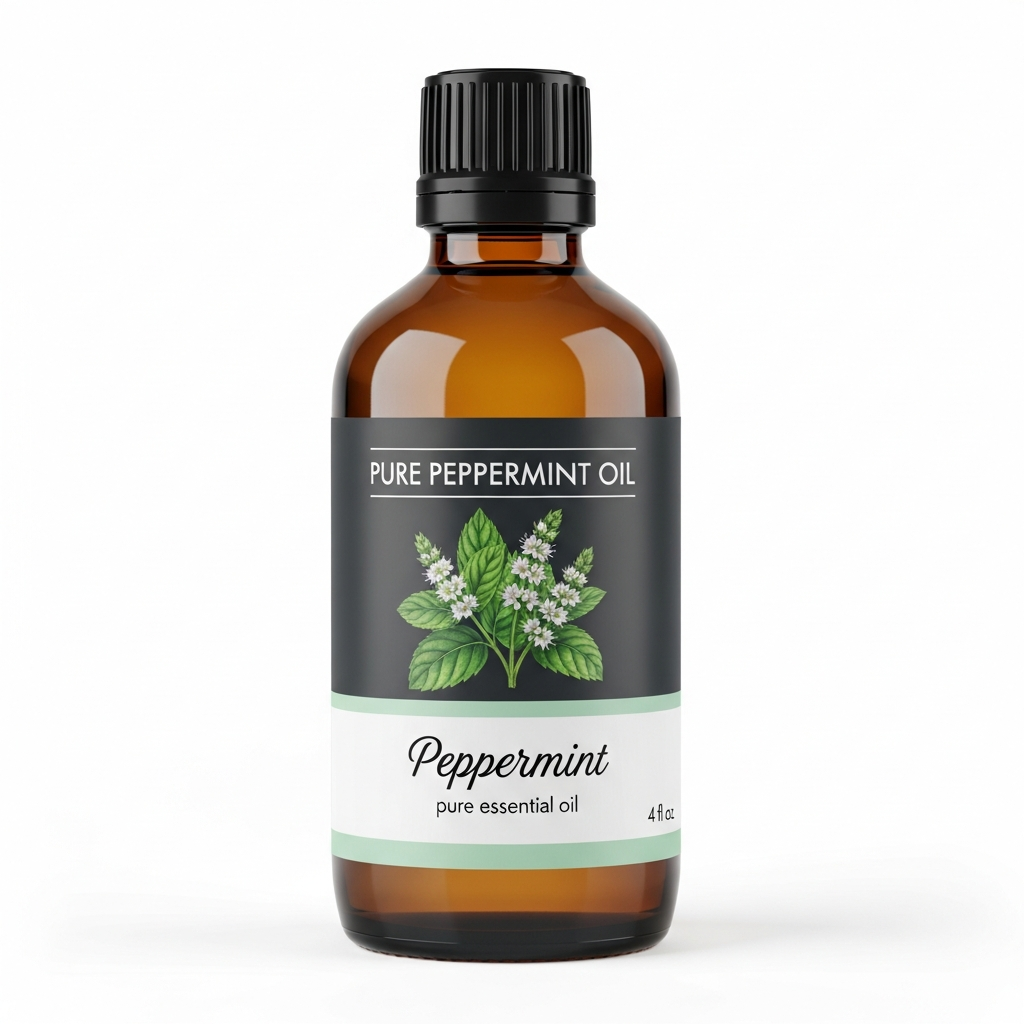
Peppermint Essential Oil
Our own Peppermint Essential Oil, in sizes from 0.5 oz to bulk.
From $10.99
Shop Now →For centuries, dried peppermint and its distilled oil have been used to scent living spaces, freshen linens, and keep certain uninvited guests at bay. Today, with more households moving away from synthetic aerosols and toward plant-sourced alternatives, pure peppermint oil has found a new generation of devoted fans. The reasons are practical. It smells extraordinary. It is versatile enough to use in a spray bottle, a diffuser, a cotton ball tucked into a cabinet corner, or a handmade candle. And it costs very little per use when you buy a quality oil and dilute it correctly.
This guide is built around every meaningful peppermint oil use in a domestic setting. You will find detailed spray recipes, room-by-room deterrent strategies, surface-by-surface safety notes, and honest guidance on what the oil can and cannot do. The focus throughout is cosmetic and aromatic: making your home smell better, feel fresher, and present a less welcoming environment to common household pests.
If you have ever bought a bottle of peppermint oil, used it twice, and let it sit in a drawer, this guide is written for you. By the end, you will have a clear system and the confidence to put that bottle to daily work.
Understanding the Oil: What Makes Peppermint So Potent
The Chemistry Behind the Cool
Peppermint oil (Mentha piperita) is produced by steam distillation of the plant's leaves and flowering tops. The resulting oil is dominated by menthol, which typically makes up between 35 and 55 percent of its total composition. Menthone, menthyl acetate, menthofuran, and a range of minor terpene compounds round out the profile.
Menthol is responsible for the sharp, cooling top note that hits you immediately. It is also the compound most responsible for peppermint's well-documented intensity as a scent signal. The olfactory impact is unusually strong relative to the quantity of oil needed, which is part of what makes it so useful in a household context. A small amount, properly applied, fills a room.
The minor compounds matter more than many people realize. A high-quality steam-distilled peppermint oil will contain dozens of trace aromatic molecules that contribute depth and persistence to the scent. Cheaper oils, or oils that have been partially reconstituted with synthetic menthol, tend to smell flat and sharp without that characteristic fresh complexity. That flatness also reduces their effectiveness as a scent-based deterrent, because it is the full aromatic profile, not just isolated menthol, that appears to influence insect and rodent behavior.
Menthol Content and Practical Potency
When you are buying peppermint oil for home use, the menthol content listed on a certificate of analysis (COA) gives you useful information. A well-regarded food-grade or cosmetic-grade peppermint oil typically shows menthol content between 38 and 48 percent. Some specialty oils push higher, toward 55 percent, and carry a noticeably more intense character. For most home deterrent and scenting purposes, anything in the standard 38 to 48 percent range from a reputable supplier will perform well.
What matters most, practically speaking, is that the oil smells genuinely potent when you open the bottle and wave your hand over the cap without putting it directly to your nose. If the scent seems thin or fades within seconds, that is a quality indicator worth noting before you build a deterrent strategy around it.
Why the Scent Works as a Deterrent
Several published studies have explored how peppermint oil and its principal compounds interact with the sensory systems of insects and small mammals. The current understanding is that the intensity of the volatile compounds interferes with the olfactory navigation that many pests rely on. Mice, ants, spiders, and certain other insects appear to find heavily menthol-scented environments strongly off-putting and will, under certain conditions, alter their movement patterns to avoid them.
It is important to be honest about the limits of this research. Most laboratory studies use relatively controlled conditions that do not perfectly mirror a real home. Real homes have gaps, cavities, and scent shadows where volatiles do not reach. Anecdotal evidence from homeowners is encouraging, but outcomes vary considerably based on infestation pressure, oil quality, application consistency, and structural factors. Peppermint oil is best understood as a meaningful deterrent layer, not a guaranteed solution.
Building Your Peppermint Oil Spray: The Foundation Recipe
A good peppermint oil spray is the most versatile tool in your peppermint toolkit. One well-made bottle can serve as a surface refresher, a fabric mist, a deterrent spray around entry points, and a light room fragrance. The recipe is simple, but the details matter.
The Core Recipe
For a general-purpose peppermint oil spray, combine the following in a clean 8-ounce (240 ml) dark glass or BPA-free spray bottle:
- 1.5 cups (approximately 360 ml) distilled water
- 1 tablespoon (15 ml) high-proof vodka or witch hazel (acts as a dispersant)
- 25 to 30 drops of pure peppermint essential oil
Shake vigorously before each use, as essential oil and water will naturally separate. Spray lightly onto surfaces, around door frames, along baseboards, on curtains, or into the air as a room refresher.
Safety note: Always patch-test on an inconspicuous area before applying to any fabric, painted surface, or finished wood. Allow to dry and check for discoloration or damage. See the safety section below for a full breakdown.
Adjusting for Purpose
The core recipe above is a general-use dilution. For specific applications, you will want to adjust the oil concentration:
| Application | Drops per 8 oz Water | Notes |
|---|---|---|
| Room and linen mist | 10 to 15 drops | Light, pleasant; safe near most fabrics |
| General surface refresher | 20 to 25 drops | Patch-test first; avoid raw wood and marble |
| Entry-point deterrent spray | 30 to 40 drops | Use on hard, non-porous surfaces only |
| Garbage can deodorizer | 40 to 50 drops | Spray inside can walls; reapply weekly |
Dispersants and Why They Matter
Essential oils do not dissolve in water. Without a dispersant, the oil will float on the surface of your spray and deliver an uneven concentration, with some sprays being nearly pure oil and others being mostly water. Witch hazel is a gentle, widely available option that helps break the oil into smaller droplets for a more even distribution. High-proof alcohol (at least 60 percent) works even more effectively. Avoid rubbing alcohol at low concentrations (70 percent isopropyl) on fabric or finished surfaces, as the solvent can cause damage.
For a deeper look at formulating deterrent-focused sprays versus refreshing room sprays, visit our dedicated guide on DIY peppermint oil spray: deterrent, room refresh, and cooling recipes.
Storage and Shelf Life
Store your prepared spray in a cool, dark location. Light and heat degrade both the water base and the aromatic compounds. A properly stored spray made with distilled water and witch hazel will remain effective for three to four weeks. If you notice the scent diminishing or any cloudiness developing, discard the batch and make a fresh one. Make smaller batches more frequently rather than large batches that sit unused.
Peppermint Oil for Bugs: Room-by-Room Strategies
The phrase "peppermint oil for bugs" covers a wide range of insects, each with different behaviors and entry patterns. A strategy that works well for ants moving along a kitchen baseboard may need adjustment for spiders entering through a basement window, or for flying insects around an outdoor threshold. This section breaks it down by room and insect type.
The Kitchen
The kitchen is the highest-traffic room for most household insects, drawn by food odors, moisture, and warmth. It is also the room where a strong peppermint scent is most welcome, because mint and food environments coexist naturally in most people's minds.
Ants: Ants follow pheromone trails laid by scout members. Disrupting those trails with a strongly scented surface spray can interrupt the communication chain. Apply a concentrated deterrent spray (30 to 40 drops per 8 oz) along baseboards, beneath the sink, around the back of the refrigerator, and at any visible crack or gap near pipes. Reapply every two to three days, or immediately after cleaning the area, since mopping or wiping will remove the scent layer.
Flies and flying insects: A lighter room spray (15 drops per 8 oz) spritzed around window sills and door frames may discourage flying insects from lingering near open entries. Some people also place a few drops on cotton balls tucked behind window screens. The effect is modest but noticeable, particularly for smaller gnats and fruit flies that tend to cluster near kitchen surfaces.
General kitchen application tip: Focus on the perimeter, not the center. You are trying to create an aromatic barrier at entry and transit points, not simply fragrance the whole room.
For a thorough room-by-room breakdown of ant and spider deterrent strategies, see our full guide on peppermint oil for ants and spiders: a room-by-room guide.
The Bathroom
Bathrooms attract insects primarily through moisture. Silverfish, small flies, and certain beetles are drawn to damp environments. Peppermint oil spray applied to the inside of cabinet bases under the sink, around pipe penetrations in the wall, and along the grout lines of the floor can help maintain an off-putting scent presence in these damp corners.
A few drops of peppermint oil placed on a dry cotton ball inside the cabinet under the sink is a very low-effort option that lasts several days before the scent fades. Refresh weekly for best results.
The Basement and Utility Areas
Basements present the biggest challenge for any scent-based deterrent approach, because they tend to be large, have many potential entry points, and often have poor airflow that allows scent to pool rather than distribute evenly. Peppermint oil can still play a useful role here, but it needs a different application strategy.
Rather than relying solely on a spray, consider placing small open jars or dishes containing several cotton balls soaked with 10 to 15 drops of peppermint oil at intervals along the perimeter walls. Position them near floor drains, utility penetrations, and window wells. Replace the cotton balls weekly, adding fresh drops as needed. This creates a distributed scent presence rather than a single concentrated point.
For insects specifically associated with basement environments, including cockroaches, our guide on peppermint oil for roaches and other unwelcome bugs goes into much greater detail on placement, concentration, and managing expectations.
The Garage and Entry Points
Garages and entry vestibules are transition zones where outdoor insects enter the domestic environment. The goal here is perimeter control. Spray the inside of door frames, the gap beneath garage doors (if there is a rubber sweep, spray along it), and around any visible gaps where pipes or cables enter the structure. A stronger concentration is appropriate for these hard surfaces, since you are not worried about fabric or finish damage on a concrete floor or metal door frame.
During warmer months, reapplication every two to three days keeps the scent intensity at a meaningful level. In humid conditions, aromatic volatiles dissipate faster, so you may need to apply more frequently.
Outdoor Perimeter Use
Peppermint oil spray can be applied around the exterior perimeter of entry doors, basement windows, and foundation vents. Use a higher concentration spray on hard exterior surfaces. Be aware that sunlight, rain, and wind will degrade the scent far more quickly outdoors than inside. In dry, warm conditions, an exterior application may last 24 to 48 hours before losing meaningful intensity. In rain or high humidity, expect to reapply the same day or the following morning.
Peppermint Oil for Mice and Other Small Intruders
Of all the peppermint oil uses people search for, "peppermint oil for mice" is among the most common and most debated. The honest answer is nuanced, and it is worth understanding both what the research suggests and where the practical limitations lie.
What the Research Actually Shows
Several laboratory studies have found that mice demonstrate avoidance behavior in the presence of peppermint oil, particularly at higher concentrations. The prevailing hypothesis is that mice rely heavily on olfactory signals for navigation, food sourcing, and social communication. An environment saturated with a powerful, non-food, non-territorial scent appears to create a form of sensory disruption that encourages them to move away from that area.
However, these studies typically use controlled environments, defined scent concentrations, and specific placement conditions. Real-world results are far more variable. A mouse that is highly motivated by food access or nesting opportunity may override scent aversion. A home with many structural gaps and cavities will have areas where peppermint scent simply does not reach. And critically, scent fades. A cotton ball that smelled intensely of peppermint on Monday may be essentially inert by Friday, leaving a gap in your deterrent coverage.
Peppermint oil for mice works best as a first line of deterrence in a home that has not yet seen active rodent activity, or as a supporting measure alongside physical exclusion work (sealing gaps, removing food sources, keeping storage areas clean and organized).
Placement Strategy for Maximum Effect
Placement precision matters more than volume. Flooding an entire room with diffused peppermint oil is far less effective than placing concentrated scent points at the specific locations where mice are most likely to travel or enter.
Focus on:
- Behind large appliances (refrigerators, stoves, dishwashers), where warmth and food debris create attractive nesting conditions
- Inside lower cabinets, particularly near pipe penetrations in the cabinet back wall
- Along the back edges of pantry shelves
- Near water heaters, furnace plinths, and utility chases
- Inside garage corners and along the base of interior garage walls
- In crawl spaces or basement rim joist areas, placed in open containers
For each location, place two to three cotton balls soaked with 10 to 15 drops of pure peppermint oil in a small open container or tucked into the space. Mark your calendar for replacement every five to seven days. In warmer or more humid environments, replace every three to four days.
What Peppermint Oil Cannot Do
It cannot seal a gap. A mouse can enter through a hole the size of a dime, and no amount of scenting will substitute for physically blocking that opening. If you have evidence of active rodent activity, peppermint oil deterrence should be considered supplementary to, not a replacement for, professional pest management assessment and structural exclusion work.
For a much more detailed breakdown of effectiveness, placement maps, and what to realistically expect, read our full article: does peppermint oil repel mice: what actually works.
Fresh-Home Uses Beyond Deterrence
A great deal of the conversation around peppermint oil at home centers on deterrence, but some of its most satisfying applications are purely about making a space smell and feel wonderful. These aromatic and cosmetic uses deserve equal attention.
Room Diffusion
A cool-mist ultrasonic diffuser running a few drops of peppermint oil transforms a room's atmosphere almost immediately. The crisp, clean scent works particularly well in spaces that benefit from a sense of alertness and freshness: home offices, kitchens, and entryways.
A good starting point for diffusion is three to five drops in a standard 100 ml diffuser. Run in 30-minute intervals rather than continuously to avoid scent fatigue, and always ensure the room is ventilated. Keep diffusers out of rooms occupied by cats, dogs, young infants, or individuals with respiratory sensitivities. When in doubt, consult a qualified healthcare provider before using essential oils in shared spaces.
Linen and Fabric Freshening
A light peppermint room spray (10 to 15 drops per 8 oz water, always patch-tested) makes an excellent linen mist. Spritz lightly onto pillowcases, curtains, or sofa cushions from a distance of at least 30 cm and allow to dry completely before contact. The scent lingers pleasantly for several hours and contributes to a fresh, clean bedroom or living room atmosphere.
Do not apply directly to delicate fabrics, silk, or wool without careful patch testing. Some people prefer to spray on the air above a made bed and allow the mist to settle gently rather than direct-spraying linens.
Trash and Compost Deodorizing
One of the most practical and under-used applications of peppermint oil spray around the house is deodorizing waste bins. A few sprays of higher-concentration peppermint spray inside the bin walls and lid, combined with a peppermint-soaked cotton ball placed under the bin liner, significantly reduces odor buildup between emptying. This also creates a scent barrier that flying insects find unappealing, addressing two problems at once.
Vacuum Filter Refreshing
Place one drop of peppermint oil on a vacuum filter or, for bagged vacuums, on the exterior of the bag before running the machine. As the motor heats the oil and circulates air, it distributes a light peppermint fragrance through the room. This is an effortless way to add a subtle refresh to any room you are already cleaning.
Closet and Drawer Sachets
Fill small muslin drawstring bags with dried peppermint leaves and add three to four drops of pure peppermint oil to each bag. Tuck these into clothing drawers, linen closets, and luggage storage. They serve as light scent sachets, adding freshness to stored fabrics while also providing a mild deterrent presence for fabric moths and silverfish in closet environments. Replace or refresh with additional drops every four to six weeks.
Seasonal and Holiday Uses
Peppermint oil's association with winter holidays makes it an especially evocative seasonal scent. It layers beautifully with warm citrus, clove, and fir needle oils in a diffuser blend. For those who enjoy making home fragrance products, peppermint oil is a core ingredient in candy cane-inspired candles and wax melts that capture the spirit of the season.
If you are interested in seasonal crafting, our guide to DIY peppermint candy cane candles and holiday melts walks through the complete process with formulation notes and scent blending suggestions.
Body Mist and Foot Soak Applications
Peppermint oil's cooling aromatic sensation makes it a popular addition to warm-weather personal care routines. A properly diluted cooling body mist can be kept in the refrigerator for a refreshing spritz on warm days, and a diluted foot soak with peppermint oil is a satisfying end-of-day ritual.
Both of these applications require careful attention to dilution and skin safety. For detailed recipes and safety guidance, see our guide on DIY peppermint foot soak and cooling body mist for hot days.
Safety, Dilution, and Surfaces: What You Must Know First
Peppermint oil is potent. That potency is what makes it useful, but it also means that undiluted or improperly applied oil can cause real problems. This section covers the safety considerations that every household user needs to understand before working with peppermint oil at home.
Dilution Ratios: The Non-Negotiable Starting Point
For any application that involves skin contact, including body mists, foot soaks, or accidentally touching a freshly sprayed surface, peppermint oil must be properly diluted. The general cosmetic guideline for most adults is a 1 to 2 percent dilution in a carrier oil or water-based formula. That works out to roughly 6 to 12 drops per ounce (30 ml) of carrier.
For deterrent sprays applied only to hard, non-skin-contact surfaces, higher concentrations can be used, but you should still handle the bottle and mixing process with care. Avoid splashing concentrated oil near your eyes and wash hands after application.
Key dilution safety rules:
- Never apply undiluted peppermint oil directly to skin.
- For children over 6 years old, reduce concentration to 0.5 percent or less for any skin-adjacent application. Do not use near the faces of children.
- Do not use peppermint oil in any form around infants and young children under 3 years old without guidance from a qualified healthcare provider.
- Consult a qualified healthcare provider before using peppermint oil during pregnancy or while nursing.
- If you experience any skin irritation after contact, wash the area with mild soap and water and discontinue use.
Pets: A Critical Consideration
Cats and dogs have significantly more sensitive olfactory systems than humans, and cats in particular lack certain liver enzymes that allow them to process certain aromatic compounds. Most aromatherapy and essential oil safety organizations advise against using peppermint oil diffusers or high-concentration sprays in areas where cats spend significant time.
Dogs may also find high concentrations of peppermint oil overwhelming or irritating, particularly near their noses or on bedding they sleep on. Keep pets out of rooms where you are actively diffusing peppermint oil, and ensure good ventilation. If a pet shows signs of respiratory distress, watering eyes, or excessive drooling after peppermint oil exposure, contact a veterinarian promptly.
This is particularly relevant when using peppermint oil as a deterrent in enclosed spaces like closets, cabinets, or utility areas where a curious pet might spend time.
Surface Compatibility
Peppermint oil in water-based spray form is generally safe on most painted walls, tile, glass, and sealed concrete. However, certain surfaces require care:
| Surface Type | Risk Level | Recommendation |
|---|---|---|
| Sealed tile and grout | Low | Generally safe; patch-test on grout |
| Painted walls (latex) | Low to medium | Patch-test in hidden area first |
| Raw or unfinished wood | High | Avoid; oil can stain and raise grain |
| Marble and natural stone | High | Avoid; acidic components can etch surface |
| Polished hardwood flooring | Medium to high | Avoid direct spray; use cotton ball method nearby |
| Delicate fabrics (silk, wool) | Medium | Always patch-test on hidden seam area first |
| Plastic surfaces | Low to medium | Patch-test; some plastics may discolor |
| Glass | Low | Generally safe; wipe clean to avoid residue |
Ventilation
Always work in a ventilated space when mixing or applying concentrated peppermint oil. The volatile compounds can cause eye watering, sneezing, and headaches in enclosed areas when used in quantity. Open a window or door before starting your mixing and application routine.
Storage Safety
Store pure peppermint oil in a sealed, dark glass bottle, away from heat sources and out of reach of children. Essential oils are not water-soluble, so a water rinse is insufficient if a child or pet ingests any amount. Contact Poison Control immediately in any case of ingestion.
Sourcing Pure Peppermint Oil: What to Look for and Why It Matters
Everything discussed in this guide depends on starting with a quality oil. A diluted, adulterated, or poorly stored peppermint oil will underperform in every application, from deterrence to diffusion to DIY crafting. Knowing how to evaluate what you are buying is as important as knowing how to use it.
What "Pure" Actually Means
In the essential oil market, the term "pure" is not regulated in the same way that food or pharmaceutical labeling is. A bottle labeled "pure peppermint oil" may still contain carrier oil additions, blended synthetic menthol, or oil from multiple sources and harvest years blended together for consistency. None of these are necessarily unsafe, but they affect performance and scent character significantly.
What you are looking for is a single-origin, steam-distilled oil with a published or available gas chromatography and mass spectrometry (GC/MS) report. A GC/MS report breaks down the percentage of each chemical compound in the oil, giving you objective confirmation of both purity and quality. Reputable suppliers make these available by batch number, either on their website or on request.
Origin and Growing Conditions
Peppermint oil is produced in several countries, with the Pacific Northwest of the United States (particularly Idaho, Oregon, and Washington), India, and parts of Europe being major growing regions. American-grown peppermint, particularly from the Pacific Northwest, has a long reputation for producing high-menthol, complex-scented oil that performs exceptionally well in both cosmetic and deterrent applications. Indian peppermint oil tends to have a very high menthol content and a somewhat sharper, less rounded character.
Neither origin is universally better. The right choice depends on your intended use and scent preference. For home deterrent and room-freshening purposes, both can be excellent. What matters more than origin is that the specific batch you receive has a complete aromatic profile confirmed by testing.
Red Flags When Shopping
Be cautious of:
- Very low price points for large volumes (often indicates adulteration or synthetic blending)
- No batch number or lot code on the bottle
- No GC/MS report available on request
- Opaque plastic bottles (light degrades essential oils; dark glass is the standard for quality products)
- Labels that list only common name without the Latin botanical name (Mentha piperita)
- Vague country of origin or no origin listed at all
Reading a GC/MS Report
You do not need a chemistry background to get useful information from a GC/MS report. Look for menthol content in the 35 to 55 percent range. Check that menthone is present (typically 14 to 32 percent in quality peppermint). Menthyl acetate should appear at around 3 to 10 percent. If the report shows very few listed compounds, or if synthetic menthol appears as a flagged addition, those are worth noting before purchasing.
Buying the Right Volume
For home use across multiple deterrent and freshening applications, a 30 ml (1 oz) bottle is a good starting point. At the dilution ratios described throughout this guide, 30 ml of pure oil will yield a substantial quantity of finished spray. A single 8-oz spray bottle at deterrent concentration uses roughly 2 to 3 ml of oil, meaning a 30 ml bottle can fill 10 to 15 spray batches.
If you plan to use peppermint oil for larger-scale deterrent coverage across a whole-home routine, a 60 ml or 100 ml bottle will be more economical. Store any opened oil in a cool, dark place with the cap sealed tightly. Properly stored peppermint oil retains its aromatic quality for two to three years, though its character will gradually shift as more volatile top notes oxidize over time.
Putting It All Together: A Practical Weekly Peppermint Routine
Information is only useful when it becomes a habit. The following routine synthesizes everything in this guide into a realistic weekly cadence that most households can maintain without significant time or cost investment.
Weekly Peppermint Home Routine
- Monday: Perimeter spray refresh. Reapply your deterrent-strength peppermint spray along baseboards in the kitchen and bathroom, around entry doors, and at any basement or garage access points. Takes about five minutes.
- Wednesday: Cotton ball refresh. Check and replace any cotton balls placed in cabinet interiors, under appliances, or in basement/utility areas. Add 10 to 15 drops of fresh oil to each. Note any areas where you have spotted insect or rodent activity and increase coverage nearby.
- Friday: Room and linen mist. Use your lighter dilution room spray to refresh soft furnishings, curtains, and bedroom linens. Run your diffuser for 30 minutes in main living areas during evening hours.
- Ongoing: Trash and vacuum. Add a few drops to the vacuum filter before each use. Spray inside bins when you change the liner.
This routine requires roughly half a bottle of spray and a small number of oil drops per week, making it genuinely sustainable over time. Adjust the frequency based on your specific environment: older homes with more structural gaps will need more frequent attention, particularly for deterrent applications.
Seasonal Adjustments
Spring and summer bring higher insect pressure and faster scent degradation due to warmth and humidity. Increase your application frequency and consider bumping up concentrations slightly during peak season. Fall and winter bring rodent pressure as temperatures drop and animals seek shelter. Shift more of your routine attention to entry points, basement perimeters, and food storage areas during autumn months.
When to Call for Professional Help
Peppermint oil is a deterrent and a freshener. It is not a replacement for professional pest management when an active infestation is present. If you are seeing significant evidence of rodents (droppings, gnawing damage, nesting material) or a large-scale insect problem, contact a licensed pest management professional. You can absolutely continue your peppermint oil routine alongside professional intervention, but do not delay professional assessment in favor of a scent-based approach when the situation has moved beyond early-stage prevention.
"The best deterrent is a well-maintained home: sealed gaps, clean food storage, and controlled moisture. Peppermint oil is a genuinely useful layer on top of that foundation, not a substitute for it."
Bringing It Back to the Scent
It is easy, in a guide like this, to focus so heavily on deterrence and systems that the simple pleasure of the thing gets lost. Peppermint oil smells extraordinary. Walking into a kitchen that carries a faint, cool mint freshness is a genuinely pleasant daily experience. The deterrent benefits are real and worth pursuing. But the scent itself, crisp and clean and unmistakably alive, is reason enough to make peppermint oil a permanent fixture in your home routine.
Start with a single spray bottle recipe this week. Notice how the room feels. Build from there.