Does Peppermint Oil Expire? Oxidation and Shelf-Life Figures
The date on a bottle of peppermint oil is a guess about oxidation, not a measurement of your bottle, and the two shelf-life figures on our own product pages show how loose that guess is. What decides whether an old bottle is still worth using is how it was stored, how much air it has seen, and what you plan to do with it. For skin use, the cost of being wrong is a possible sensitisation reaction, so the standard for an old bottle should be stricter than for a room spray.
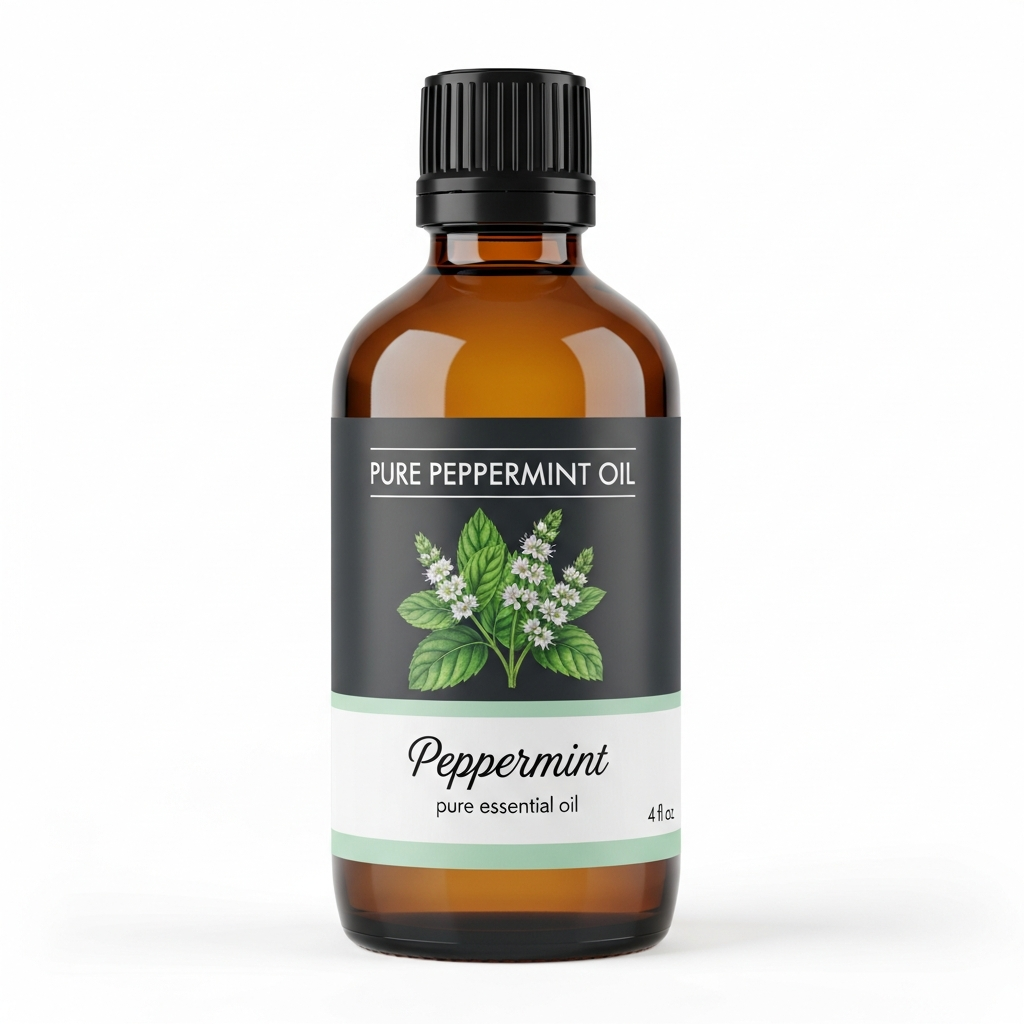
Peppermint Essential Oil
Our own Peppermint Essential Oil, in sizes from 0.5 oz to bulk.
From $10.99
Shop Now →The two figures on our pages, and what they are
Our Mentha piperita page says the oil typically keeps for 3 to 5 years. Our Mentha arvensis (cornmint) page says typically 2 to 3 years. Both are the shop's stated expectations for that oil. Neither is a tested result, neither comes with a stability study, and the published certificate of analysis for the piperita sample lists no best-by date (it reports one refractive index and nothing else), while the published GC-MS report for the arvensis oil carries no date either. So treat each range as a planning figure from the seller. The fact that the two oils carry different figures is itself a reason not to read the numbers as physics: nothing we publish explains why one would last a year longer than the other.
What changes in the bottle
The Tisserand Institute (Tisserand Institute, updated 2022) names three causes of oxidation: oxygen, light and heat, and says oxidation changes odour. Its public page gives no shelf-life numbers (those sit in a paid class and chart) and does not mention peppermint, so it supports the mechanism and nothing more precise.
For peppermint specifically, the oldest usable source is a US patent granted in 1984 (US 4,440,790, filed 1982). It describes deterioration of peppermint oil in storage, which alters odour and flavour, as a known problem, attributes it largely to oxidation (citing a 1952 study), and names menthofuran as one of the main sources of off-notes. A patent is a company's claim about its own process, not a controlled ageing study. It also says earlier attempts to stop the change with antioxidants had failed. Take from it only this: the people who handle peppermint oil industrially have long treated oxidation as the thing that ages it.
Evaporation of the lightest components is the other loss people mention. No source fetched for this article quantified it for peppermint oil, so no number is offered here.
Why aged oil matters more on skin than in a diffuser
Peppermint oil contains some limonene. The ISO 856 profile as reproduced in the Cosmetic Ingredient Review report (CIR, 2018) gives limonene at 1.0 to 3.0% for oils from origins other than the US and 1.0 to 2.5% for the US type. Limonene is one of the best-studied terpenes for what happens when it oxidises, and the studies are on skin allergy:
- Dittmar and Schuttelaar (Contact Dermatitis, 2019) patch tested 821 consecutive patients at a Dutch university dermatology clinic. 77 (9.4%) reacted to limonene hydroperoxides at 0.3% in petrolatum and 96 (11.7%) to linalool hydroperoxides at 1.0%; 38 reacted to both. These were dermatitis patients, a selected group, not the general public.
- Bråred Christensson and colleagues (Contact Dermatitis, 2010) tested 3,418 consecutive dermatitis patients with air-exposed (oxidised) linalool: positive reactions rose from 0.83% at 2.0% in petrolatum to 7.2% at 11.0%.
Both studies used deliberately oxidised pure compounds, not aged peppermint oil. Whether an old bottle of peppermint oil builds up enough of these products to matter has not been shown by anything fetched here. The reasoning is narrower and still worth acting on: the hazard these papers document is a skin hazard that grows with oxidation, so an oil you suspect is old should be taken off your skin-use list first. Our own safety copy already asks for 0.5% to 2% in a carrier oil and a patch test on a small area; a patch test with a questionable bottle is the cheap check, and a reaction is a question for a dermatologist or allergist, not for a seller.
Air in the bottle: the arithmetic
If oxygen is a cause of ageing, a bottle that is mostly air has more of it to work with. The CIR report lists a specific gravity of 0.896 to 0.908 for peppermint oil in the USP specification (general literature, not a figure for our oils; we publish no density). Using 0.90 g/ml:
- 5 lb is 2,268 g, about 2,520 ml, or roughly 85 oz of oil.
- A 16 oz bottle with 1 oz of oil left holds about 15 oz of air, or 15 x 29.57 = 444 ml. Decant that last ounce into a 1 oz bottle filled to the neck and the air drops to almost nothing.
That is why our bulk pages advise decanting working amounts: you open a small bottle often and the big one rarely. Our pages also say to keep the oil tightly capped in a cool, dark place away from heat and sunlight, which matches the three causes above.
Will you finish it inside the window?
This is the decision that matters for the larger sizes. Take the 5 lb container (about 2,520 ml) and the shop's own figures, with a usage rate you supply:
| Window | Oil to use per month to finish 2,520 ml |
|---|---|
| 2 years (low end for cornmint) | about 105 ml (3.5 oz) |
| 3 years | about 70 ml (2.4 oz) |
| 5 years (high end for piperita) | about 42 ml (1.4 oz) |
For scale, 2% of a 1 oz carrier blend is 0.59 ml, about 12 drops at 20 drops per ml (droppers vary). A hobbyist making a few ounces of blend a month uses a fraction of a millilitre per batch and would need many years to finish a 5 lb container. If your monthly use is nowhere near the table, the 5 lb container is outside the window by arithmetic, and a smaller size is the better order. The bottle-size article covers the sizes; the bulk page is for buyers who really do use it at that rate.
Checking a bottle you already own
No source fetched here gives a published acceptance limit, such as a peroxide value, for peppermint oil, so there is no number to hold your bottle against. What can be done, in order:
- Smell it against a fresh bottle or your memory of it. The Tisserand Institute page lists odour change as the effect of oxidation. A flat, sour or harsh note where the cool sweet note was is a reason to stop using it on skin.
- Do not lean on the certificate. The published COA reports a refractive index of 1.4596 +/- 0.0003 for one piperita sample, inside the 1.459 to 1.465 range the CIR report gives for the pharmacopoeial oil. Nothing fetched here connects refractive index to age, and the COA is not tied to any retail lot, so it cannot tell you the state of a bottle on your shelf.
- If you need a measured oxidation marker for a product you will sell, ask a testing laboratory which markers it can run on a terpene-rich oil and what limit applies. Get the report in writing, for the oil you actually hold.
- Patch test at the low end of the range (0.5% to 1% in a carrier) before putting an old bottle on a face, scalp or body. Our distillation page says to use far less than you think you need.
Two other points keep the question honest. The oil is a concentrated material and should never be swallowed, aged or fresh. And if you make products for sale, the shelf life of the finished product is set by the weakest ingredient, which may be the carrier oil or butter rather than the peppermint; the carrier-oil article goes into that, and the safety basics cover dilution. For a general question about the order of purchase or storage see the FAQ.
Our position is simple: buy the size you will use within the shorter of the two windows, keep it capped, dark and cool, decant for daily use, and let your nose and a patch test overrule the printed date.
Peppermint Essential Oil
Peppermint Essential Oil from our own shop, in sizes from 0.5 oz to bulk.
From $10.99
Shop Now →Sources & Further Reading
- Tisserand Institute, 2022. Oxidation and the Shelf Life of Essential Oils. tisserandinstitute.org
- US Patent and Trademark Office, 1984. US 4,440,790, Process for stabilizing peppermint oil. patents.google.com/US4440790A
- Cosmetic Ingredient Review, 2018. Amended Safety Assessment of Mentha piperita (Peppermint)-Derived Ingredients as Used in Cosmetics. cir-safety.org
- Dittmar D, Schuttelaar MLA, 2019. Contact sensitization to hydroperoxides of limonene and linalool. Contact Dermatitis 80(2):101-109. PMID 30378131
- Bråred Christensson J et al., 2010. Linalool, a significant contact sensitizer after air exposure. Contact Dermatitis 62(1):32-41. lup.lub.lu.se/1547331