Peppermint Oil for Mice in Cars, RVs and Storage
A car that sits for weeks in a garage or storage unit gives a mouse three things it likes: shelter, quiet and often a crumb or two. Peppermint oil is a popular answer, partly because it smells so strong. The pest specialists who write the university guidance start somewhere less glamorous, and their order of operations is the one that holds up.
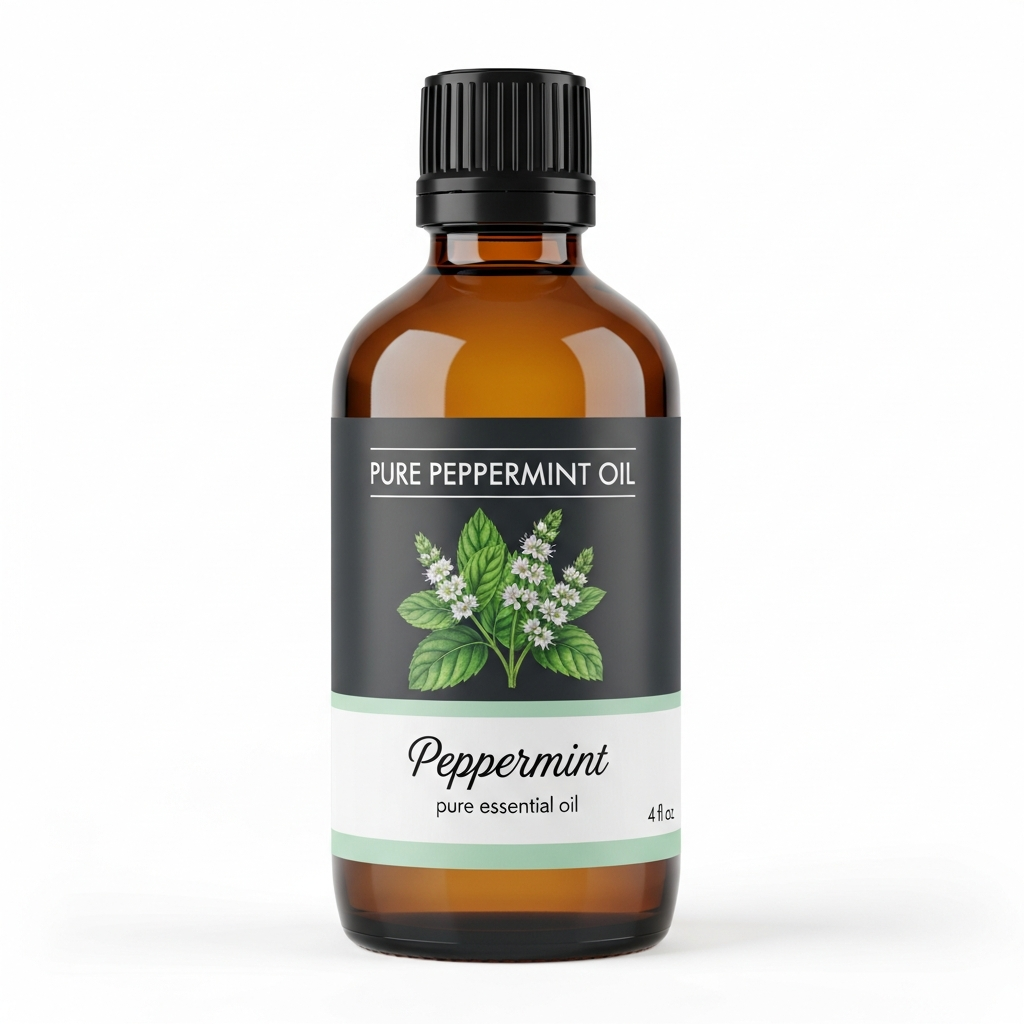
Peppermint Essential Oil
Our own Peppermint Essential Oil, in sizes from 0.5 oz to bulk.
From $10.99
Shop Now →What the extension pages say
The University of California Statewide IPM Program is our clearest source. On rats, it says that rats have an initial aversion to some odors and tastes, but no repellents have been found to solve a rat problem for more than a very short time, and that no truly effective rat repellents are registered in California. It describes sanitation as fundamental and ongoing, and it advises sealing all holes larger than 1/4 inch with steel wool, wire screen or sheet metal, because rats can chew through plastic, foam, wood and caulk.
For house mice the same program makes a similar case. Mice can squeeze under gaps 1/4 inch tall and through openings 3/8 inch wide, and good housekeeping seldom controls them completely on its own while poor housekeeping lets them thrive. In millimetres, those are 6.35 and 9.5. Neither page names peppermint oil. That silence is not a verdict on peppermint; it simply means the program's guidance does not rest on scent.
What we found on peppermint and rodents
We searched Europe PMC on 29 October 2026 for essential oils with house mice as repellents or deterrents, and for peppermint with mice, rats or rodents. Among the first records returned for each, none was a trial of peppermint oil as a rodent repellent. We read only the top of each list, so this is a snapshot rather than proof that no study exists, but it does mean we have no species, concentration or duration to report, and we have not used web pages that quote percentages without a study behind them.
What the EPA label tells you
Peppermint oil and cornmint oil both appear on the list of active ingredients under the federal minimum-risk exemption, 40 CFR 152.25. The EPA describes minimum-risk products as ones it exempts from registration because they pose little to no risk. Exempt means the product did not go through registration, so a label with that status tells you the ingredient is allowed in the product. It does not tell you the product has been shown to work, and the rule bars such labels from claiming to control disease-carrying insects or rodents.
A sensible order for a car, RV or storage unit
- Look for signs. Droppings, chewed material and nests tell you more than any scent. If wiring looks damaged, a mechanic should see the vehicle before it is driven.
- Take away food and shelter. Seed, pet food, snacks and stacked cardboard near the vehicle give a mouse reasons to stay.
- Close the openings. Use the 1/4 inch rule for the building or unit, and check the owner's manual and a mechanic about the vehicle itself.
- Bring in a licensed pest professional for an established problem, or for a vehicle you cannot afford to have chewed.
- Scent last, as a small extra.
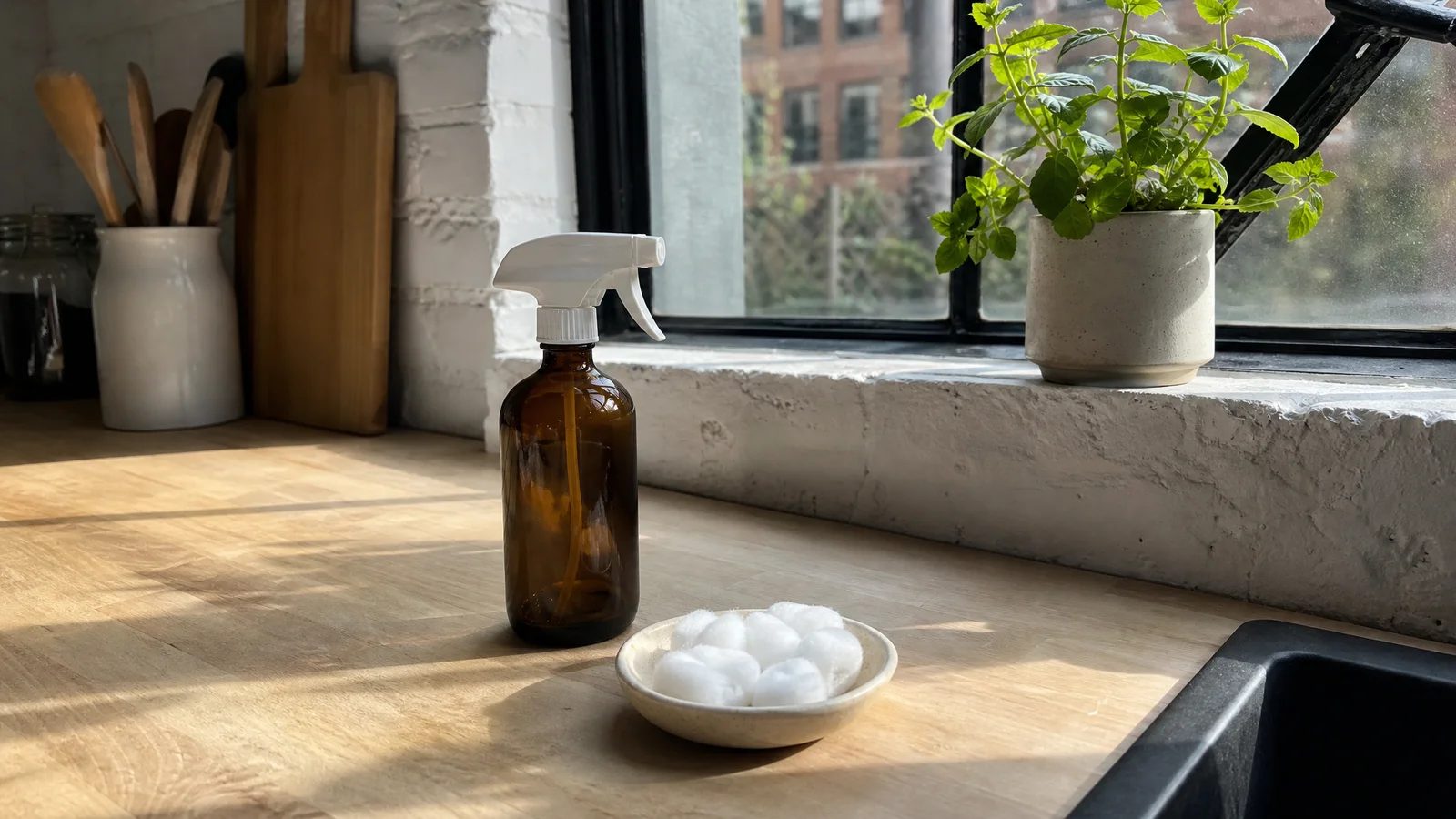
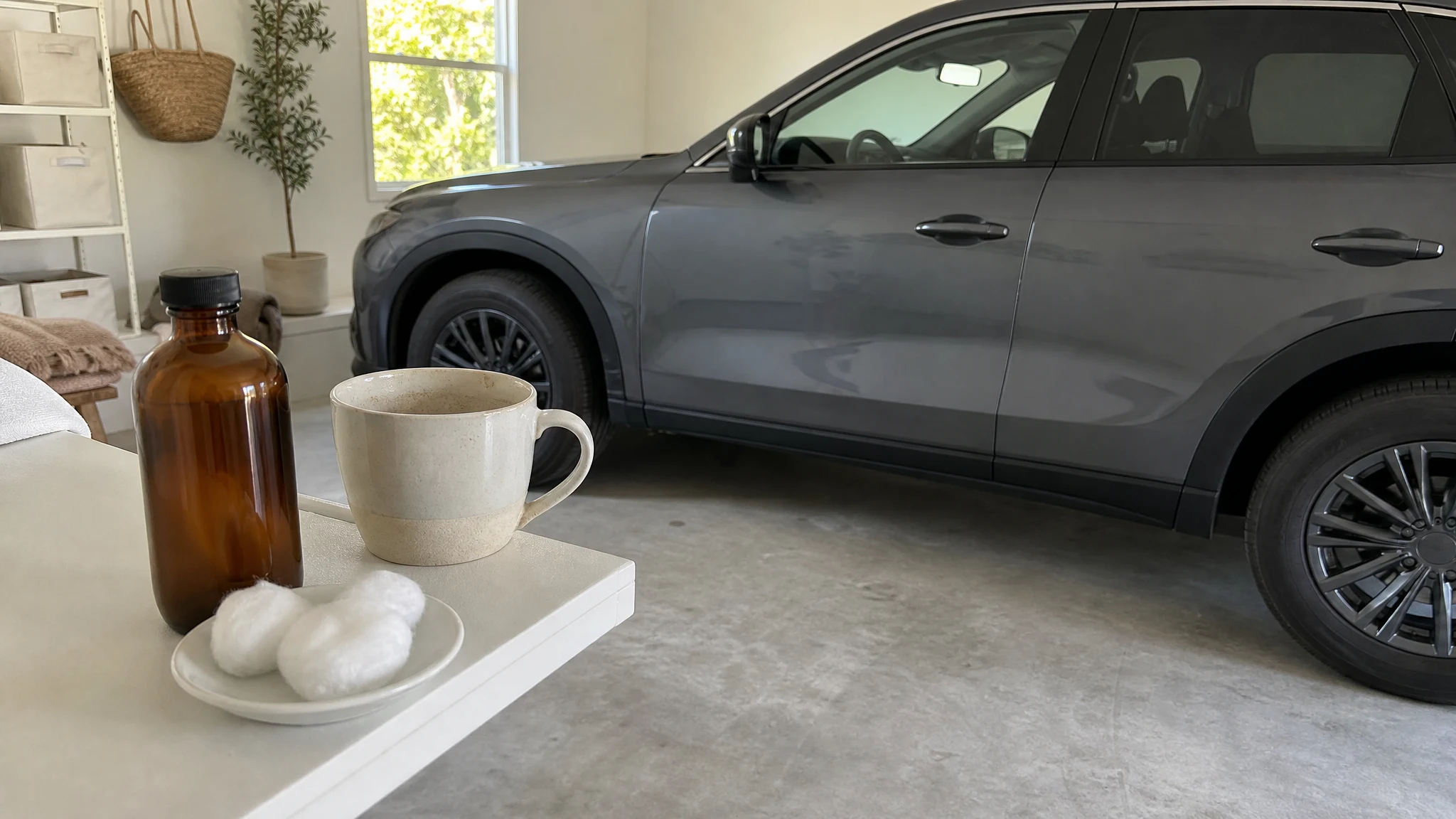
Because the UC pages treat sanitation as ongoing, a vehicle that rests for months benefits from a schedule. Our suggestion, a plan and not a sourced rule: for a six-month winter storage, check every four weeks, which is six short inspections with a flashlight. You are looking for droppings, shredded material, new nesting and any gap that has opened. That inspection is also where you would notice a scented cotton ball has stopped smelling of anything.
A walk-through before storage
The last ten minutes before you park a vehicle for the season are the best use of your time. Clear out wrappers, napkins and any snack stash, and vacuum the crumbs from the seats and the floor mats. Empty the glove box and the console of anything edible, and take out pet food and bird seed from the trunk. Look at the corners of the garage or the unit, where boxes lean against walls and make a cozy gap. Make a note of the date, so your first check has something to be measured against.
If you still like the idea of peppermint
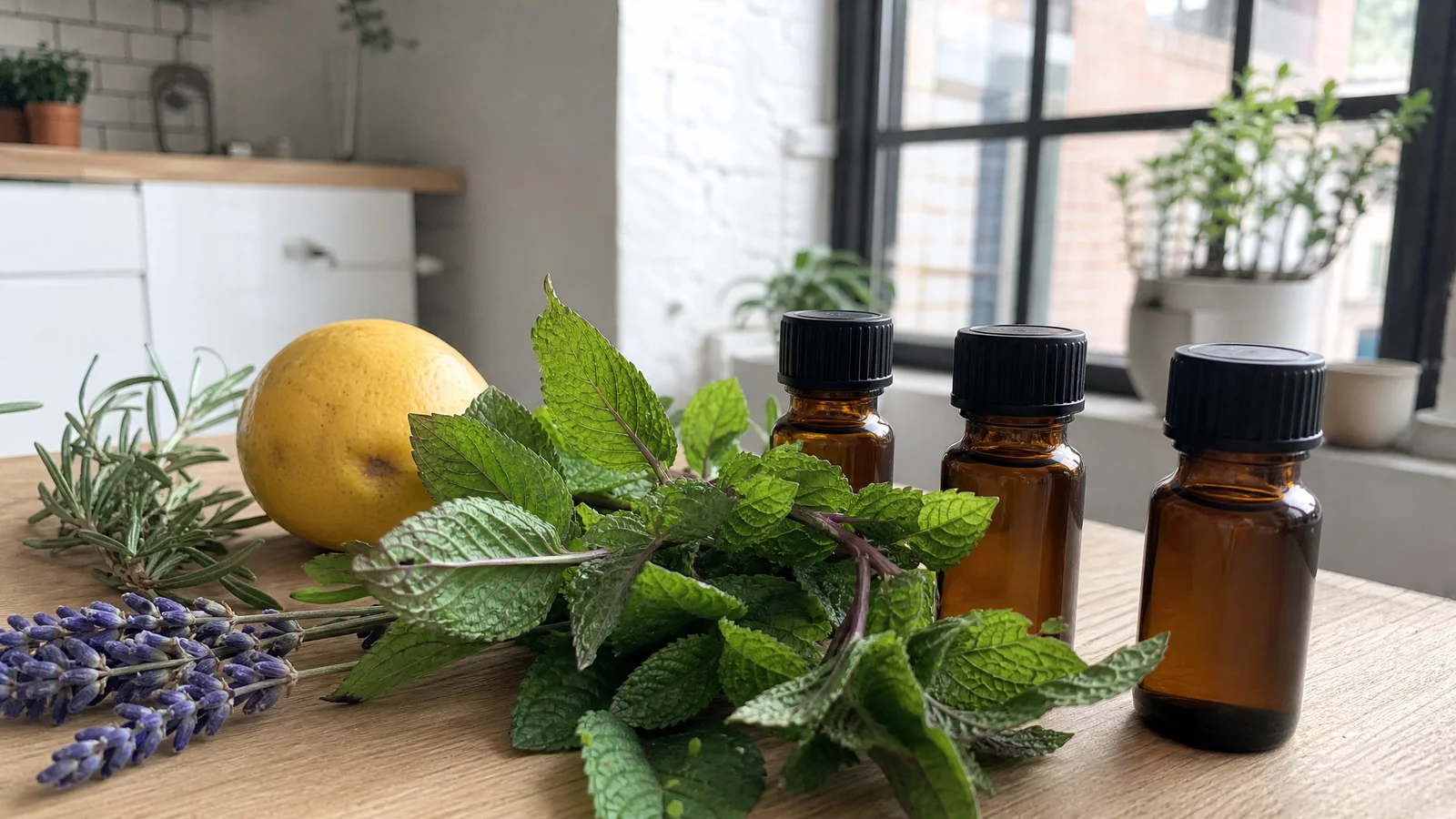
We sell two neat peppermint oils, a piperita and an arvensis (cornmint), for their cool, minty aroma, and we make no repellent claim for either. If you place a scented cotton ball in a garage or storage space, think about the scale. By our arithmetic, a 1 oz bottle (29.57 ml) holds roughly 590 drops at 20 drops per milliliter, so ten drops is about half a milliliter, a small amount of oil that no source we read ties to any effect on mice.
Keep oil away from hot engine parts, wiring and electrical components. No source we read addresses it, and the vehicle manual and a mechanic are the right authorities. A closed cabin or small unit also concentrates whatever you put in it, which is reasoning from the size of the space, so keep amounts small and the area ventilated before anyone spends time inside. Our safety line applies: keep the oil away from eyes, children and pets, and never take it internally. For household rooms, our posts on mice at home and natural mouse repellents take other angles.
A tidy, sealed space with a regular check is the plan that works, and a hint of peppermint can simply make the garage smell fresh while you do it.
Peppermint Essential Oil
Peppermint Essential Oil from our own shop, in sizes from 0.5 oz to bulk.
From $10.99
Shop Now →Sources & Further Reading
- UC Statewide IPM Program. Rats (Pest Notes 74106)
- UC Statewide IPM Program. House Mouse (Pest Notes 7483)
- US EPA. Minimum Risk Pesticides Exempted from FIFRA Registration
- Cornell LII. 40 CFR 152.25 - Exemptions for pesticides of a character not requiring FIFRA regulation