Blending With Peppermint Oil: Best Partner Oils
Peppermint is a strong personality. It arrives first, it is cool and sharp, and it will happily take over a blend if you let it. The art of blending with it is mostly the art of choosing a partner that either sharpens the effect or gives it something to lean against.
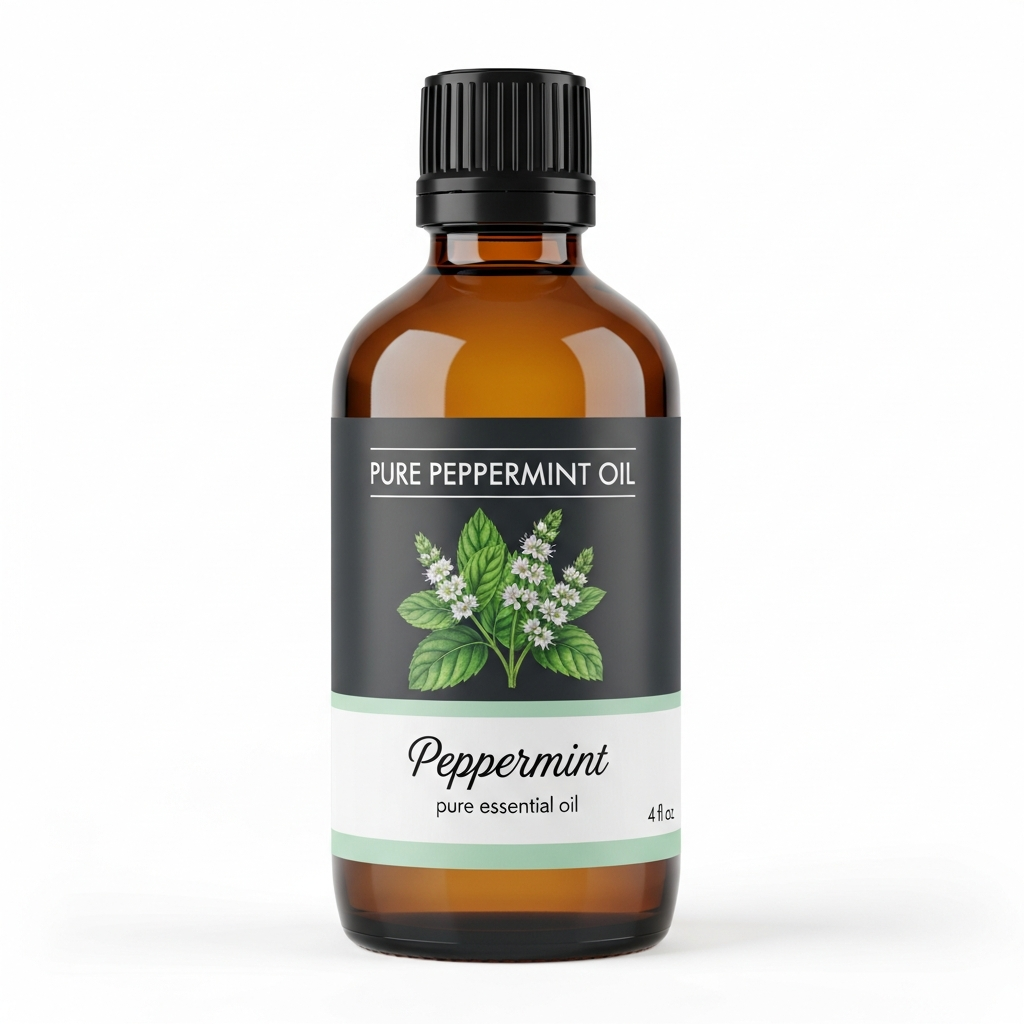
Peppermint Essential Oil
Our own Peppermint Essential Oil, in sizes from 0.5 oz to bulk.
From $10.99
Shop Now →Why partners behave the way they do
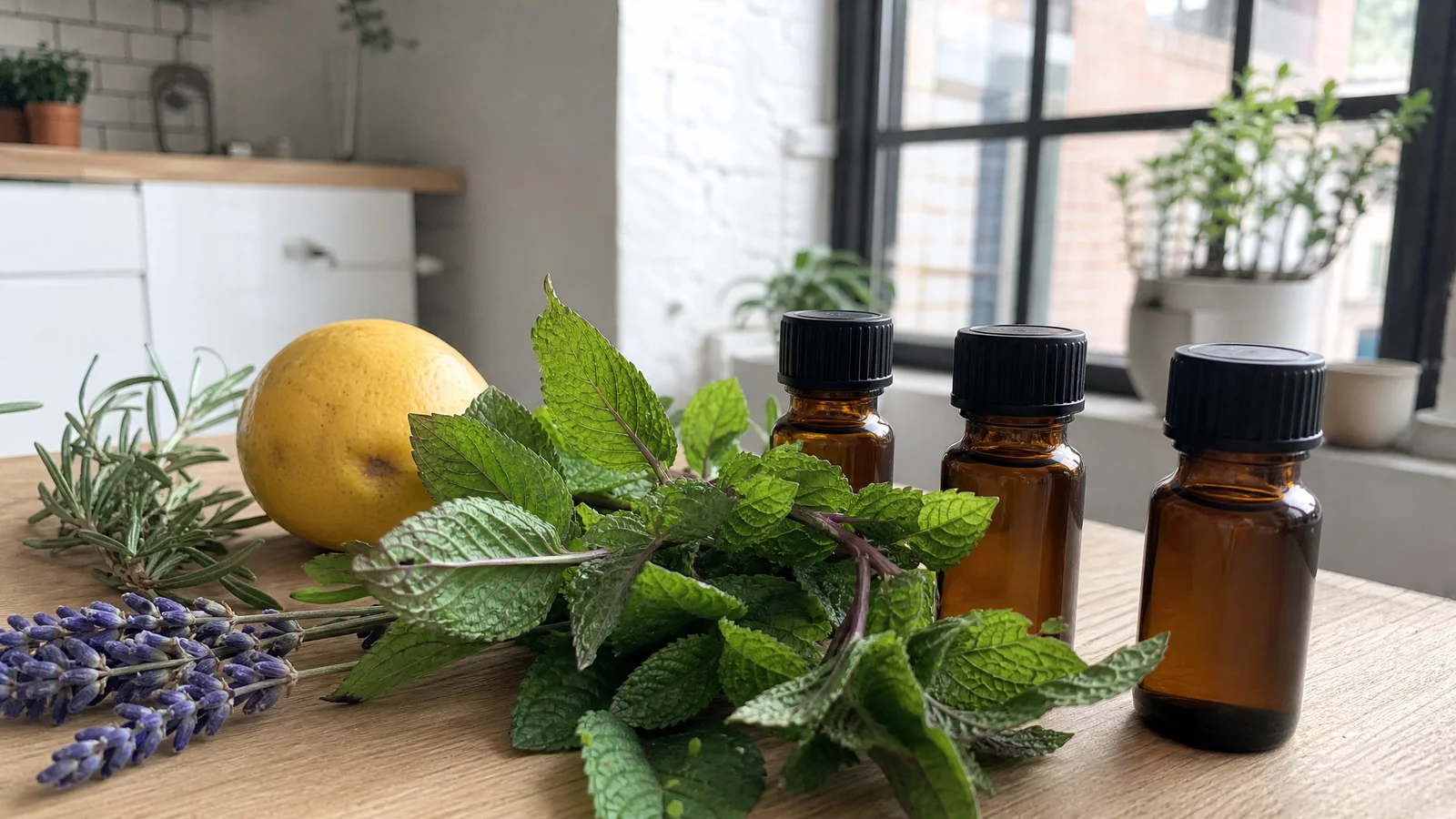
We describe our piperita oil as crisp, cool and minty with a faint candy-like sweetness, and we suggest eucalyptus, spearmint, rosemary, lavender, sweet orange and tea tree as partners. The EU safety opinions on feed-additive oils publish batch compositions for four of those, which shows why the pairings work. These are samples from the assessments, not our oils, but they describe each oil's character well.
| Oil | Main components (mean % of peak area) |
|---|---|
| Peppermint | Menthol 43.4, menthone 21.6, isomenthone 6.4, 1,8-cineole 4.3 |
| Eucalyptus globulus | 1,8-cineole 79.5, limonene 8.0, p-cymene 5.6 |
| Lavender | Linalyl acetate 37.1, linalool 31.2 |
| Spearmint | Carvone 68.5, limonene 12.4 |
What each pairing does
These are readings of the table, not notes from a trial.
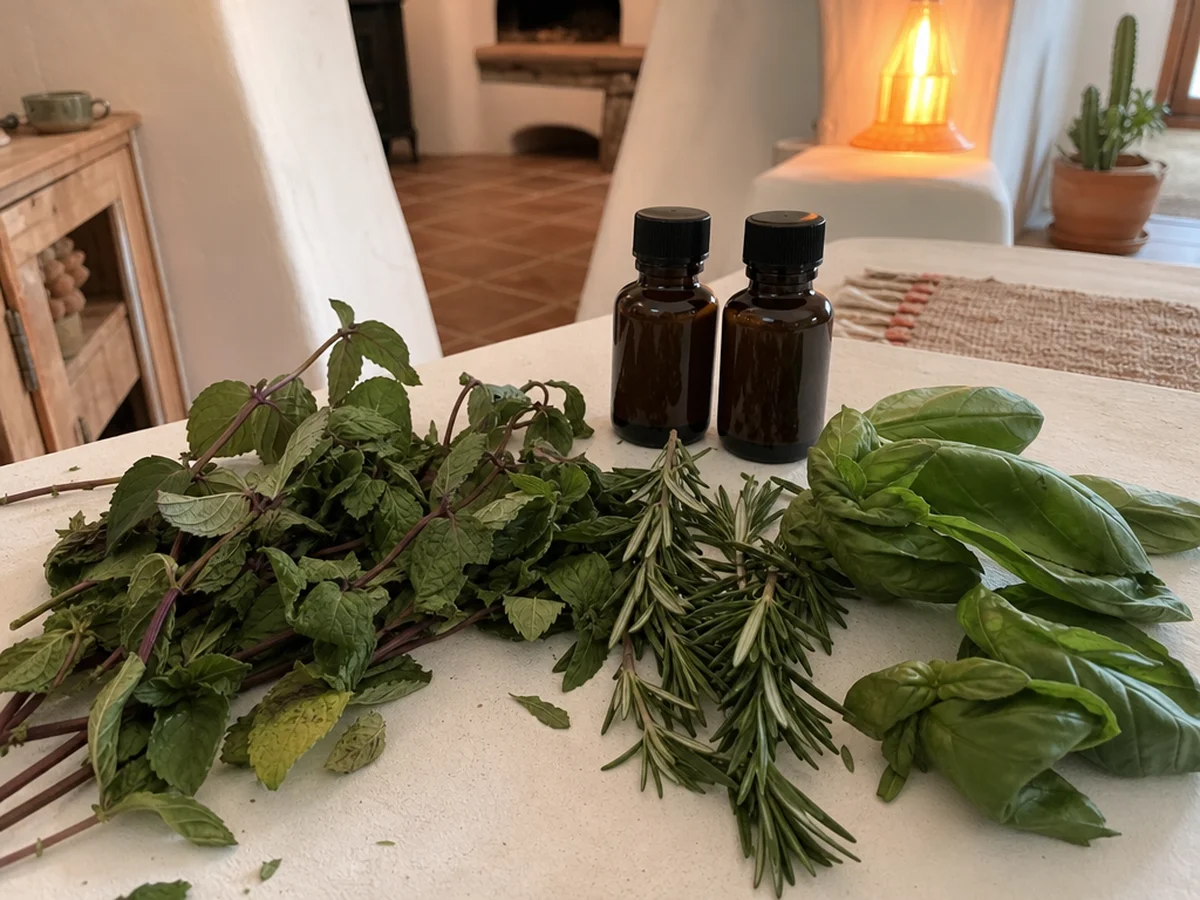
- Eucalyptus. Peppermint already carries a little 1,8-cineole, and eucalyptus is mostly that compound. The pair deepens a sharp, camphor-like top note rather than adding a new family of scents, so a small amount of eucalyptus goes a long way.
- Spearmint. Its signature is carvone, with very little menthol, so it softens a minty blend toward something sweeter and rounder. Our peppermint versus spearmint comparison looks at the two in detail.
- Lavender. Linalool and linalyl acetate belong to a different chemical family from menthol and menthone, which is why the combination reads as a mint top over a floral body.
- Sweet orange, rosemary and tea tree. They are on our pairing list for aroma, and sweet orange in particular brightens the cool edge of peppermint with a citrus lift.
We sell only peppermint oils, so you will find the partner oils, carrier and bottles at a craft or supply shop. Look for a supplier that gives the botanical name and a batch document. You can see them in our shop, and larger sizes are on our bulk page, with a guide to buying peppermint oil in bulk.
Smell before you blend
Before any oil goes into a bottle, we like to smell the candidates side by side. Put a drop of each on its own paper strip, wave them gently a few inches from your nose, and then hold two strips together. You will notice that peppermint announces itself first and the partner arrives a few seconds later, in the background. If the pairing sounds like one clear idea, such as cool mint over a floral body, it is ready to try. If it sounds like two oils arguing, change the partner before you change the amounts.
Give your nose a rest between sniffs. After three or four oils everything starts to smell alike, so step away, breathe in the crook of your elbow, and come back to the strips a minute later.
Set one total strength, then divide it
A blend has one dilution, not one per oil. Decide the total essential-oil percentage first and then share it out. Our guidance for skin is 0.5% to 2% in a carrier oil with a patch test first, and the Cosmetic Ingredient Review (2018) reports peppermint oil at up to 1.9% in rinse-off products and up to 5% in face and neck leave-on products. Those survey figures describe what manufacturers use, and they are for peppermint alone, so for a mixture we stay at the lower end and give peppermint the smaller share.
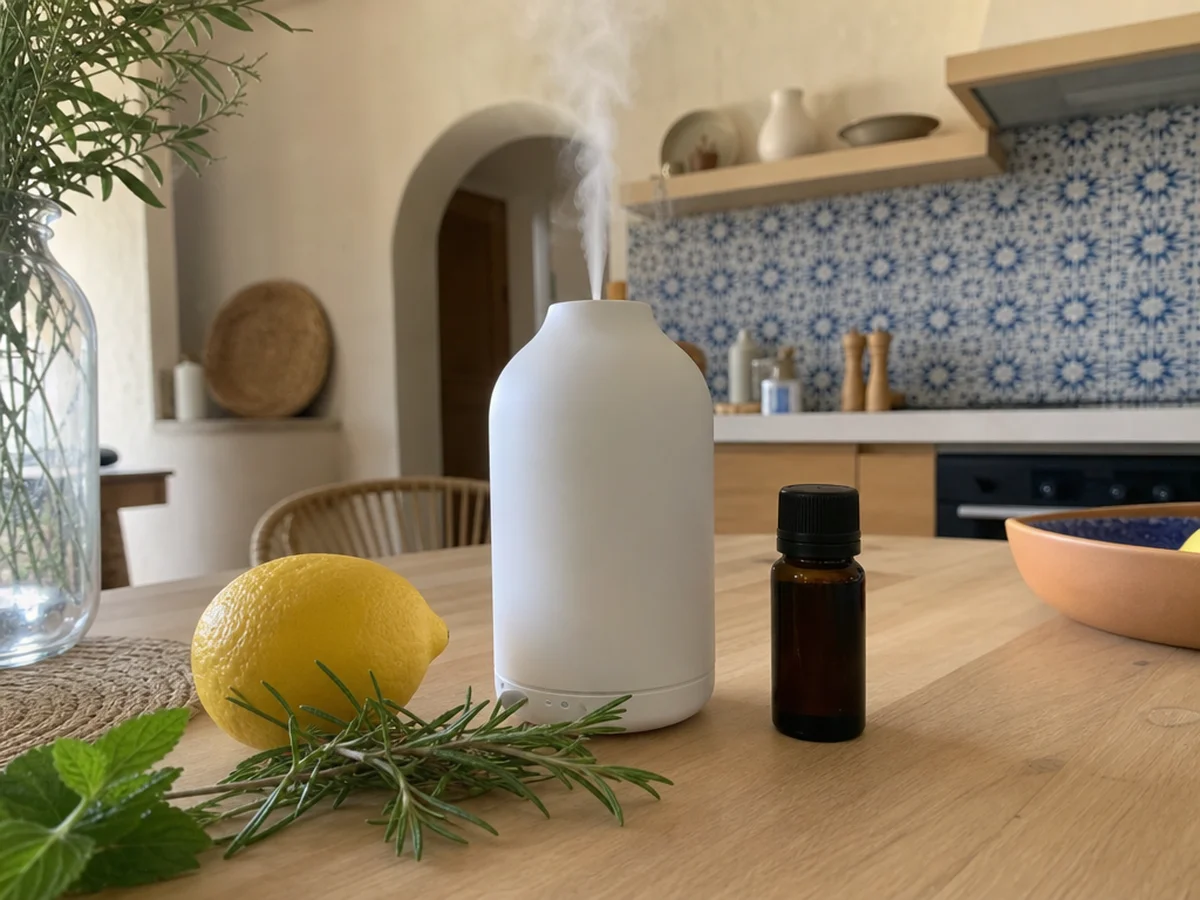
The arithmetic, in a 30 ml bottle with a milliliter taken as roughly 20 drops: 0.5% total is about 3 drops, 1% about 6 drops, 2% about 12 drops. Each drop is about 0.17%, so a few drops added "to taste" move the strength more than they seem to.
Here are three example splits, shown as arithmetic for a 30 ml bottle, with no claim about benefit:
- Mint over floral, 1% total: 2 drops peppermint and 4 drops lavender, which leaves peppermint at about 0.33% of the finished oil.
- Cool camphor, about 0.67% total: 3 drops peppermint and 1 drop eucalyptus, with peppermint at 0.5%.
- Sweet mint, 1% total: 2 drops peppermint and 4 drops spearmint, so the carvone note leads.
The skin sees everything together
The EU opinions classify peppermint, eucalyptus, lavender and spearmint oils as irritants to skin and eyes and as skin and respiratory sensitisers. Adding a second oil does not dilute that; it adds another ingredient to the list. Each partner at a fraction of a percent is a smaller exposure than any one of them alone at 2%, but the skin meets them together. The patch-test results in the CIR report, including 20% peppermint oil in 104 and 101 volunteers with no sensitization and a 0.53% positive rate among 71 patients at 2% in petrolatum, come from the single oil, so patch test the finished blend on the inner forearm and wait a day before wider use.
Keep the blend away from the eyes, and do not extend it to the face of an infant or young child, as the NCCIH advises. Our dilution guide, carrier oil comparison and rollerball formulas pick up the practical side.
Dress the blend for the season
Think of blends the way you think of recipes. For a winter mix, our piperita and sweet orange make an easy pair, with the citrus warming up the cool edge. For something that reads more like a summer morning, let spearmint carry the sweetness and keep peppermint in a supporting role. Whatever you choose, write the drop counts and the date on the bottle, let the mix rest capped overnight, and smell it again the next day. The first sniff is mostly the top notes, and a second look tells you what is left.
Start with the smallest peppermint share that still reads as mint, let the partner carry the character, and add a drop only if the lower mix turns out too faint.
Peppermint Essential Oil
Peppermint Essential Oil from our own shop, in sizes from 0.5 oz to bulk.
From $10.99
Shop Now →Sources & Further Reading
- EFSA FEEDAP Panel, 2025. Safety and efficacy of a feed additive consisting of an essential oil derived from the aerial parts of Mentha × piperita L. (peppermint oil) for use in all animal species (FEFANA asbl)
- EFSA FEEDAP Panel, 2023. Safety and efficacy of a feed additive consisting of an essential oil derived from Eucalyptus globulus Labill. (eucalyptus oil) for all animal species (FEFANA asbl)
- EFSA FEEDAP Panel, 2024. Safety and efficacy of a feed additive consisting of an essential oil derived from the flowering tops of Lavandula angustifolia Mill. (lavender oil) for use in all animal species (FEFANA asbl)
- EFSA FEEDAP Panel, 2025. Safety and efficacy of a feed additive consisting of an essential oil derived from the aerial parts of Mentha spicata L. (spearmint oil) for use in all animal species (FEFANA asbl)
- Cosmetic Ingredient Review, 2018. Amended Safety Assessment of Mentha piperita (Peppermint)-Derived Ingredients as Used in Cosmetics
- NCCIH. Peppermint Oil: Usefulness and Safety