Peppermint Oil for Ants and Spiders: What Studies Show
Peppermint oil has a loyal following as the natural answer to ants in the kitchen and spiders in the corners. The honest picture is more interesting than the folklore: one careful lab study really did find that ants avoided a dish treated with peppermint oil, and that result tells you a good deal about what scent can and cannot do around a home.
Peppermint Essential Oil
Our own Peppermint Essential Oil, in sizes from 0.5 oz to bulk.
From $10.99
Shop Now →What the ants actually did
In 2024, Holloway and colleagues tested several common home remedies on Argentine ants (Linepithema humile). They coated the floor of a small dish with a 1% solution of peppermint oil in hexane, let the solvent evaporate for two hours, then added water to make a damp shelter. Twenty workers were put in a box with the dish, and the team counted how many had moved in after two and four hours, repeating each treatment twelve times.
The contrast was sharp. In the first trial a dish with water alone held about 18 of 20 ants at two hours, while the peppermint dish held fewer than one on average. At four hours it was about 19 against about one. Of the natural materials compared, the authors found 1% peppermint oil the most deterrent. It is a clean result, and it is fair to say peppermint oil has a real effect on these ants in these conditions.
Reading it for a real kitchen
The design shows what the result covers. The oil was fresh, the test lasted four hours, and the ants chose between two places inside a box. That makes it good evidence that ants would rather not settle in a freshly treated shelter. It does not measure how long a scent holds on a countertop, and it does not test a worker following a trail to a crumb. The study also had no hexane-only comparison, so the solvent cannot be fully separated from the oil.
That matches how the University of California pest specialists describe plant oils. They say oils such as peppermint have excellent contact activity but limited residual activity, which is a polite way of saying a scented wipe-down helps for a while and then fades. For a trail that keeps returning, their advice starts elsewhere: wipe the trail with soapy water, follow it back to where ants come in, seal that gap, and store food in sealed containers. They describe enclosed baits as more effective and safer than sprays, since workers carry the bait back to the nest.
Put those together and a sensible role appears. Peppermint oil can be a pleasant, fresh-smelling part of cleaning the surfaces ants have been using. The sealing, the sealed food and the bait do the structural work.
Spiders: a different story
For spiders we looked for the same kind of evidence. A Europe PMC search on 4 November 2026 for peppermint with spider, repellent, repellency or deterrent returned 93 records, and the first ten included no peppermint study on true spiders (two were about spider mites, which are a different group). We only skimmed that list, so it is not proof that nothing exists, but there is no spider result we can point to.
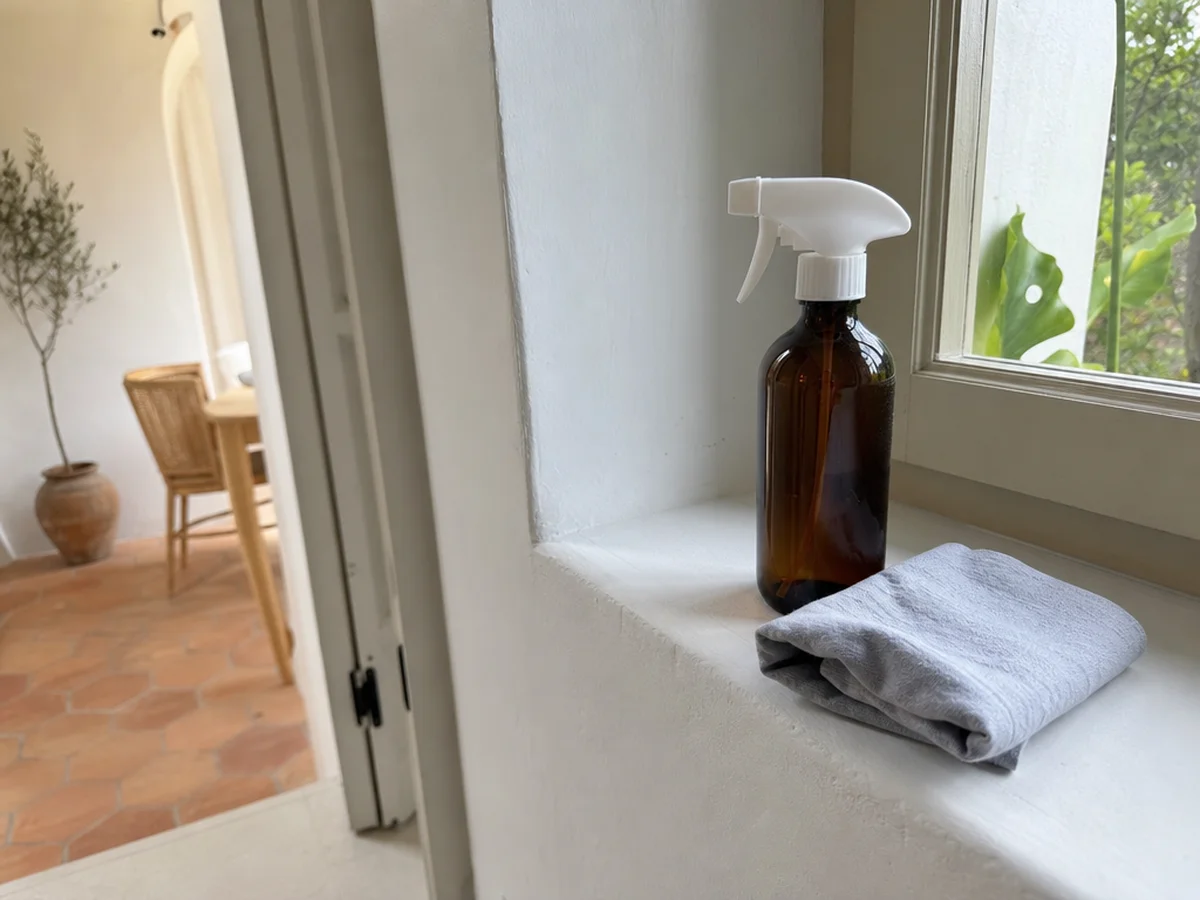
What does exist is practical advice. The UC pest guide on spiders suggests sealing cracks in foundations and gaps around windows and doors, vacuuming webs and corners regularly, clearing clutter and leaf litter from around the foundation, and moving outdoor lights away from doors, since lights draw the insects that spiders eat. It also points out that a spider in the corner often means prey is nearby. Anything unusual or severe, such as a bite you are worried about, belongs with a physician or poison control.
A kitchen routine that does the real work
If ants are a regular visitor, turn the dull steps into a small routine. Wipe the counters and the floor along the baseboard at the end of the day, brush crumbs off the table, and rinse jars that held anything sweet before they go in the recycling. Pick up pet food bowls overnight. Then walk the edge of the room with a flashlight and watch where the line of ants first appears; that spot is the one to seal. None of it needs a bottle of anything, and all of it adds up.
If you like the scent around the house
We sell two peppermint oils, a Mentha piperita and a Mentha arvensis (cornmint), both neat, and we sell them for their cool, minty aroma. We make no pest-control claim for either. If you use a diluted oil in a cleaning routine, a few sensible habits apply.
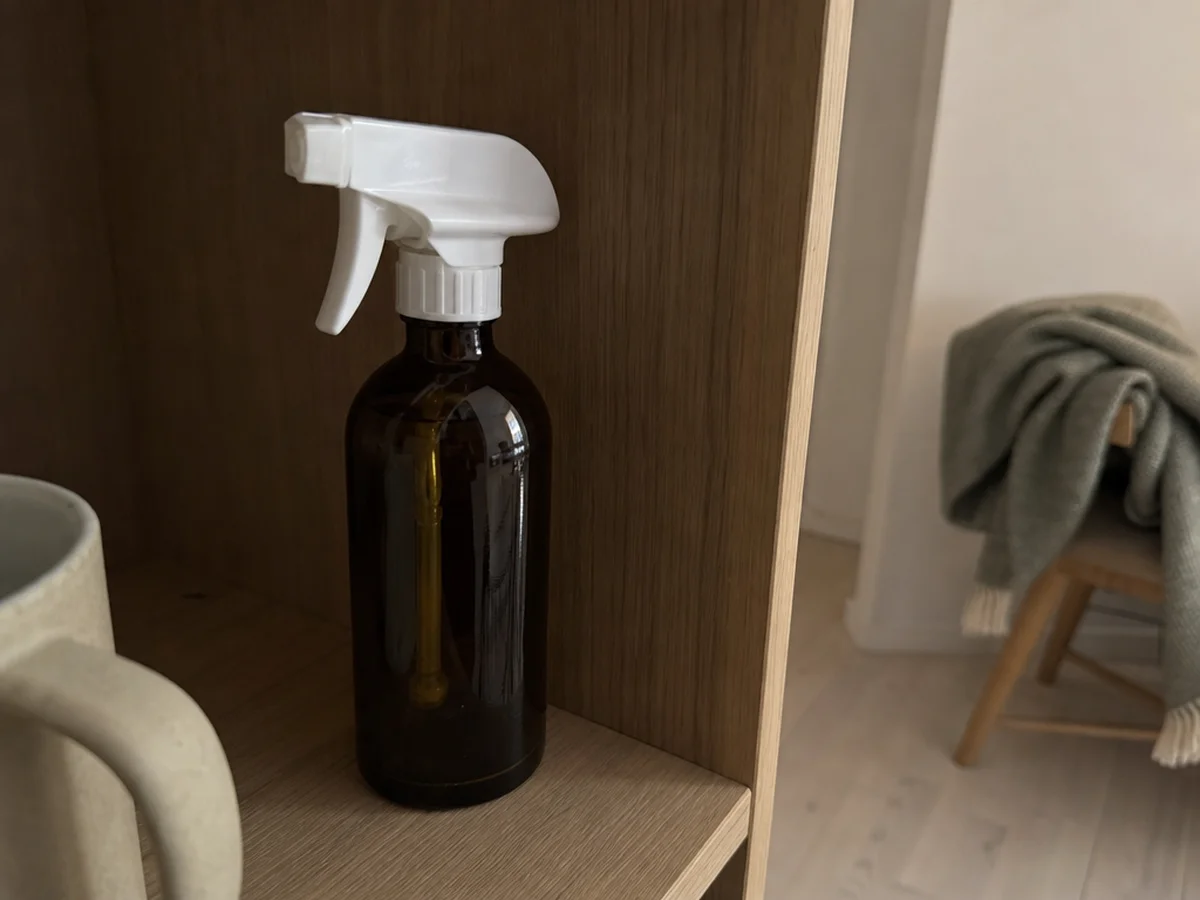
- Dilute, and keep it away from skin and eyes. Our dilution guide explains why percentages matter more than drops.
- Mind the pets. The ASPCA lists mint as toxic to dogs and cats, with essential oils as the toxic principle, so keep treated floors and low surfaces out of paw and tongue reach. Our posts on cats and dogs go into detail.
- Keep it away from infants. The NCCIH advises against putting peppermint oil on the face of infants or young children, because inhaled menthol can affect breathing, so keep treated spots out of nurseries.
- Water will not carry it. Menthol dissolves in water only at about 456 to 490 mg per liter (PubChem), so oil in a plain water spray floats in droplets. Shake any mix every time and test a hidden patch of surface before you spray varnished wood or plastic.
The same habit of checking what a study actually tested runs through our posts on mice and cockroaches.
So the ants really do dislike a fresh coat of peppermint oil, and a clean, sealed kitchen with its trail wiped away does more than any scent. Enjoy the aroma for what it is, and let the caulk and the bait handle the rest.
Peppermint Essential Oil
Peppermint Essential Oil from our own shop, in sizes from 0.5 oz to bulk.
From $10.99
Shop Now →Sources & Further Reading
- Holloway et al., 2024. Common Home Remedies Do Not Deter Argentine Ants, Linepithema humile (Hymenoptera: Formicidae), from a Preferred Harborage. Insects 15(10):768
- UC Statewide IPM Program. Ants (Pest Notes 7411)
- UC Statewide IPM Program. Spiders (Pest Notes 7442)
- ASPCA. Toxic and Non-toxic Plants: Mint
- NCCIH. Peppermint Oil: Usefulness and Safety
- PubChem. (-)-Menthol, CID 16666, solubility record