Peppermint Oil on the Scalp: Blend Math and the Tingle
The first thing anyone notices about peppermint oil on the scalp is the cold. Within a minute or two the skin feels icy, even though nothing has actually cooled. It is one of the most distinctive sensations in aromatherapy-style products, and it has a neat explanation.
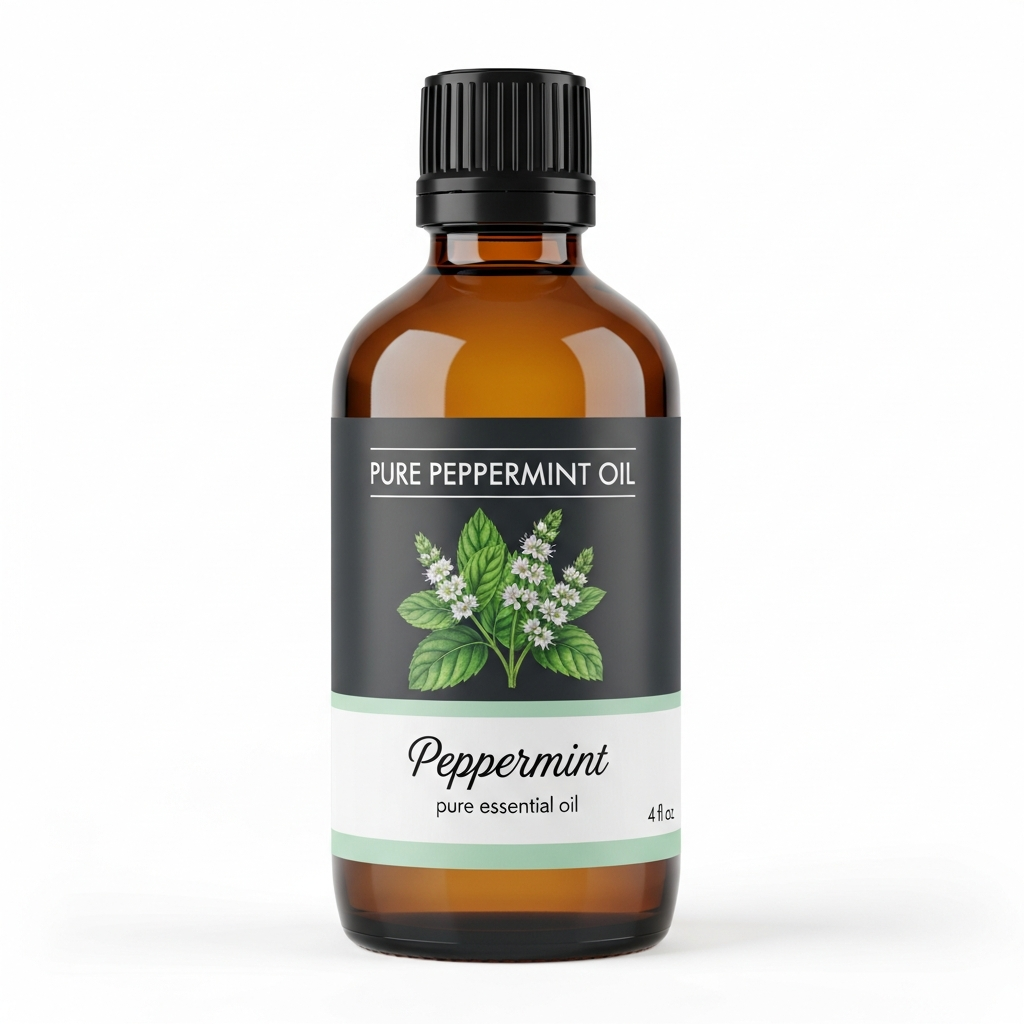
Peppermint Essential Oil
Our own Peppermint Essential Oil, in sizes from 0.5 oz to bulk.
From $10.99
Shop Now →Cold without any cooling
In 2002, McKemy and colleagues reported in Nature the identification of a receptor in sensory neurons that responds to both cold temperatures and menthol. That is the short version of why peppermint feels cold: menthol switches on the same nerve pathway that cold does, so the brain gets a "cold" message with no drop in temperature. Reasoning from that, the tingle is a sensation, a bit like a very quiet alarm. It is real and quite pleasant to many people, but it does not tell you anything about what is happening in the skin.
It also explains why more is not better. Menthol is a strong signal, and a stronger blend does not feel more refreshing for long. Past a point it simply stings, which is the skin's way of saying it has had enough.
A scalp blend, worked out
We sell our peppermint oils neat, so dilution is yours to do. Our guidance is 0.5% to 2% in a carrier oil with a patch test first, and for the scalp we would start at the bottom of that range. Published use levels point the same way. The Cosmetic Ingredient Review (CIR) 2018 report on peppermint oil lists maximum reported use of up to 0.96% in non-coloring hair products and up to 1.9% in rinse-off products, drawn from an industry survey. Those figures record what manufacturers use rather than a threshold we can call suitable for every scalp, which is one more reason to begin low and judge by how your skin responds.
Here is the arithmetic for a 30 ml bottle of carrier, with a milliliter taken as roughly 20 drops (droppers differ, so treat it as an estimate):
- 0.5% is about 0.15 ml of oil, roughly 3 drops.
- 1% is about 0.3 ml, roughly 6 drops.
- 2% is about 0.6 ml, roughly 12 drops.
The carrier is your choice. We mention jojoba and sweet almond as familiar options, and you will find both at a craft or grocery shop, since we sell only peppermint oils. Our carrier oil comparison covers what suits which job, and the dilution guide explains why we think in percentages rather than drops.
Making it a pleasant routine
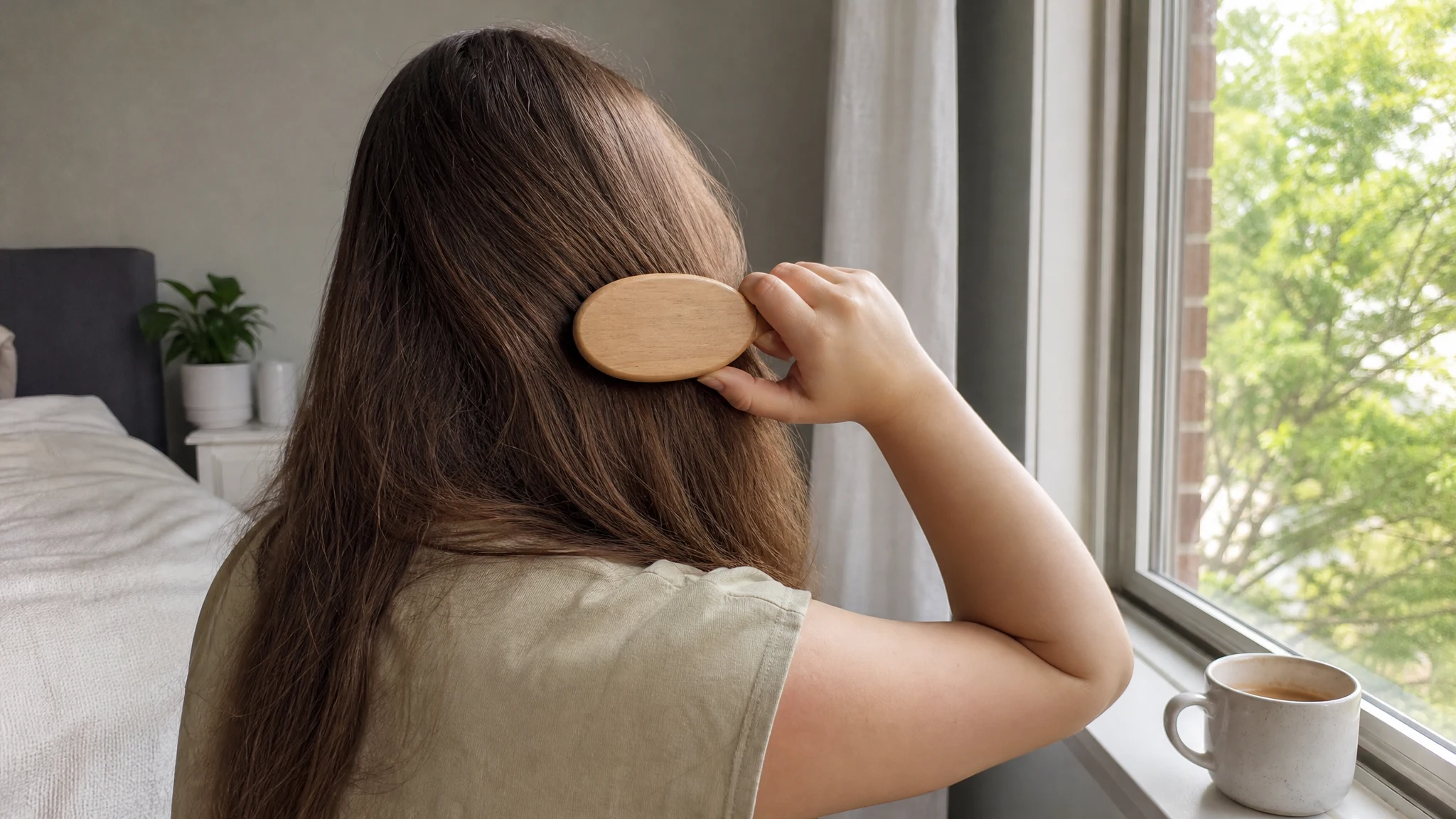
A scalp oil works best when it is simple. Part the hair, apply a little of the diluted blend with your fingertips, massage it in for a minute, and wash your hands well afterward so none ends up near your eyes. Menthol and eyes do not mix, and a scalp sits closer to them than most places you would apply an oil, so keep the blend away from the forehead line and temples. If you rinse it out in the shower, close your eyes and tilt your head back first.
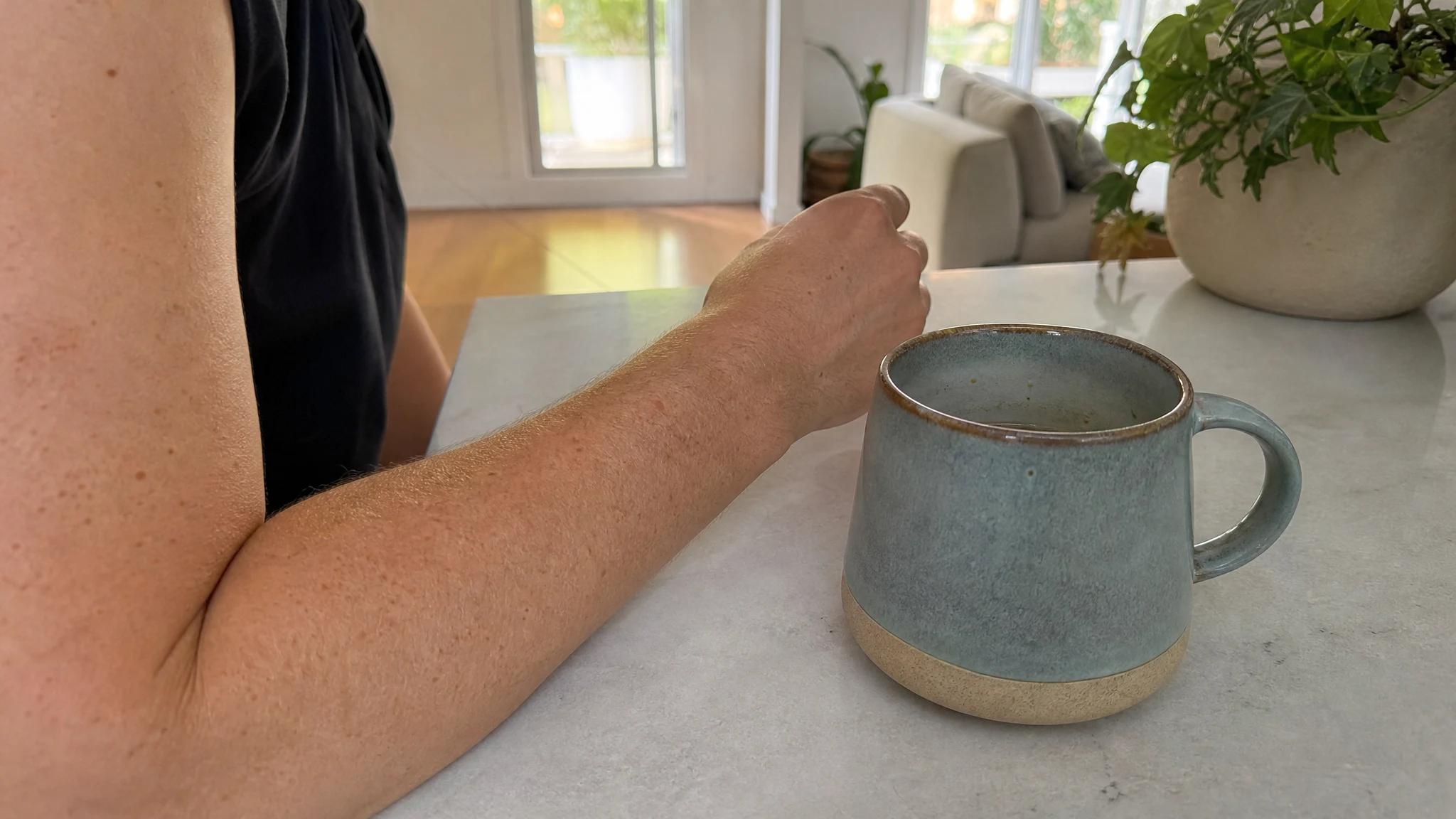
Patch test before you commit. Put a little of the finished blend on the inner forearm and wait to see how skin responds. The Poison Control center notes that a skin rash is the most common reaction to essential oils and that washing the oil off with soap and water is the first step if one appears. Stop using the blend if your scalp burns or itches beyond the brief cool feeling.
What you'll notice, and how to pace it
The cool feeling usually arrives within a minute or two, peaks, and then settles into something quieter. That settling is normal, and it is not a cue to add more. If you find yourself wanting a second application because the tingle has faded, that is the moment to leave the bottle alone and let the scent do the work.
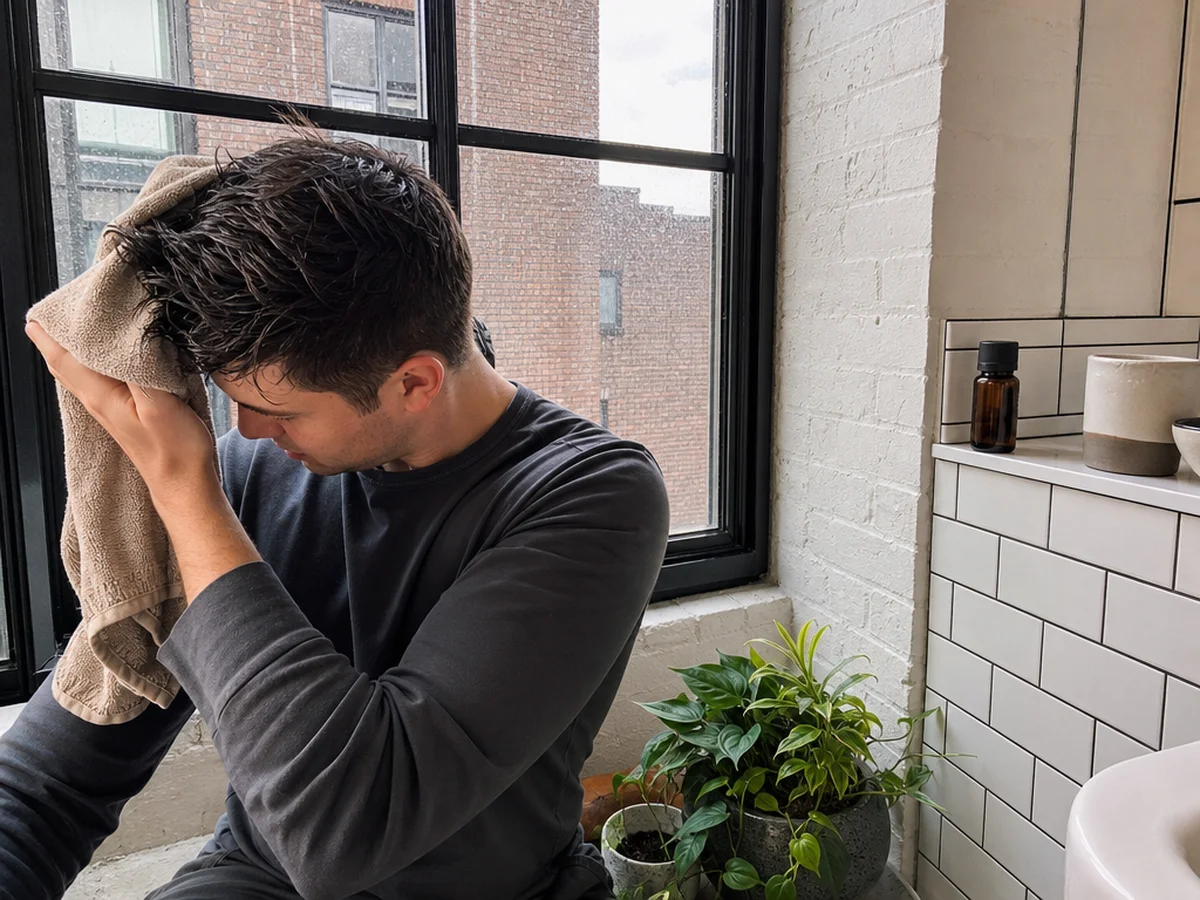
A few small habits make the whole thing more comfortable. Do your application a little while before you lie down or lean over a pillow, so nothing drifts toward your eyes. Keep a towel over your shoulders so a stray drip does not run down your neck, where the skin can be more sensitive. And if you have rinsed the blend out, the lingering scent is often pleasantly faint, a bright, minty hint rather than a cloud. That quiet finish is, to us, the sign you got the strength right.
Who should skip it
- Infants and young children. The NCCIH says peppermint oil should not be applied to the face of infants or young children, because inhaling menthol can cause serious side effects. We follow that closely and do not suggest scalp blends for little ones.
- Anyone with cardiac fibrillation or G6PD deficiency. The CIR report passes along the advice of Tisserand and Young to avoid peppermint oil altogether in those cases.
- Pregnant or nursing readers. We recommend checking with a physician before use, and that applies here.
Scalp health has plenty of causes, from dryness to flaking to thinning, and a dermatologist is the right person for any of them. What we offer is a cosmetic oil with a lively aroma and a very particular feel, to be used lightly. Our dandruff post and skin post take the adjacent questions further.
A scalp blend is at its best when you barely notice it is there beyond a gentle coolness and a fresh, minty scent. If you reach for the dropper a fourth time, put it down and wait.
Peppermint Essential Oil
Peppermint Essential Oil from our own shop, in sizes from 0.5 oz to bulk.
From $10.99
Shop Now →Sources & Further Reading
- McKemy DD, Neuhausser WM, Julius D, 2002. Identification of a cold receptor reveals a general role for TRP channels in thermosensation. Nature
- Cosmetic Ingredient Review, 2018. Amended Safety Assessment of Mentha piperita (Peppermint)-Derived Ingredients as Used in Cosmetics
- NCCIH. Peppermint Oil: Usefulness and Safety
- Poison Control. Essential oils: Poisonous when misused