Peppermint Oil and Cockroaches: Lab Kill vs Real Homes
Pour undiluted peppermint oil on a German cockroach and it will very likely die. That is the headline from a 2025 laboratory study, and it is true. It is also a long way from a plan for clearing a kitchen, and the distance between the two is worth understanding before anyone rearranges a pantry around a scent.
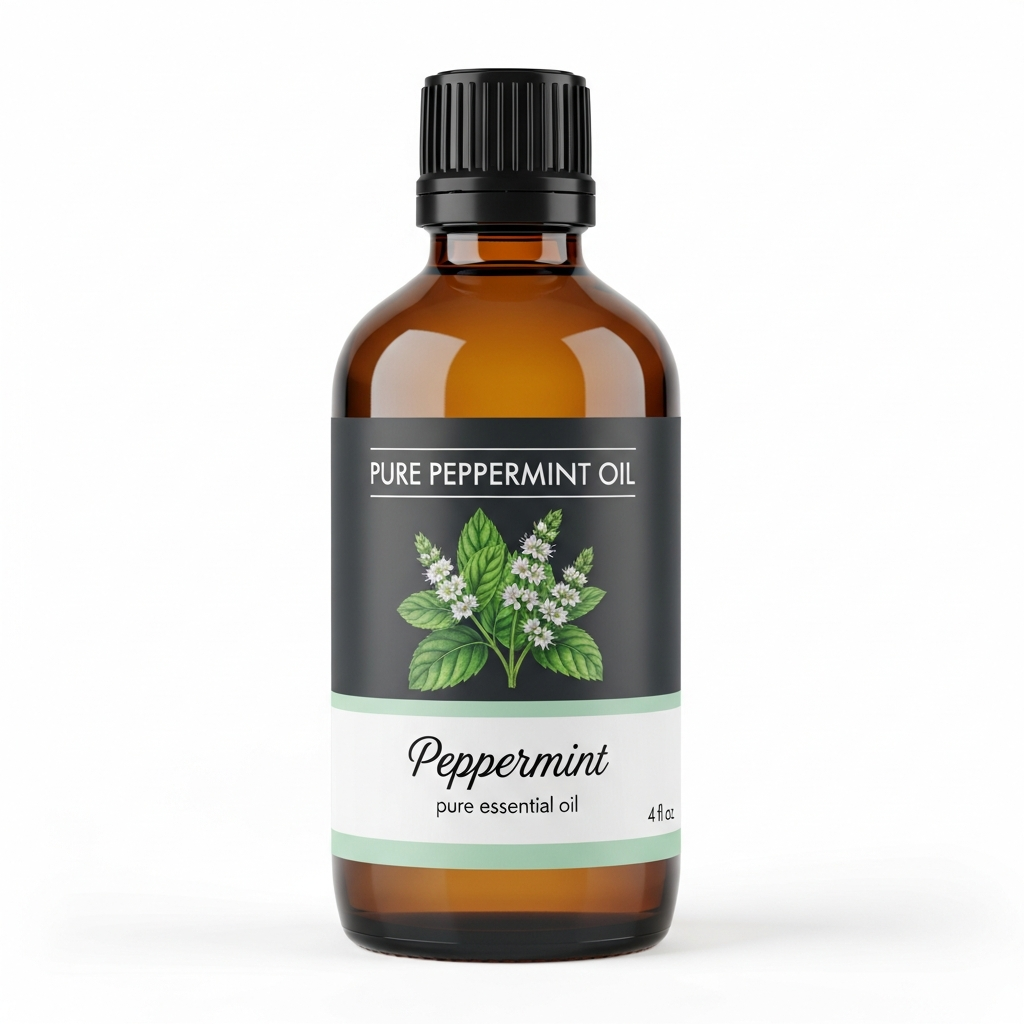
Peppermint Essential Oil
Our own Peppermint Essential Oil, in sizes from 0.5 oz to bulk.
From $10.99
Shop Now →What the lab study did
Manzanares-Sierra and colleagues compared 16 essential oils on adult female German cockroaches (Blattella germanica). Each oil went on neat, 15 microlitres per insect, applied to the back of a restrained cockroach, with ten insects per oil and an untreated control group. Peppermint (Mentha piperita) reached 100% mortality at 24 hours, among the strongest results in the study. It was not one of the four oils that knocked every insect down within 30 seconds, so its action was steady rather than instant.
The authors are clear about what the study did not do. The oil was used neat and placed directly on the insect, the cockroaches came from one laboratory strain with no resistance, and persistence was not measured. Repellency was not tested at all; the work measured toxicity by contact. So the finding is a strong one for what it is: undiluted peppermint oil, placed on a cockroach, killed it within a day. It does not say a diluted spray on a baseboard would do the same, and it does not say cockroaches avoid the smell.
What an infestation asks for
The University of California pest guide on cockroaches opens with a plain statement that pesticides alone will not solve cockroach problems. Its points are easy to picture. German cockroaches like warm, humid rooms, and one female and her offspring can produce more than 30,000 cockroaches in a year. Sprays can knock insects down for a while but may scatter the rest into new hiding places, and foggers often miss the cracks where they live.
The guide's main chemical tool is gel bait, placed in small dabs close to where cockroaches hide and forage. It works slowly, often taking a week or more, and it works best when other food is scarce. Sticky traps along walls and behind appliances, checked daily, show where the activity is concentrated and whether anything is working. And sanitation and sealing come first: tight lids, fixed leaks, vacuumed crevices, closed cracks, door sweeps.
Reasoning from the two sources together, a peppermint spray belongs in the category of short-lived sprays, and the lab kill came from a dose nobody can reproduce from a spray bottle. The arithmetic of population does the rest: killing the cockroaches you see, one at a time, cannot keep pace with a colony that grows into the tens of thousands.
One interesting wrinkle about repellents
The UC guide says boric acid is not repellent, and that is part of why it works: cockroaches walk through it, carry it, and swallow it while grooming. Desiccant dusts, by contrast, are described as repellent and suited to voids and out-of-the-way spots. From that description we would draw a cautious, reasoned conclusion: a strong smell placed beside a bait might discourage the foraging the bait relies on. No study we found tested peppermint that way, so take it as an inference rather than a measured effect. A Europe PMC search on 4 November 2026 for peppermint with cockroach, Blattella or Periplaneta returned 172 records, and among the first 15 the only peppermint study was this contact-kill paper.
Why a faster fix matters
The UC page also notes that shed skins and droppings are strong indoor allergens, and that cockroach infestations are a recognized asthma trigger for children, particularly in multi-unit housing. That raises the value of choosing the approach with the best evidence from day one. Our own ants and spiders post and our look at mice follow the same reasoning, because it applies across the household pests.
A plan that follows the evidence
- Put sticky traps in likely spots for a few days to find the busy areas.
- Remove food and water: sealed containers, nightly dishes, fixed leaks.
- Place gel bait in many small dabs near hiding places, and be patient.
- Seal cracks and add door sweeps.
- Call a licensed pest professional if traps stay busy, if you see cockroaches by day, or if you live in a multi-unit building.
Where peppermint fits in a clean kitchen
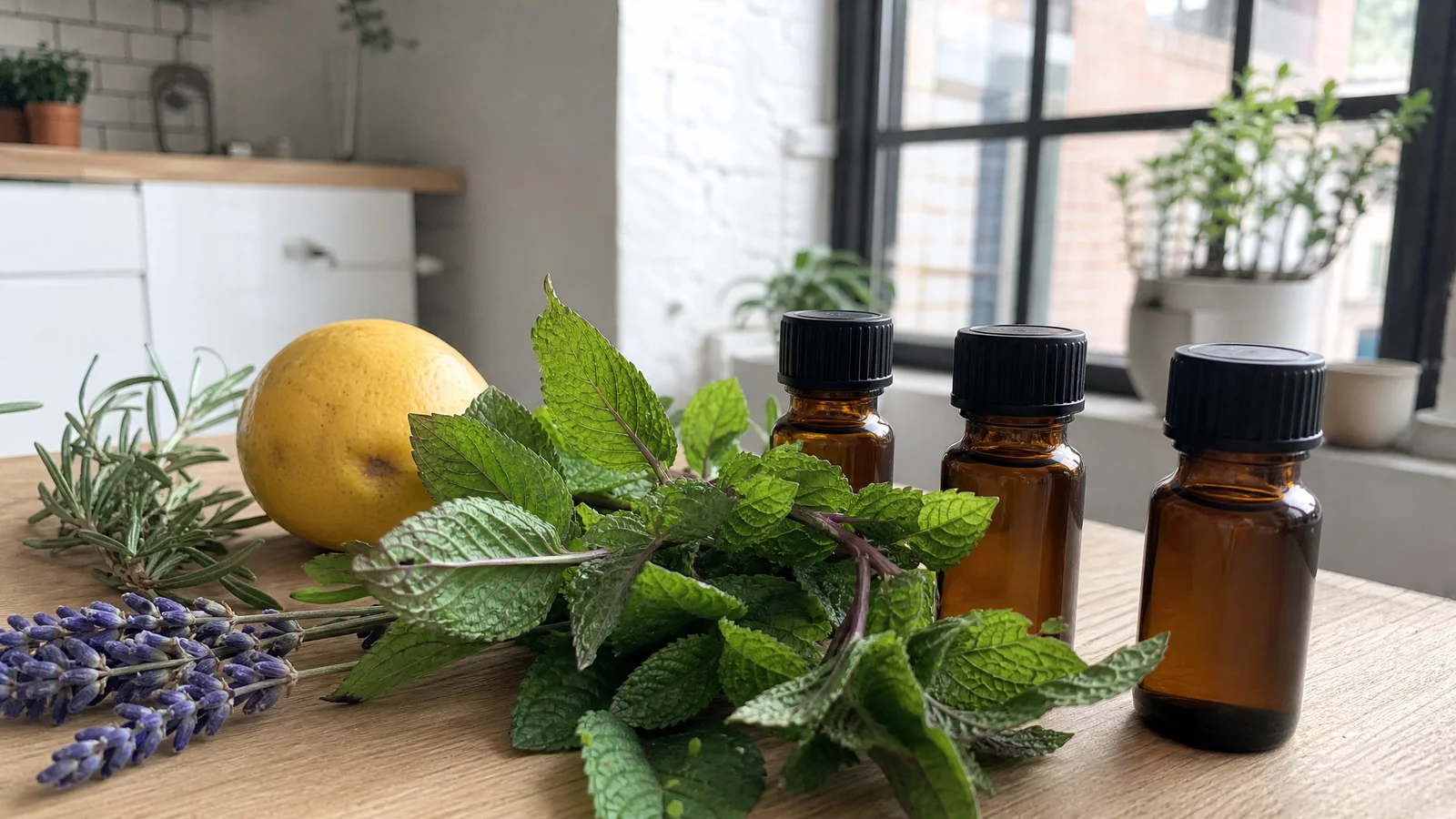
We sell two neat peppermint oils, a piperita and an arvensis (cornmint), for their crisp, cool, minty aroma, and we make no insect-control claim for either. A little diluted oil in a cleaning routine can make a kitchen smell wonderful. If you use it, keep pets in mind, because the ASPCA lists mint as toxic to dogs and cats with essential oils as the toxic principle, so skip floors and cabinets where a pet can walk or lick. Our guides for cats and dogs explain more. And the NCCIH advises against peppermint oil near the face of infants or young children, so keep it out of nurseries.
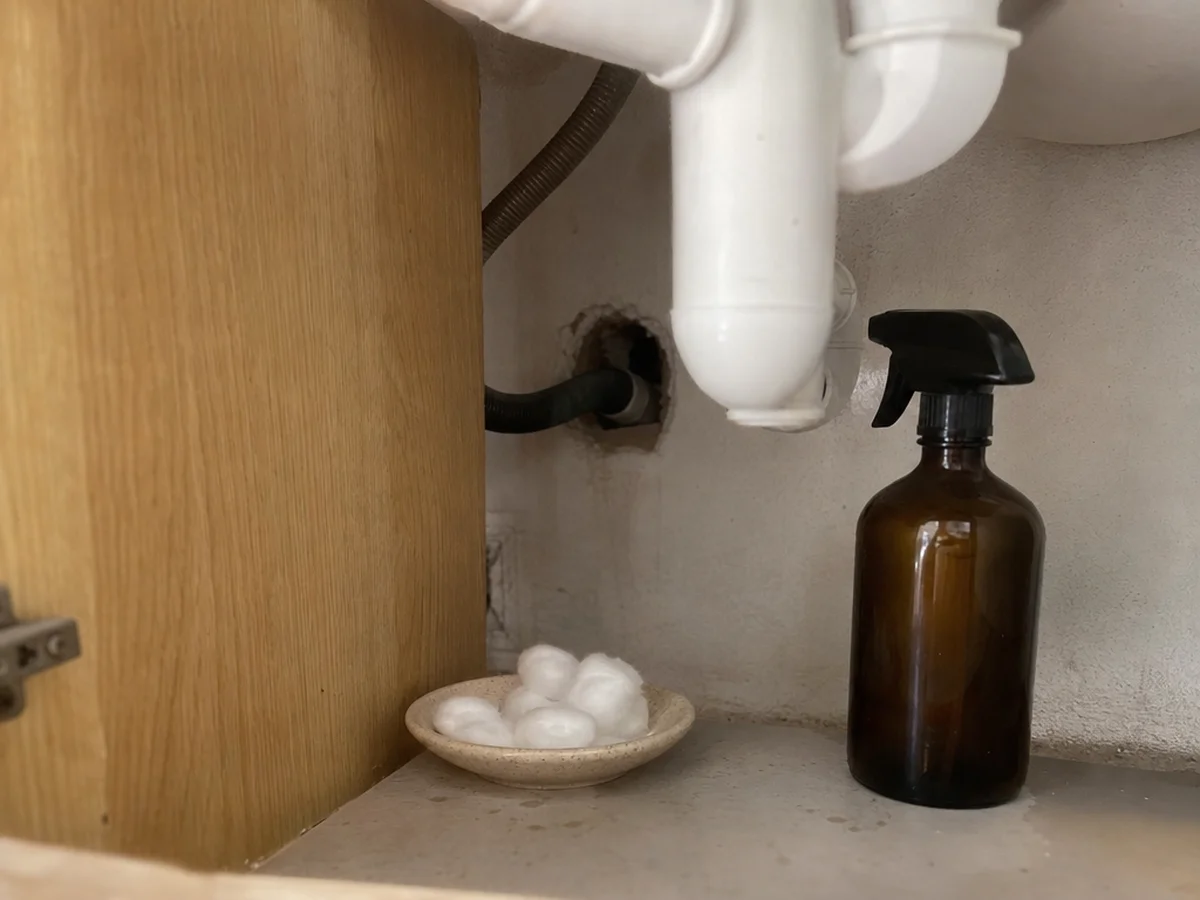
A tidy kitchen, step by step
The satisfying thing about cockroach prevention is how ordinary it is. Wipe the counters before bed, run a damp cloth around the base of the toaster and the coffee maker, empty the crumb tray, and take the recycling out before it gets sticky. Look under the sink with a flashlight for drips. None of it smells like anything, and all of it sits on the side of the list that works.
Once the kitchen is clean and dry, a cloth lightly scented with diluted peppermint can make the whole room feel freshly finished. That is the role we would give it: a finishing touch after the real work, never the plan itself. Keep the cloth and the bottle where children and pets cannot reach them.
Peppermint oil makes a lovely smell in a kitchen that has been cleaned, sealed and baited. The cleaning, sealing and baiting are what keep cockroaches out.
Peppermint Essential Oil
Peppermint Essential Oil from our own shop, in sizes from 0.5 oz to bulk.
From $10.99
Shop Now →Sources & Further Reading
- Manzanares-Sierra et al., 2025. Essential Oils as Bioinsecticides Against Blattella germanica (Linnaeus, 1767): Evaluating Its Efficacy Under a Practical Framework. Insects 16(1):98
- UC Statewide IPM Program. Cockroaches (Pest Notes 7467)
- ASPCA. Toxic and Non-toxic Plants: Mint
- NCCIH. Peppermint Oil: Usefulness and Safety