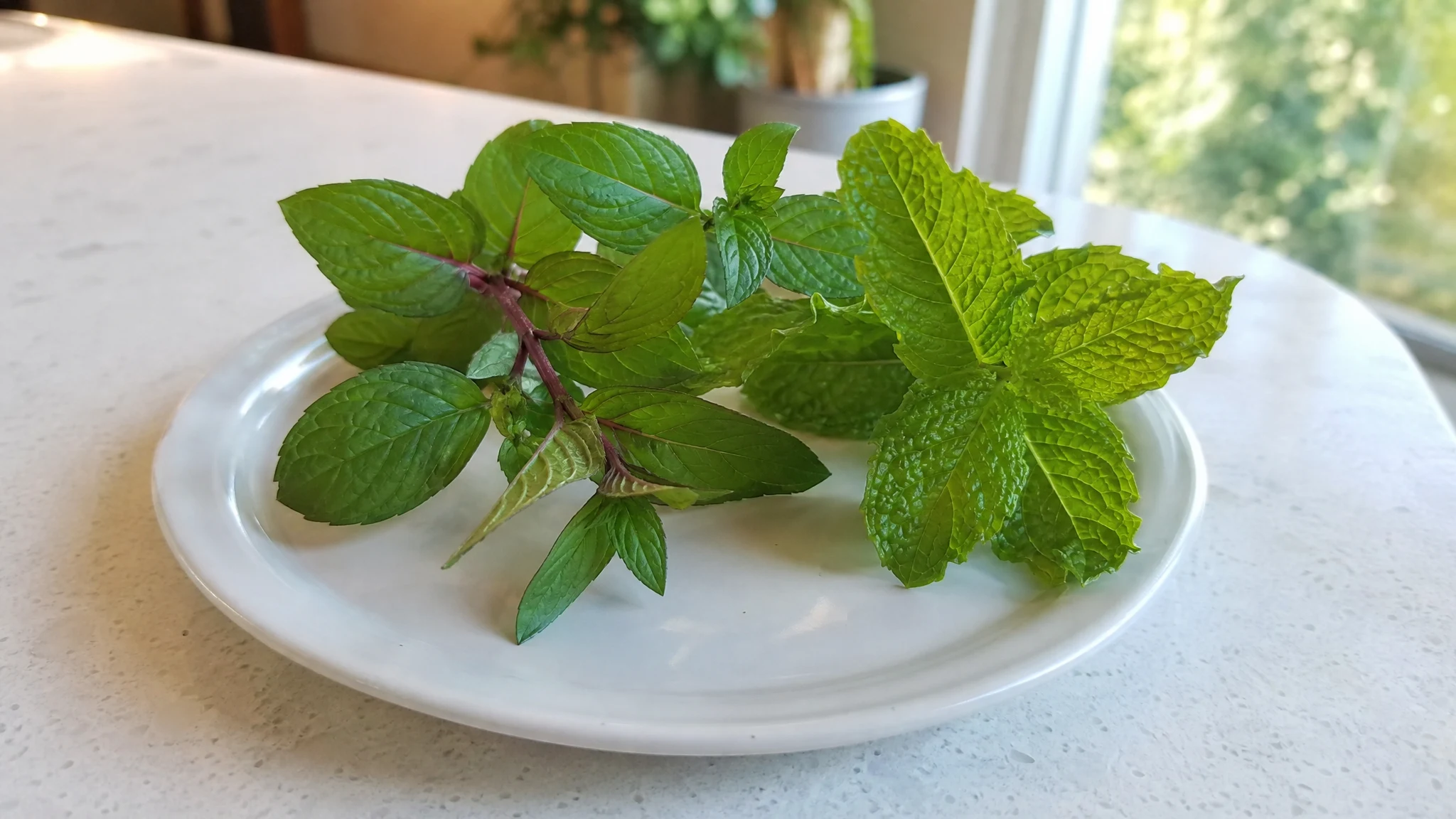
Peppermint vs Spearmint Oil: Which Mint Suits You?
Anyone who has stood in the gum aisle knows that peppermint and spearmint are not the same flavour, even though both are mints. The reason comes down to one molecule. Peppermint oil is built around menthol, and spearmint oil is built around carvone, with almost no menthol at all. Once you know that, choosing between them gets much easier.
Peppermint Essential Oil
Our own Peppermint Essential Oil, in sizes from 0.5 oz to bulk.
From $10.99
Shop Now →Two mints, two signature compounds
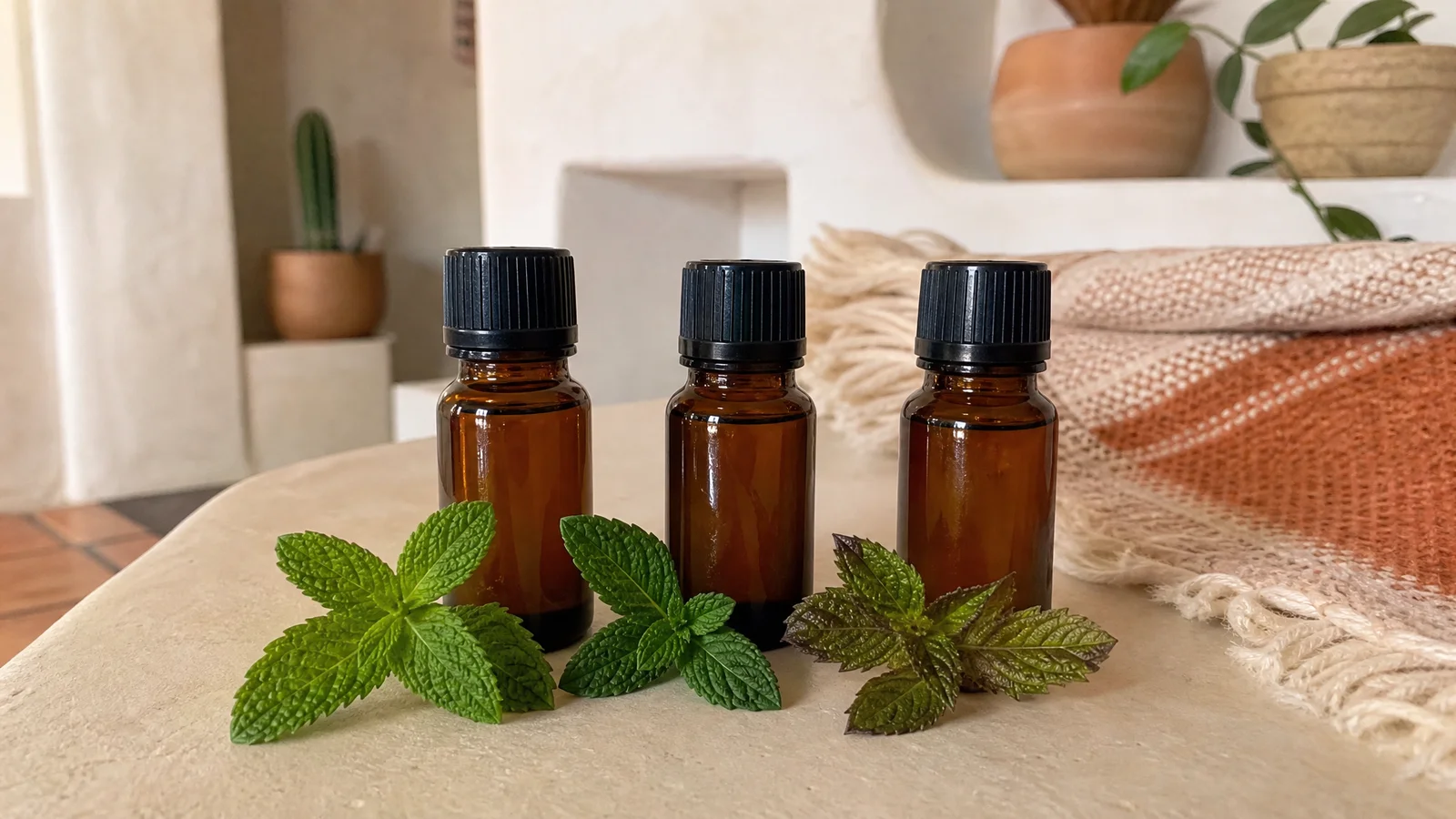
In the Cosmetic Ingredient Review's summary, the menthol in peppermint oil runs from about 30 to 55 percent, with menthone another 14 to 32 percent. Those are the compounds behind peppermint's crisp, cooling character. Our Mentha piperita oil is the classic version: crisp, cool and minty, with a faint candy-like sweetness underneath. Our Mentha arvensis (cornmint) oil leans harder into menthol, bold and sharply minty with a strong menthol backbone.
Spearmint, Mentha spicata, takes a different road. A 2025 opinion from the European Food Safety Authority analysed steam-distilled spearmint oil and found carvone averaging about 49 percent in three batches, with limonene near 19 percent and menthol only about 2 percent. In a second analysis of six batches, carvone averaged 68.5 percent. A 2025 review in Nutrients agrees that carvone in spearmint oil is often above 60 percent. So the range is wide, and a single carvone figure only means something when you know which batch and method it came from.
Limonene is the same compound that makes citrus peel smell bright, which is a nice clue to why spearmint tends to read as rounder and sweeter next to peppermint's sharp cold edge. That is our chemistry-based reading, not a tasting panel's verdict, and your own nose will settle it.
Where the cool comes from
Menthol is also the reason peppermint feels cold. In 2002, researchers identified a sensory receptor in trigeminal nerve cells that responds both to menthol and to temperatures in the cool-to-cold range (McKemy and colleagues, Nature). The receptor is why a menthol-rich oil can feel icy on warm skin or in a breath of air without anything actually getting colder. Reasoning from that, an oil with 2 percent menthol has far less to offer that receptor than one with 30 to 55 percent. If you want the cooling tingle in a project, peppermint or cornmint is the better match. If you want a mint note without the chill, spearmint is the one to look for.
Spearmint is not the gentle one
A common idea is that spearmint is the softer mint for skin or for children. The sources we read do not back that up. EFSA's spearmint opinion describes the oil as an irritant to skin and eyes and as a skin and respiratory sensitiser, which is the language for a concentrated aromatic, and the same is true of peppermint oil. Neither mint is mild when neat. Both want the same habits: dilute before skin contact, patch test first, and keep the bottle away from eyes.
For our peppermint oils we suggest 0.5% to 2% in a carrier oil, and we would start at the low end. That guidance is written for our two peppermint oils, so please do not carry it over to spearmint, where you should follow the supplier's own guidance. The US National Center for Complementary and Integrative Health also advises against peppermint oil on the face of infants and young children, because inhaled menthol can cause serious side effects. Spearmint has little menthol, but we found nothing that clears it for a small child's face, so our approach is the same for both. Our children page goes through it.
How each one meets the nose
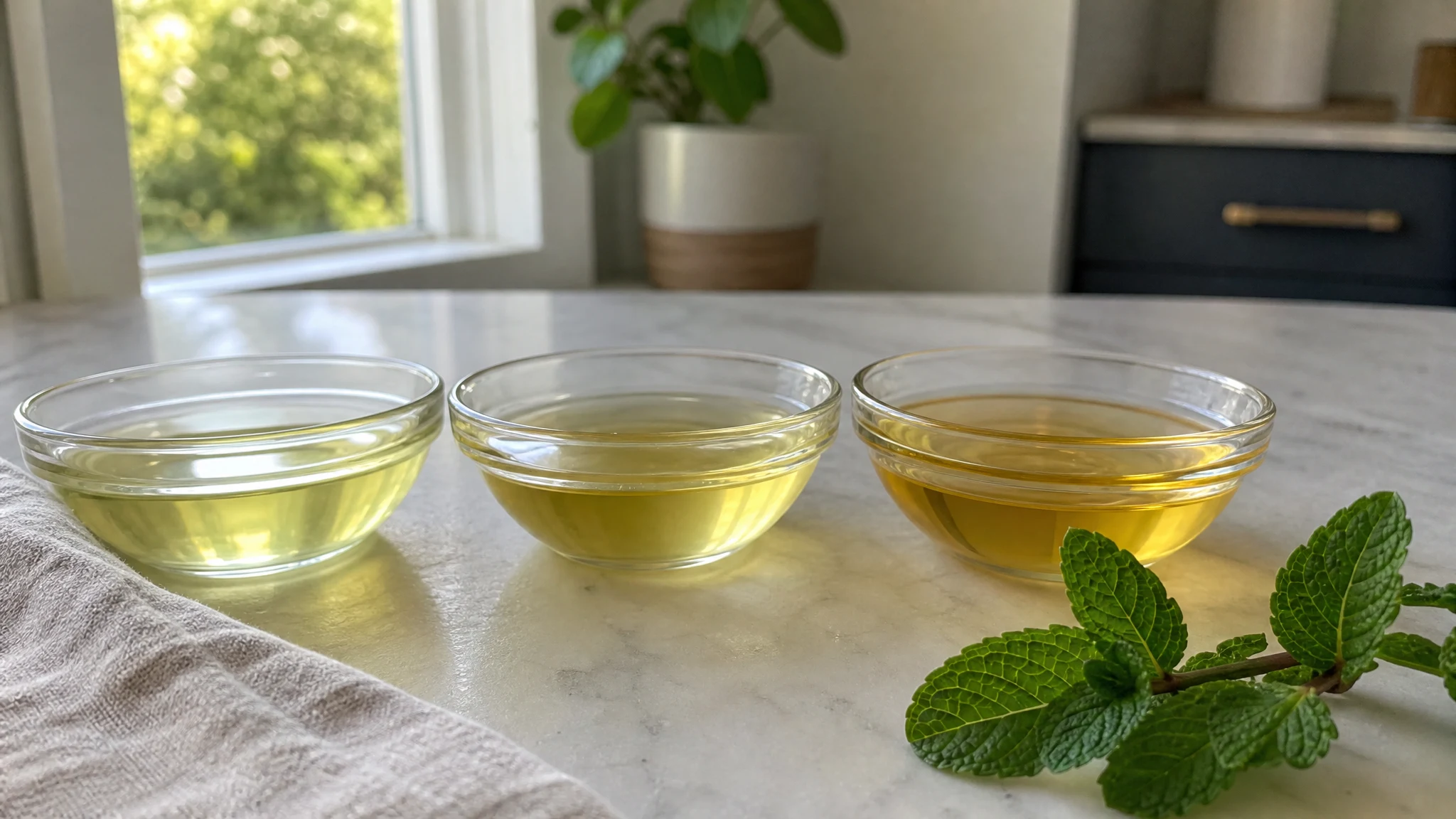
Peppermint tends to hit the front of the nose with cold, then settle into something sweet and minty. Spearmint is usually warmer and rounder, the smell most people associate with mint chewing gum or a handful of leaves from the garden, with none of the icy snap. If you put them on two strips of paper and smell them one after another, the difference is obvious within seconds.
That difference suggests where each one belongs. A crisp peppermint suits a wintery room spray, a foot soak or a minty soap where the cooling character is the point. A sweeter mint note suits a project where you want freshness without the chill. Many people like both in their cupboards, and we are no exception: they do different jobs, and blending a little of the softer one into the sharper one is a pleasant way to round it off.
Choosing without a ranking
- Pick by the note you want. Cool, crisp and menthol-led points to peppermint or cornmint. Sweeter and carvone-led points to spearmint.
- Pick by species, not by the word "mint". Even "peppermint" covers two plants, which our piperita versus arvensis comparison unpicks.
- Ask for a named-compound report. A report that lists menthol, menthone, carvone and limonene shows you which mint is in the bottle. Our paperwork guide explains what to look for.
- Buy spearmint from a spearmint supplier. We focus on peppermint, and spearmint is easy to find at craft and aroma supply shops.
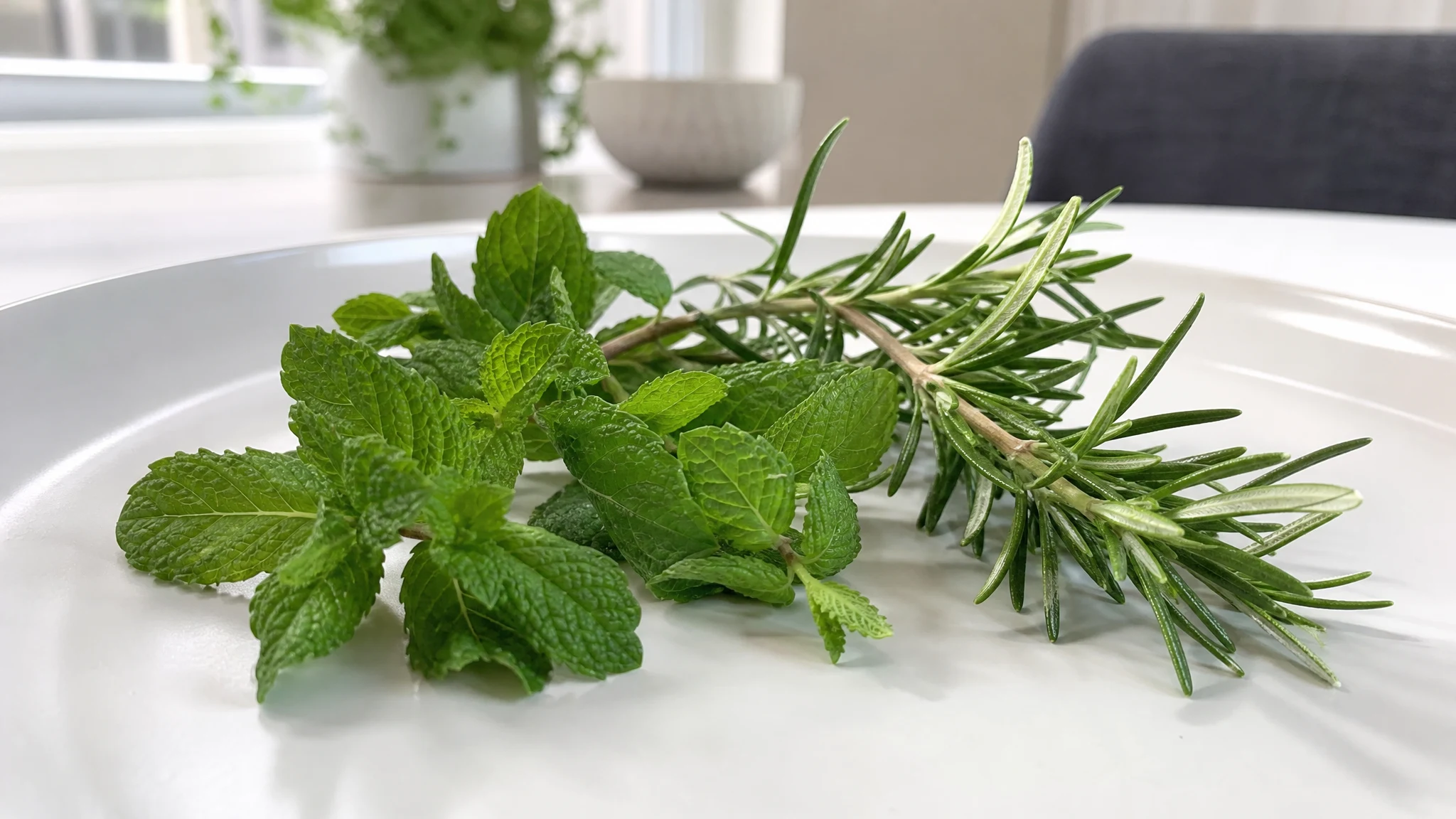
Peppermint pairs nicely with spearmint when you want to soften the chill, since spearmint is one of the oils that blends well with ours. Our dilution guide has the arithmetic for working either into a carrier. If you are choosing for a health reason rather than a scent, a pharmacist or physician is the better person to ask, since we sell cosmetic and aromatic oils and neither mint is a remedy.
Peppermint Essential Oil
Peppermint Essential Oil from our own shop, in sizes from 0.5 oz to bulk.
From $10.99
Shop Now →Sources & Further Reading
- Safety and efficacy of a feed additive consisting of an essential oil derived from the aerial parts of Mentha spicata L. (spearmint oil) for use in all animal species (FEFANA asbl), EFSA Panel on Additives and Products or Substances used in Animal Feed, EFSA Journal, 2025.
- Mentha Essential Oils: Unraveling Chemotype-Dependent Biosynthesis and Assessing Evidence for Health-Promoting Activities, Yu Y, Ma Y, Ouyang Z, Huang L, Nutrients, 2025.
- Amended Safety Assessment of Mentha piperita (Peppermint)-Derived Ingredients as Used in Cosmetics, Cosmetic Ingredient Review, 2018.
- Identification of a cold receptor reveals a general role for TRP channels in thermosensation, McKemy DD, Neuhausser WM, Julius D, Nature, 2002.
- Peppermint Oil: Usefulness and Safety, National Center for Complementary and Integrative Health, May 2025.