What Size Peppermint Oil Bottle Should You Start With?
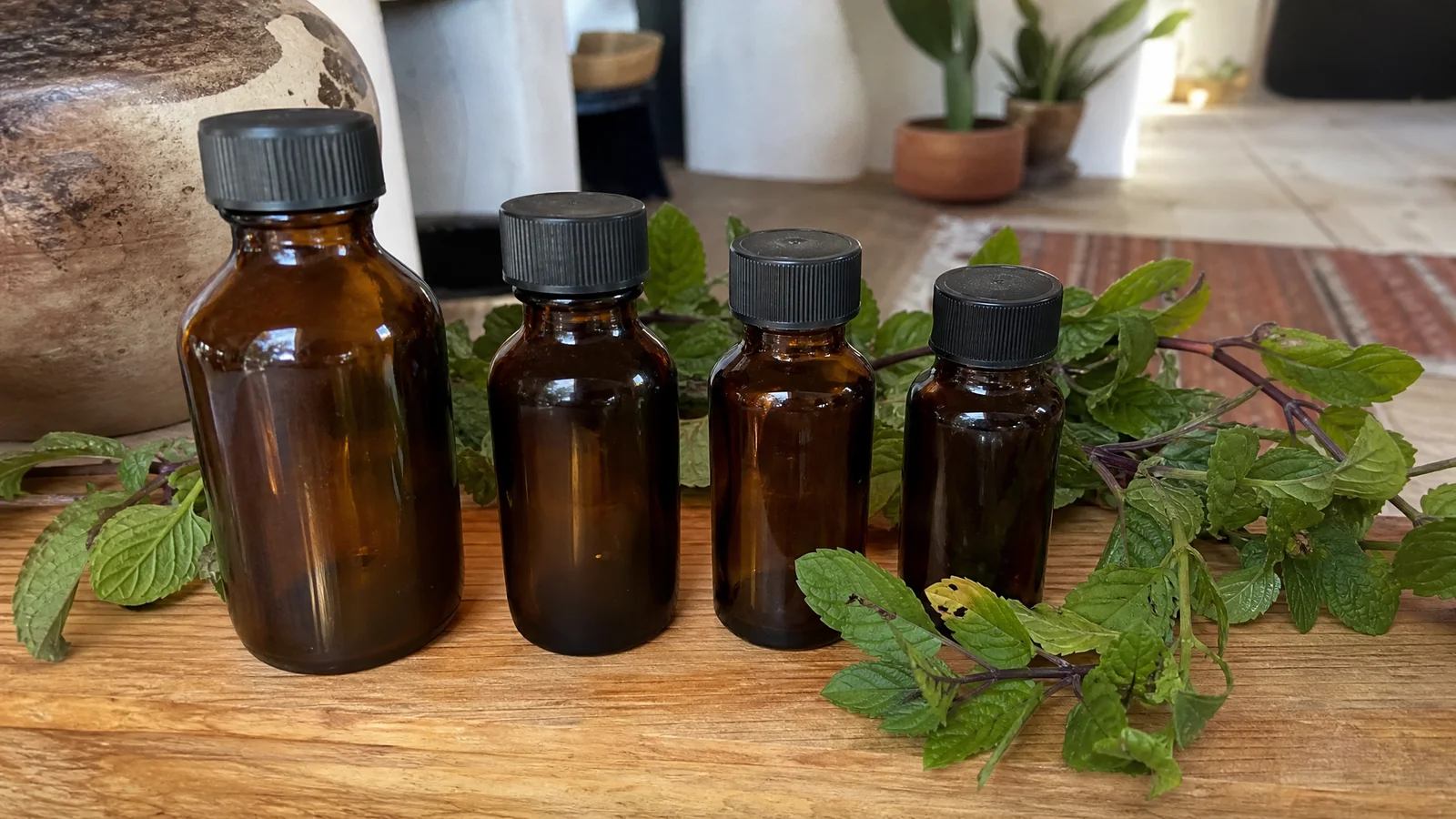
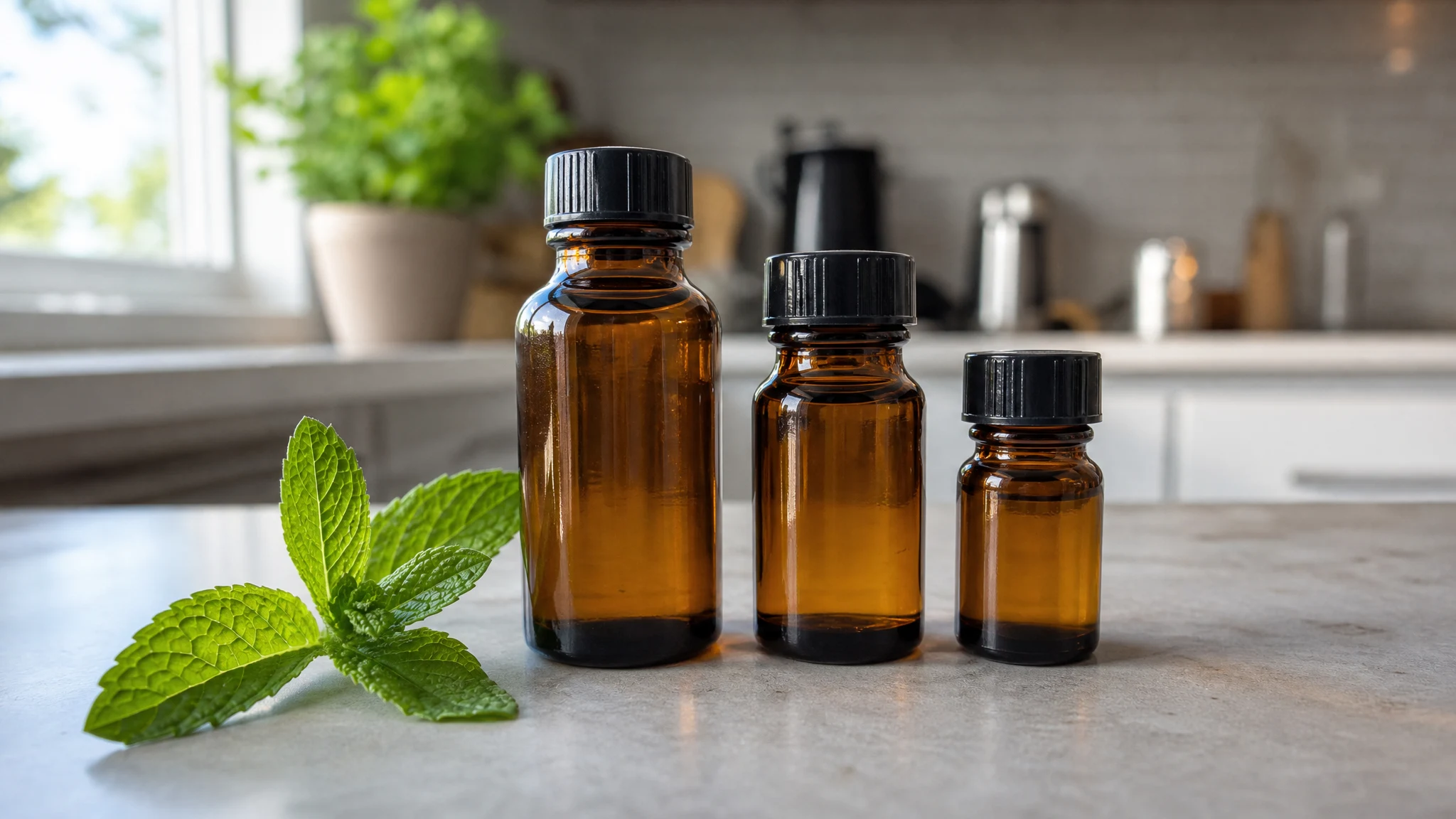
Most people choose a bottle size the way they choose a coffee: small, medium or large. Peppermint oil rewards a different habit. It is so concentrated that even our smallest bottle makes far more finished blend than a first project calls for, so the useful question is not "how much do I want?" but "how much will I actually make?"
Peppermint Essential Oil
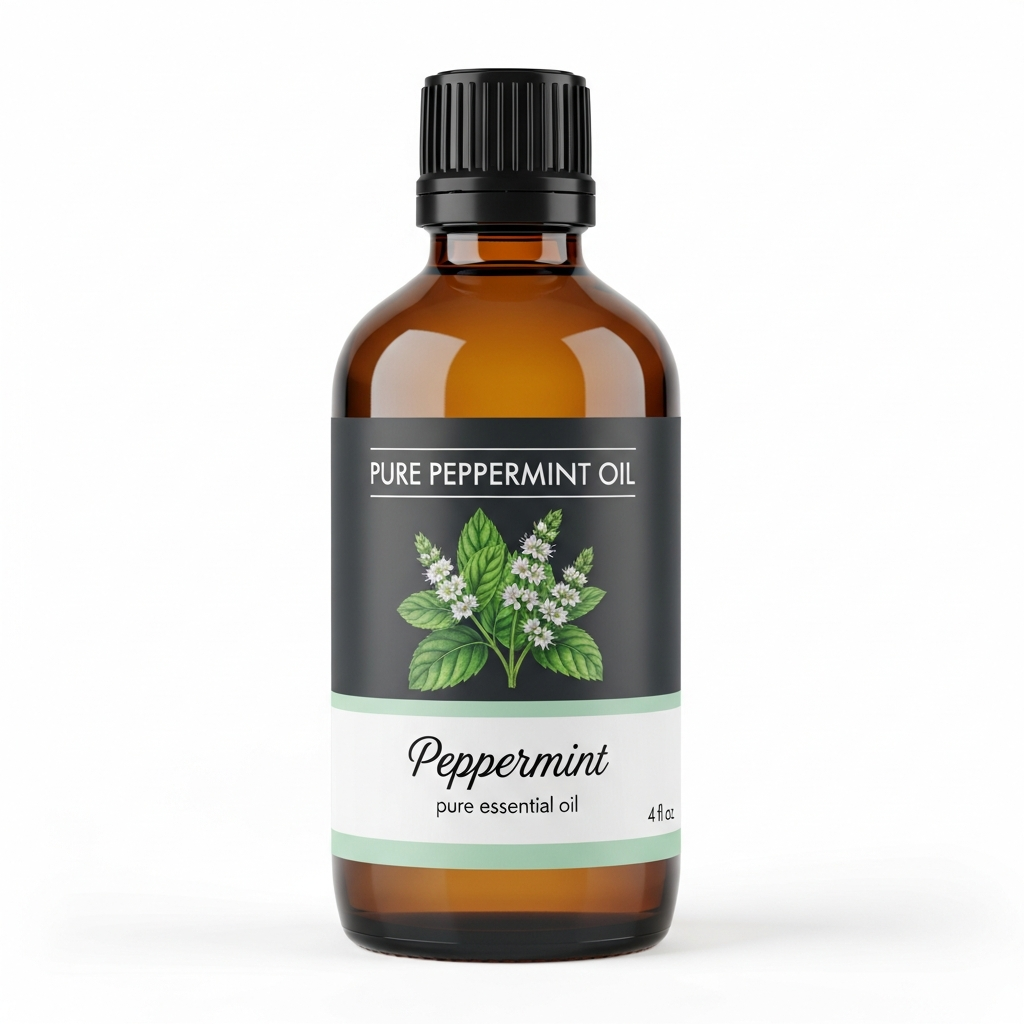
Our own Peppermint Essential Oil, in sizes from 0.5 oz to bulk.
From $10.99
Shop Now →Work backward from the finished blend
We suggest diluting either of our peppermint oils to 0.5% to 2% in a carrier oil for skin, which comes to roughly 3 to 12 drops per ounce of carrier. Turn that around and a bottle looks very different. Using fluid ounces of about 29.6 ml and the rough convention of 20 drops to a millilitre (droppers vary), here is what the small sizes make. This is arithmetic, not a measured yield.
- 0.5 oz is about 14.8 ml of oil, or roughly 300 drops. At 2% that makes about 740 ml of blend, the equivalent of 25 one-ounce roller bottles. At 0.5% it makes nearly three litres.
- 1 oz doubles those numbers: about 1.5 litres of blend at 2%.
- 2 oz and 4 oz are for people who already make something regularly and know their own per-batch amount.
Peppermint oil is lighter than water, so if you ever work from weight rather than volume the oil takes up a little more room than you might expect. The United States Pharmacopeia range for peppermint oil, as reproduced in the Cosmetic Ingredient Review safety assessment, is 0.896 to 0.908 g/ml. On that basis a 5 lb container holds about 2.5 litres of oil, which at 2% would stretch to something like 125 litres of blend. That is manufacturing territory, not a kitchen-table quantity.
Why a big bottle is not always the economical one
Every time a bottle is opened, a little air goes in, and the emptier the bottle gets, the more air sits above the oil. A recent review of vegetable oil oxidation reports that oxidation roughly doubles for every 10 C rise in temperature, that light speeds it up, and that more oxygen in the headspace means more dissolved oxygen in the oil. Those findings concern vegetable oils rather than essential oils, so applying them to peppermint is our own inference. Even so, the practical lesson is sound: an oil you will use over many months is better off in a bottle that stays mostly full.
It fits the advice we give for our larger sizes, which is to decant working amounts into smaller airtight bottles and keep the main container capped. We describe typical keeping at 3 to 5 years for our Mentha piperita and 2 to 3 years for our Mentha arvensis when the bottle stays capped, upright and out of heat and sunlight. Our shelf-life guide goes into the details.
Pick the oil before the size
We sell two peppermint oils, and they are not interchangeable. Our Mentha piperita is crisp and cool with a faint candy-like sweetness underneath, the one to reach for if you are thinking of lip balms, holiday scents or anything that should smell like a classic mint candy. Our Mentha arvensis, also called cornmint, is bolder and sharper, with a strong menthol backbone that suits room sprays and cleaning blends. Our side-by-side comparison sets out the differences.
If you cannot decide, we would rather see you order the smallest bottle of each than a large bottle of one. Smell them, try them in your own project, and then scale up the one you reach for.
Matching size to purpose
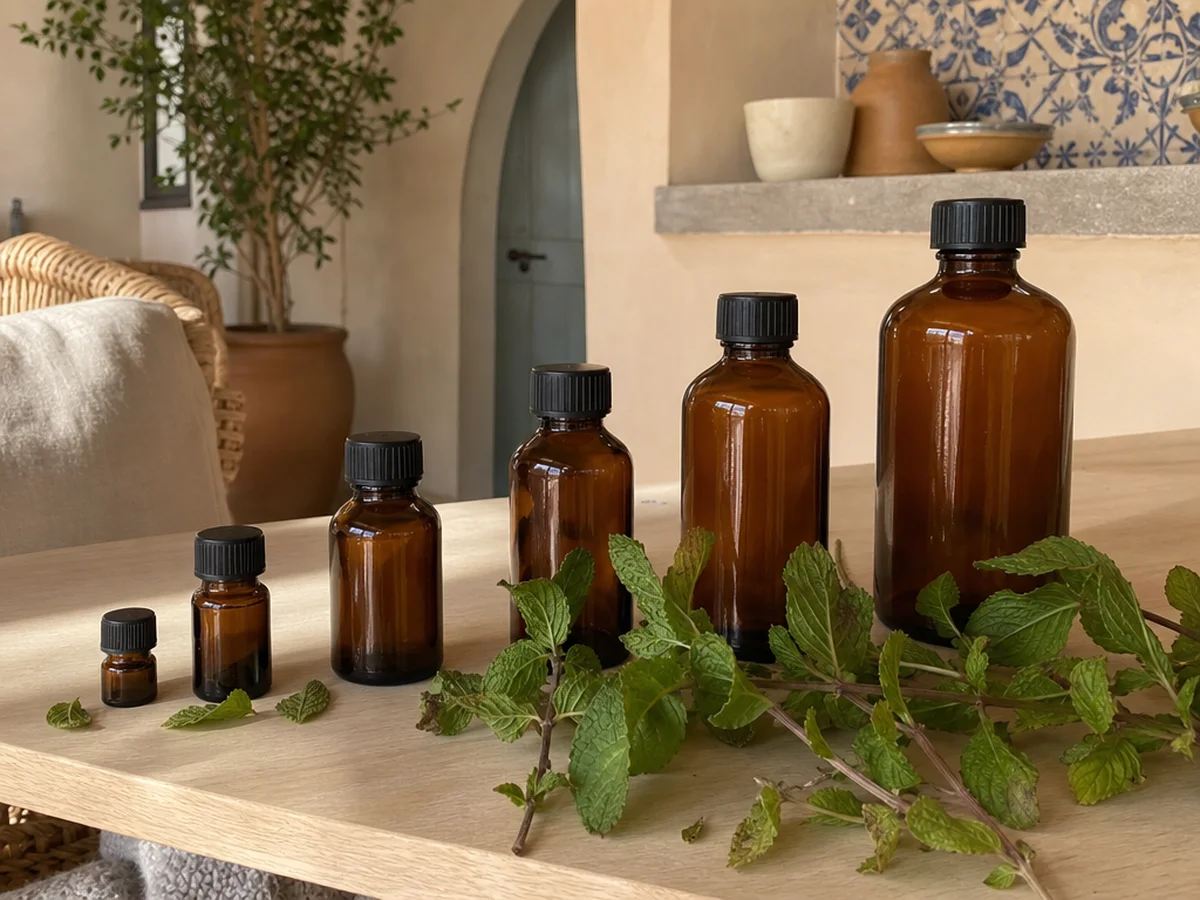
For a diffuser, a few roller bottles or a first batch of anything, the 0.5 oz to 2 oz sizes are plenty; the diffuser drops guide shows how few drops a room needs. Soap, candle and balm makers who have settled on a recipe often move to 4 oz to 16 oz. The pound sizes (5, 25, 100 and 400 lb) are for production and resale. We offer sample bottles from 0.5 oz, and our bulk page covers the larger sizes along with private label and custom formulation enquiries.
If you need menthol, menthone, pulegone or menthofuran figures for a lot, particularly before a large order, ask us in writing through the contact page before ordering. The Certificate of Analysis we publish is for a piperita sample and lists a refractive index of 1.4596 at 20 C, which sits inside the pharmacopoeial range for peppermint oil. Our quality-check guide lists the questions worth asking any seller.
A bigger bottle is a bigger thing to store safely
Poison control centres advise keeping essential oils locked up and out of sight and reach of children and pets, and the US number to call after a swallow is 1-800-222-1222. The National Center for Complementary and Integrative Health says peppermint oil should not be applied to the face of infants or young children and that skin application can cause rashes or irritation. Our oils are sold neat and never for internal use, so patch test a diluted blend first. Our 0.5% to 2% line is a general starting range; if you are formulating something to sell, check IFRA standards for your product type, and see our dilution guide for working numbers.
A note on starting small
Ask yourself what you reached for the last time you made something scented from scratch, and how long that bottle lasted. If the honest answer is a few weeks of occasional use, the smallest bottle is the right size. A bottle you finish is better than one that ages in a drawer, and a small one makes it easy to keep your favourite close at hand with a second in reserve.
So start small, jot down how many drops your first batch used and at what strength, and let those numbers tell you when it is time to move up a size.
Peppermint Essential Oil
Peppermint Essential Oil from our own shop, in sizes from 0.5 oz to bulk.
From $10.99
Shop Now →Sources & Further Reading
- Cosmetic Ingredient Review, 2018. Amended Safety Assessment of Mentha piperita (Peppermint)-Derived Ingredients as Used in Cosmetics
- Gharby S et al., 2025. Vegetable oil oxidation: Mechanisms, impacts on quality, and approaches to enhance shelf life. Food Chem X
- NCCIH, Peppermint Oil: Usefulness and Safety
- Poison Control, Essential oils: Poisonous when misused