How to Check Peppermint Oil Quality: 4 Questions
There is no trick for judging peppermint oil at the kitchen counter. No drop-on-paper test, no colour check and no sniff will reliably separate a good bottle from one that has been stretched. The checks that carry weight happen on paper, and the good news is that they come down to four plain questions you can put to any seller, including us.
Peppermint Essential Oil
Our own Peppermint Essential Oil, in sizes from 0.5 oz to bulk.
From $10.99
Shop Now →Why your nose is the wrong instrument
Researchers have shown how hard the job is even with a laboratory. A 2025 study used nuclear magnetic resonance and statistical modelling on 50 commercial peppermint oils and reported that 42% were adulterated, with synthetic chemicals, de-mentholized cornmint oil and lower-cost oils among the adulterants. A 2024 study measured 36 terpenoids by conventional and chiral GC/MS in 22 authentic peppermint oils and 36 commercial products, and found that 53% of the products did not meet the ISO specification. Both studies tested market samples without naming brands, so they tell you the issue is real, not how common it is anywhere in particular. Their practical lesson is that if detection takes instrument time, a quick sniff will not do it.
Question one: which species is it?
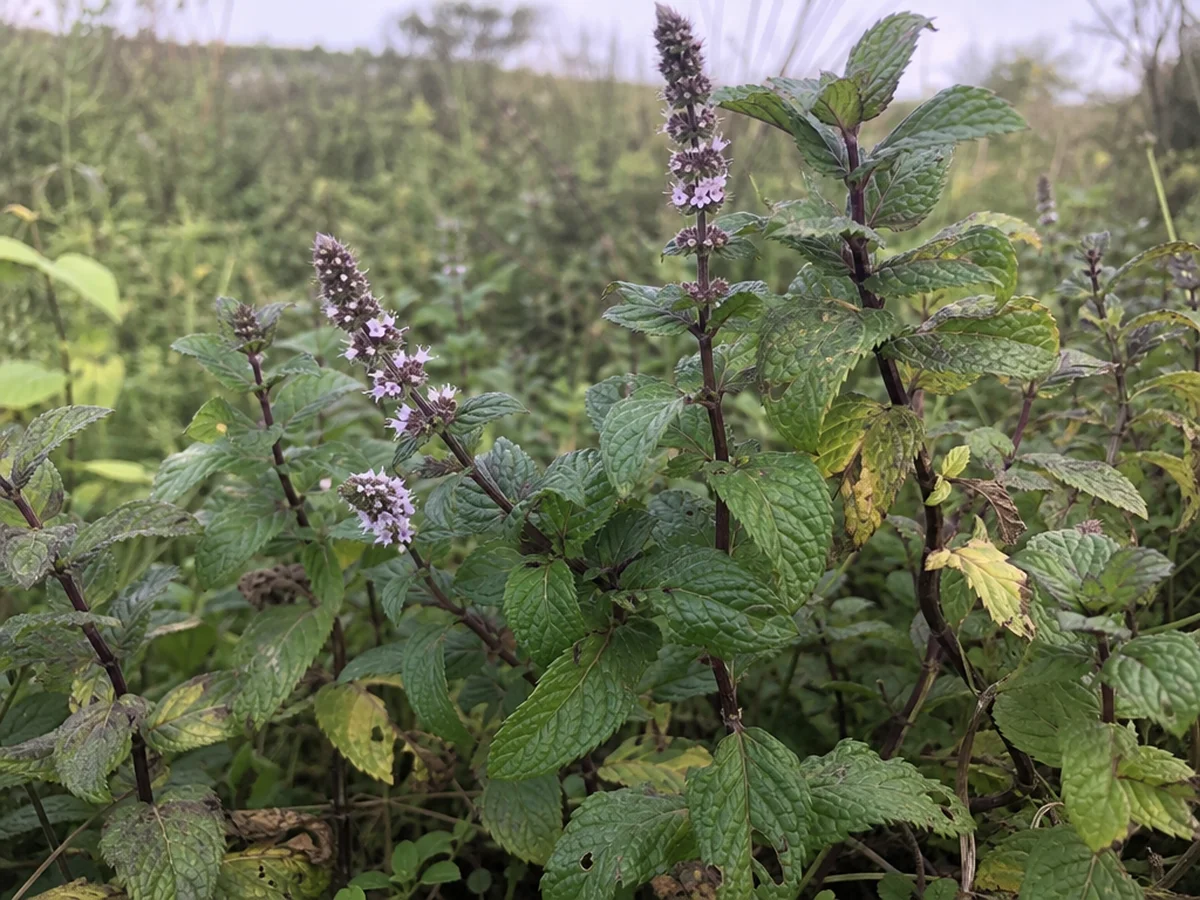
"Peppermint oil" is sold from two plants. Mentha piperita is the classic peppermint; Mentha arvensis is cornmint, or field mint. They overlap in chemistry, which is why a menthol figure alone cannot name the species, but they are different materials with different characters. Our piperita is crisp and cool with a faint candy-like sweetness, and our arvensis is bolder and sharper. A label that says only "peppermint" leaves the question open, so look for the Latin name. We give it on each product page, and our species comparison shows how the two differ.
Question two: does the paperwork belong to this bottle?
A report is only useful if it describes the oil in front of you. Ask for the lot number printed on the bottle, then ask for the analysis for that lot, naming the laboratory, the date, the method and the species. If a document is labelled as a "sample", it is fair to ask whether your bottle comes from the same material.
Question three: numbers, or just "passes"?
The Cosmetic Ingredient Review reproduces the United States Pharmacopeia criteria for peppermint oil: a refractive index at 20 C between 1.459 and 1.465, a specific gravity of 0.896 to 0.908, total esters of at least 5% as menthyl acetate and total menthol of at least 50%. It also lists literature ranges for the main constituents of Mentha piperita oil, such as menthol at 30% to 55% and menthone at 14% to 32%, with pulegone reported from under 1% up to 4% in North American oils. A report that prints values can be held up against ranges like these. A report that prints only "complies" cannot.
The 2024 study adds a useful detail: the ratio of menthone to isomenthone proved a good indicator for spotting adulteration, so a report that quantifies both is giving you something to work with.
Question four: what does the report not see?
Even a good composition report has limits. In the 2024 study, 27 commercial products had mirror-image (enantiomer) compositions above or below the norm of the authentic oils, and only eight of those 27 still met the ISO standard. One sample passed the ISO specification and the chiral analysis yet was flagged as an outlier by the statistical model. Reasoning from that, a standard report is a strong start but not the last word, and a seller who can supply chiral data is offering something beyond the usual. A composition report also does not cover pesticide residues or metals; the Cosmetic Ingredient Review panel raised those as concerns for botanical ingredients in general, so if they matter to you, ask for that document separately.
How we answer
We would rather show our own paperwork than ask you to guess. The Certificate of Analysis we publish is for a Mentha piperita sample, with a batch number and a refractive index of 1.4596 at 20 C, inside the pharmacopoeial range above. The GC-MS report we publish is for our Mentha arvensis and gives chemical-family totals rather than individual compounds. If you need menthol, menthone, pulegone and menthofuran figures for the lot you will receive, ask us in writing through the contact page before ordering and get the document in writing before you rely on it. We also offer sample bottles from 0.5 oz, so you can try an oil in your own application before committing to more.
Price, labels and where to ask
A low price proves nothing and a high one does not either; our price guide explains why. The grade words on a bottle, from food grade to the loftier-sounding ones, are unpacked in our label guide, and our where-to-buy guide sorts the places you can shop by what each lets you check.
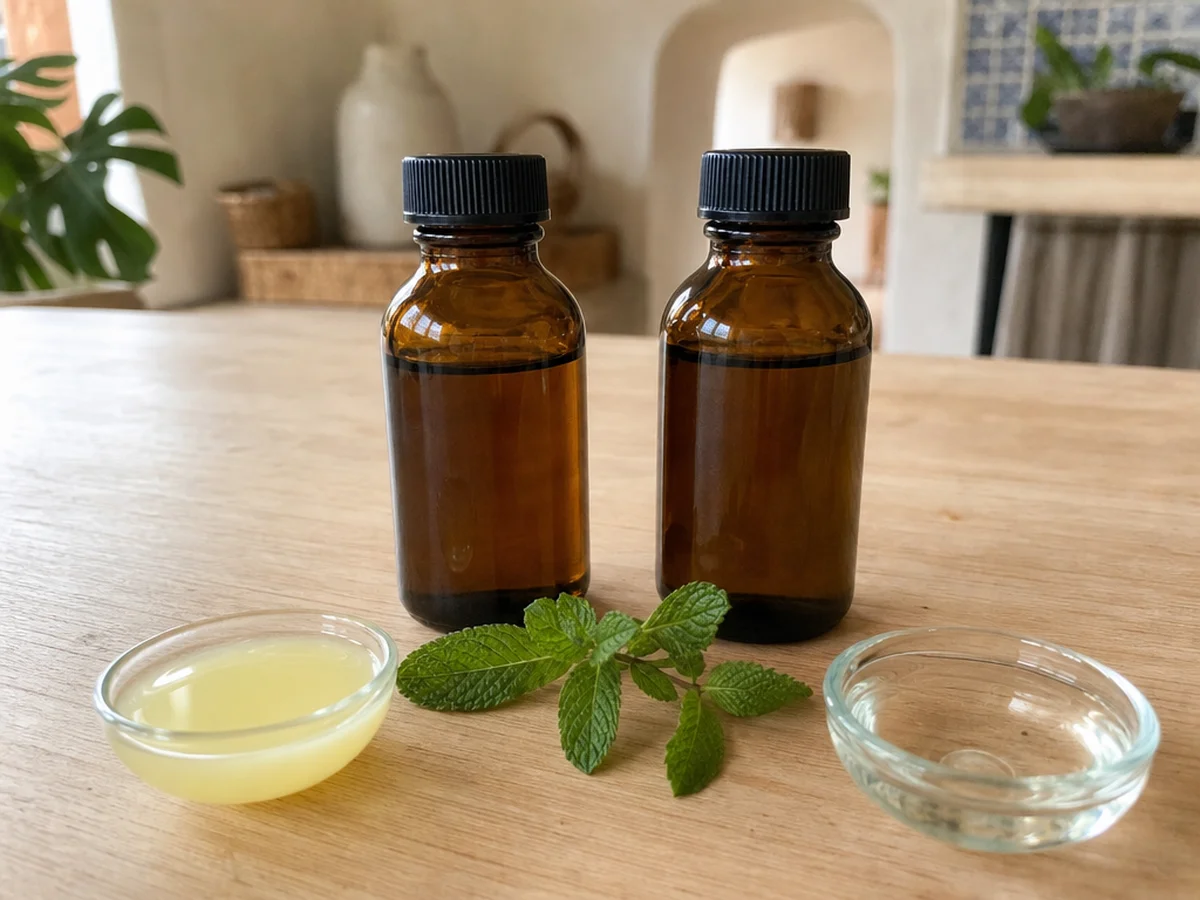
Good paperwork does not change how concentrated the oil is. We suggest 0.5% to 2% in a carrier oil with a patch test, away from eyes, children and pets, and never for internal use. The Cosmetic Ingredient Review report cites a recommended maximum dermal level of 5.4% for peppermint oil and advises avoiding it with glucose-6-phosphate dehydrogenase deficiency, and the National Center for Complementary and Integrative Health says not to use it on the face of infants or young children. Our dilution guide has the working numbers.
A small habit for any new bottle
Whatever you decide about a seller, one habit costs nothing. When a bottle arrives, write the date on it, note the species and lot number on a label, and smell it once from a few inches away so you remember what it was like fresh. Months later you can compare it with the same bottle. That will not tell you about composition, but it will tell you what your own bottle does over time, and that is worth knowing.
Species, lot, values, method: four questions, and a seller worth buying from will answer them gladly.
Peppermint Essential Oil
Peppermint Essential Oil from our own shop, in sizes from 0.5 oz to bulk.
From $10.99
Shop Now →Sources & Further Reading
- Zhao J et al., 2025. Characterization, differentiation, and adulteration detection of peppermint essential oil: An NMR approach. J Pharm Biomed Anal
- Wang M et al., 2024. Comprehensive quality assessment of peppermint oils and commercial products: An integrated approach involving conventional and chiral GC/MS coupled with chemometrics. J Chromatogr B
- Cosmetic Ingredient Review, 2018. Amended Safety Assessment of Mentha piperita (Peppermint)-Derived Ingredients as Used in Cosmetics
- NCCIH, Peppermint Oil: Usefulness and Safety