Peppermint Oil FAQ: Your Questions Answered Straight
A bottle of peppermint oil tends to raise the same handful of questions: which mint is this, how much is too much, who should keep their distance, and what does the paperwork really tell me? Here are the ones worth settling, answered the way we would across a counter.
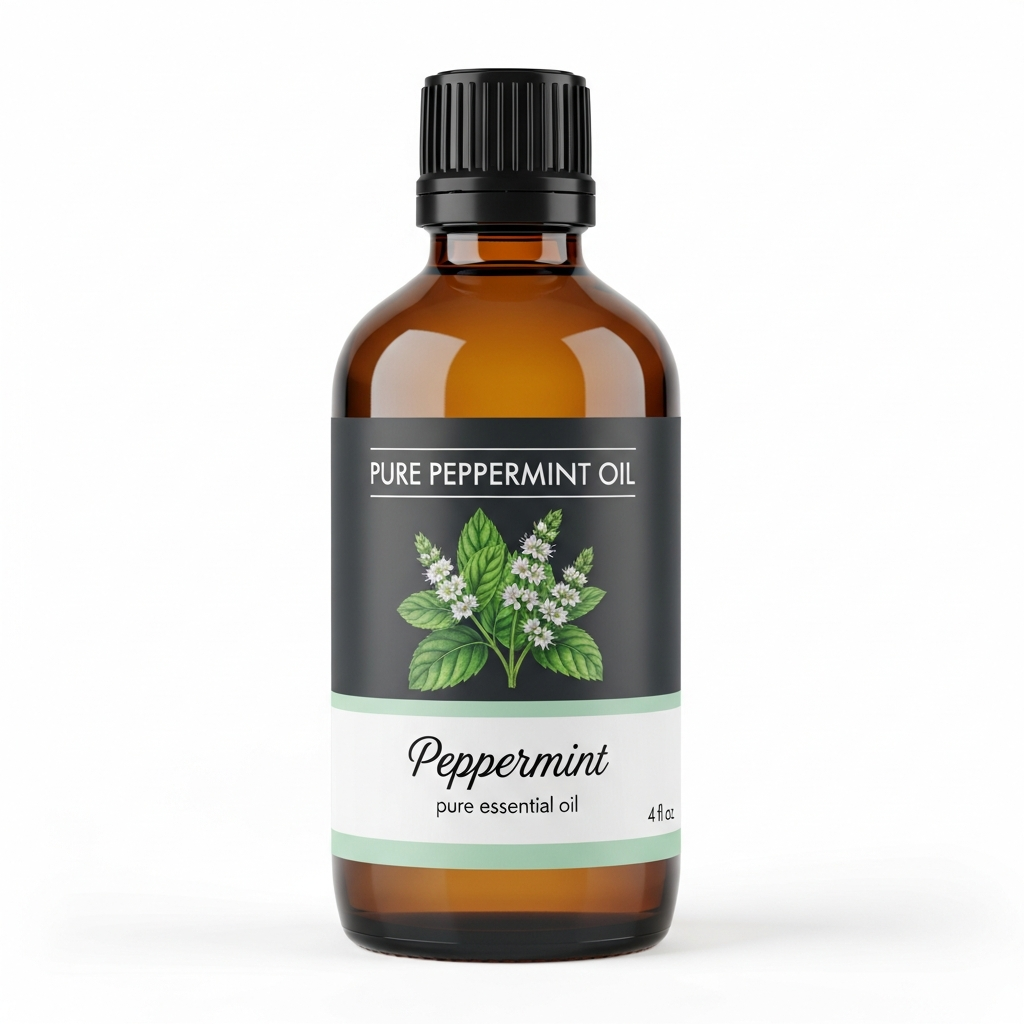
Peppermint Essential Oil
Our own Peppermint Essential Oil, in sizes from 0.5 oz to bulk.
From $10.99
Shop Now →Which mint is in the bottle?
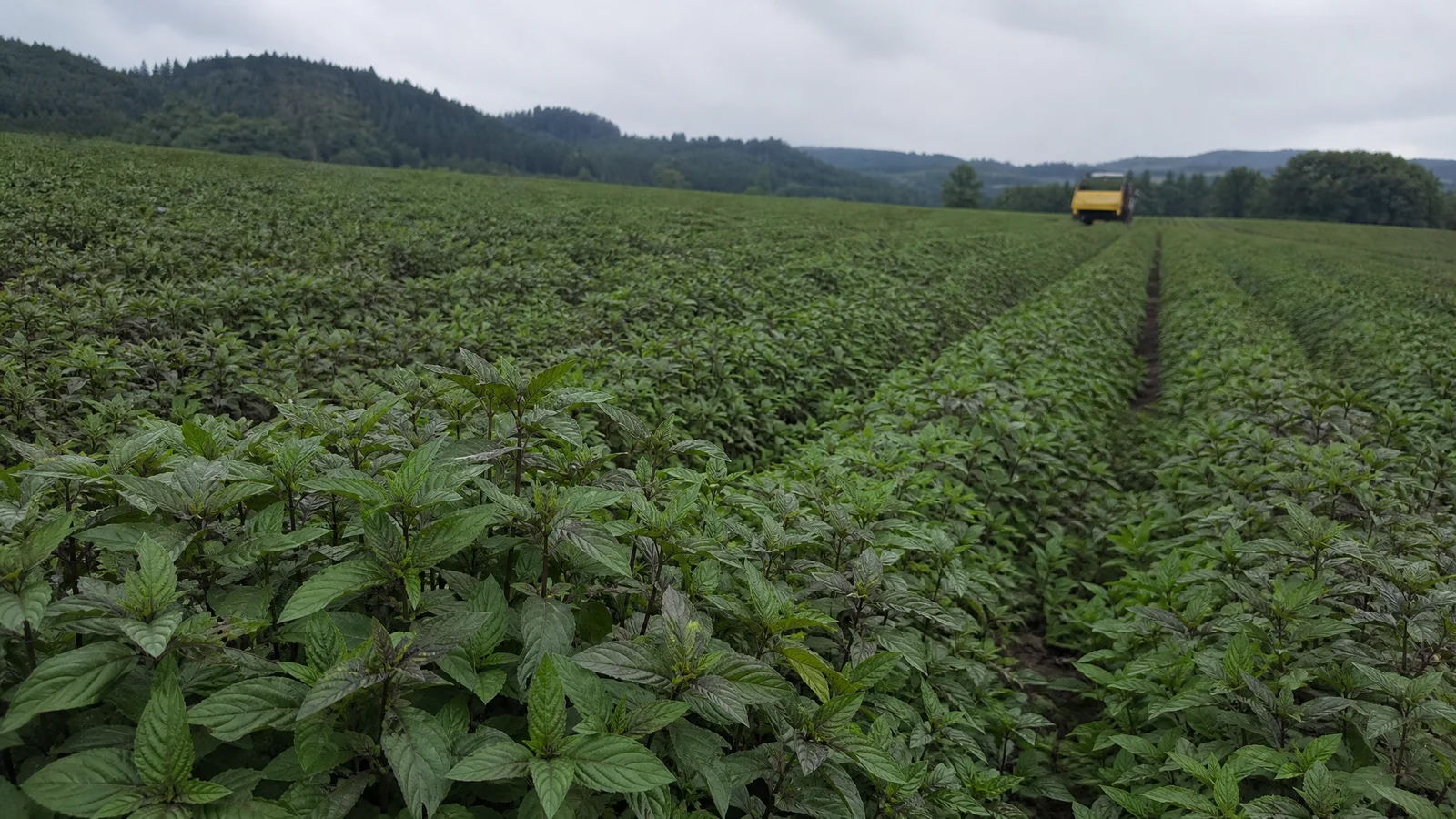
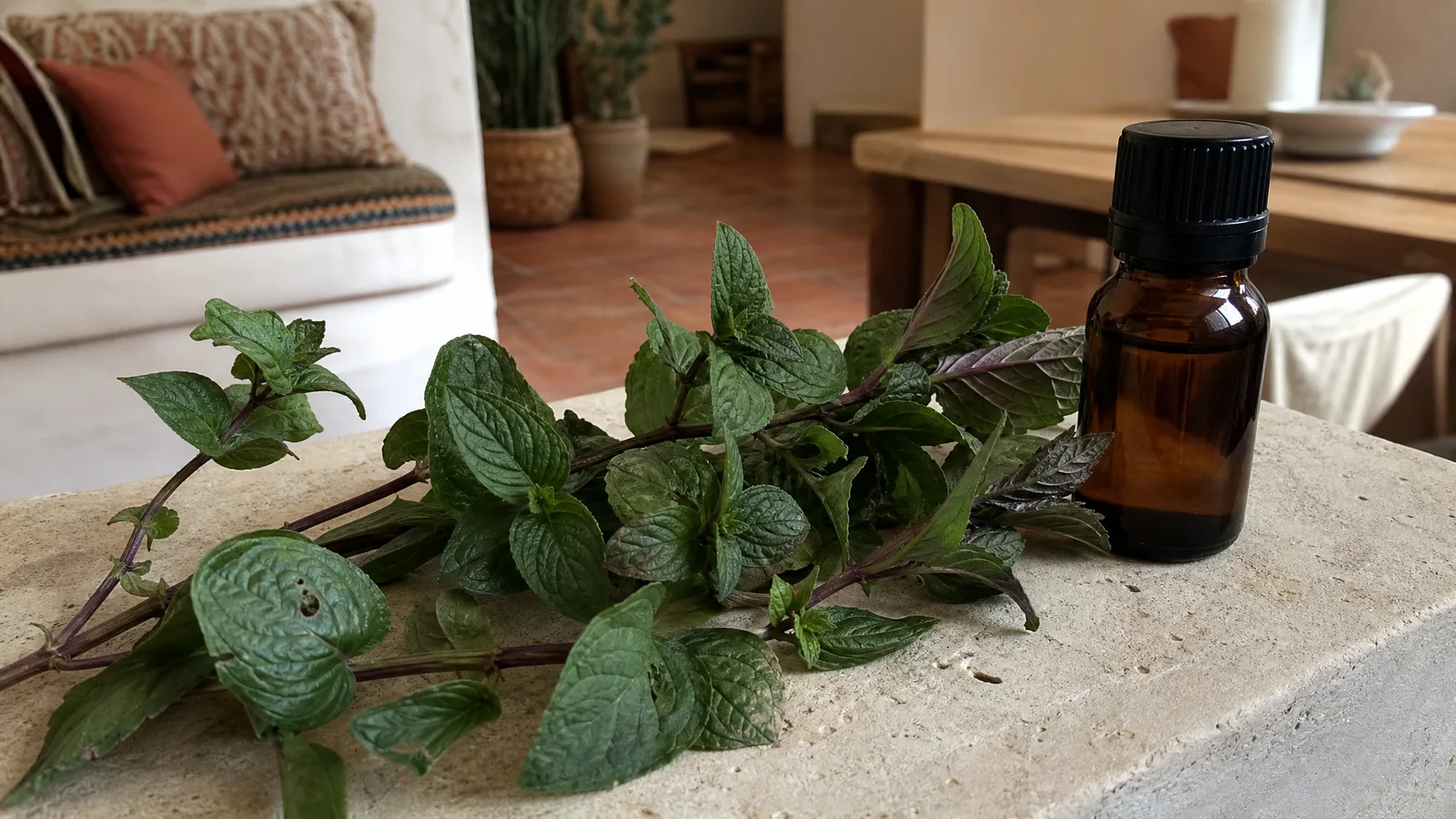
Two different species are sold as peppermint oil, and we carry both. Our Mentha piperita has a crisp, cool aroma with a faint candy-like sweetness. Our Mentha arvensis, or cornmint, is bolder and sharply minty with a strong menthol backbone. The chemistry backs up the difference: cornmint oil typically runs above 60% menthol with 4% to 18% menthone, while the balance in peppermint oil shifts with the stage at which the crop is cut (Kalemba and Synowiec). Our piperita and arvensis comparison goes deeper.
Can I tell a good oil by smell?
Not reliably. A 2025 NMR study of 50 commercial peppermint oils found 42% adulterated, with synthetic chemicals, cheaper oils and de-mentholised cornmint oil among the culprits (Zhao and colleagues). A nose cannot repeat that, but you can read the documents closely. Our Certificate of Analysis covers a Mentha piperita sample and reports its refractive index. Our GC-MS report covers the Mentha arvensis oil and lists chemical-family totals. If you want menthol, menthone and pulegone figures for the oil you plan to buy, ask us in writing through the contact page before ordering and keep the answer in writing. Our quality checks article has more questions for any seller.
How much can go on skin?
We recommend 0.5% to 2% in a carrier oil, a patch test first, and starting at the low end. In drops, 1% in a 1 oz (30 ml) bottle of carrier is 0.3 ml, about 6 drops at the usual rule of thumb of 20 drops to the millilitre (droppers vary). For context, the Cosmetic Ingredient Review reports a recommended maximum dermal level of 5.4% for peppermint oil, worked out from its pulegone and menthofuran content, and relays advice that people with G6PD deficiency or cardiac fibrillation avoid it (CIR, 2018). A ceiling is not a target, it describes Mentha piperita oil, and the face, broken skin and young children all call for extra care. Our guide to diluting peppermint oil turns percentages into drops.
What about babies and young children?
Keep it away from their faces. The National Center for Complementary and Integrative Health (NCCIH) says peppermint oil should not be applied to the face of infants or young children because serious side effects may occur if they inhale the menthol (NCCIH). Our guidance is the same, and we give no dilution table for children; our children's article explains why.
Can I swallow it?
No. Our oils are neat aromatic and cosmetic materials, and we say never to take them internally. The research on peppermint oil and irritable bowel syndrome used enteric-coated capsules, which are a different product from a bottle of oil, and NCCIH lists heartburn, nausea, abdominal pain and dry mouth as possible effects of oral use. After an accidental swallow, call Poison Control on 1-800-222-1222 (Poison Control). Our ingestion article has the label side.
Is it okay around pets?
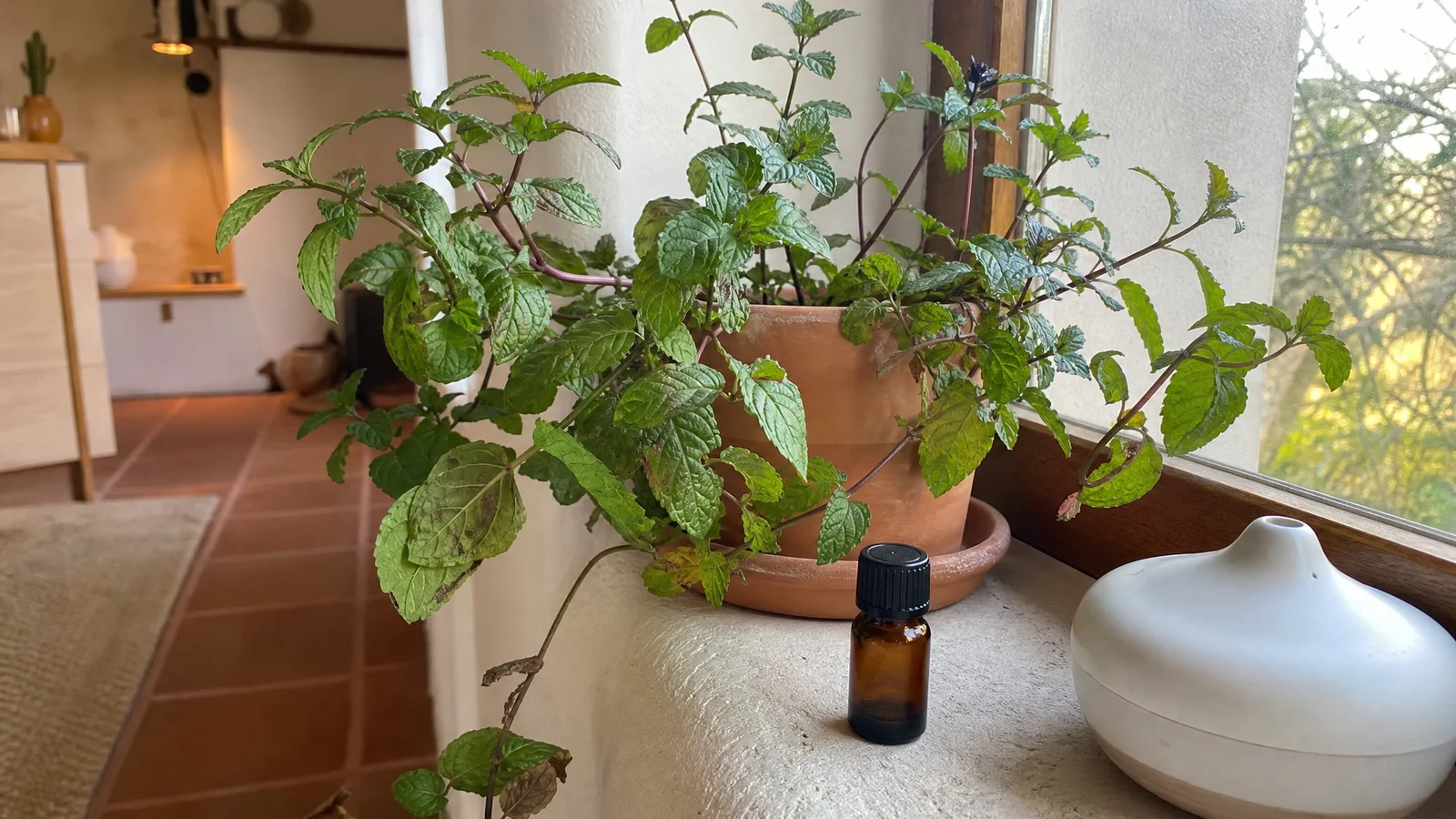
Plan on keeping them apart. The ASPCA lists mint as toxic to dogs, cats and horses and names essential oils as the toxic principle (ASPCA), and Pet Poison Helpline says cats and birds are at the greatest risk from essential oils in general (Pet Poison Helpline). Keep bottles out of reach, skip the diffuser in shared rooms, and see our guides for cats and dogs.
Will it mix into water?
Barely. Menthol, the main component, dissolves at only about half a gram per litre of water (PubChem), and an oil is a mixture, so drops tend to float or cling instead of blending in. Floating oil can land on skin undiluted in a bath or foot soak, so a carrier oil is the better vehicle.

Does it keep mice away?
We could not find a controlled study showing that it does. The University of California's house mouse guide puts its weight elsewhere: mice can squeeze through openings as small as 1/4 inch, so seal gaps with wire screen or coarse steel wool, then trap (UC IPM). Peppermint oil appears on the EPA's list of ingredients allowed in exempt, minimum-risk pesticide products (40 CFR 152.25), which means exempt from registration, not proven to work. Our mice article lays out a plan that starts with the gaps.
How long does a bottle last?
We say typically 3 to 5 years for our Mentha piperita and 2 to 3 years for our Mentha arvensis, kept capped, upright and away from heat and sunlight. A flatter, harsher smell than you remember is the practical signal to retire a bottle. More in does peppermint oil expire.
What will it smell like when I open it?
Our Mentha piperita opens crisp and cool, with a faint candy-like sweetness underneath. Our Mentha arvensis is bolder and sharper, with a strong menthol backbone and a more assertive edge. Smell either one from a paper strip at arm's length first. Your nose will tire quickly, so a second sniff a few minutes later is a fairer test than a third one straight away.
Where should I keep the bottle?
Capped, upright and in a shaded cabinet away from heat, well out of reach of children and pets. Keep it apart from the kitchen flavourings, so that nobody mistakes it for something to cook with.
Does it have proven health uses?
The evidence is narrow. NCCIH says a small body of research points to enteric-coated peppermint oil capsules may improve IBS symptoms in adults, and that little else is established. We sell an aromatic oil for external use, not a capsule or a remedy, and we make no health claims for it. For a symptom, a physician or pharmacist is the right person to ask.
If there is a question we have missed, send it through the contact page and we will answer it.
Peppermint Essential Oil
Peppermint Essential Oil from our own shop, in sizes from 0.5 oz to bulk.
From $10.99
Shop Now →Sources & Further Reading
- Kalemba D, Synowiec A, 2019. Agrobiological Interactions of Essential Oils of Two Menthol Mints: Mentha piperita and Mentha arvensis. Molecules. PMC6983130
- Zhao J et al., 2025. Characterization, differentiation, and adulteration detection of peppermint essential oil: An NMR approach. J Pharm Biomed Anal. Europe PMC, PMID 40339205
- Cosmetic Ingredient Review, 2018. Amended Safety Assessment of Mentha piperita (Peppermint)-Derived Ingredients as Used in Cosmetics. cir-safety.org
- NCCIH. Peppermint Oil: Usefulness and Safety. nccih.nih.gov
- Poison Control. Essential oils: Poisonous when misused. poison.org
- ASPCA. Toxic and Non-toxic Plants: Mint. aspca.org
- Pet Poison Helpline. Essential Oils. petpoisonhelpline.com
- PubChem. (-)-Menthol, solubility record (CID 16666). pubchem.ncbi.nlm.nih.gov
- UC Statewide IPM Program. House Mouse. ipm.ucanr.edu
- 40 CFR 152.25 - Exemptions for pesticides of a character not requiring FIFRA regulation. law.cornell.edu