Peppermint Oil and Children: The Face Rule
If you remember one thing about peppermint oil and children, make it this: keep it away from the face of an infant or young child. The second rule is about where the bottle lives. Both are simple, and both rest on what poison centers and public-health bodies have actually written down. Neither needs special equipment; they need a habit.
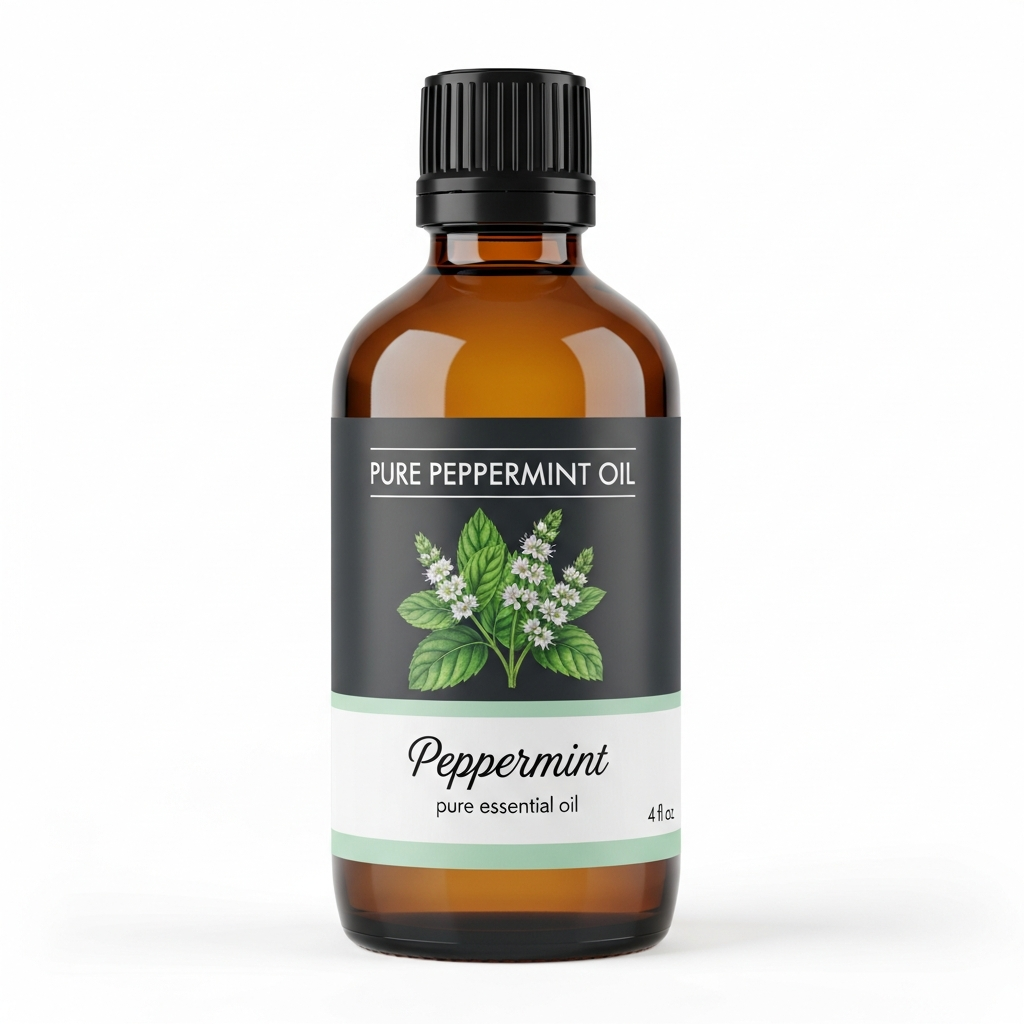
Peppermint Essential Oil
Our own Peppermint Essential Oil, in sizes from 0.5 oz to bulk.
From $10.99
Shop Now →Why the face is the line
The National Center for Complementary and Integrative Health says peppermint oil should not be applied to the face of infants or young children because serious side effects may occur if they inhale the menthol in it (NCCIH). Our guidance matches: keep our oils away from the face of an infant or young child, where concentrated menthol can affect breathing.
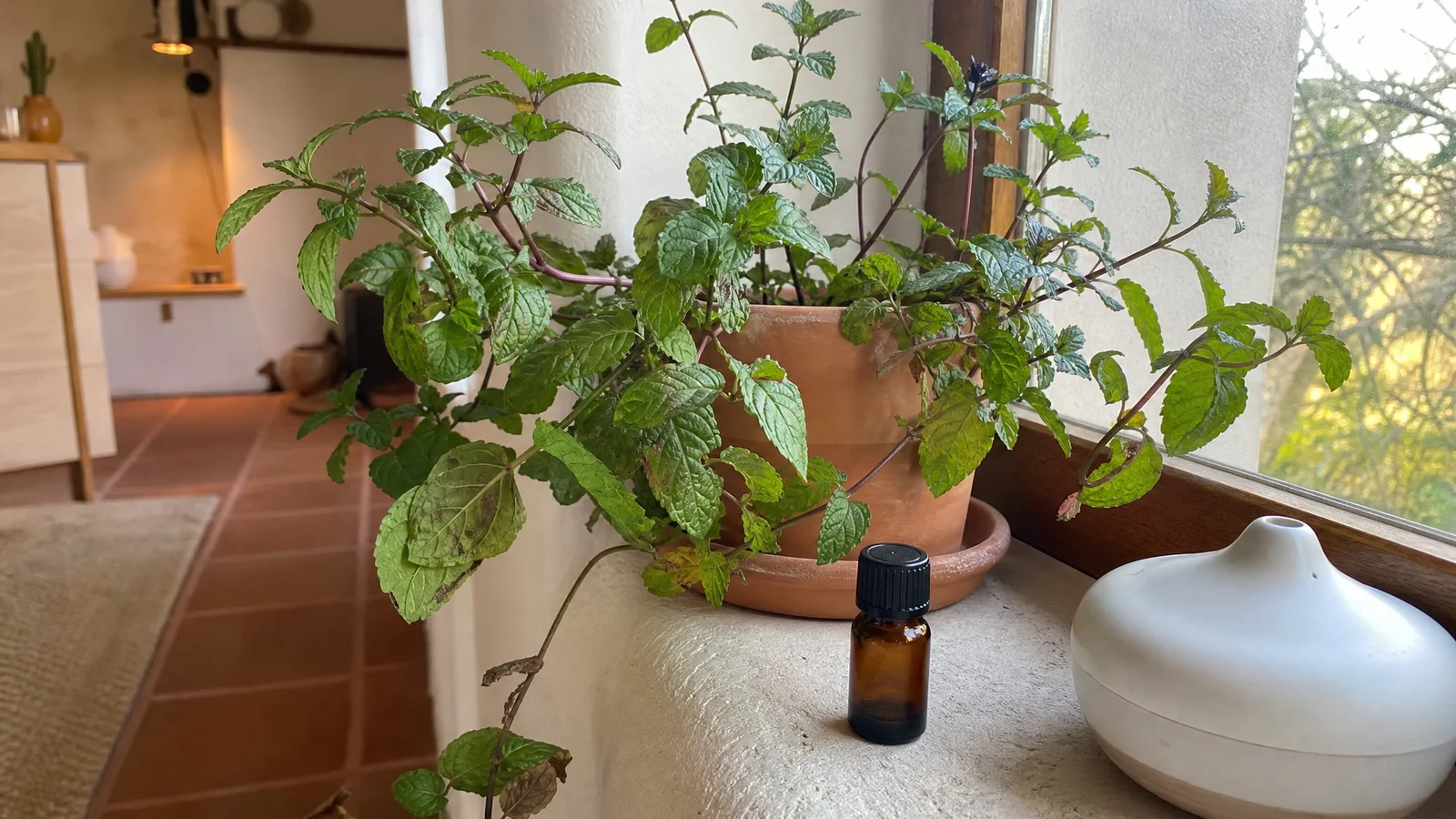
Read that closely and it is about inhaling as well as applying. Whether it reaches as far as a diffuser running in a baby's room is a question for a pediatrician. The page does not say, and we would rather send you to the person who can see your child than guess. If you do diffuse at home, our diffuser article covers the amounts and the air-out habit for the rest of the household.
The bottle is the other half
Poison data shows how most trouble starts: a bottle within reach. A review of calls to the New South Wales Poisons Information Centre, reported by the University of Sydney, found essential-oil exposures frequent and rising by more than 5 percent a year, with 63 percent of cases in children under 15. The clear majority were accidental or the result of mistaking oils for medicines like cough mixture. Peppermint was 3.5 percent of the calls, behind eucalyptus at 46.4 percent and tea tree at 17 percent (University of Sydney). Those shares are of all essential-oil calls, so they say little about how risky peppermint is compared with other oils. They do show that small bottles are easy for small hands to find.
The same news release quotes the lead author on a practical point: many of these products do not come with child-resistant closures or flow restrictors. We would not lean on a cap to do the job, ours included. Poison Control adds that children have thin skin and immature livers, which might make them more susceptible to toxic effects than adults, that aspirating an essential oil can cause pneumonia, and that bottles belong locked up and out of sight and reach of children and pets (Poison Control).
A short household checklist
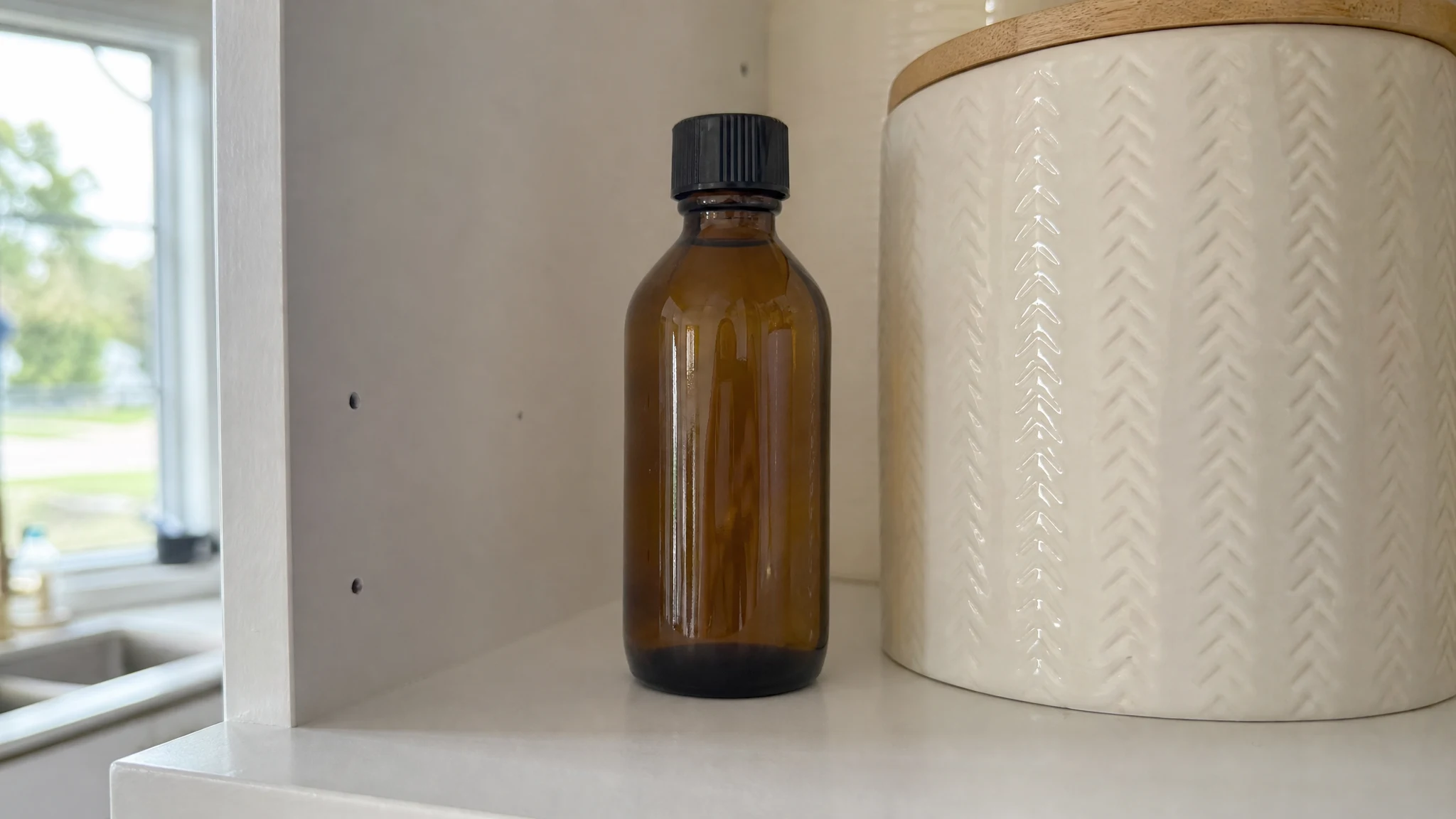
- Store the bottle high, capped and upright, in a cool, dark cabinet that closes. A lock is better still: Poison Control's own advice is that if young children live in the home, essential-oil bottles should either be discarded safely or kept locked up, out of sight and reach.
- Keep anything freshly scented with peppermint away from an infant's face and sleeping area.
- Never give a child peppermint oil to swallow. Ours is labeled not for internal use.
- Know the number: Poison Control is 1-800-222-1222, free and open around the clock. For a child struggling to breathe or unresponsive, call emergency services first.
- If skin reddens or itches after any contact, wash it off gently and stop. Poison Control gives the same advice for rashes.
Making the habit stick
Rules hold up when they are easy. Pick one spot for the bottle, up high and latched, and return it there every single time, even if you plan to use it again in ten minutes. Keep your measuring tools with it so nothing is left on the counter. If you make a blend or a batch of soap, finish in the same order each time: cap, wipe, store, before anyone walks into the kitchen. A ringing phone or a doorbell is exactly when a bottle gets left out, so the habit has to be automatic.
What we leave to your pediatrician
We give no age-based dilution for peppermint oil on a child's body, because we have no verified table to point to. Our 0.5% to 2% in a carrier guidance is written for adults and is not a children's figure. We also do not suggest our oils for a child's illness: ours are aromatic materials for external use, and they are not intended to diagnose, treat, cure or prevent any disease. If you are wondering about a particular child, a pediatrician or pharmacist can answer in a way an article cannot.
Talking with older children
As children grow, explain the bottle rather than just hiding it. Tell them it is strong, tell them why it lives on the high shelf, and ask them to come and find you if they ever see it out. A plain explanation is easier to remember than a flat no. Keep them from handling or sniffing it on their own, and leave any question about what is suitable at a given age to your pediatrician.
One last practical point is the travel bag. Bottles tend to go missing from the places we forget to think about: a handbag, a gym bag, a bathroom drawer, the cup holder in the car. If you carry a small blend with you, give it a home that closes and keep it zipped away from where a child might rummage.
Related questions have their own pages: pregnancy and nursing, why the label says never to swallow it, and how adults dilute it. Peppermint is lovely in a household of grown-ups who handle it with care; with children around, the face rule and the high shelf are what make that work.
Peppermint Essential Oil
Peppermint Essential Oil from our own shop, in sizes from 0.5 oz to bulk.
From $10.99
Shop Now →Sources & Further Reading
- NCCIH. Peppermint Oil: Usefulness and Safety. nccih.nih.gov
- University of Sydney, 2019. Essential oil poisoning calls on the rise, children most affected. sydney.edu.au
- Poison Control. Essential oils: Poisonous when misused. poison.org