Peppermint vs Cornmint Oil: Which Mint Is Which?
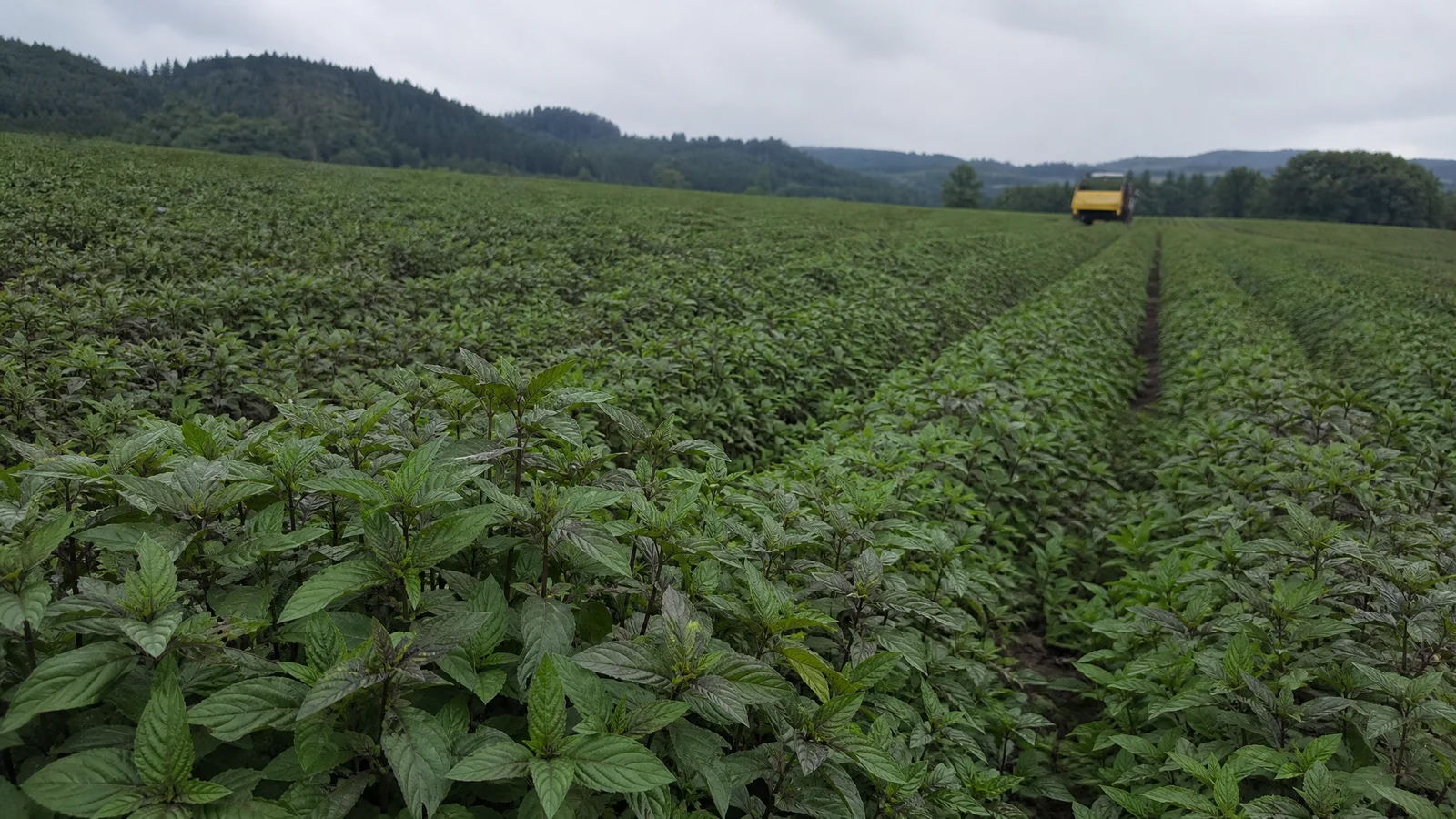
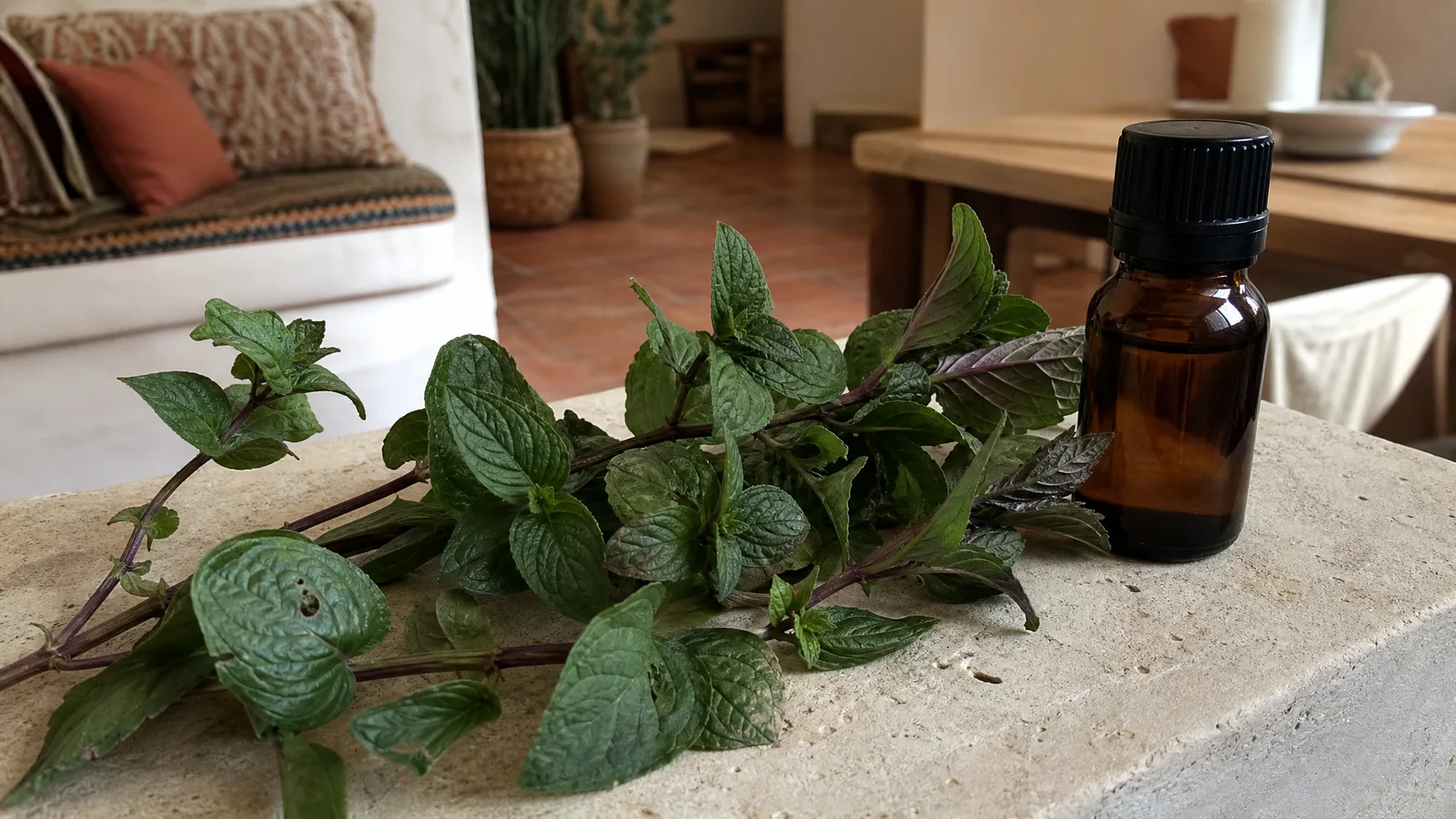
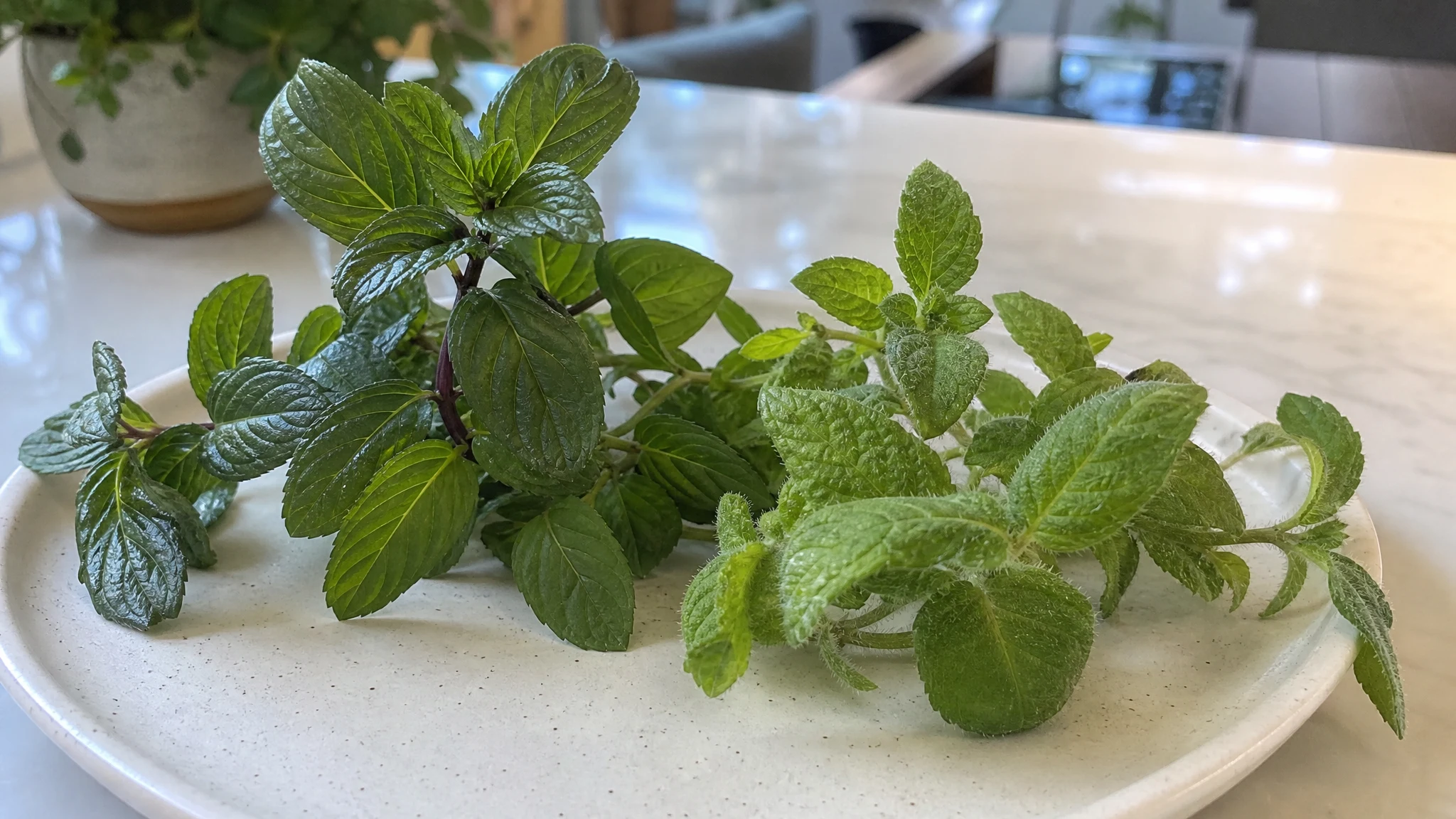
"Peppermint oil" on a label can mean two different plants. Mentha piperita is the classic peppermint, and Mentha arvensis, called cornmint or field mint, is a separate species that also ends up in bottles under the same name. We sell one oil of each, which makes this the one place where our two products sit side by side. Our view is that neither is the better oil. They are different materials, and the only real mistake is buying one while believing you bought the other.
Peppermint Essential Oil
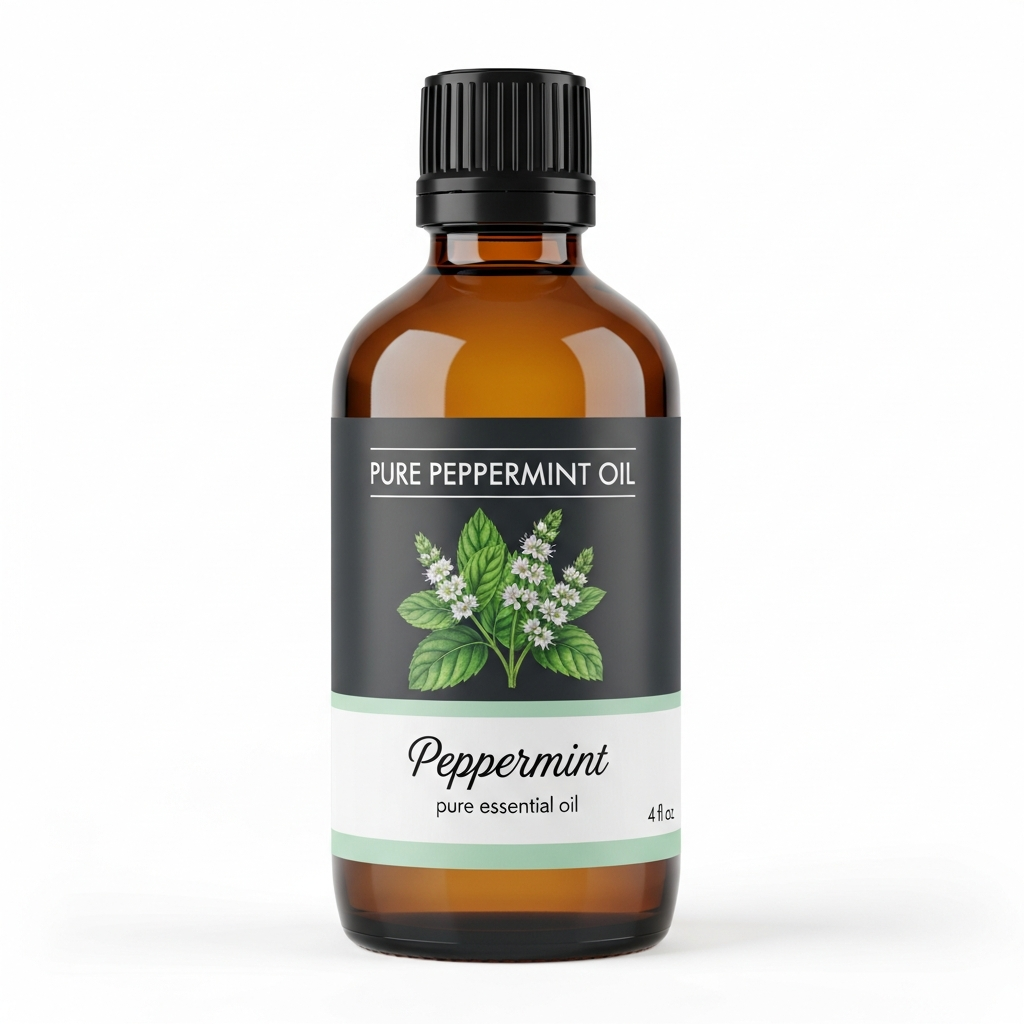
Our own Peppermint Essential Oil, in sizes from 0.5 oz to bulk.
From $10.99
Shop Now →Two plants, not two grades
Peppermint is a hybrid, Mentha x piperita, and has its own standard: ISO 856 covers oil of peppermint. Cornmint is Mentha arvensis, and it has a separate standard, ISO 9776, which covers Mentha arvensis oil that is partially dementholized. That title is revealing. Cornmint is rich enough in menthol that part of it is often removed and sold on, and the leftover oil is the kind that has turned up as a cheaper substitute for true peppermint oil.
A review of the two mints reports that peppermint oil typically contains menthol in the range of 20% to 60% and menthone from 5% to 35%, while cornmint oil has more than 60% menthol and 4% to 18% menthone. Those are broad literature ranges, not figures for our oils, but they show the headline difference: cornmint is menthol-forward, and peppermint is a more balanced mixture with a lot more menthone and a rounder, sweeter edge.
Why menthol alone will not tell you which is which
The ranges overlap, so a menthol number by itself cannot identify the species. That matters because adulteration studies keep returning to cornmint. A 2025 NMR study of 50 commercial peppermint oils reported 42% adulterated, with synthetic chemicals, de-mentholized cornmint oil and lower-cost oils among the adulterants. A 2024 GC/MS study built a statistical model that could tell authentic peppermint oils from cornmint oils sold in the US, which means the two are distinguishable in the laboratory even when a label does not say. Our reading is straightforward: the label has to name the species, and a good report lists named compounds rather than a single menthol figure.
How they differ for a maker
Our Mentha piperita is crisp, cool and minty with a faint candy-like sweetness underneath. It is a top note, and it blends well with eucalyptus, spearmint, rosemary, lavender, sweet orange and tea tree. If you are imagining a candy-cane lip balm, a wintery home fragrance or a classic mint soap, this is the one to start with.
Our Mentha arvensis is bold, cooling and sharply minty, with a strong menthol backbone, also a top note, and it pairs well with lavender, rosemary, eucalyptus, lemon, spearmint and tea tree. That assertive character suits room mists, cleaning sprays, foot soaks and body butters where you want the cooling edge to carry. We think of it as an assertive mint rather than a soft one.
The best way to choose is with your own nose: order the smallest bottle of each, smell them side by side, then scale up the one you keep reaching for. Our bottle size guide helps with that first order, and our pairing guide covers companions for both. If it is spearmint you are weighing, our spearmint comparison covers that third mint.
Smelling them side by side
If you have both oils, a simple comparison helps. Put a drop of each on a separate strip of plain paper, such as a coffee filter cut into narrow pieces, and label each strip with a pencil. Smell one, rest for a few seconds so your nose clears, then smell the other. Come back to both after ten minutes and again after an hour, because what lingers is often different from what greets you.
Our Mentha piperita opens crisp and cool with a faint candy-like sweetness, and our Mentha arvensis opens bold and sharply minty with a strong menthol backbone. You may well decide one belongs in a soft mint soap and the other in a room mist where the edge is welcome. Write down which strip you reach for, because that, more than any table, is the answer to which one is yours.
What our documents show
The Certificate of Analysis we publish is for a Mentha x piperita sample and reports a refractive index of 1.4596 at 20 C, which sits inside the 1.459 to 1.465 range given for pharmacopoeial peppermint oil in the Cosmetic Ingredient Review assessment. The GC-MS report we publish is for our Mentha arvensis. It is qualitative and gives chemical-family totals, with the monoterpenol family (the group that includes menthol) at about 71% of the area and 99.04% of the total identified; area percent is not weight percent, so these are not menthol figures.
If you want named-compound numbers for menthol, menthone, isomenthone, 1,8-cineole, pulegone and menthofuran for the lot you will receive, ask us in writing through the contact page before ordering, and get the document in writing. Our quality-check guide explains what to ask any seller.
One dilution line for both
Both oils are sold neat and both are potent. We suggest 0.5% to 2% in a carrier oil with a patch test first, away from eyes, children and pets, and never for internal use. A lower end of that range is a gentle place to begin. If you are making a product for others, check IFRA standards for your category, and see our dilution guide for working numbers.
Two oils, one name, and the better one is simply whichever matches what you are making.
Peppermint Essential Oil
Peppermint Essential Oil from our own shop, in sizes from 0.5 oz to bulk.
From $10.99
Shop Now →Sources & Further Reading
- ISO 856:2006 - Oil of peppermint (Mentha x piperita L.)
- ISO 9776:1999 - Oil of Mentha arvensis, partially dementholized (Mentha arvensis L. var. piperascens Malinv. and var. glabrata Holmes)
- Kalemba D, Synowiec A, 2019. Agrobiological Interactions of Essential Oils of Two Menthol Mints: Mentha piperita and Mentha arvensis. Molecules
- Zhao J et al., 2025. Characterization, differentiation, and adulteration detection of peppermint essential oil: An NMR approach. J Pharm Biomed Anal
- Wang M et al., 2024. Comprehensive quality assessment of peppermint oils and commercial products: An integrated approach involving conventional and chiral GC/MS coupled with chemometrics. J Chromatogr B
- Cosmetic Ingredient Review, 2018. Amended Safety Assessment of Mentha piperita (Peppermint)-Derived Ingredients as Used in Cosmetics