Peppermint Oil Origin: Does Yakima or India Matter?
Yakima, Willamette, India: peppermint oil labels love a place name, and a place name is a pleasant thing to read on a bottle. It tells you about geography, though, and not about what is actually inside. The more interesting story is how much of the oil's character is decided by which cut of the crop it came from, which the published chemistry shows rather nicely.
Peppermint Essential Oil
Our own Peppermint Essential Oil, in sizes from 0.5 oz to bulk.
From $10.99
Shop Now →Where American peppermint oil really comes from
The US Department of Agriculture counts peppermint oil by state, and the 2025 figures surprise people. Total US production was about 2.5 million pounds of oil from roughly 22,900 harvested acres. Idaho led with about 44 percent of it, Oregon made about 29 percent and Washington about 27 percent. So neither Yakima (in Washington) nor the Willamette Valley (in Oregon) is the biggest source by weight. USDA reports state totals only, so a valley name on a bottle describes one slice of production, and we have no published data that says how a Willamette oil differs from any other.
Origin shows up in ranges, and the ranges overlap
The international peppermint standard, as reproduced by the Cosmetic Ingredient Review, gives one chemical profile for "U.S. type" oil and a wider one for oils from other origins. Menthol, for example, is listed at 36 to 46 percent for the U.S. type and 32 to 49 percent for other origins. Every U.S. range sits inside the other-origins range. In plain terms, you cannot tell where an oil is from by tasting one number, and "U.S. type" does not promise more menthol or less pulegone. The band is wide.
The cut matters more than the zip code
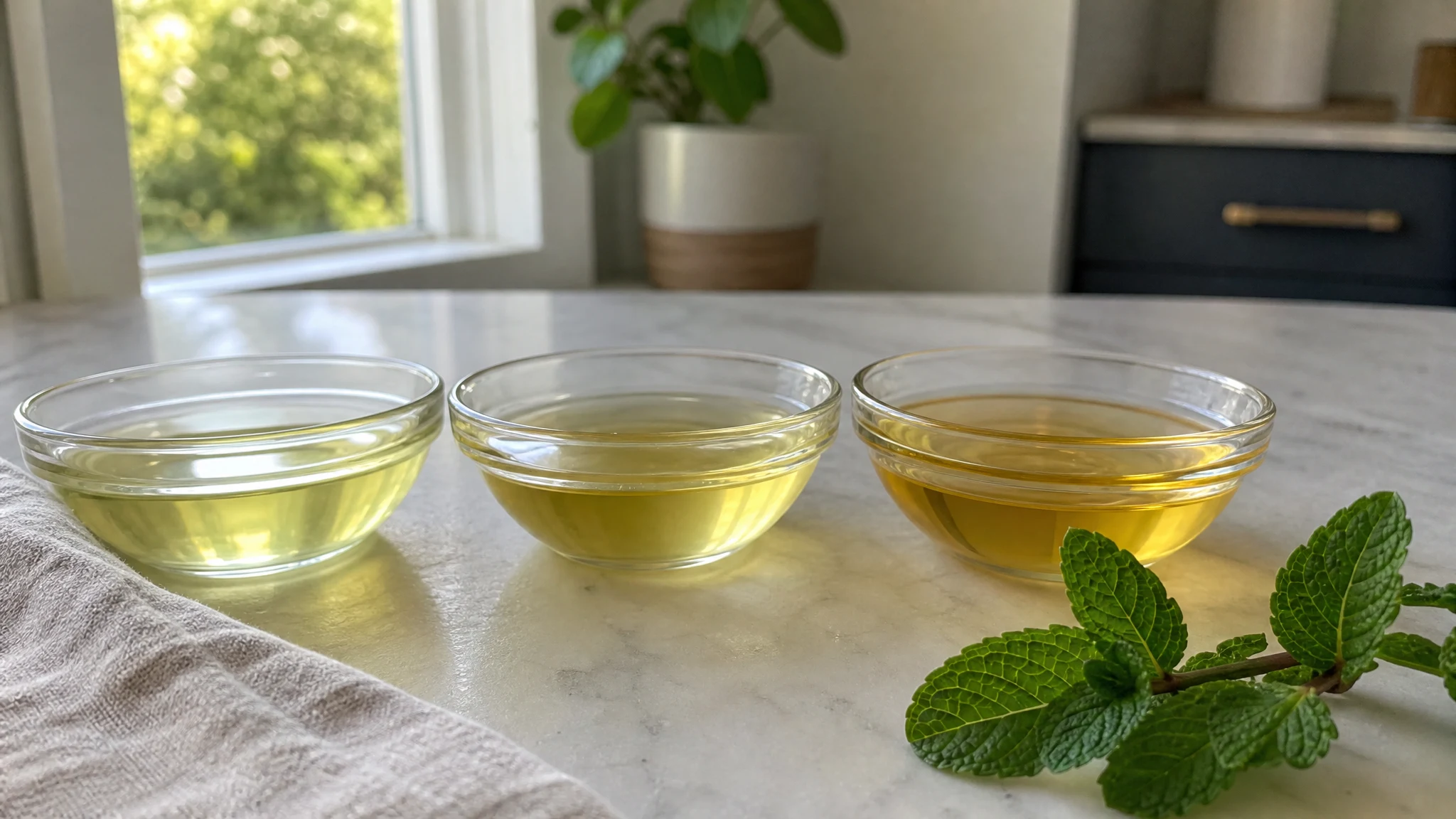
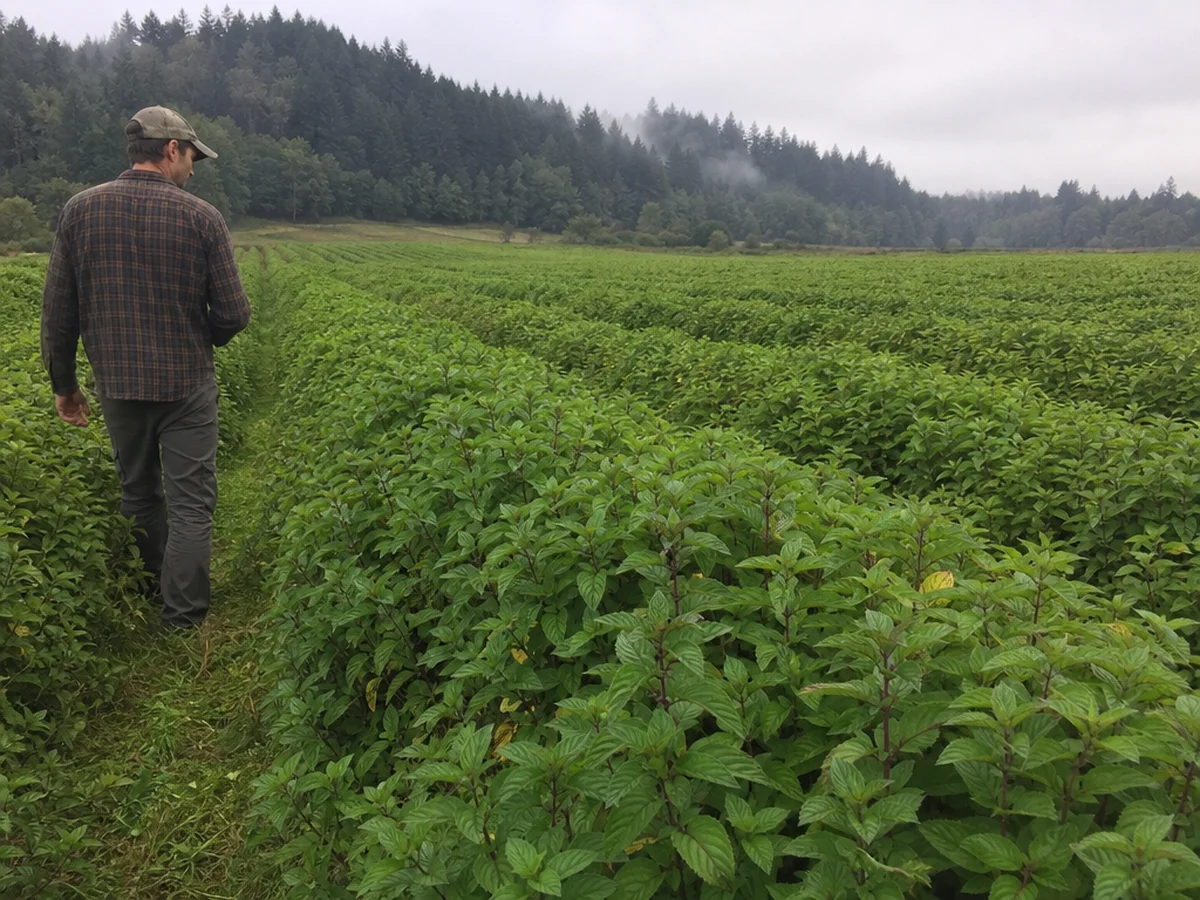
Yakima is double-cut country: the mint is harvested in July and again in September. A 2011 Journal of Food Science study steam-distilled oil from both cuts, using fresh and dried leaf, and profiled each by GC-MS and by aroma and taste. The Cosmetic Ingredient Review, summarising the work, notes that first-harvest oils tend to carry more 1,8-cineole, isomenthone, menthofuran and pulegone and less menthol and menthone than second-harvest oils, and that fresh and dried leaf also give different oils.
Reasoning from that, two oils from the same valley and the same year can differ by cut and by drying, and neither difference appears in the place name. A bare "Yakima" is closer to a brand voice than to a specification, which makes the harvest and a named-compound report far more telling.
India, and why the word needs a second question
India is the heavyweight of mint oil worldwide. A 2022 paper on Indian menthol mint puts its share of world mint oil near 80 percent, grown on around 250,000 hectares by close to 500,000 families, citing a 2020 source. That figure belongs to the cornmint crop, Mentha arvensis, not to peppermint specifically. So "India" can sit on a bottle of either plant.
Origin does leave a chemical trace. A 2024 study of 22 authentic peppermint oils and 36 commercial products built a statistical model that could separate U.S., Indian and blended peppermint oils, and cornmint oils sold in the U.S., though it took gas chromatography and chemometrics to do it. The same study found that 53 percent of the commercial products failed the ISO specification, a good reminder that a region name is not a passing grade.
What you can judge at your own nose
A place name cannot be smelled, but a bottle can. Open it, hold it a hand's width below your nose and breathe in gently rather than sniffing hard. Peppermint is strong enough that a deep sniff mostly registers as cold and nothing else. Give it a few seconds and you'll notice what sits underneath the chill: a faint candy-like sweetness in a rounder oil, a sharper menthol edge in a bolder one.
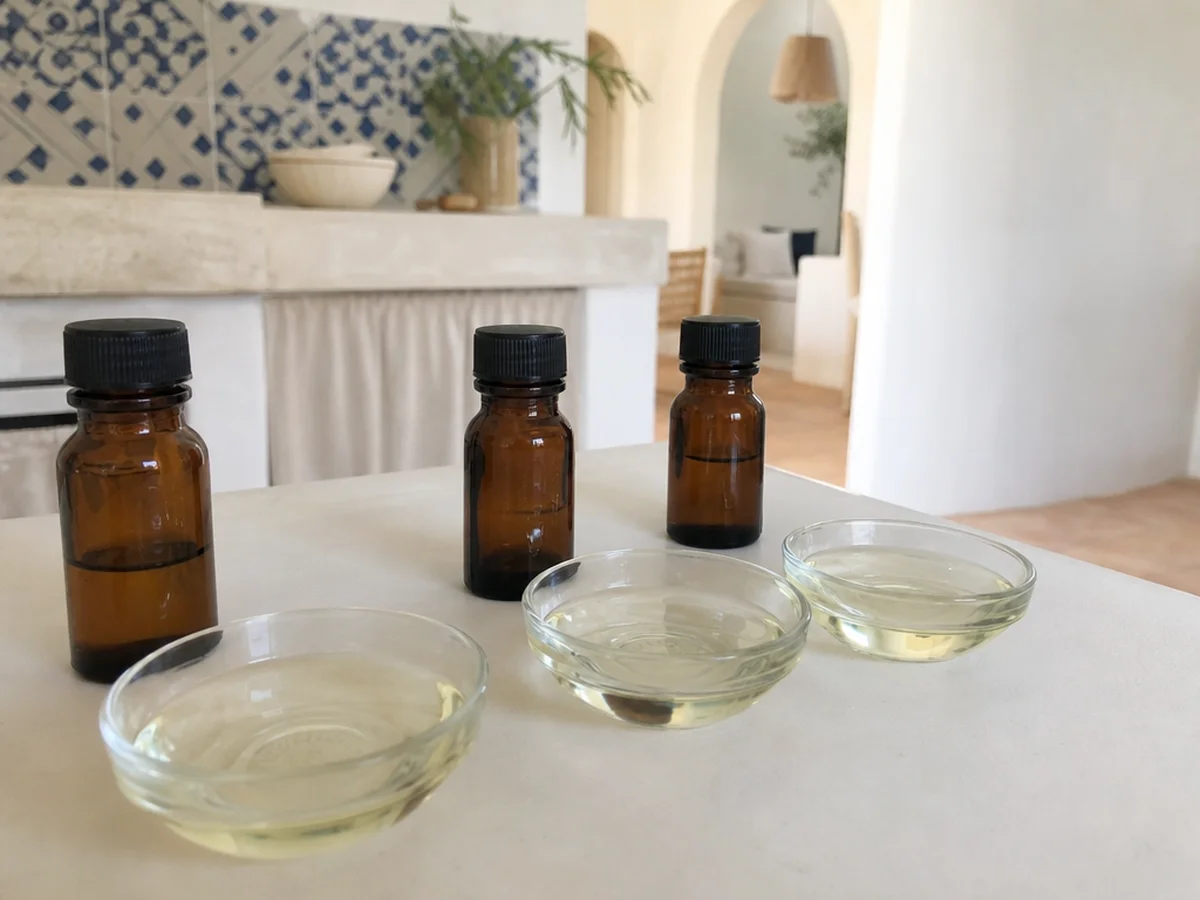
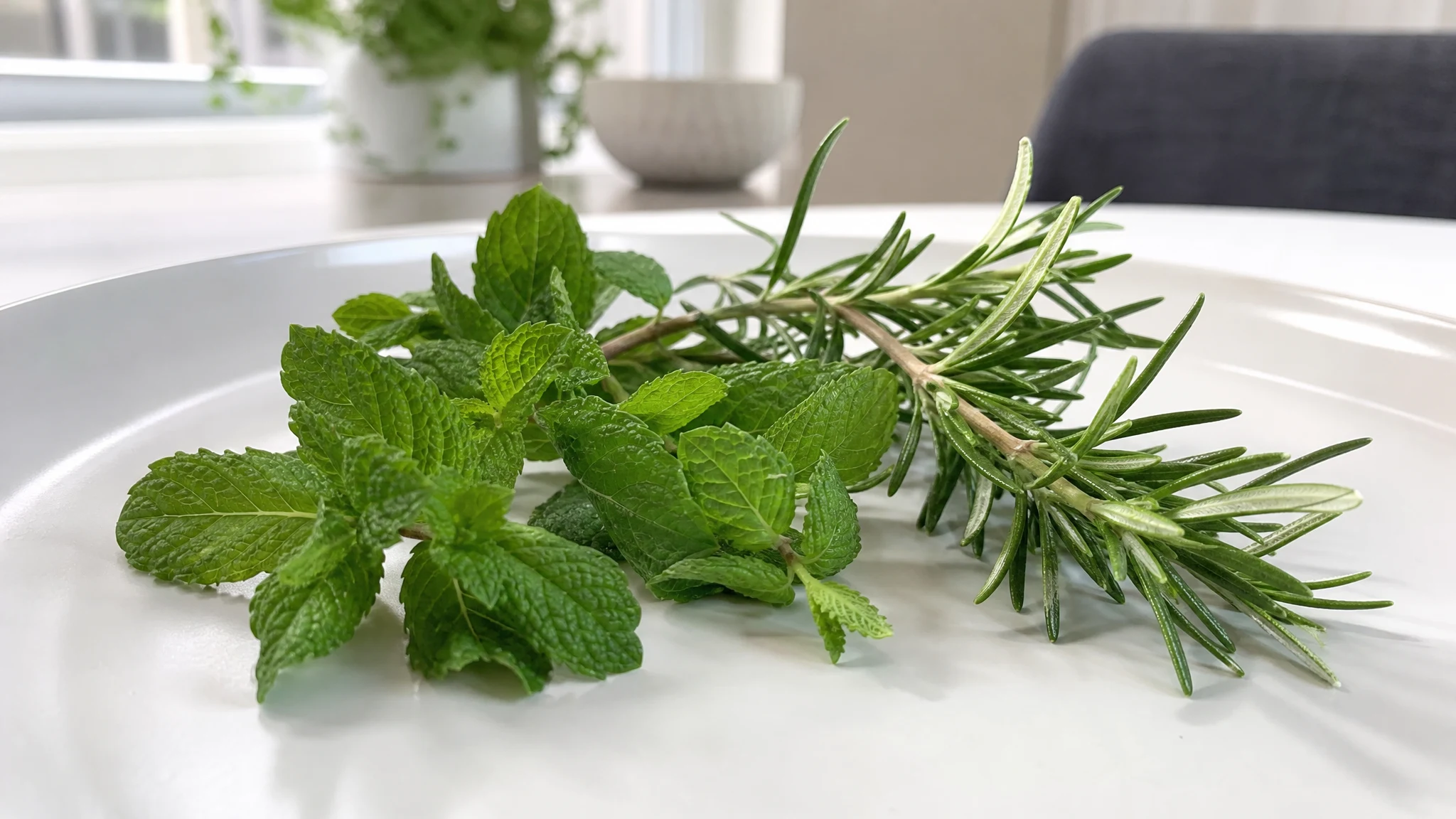
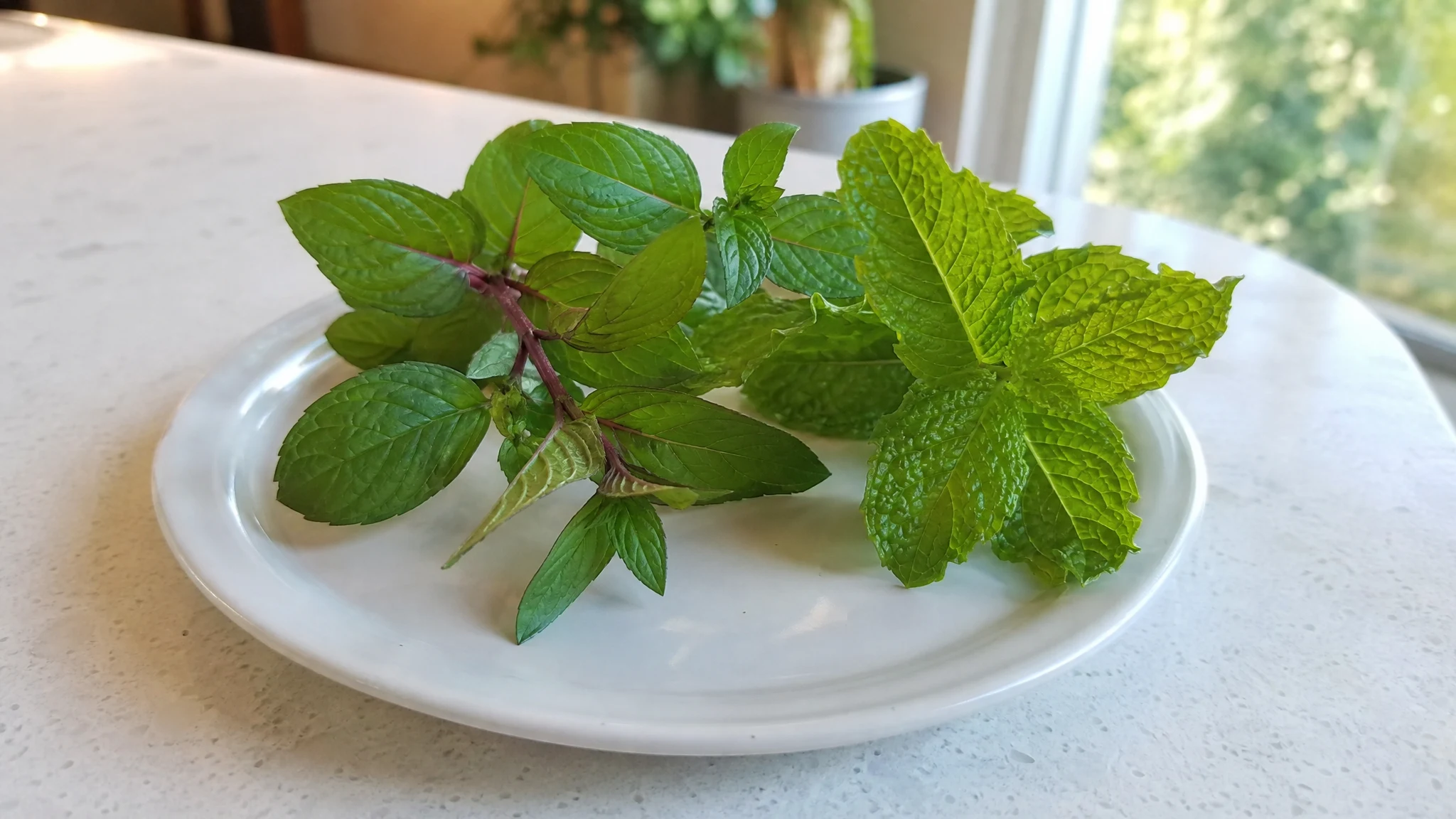
Our Mentha piperita is crisp, cool and minty with a faint candy-like sweetness, and our Mentha arvensis is bold and sharply minty with a strong menthol backbone. Those are the words we use because they describe the scent in the bottle, and they are a better guide to a project than a postcode.
We would suggest writing down what you smell the day you open a bottle, next to the species and the date. A line in a notebook is worth more than a region name six months later, when you are trying to remember which mint you liked in a soap or a balm. Origin makes a lovely story, and we enjoy a good story as much as anyone, but at the workbench it is the species, the scent and the paperwork you will actually use.
How we would read an origin claim
- Treat the region as the start of a question. Ask which species, which year and cut, and whether a report exists for that lot. Our paperwork guide shows what a useful report lists.
- Ask for named compounds. Menthol, menthone, isomenthone, menthofuran and pulegone are the ones the ISO profile controls.
- Be wary of paying for the name. We found no source linking a regional label to a measured quality premium, and our price guide looks at what really moves cost.
- Know the species. Our piperita versus arvensis comparison sets the two plants out side by side.
We sell a Mentha piperita and a Mentha arvensis, each with guidance to dilute to 0.5% to 2% in a carrier oil and patch test first. If origin matters to what you are making, ask us in writing through our contact page before you order, as you would with any seller, and get the answer in writing.
The short version: choose a mint by its species and by a report that shows its compounds, and enjoy the valley name as scenery.
Peppermint Essential Oil
Peppermint Essential Oil from our own shop, in sizes from 0.5 oz to bulk.
From $10.99
Shop Now →Sources & Further Reading
- Crop Production 2025 Summary, USDA National Agricultural Statistics Service, January 2026.
- Amended Safety Assessment of Mentha piperita (Peppermint)-Derived Ingredients as Used in Cosmetics, Cosmetic Ingredient Review, 2018.
- Volatile compounds and sensory analysis of both harvests of double-cut Yakima peppermint (Mentha piperita L.), Chen MZ and colleagues, Journal of Food Science, 2011.
- Non-invasive Estimation of Foliar Nitrogen Concentration Using Spectral Characteristics of Menthol Mint (Mentha arvensis L.), Pandey P, Singh S, Khan MS, Semwal M, Frontiers in Plant Science, 2022.
- Comprehensive quality assessment of peppermint oils and commercial products: An integrated approach involving conventional and chiral GC/MS coupled with chemometrics, Wang M and colleagues, Journal of Chromatography B, 2024.