Peppermint Oil Prices: What Really Sets the Number
Put three bottles of peppermint oil side by side and the prices can look like they belong to different products. In a sense, they may. The oil itself is a surprisingly small part of what any bottle costs, which leaves plenty of room for species, paperwork, packaging and margin to pull prices apart. We do not quote prices here; this is a method for making any two offers comparable.
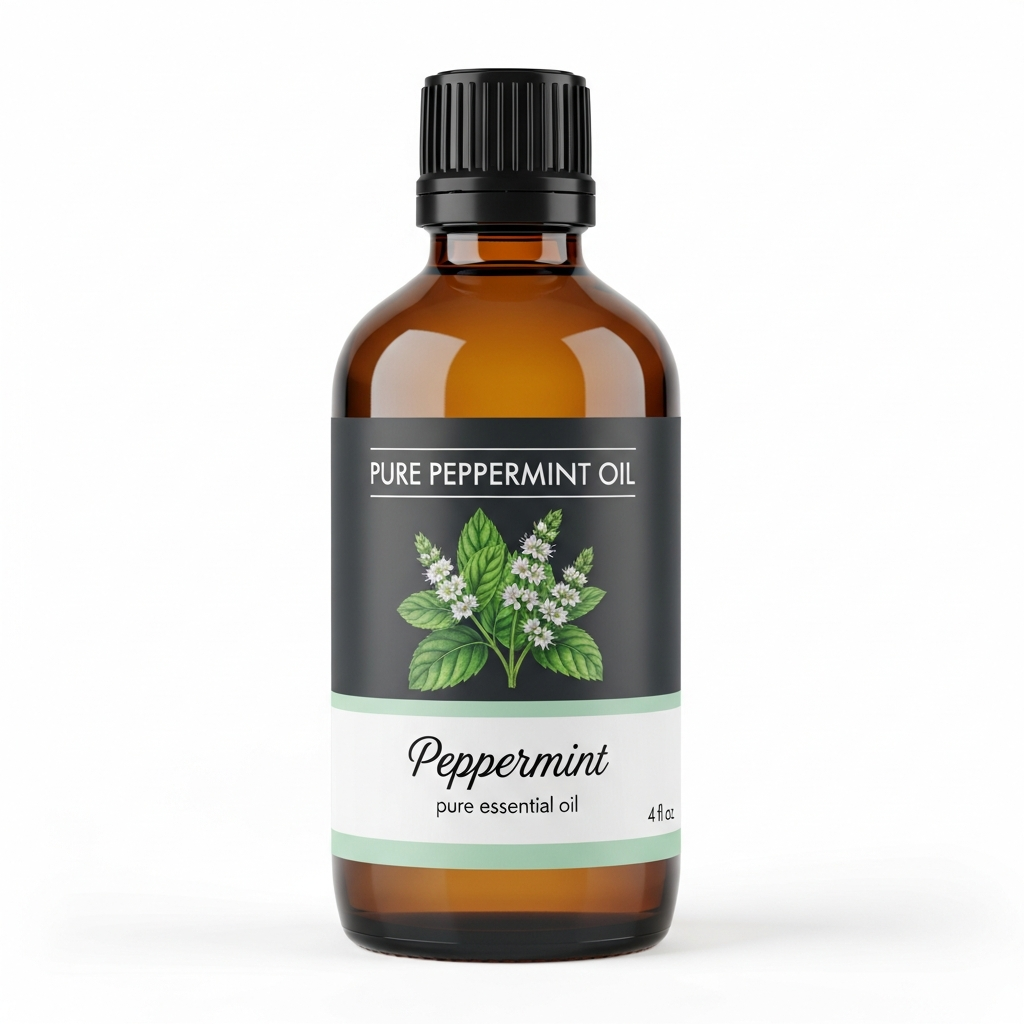
Peppermint Essential Oil
Our own Peppermint Essential Oil, in sizes from 0.5 oz to bulk.
From $10.99
Shop Now →What the oil costs at the farm
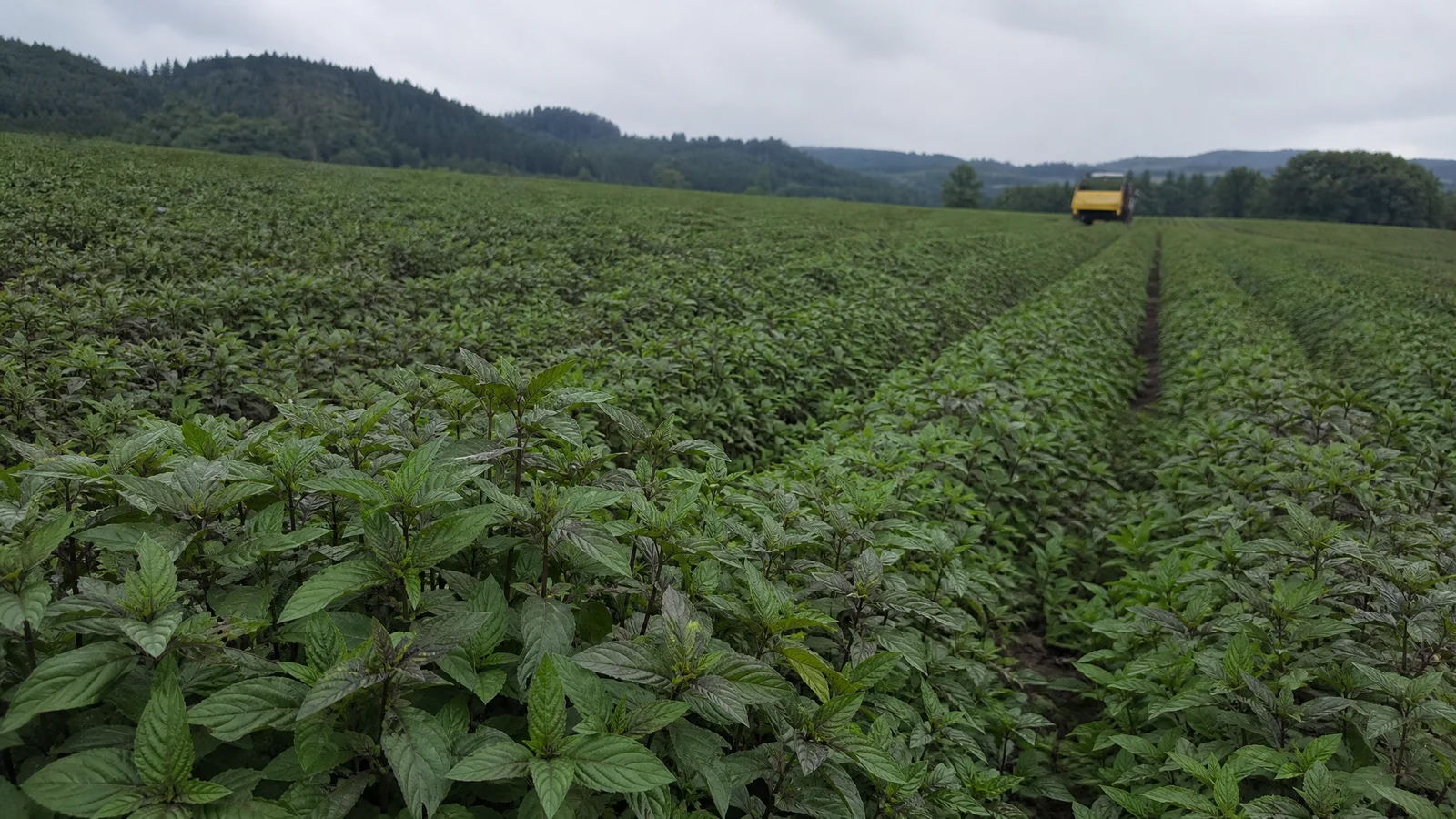
The US Department of Agriculture publishes the one price series for peppermint oil we could fetch. Its Crop Production 2025 Summary reports that US growers harvested 22,900 acres of peppermint for oil in 2025, at 108 pounds of oil per acre, for a total of about 2.47 million pounds. Its Crop Values 2025 Summary shows the national average price growers received rose about 14% from 2024 to 2025, after being nearly flat the year before. Both cover US growers only, not oil grown or imported from elsewhere.
To compare with a bottle, convert it to millilitres. A pound is 453.6 g, and the United States Pharmacopeia density range for peppermint oil, 0.896 to 0.908 g/ml (as reproduced by the Cosmetic Ingredient Review), makes a pound of oil about 500 to 506 ml. Divide the 2025 grower price by that and you land at roughly 4.7 to 4.8 US cents per millilitre. That is our arithmetic, not anyone's quote. At that level the oil in a 15 ml bottle is worth well under a dollar at the farm. Everything above that is bottling, testing, packaging, shipping, support and margin.
The oil is a tiny share of what you make
At the top of our 0.5% to 2% dilution range, one millilitre of oil makes 50 ml of blend, so a 30 ml roller bottle contains 0.6 ml of oil, under three cents of it at the farm-gate figure. Reasoning from that, the carrier oil, the bottle, the label and your own time are what dominate the cost of anything you make. Choosing an oil with a species-matched document costs you very little per finished bottle, and saving a few cents on an oil you cannot verify is a poor trade.
What low and high prices can and cannot tell you
The adulteration studies are the reason to look past the number. A 2025 NMR study of 50 commercial peppermint oils reported 42% adulterated, with synthetic chemicals, de-mentholized cornmint oil and lower-cost oils among the adulterants. A 2024 study found 53% of 36 commercial products sold as containing peppermint oil did not meet the ISO specification. Neither paper reports prices, so neither says the cheap bottles were the adulterated ones. What they do establish is that cheaper ingredients exist as an option for adulterators, which means a low price may reflect honest costs or substituted material. A high price may reflect good documentation or just a high margin. The price tells you about the seller's position, not the oil's composition.
What moves a bottle's price
The first two items below rest on the sources above; the rest are our reasoning rather than measured figures.
- Species. Mentha piperita and Mentha arvensis differ in typical composition, and we sell one of each. We found no source comparing their market prices, so we make no claim about either.
- Harvest year. The USDA grower price moved about 14% in a year, and yield per acre shifted from 91 to 103 to 108 pounds across 2023 to 2025.
- Documentation. A lot-matched, quantified report costs money to produce, and a seller who supplies one carries that cost.
- Container and size. Glass, caps and droppers are a bigger share of a small bottle than a large one, and bulk sizes spread fixed costs over more oil. Our bottle size guide shows what each size makes at our dilution line.
- Channel. A brand shop, a marketplace and a wholesale desk each add different costs.
- Labels. Food or "therapeutic" vocabulary does not change the oil; see our guide to grade labels.
Comparing two offers in three steps
First, divide the price by the millilitres in the bottle. If the size is in ounces, ask whether they are fluid ounces or weight, because oil is lighter than water. Second, note the species and whether a document names it, so that a piperita offer and an arvensis offer are never treated as one product. Third, ask for the report for the lot in writing. Write the per-millilitre result beside the species and the size, because the figure often shifts with the bottle.
The Certificate of Analysis we publish is for a piperita sample and lists a refractive index; the GC-MS report we publish is for our arvensis oil and gives chemical-family totals. If you need menthol, menthone, pulegone and menthofuran figures for a lot, ask us in writing through the contact page before ordering. Our quality-check guide shows what to request from any seller.
Reading a listing like a careful shopper
A listing that gives the Latin name, the size in millilitres or ounces, and a plain way to ask questions in writing is far easier to compare than one that offers a pretty photograph and the word "peppermint". Our suggestion is to take the two or three offers you are weighing, pick the smallest size of each, and set them side by side on the same afternoon. Smell them one after another, note the species on each label, and only then look at the numbers. The nose and the label usually settle more than the price does.
Whatever the price, the oil is concentrated
We suggest diluting to 0.5% to 2% in a carrier with a patch test, keeping the oil away from eyes, children and pets, and never taking it internally. The Cosmetic Ingredient Review report cites a recommended maximum dermal level of 5.4% for peppermint oil, set from its pulegone and menthofuran content, and the NIH advises against applying it to the face of infants or young children. Our dilution guide has the working numbers.
There is no fair price for peppermint oil in the abstract, only a fair price for a named species, a stated size and a document you have actually read. Our shop lists the sizes we sell, and our bulk page and guide to buying peppermint oil in bulk show how larger sizes are offered.
Peppermint Essential Oil
Peppermint Essential Oil from our own shop, in sizes from 0.5 oz to bulk.
From $10.99
Shop Now →Sources & Further Reading
- USDA National Agricultural Statistics Service, Crop Production 2025 Summary, January 2026
- USDA National Agricultural Statistics Service, Crop Values 2025 Summary, February 2026
- Cosmetic Ingredient Review, 2018. Amended Safety Assessment of Mentha piperita (Peppermint)-Derived Ingredients as Used in Cosmetics
- Zhao J et al., 2025. Characterization, differentiation, and adulteration detection of peppermint essential oil: An NMR approach. J Pharm Biomed Anal
- Wang M et al., 2024. Comprehensive quality assessment of peppermint oils and commercial products: An integrated approach involving conventional and chiral GC/MS coupled with chemometrics. J Chromatogr B