Food Grade vs Cosmetic Grade Peppermint Oil: What It Means
"Food grade" and "cosmetic grade" sound like two rungs of an official ladder, with one rung a little higher than the other. They are not. In the United States there is a list of flavouring substances, a definition of cosmetics based on what a product is for, and a handful of quality specifications a seller can choose to meet. The grade words on the front of a bottle are the seller's own shorthand, and it helps to know what they can and cannot promise.
Peppermint Essential Oil
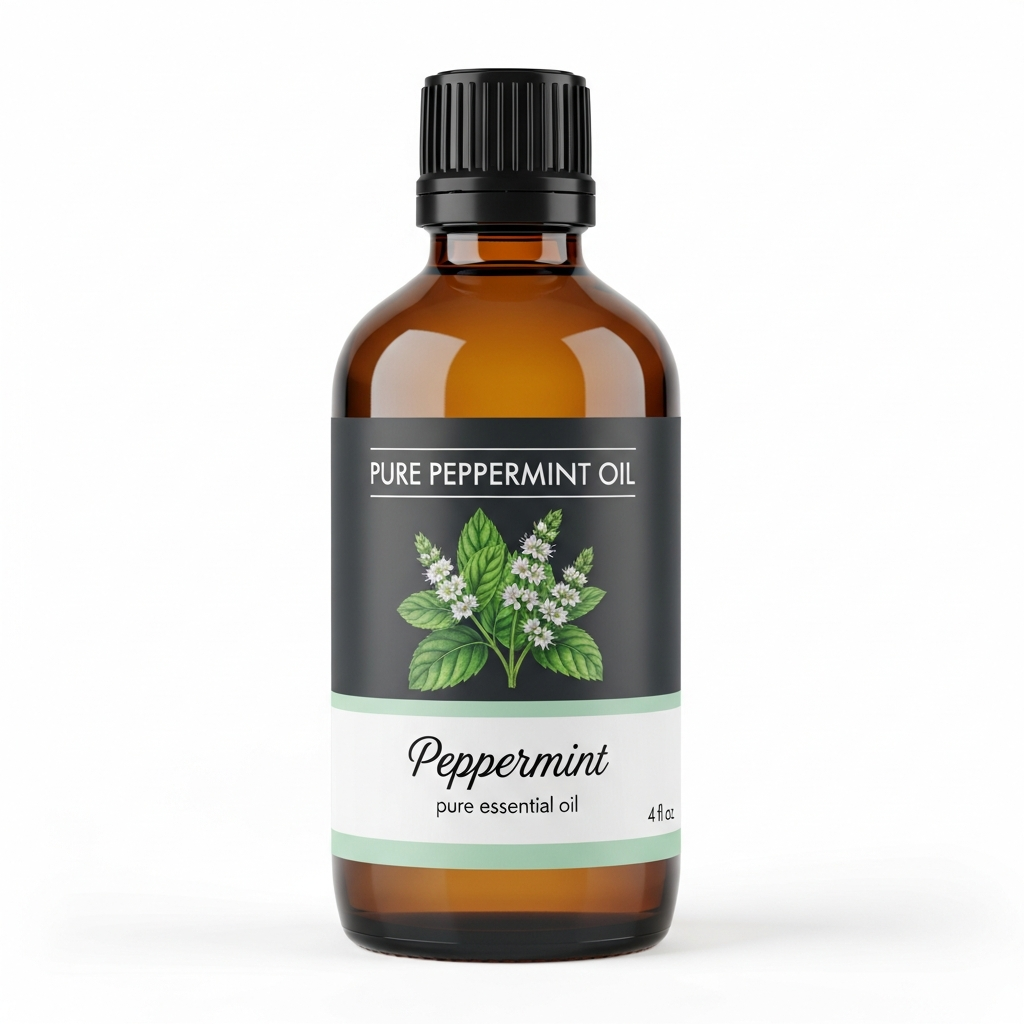
Our own Peppermint Essential Oil, in sizes from 0.5 oz to bulk.
From $10.99
Shop Now →What "food grade" can honestly point to
The nearest thing to an official food hook is 21 CFR 182.20, the FDA list of essential oils, oleoresins and natural extractives (including distillates) that are generally recognized as safe for their intended use. Peppermint, Mentha piperita L., is on it. That intended use is flavouring food, at flavouring levels, as a food ingredient. The version of the list we read has no entry under the name Mentha arvensis, so we cannot tell you whether a cornmint oil is covered by it.
That is why a "food grade" sticker deserves a follow-up question: is the oil sold as a food product, or does it simply meet a food specification? Neither is the same as an invitation to swallow neat oil from a dropper. Our oils are aromatic oils, sold neat, with "never take internally" on the label, and we make no food-grade claim for either one. If you want peppermint in a brownie, a product made and labelled for the kitchen is the right shelf; our extract versus essential oil guide explains the difference, and our ingestion guide covers the rest.
What "cosmetic grade" really describes
The FDA defines a cosmetic by intended use: articles intended to be rubbed, poured, sprinkled or sprayed on the body for cleansing, beautifying, promoting attractiveness or altering appearance. It also notes that the law does not require cosmetic products and ingredients, other than color additives, to have FDA approval before they go on the market. The FDA page never uses the word "grade". So "cosmetic grade" on an oil is best read as the seller saying "this is meant for the skin or the air around you". It is a statement of purpose, not an audited tier.
The same page makes a useful point about the opposite direction. A product intended for a therapeutic use, such as treating or preventing disease, is legally a drug, even if it also changes appearance. A bottle that wraps health promises around an oil has not been upgraded by them; the promises change the category it belongs to. That is why we describe our peppermint oils by aroma and craft use and leave medical claims to medicine.
What a real specification looks like
Where quality is concerned, the useful documents are specifications. The Cosmetic Ingredient Review reproduces United States Pharmacopeia criteria for peppermint oil: a refractive index at 20 C between 1.459 and 1.465, a specific gravity of 0.896 to 0.908, total esters of at least 5% (as menthyl acetate) and total menthol of at least 50%. ISO has its own standard for oil of peppermint, ISO 856. A seller who names the standard, the parameters and the lot is telling you something concrete. A seller who names only a grade is not.
Specifications matter because the market does not always meet them. A 2024 study compared 22 authentic peppermint oils with 36 commercial products sold as containing peppermint oil, using conventional and chiral GC/MS, and found that 53% of the products did not meet the ISO specification. A 2025 NMR study of 50 commercial peppermint oils reported 42% adulterated, with synthetic chemicals, de-mentholized cornmint oil and lower-cost oils among the adulterants. Both used market samples without naming brands, so they show that the issue exists rather than how common it is at any one seller. Our reading is simple: a document that matches the species and the lot says more than a word on the front label.
Reading the bottle instead of the grade
When you are choosing a peppermint oil, these questions do more work than any grade word:
- Which species is it, written as a Latin name? "Peppermint" is sold from both Mentha piperita and Mentha arvensis, and we sell one of each.
- Is it sold for food, for cosmetic or aromatic use, or as a medicine, and does the label say so?
- Is there a lot number, and can the seller send an analysis that belongs to it?
- If a standard is mentioned, which one, and which parameters were measured?
The Certificate of Analysis we publish is for a Mentha piperita sample and lists a refractive index of 1.4596 at 20 C, which falls inside the USP range above. The GC-MS report we publish is for our Mentha arvensis and gives chemical-family totals. If you want menthol, menthone, pulegone and menthofuran figures for the lot you will receive, ask us in writing through the contact page before ordering. Our quality-check guide turns these questions into a checklist.
One small habit helps with every oil you look at: write down your questions before you open the seller's page, so a handsome label does not set the agenda for you.
Safety does not change with the label
Whatever a bottle is called, peppermint oil is concentrated. We suggest 0.5% to 2% in a carrier oil with a patch test first, away from eyes, children and pets. The Cosmetic Ingredient Review report cites a recommended maximum dermal level of 5.4% for peppermint oil, based on its pulegone and menthofuran content, and advises avoiding it with glucose-6-phosphate dehydrogenase deficiency. The National Center for Complementary and Integrative Health says it should not be applied to the face of infants or young children; our children and peppermint guide goes into it. If you are pregnant, nursing or managing a medical condition, ask your physician first.
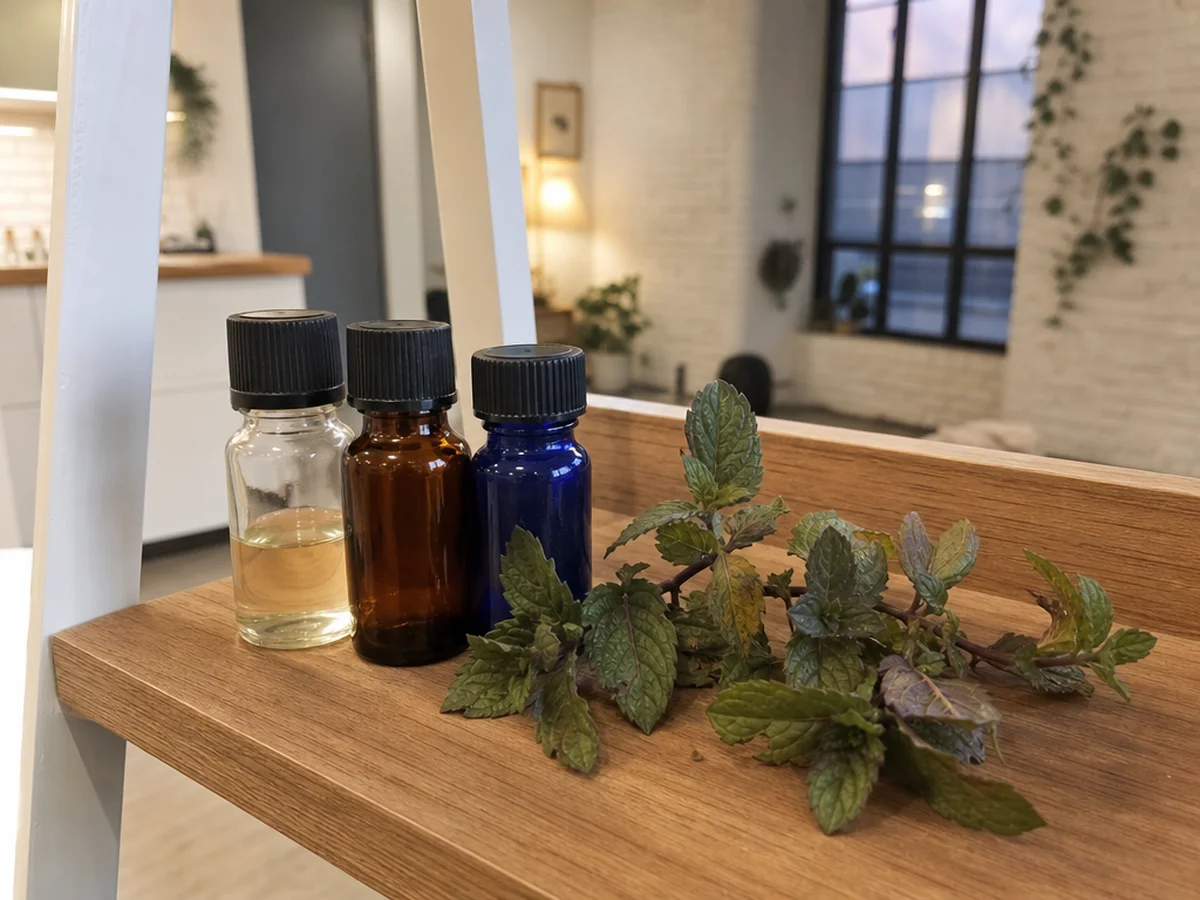
In short, let the grade word go and read the species, the lot and the paperwork. That is where the useful information on any peppermint oil bottle lives.
Peppermint Essential Oil
Peppermint Essential Oil from our own shop, in sizes from 0.5 oz to bulk.
From $10.99
Shop Now →Sources & Further Reading
- 21 CFR 182.20 - Essential oils, oleoresins (solvent-free), and natural extractives (including distillates), Legal Information Institute
- FDA Authority Over Cosmetics: How Cosmetics Are Not FDA-Approved, but Are FDA-Regulated
- Cosmetic Ingredient Review, 2018. Amended Safety Assessment of Mentha piperita (Peppermint)-Derived Ingredients as Used in Cosmetics
- ISO 856:2006 - Oil of peppermint (Mentha x piperita L.)
- Wang M et al., 2024. Comprehensive quality assessment of peppermint oils and commercial products: An integrated approach involving conventional and chiral GC/MS coupled with chemometrics. J Chromatogr B
- Zhao J et al., 2025. Characterization, differentiation, and adulteration detection of peppermint essential oil: An NMR approach. J Pharm Biomed Anal
- NCCIH, Peppermint Oil: Usefulness and Safety