Peppermint Cold Process Soap: How Much Oil to Add
Peppermint is one of the most loved scents in handmade soap: cool, clean and instantly recognizable. Soapmaking forums are full of confident rules about how much to add per pound and how long the smell lasts, so it helps to start from the numbers that are actually published and work forward from there.
Peppermint Essential Oil
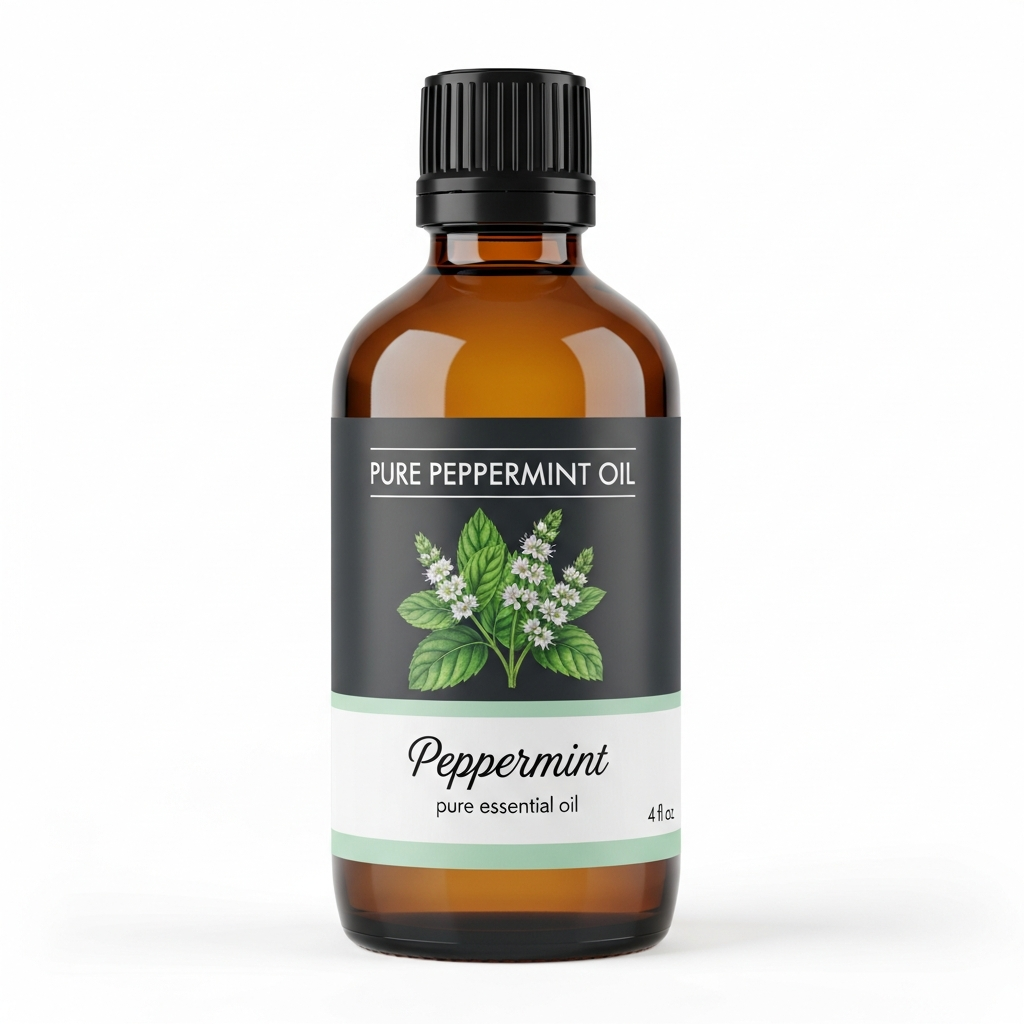
Our own Peppermint Essential Oil, in sizes from 0.5 oz to bulk.
From $10.99
Shop Now →Start with the published ceiling for rinse-off products
The Cosmetic Ingredient Review (CIR) amended assessment of peppermint oil, released in June 2018, includes a table of maximum concentrations reported by industry in a 2017 survey: up to 1.9% in rinse-off products, up to 0.96% in non-coloring hair products and up to 5% in face and neck leave-on products. This records what manufacturers use rather than a safety limit. The report separately records a recommended dermal maximum of 5.4% for peppermint oil, tied to pulegone and menthofuran content, with avoidance in cardiac fibrillation and glucose-6-phosphate dehydrogenase deficiency.
Our guidance of 0.5% to 2% is for diluting the oil in a carrier before it touches skin, with a patch test first. Soap is different, because the oil becomes part of a mass of fat, lye and water that is rinsed away. We put the two sets of numbers side by side and leave the final call to you, starting low.
From a percentage to grams
Soap recipes usually quote scent against the weight of the base oils, while the CIR figure is a share of the finished product. They are different numbers, so the conversion is yours to do. As a worked example, assume the oils make up about two thirds of the batch weight (this depends on your water ratio, and it is an assumption, not a published figure):
- A 1,000 g batch at 1.9% peppermint oil carries 19 g of the oil.
- If the oils weigh about 667 g, that works out to roughly 2.8% of the oil weight.
- For a 454 g (1 lb) batch of oils, that is about 12.9 g of peppermint oil. With a USP specific gravity of 0.896 to 0.908, as reproduced in the CIR report, that is about 14.2 to 14.4 ml.
Treat that as an upper boundary, the largest amount the survey figure supports. Anything below is your choice, and a smaller amount makes sense for a first bar. Water leaves a bar as it cures, so the oil's share of the finished bar creeps up a little.
The scent question
The question every maker asks is how to keep the peppermint smell. On 4 November 2026 we searched Europe PMC for cold process, handmade or artisanal soap together with essential oil or fragrance. It returned 11 records, two of them on soap, and none measured how much peppermint scent survives curing. The closest was Prieto Vidal and colleagues in 2018, who analysed seven cold-saponified herbal soaps and found that 86% to 99% of most polyunsaturated fatty acids remained unsaponified; the abstract reports no scent results.
We read that as good news for your own bench: nobody has handed down a rule, so you can build your own. Make two small batches that differ in one thing, weigh them at the same cure day, and have the same person sniff each at set times, such as 1, 4 and 6 weeks, writing notes as you go. We list peppermint as a top note, the class of aroma that tends to leave first, so it is reasonable to expect the cool sparkle to soften before the rest of the fragrance does. That is a general fact about top notes, not a measurement of what stays in a bar.
Lye deserves your full attention
Cold process soap uses sodium hydroxide. The NIOSH Pocket Guide lists irritation of the eyes, skin and mucous membranes, burns to eyes and skin, and lung injury among its effects. It advises irrigating the eyes and flushing the skin with water immediately, seeking medical attention if it is swallowed, and gives an exposure limit of 2 mg per cubic metre of air. Gloves, eye protection and good ventilation are standard for that reason.
Peppermint oil adds a smaller consideration at the pour. EFSA's assessment classifies it as an irritant to skin and eyes and a skin and respiratory sensitiser, so measure it with the same gloves and eye protection, and keep the bottle capped between measurements. Our oils are for external cosmetic use, and the lye, fats, molds and carrier oils come from a soap supply shop, since we sell only peppermint oils.
Who should skip a peppermint bar
- Infants and young children. The NCCIH advises against putting peppermint oil on the face of infants or young children, because inhaled menthol can cause serious side effects. We would not use a peppermint bar for a baby's wash.
- Anyone who has reacted to mint, menthol or fragrance. Lather a bit of the finished bar on the inner forearm and wait before wider use.
- Homes with pets. The ASPCA lists mint as toxic to dogs and cats, so store bars out of reach and keep them off animals.
For the dilution side of other products, see our dilution guide and the arithmetic in our sugar scrub post. The shelf life post covers keeping the oil between batches, and the skin post covers how menthol behaves on skin.
Write it all down
Soap rewards a notebook. Record the oils, the lye, the water, the peppermint weight and the date for every batch, and tape a copy of the label onto the page. Weeks later, when you sniff a bar and wonder what you did, the page has the answer. Start with a small batch so a miss costs little, and change one thing at a time.
Pick a number below 1.9% of the finished bar, work out the grams for your recipe, protect your eyes and hands, and let your own cure-day notes tell you how long the cool note lasts.
Peppermint Essential Oil
Peppermint Essential Oil from our own shop, in sizes from 0.5 oz to bulk.
From $10.99
Shop Now →Sources & Further Reading
- Cosmetic Ingredient Review, 2018. Amended Safety Assessment of Mentha piperita (Peppermint)-Derived Ingredients as Used in Cosmetics
- Prieto Vidal et al., 2018. The Effects of Cold Saponification on the Unsaponified Fatty Acid Composition and Sensory Perception of Commercial Natural Herbal Soaps. Molecules 23(9):2356
- CDC NIOSH. NIOSH Pocket Guide to Chemical Hazards - Sodium hydroxide
- EFSA FEEDAP Panel, 2025. Safety and efficacy of a feed additive consisting of an essential oil derived from the aerial parts of Mentha × piperita L. (peppermint oil) for use in all animal species (FEFANA asbl)
- NCCIH. Peppermint Oil: Usefulness and Safety
- ASPCA. Toxic and Non-toxic Plants: Mint