What Is Peppermint Oil? Plant, Process and Profile
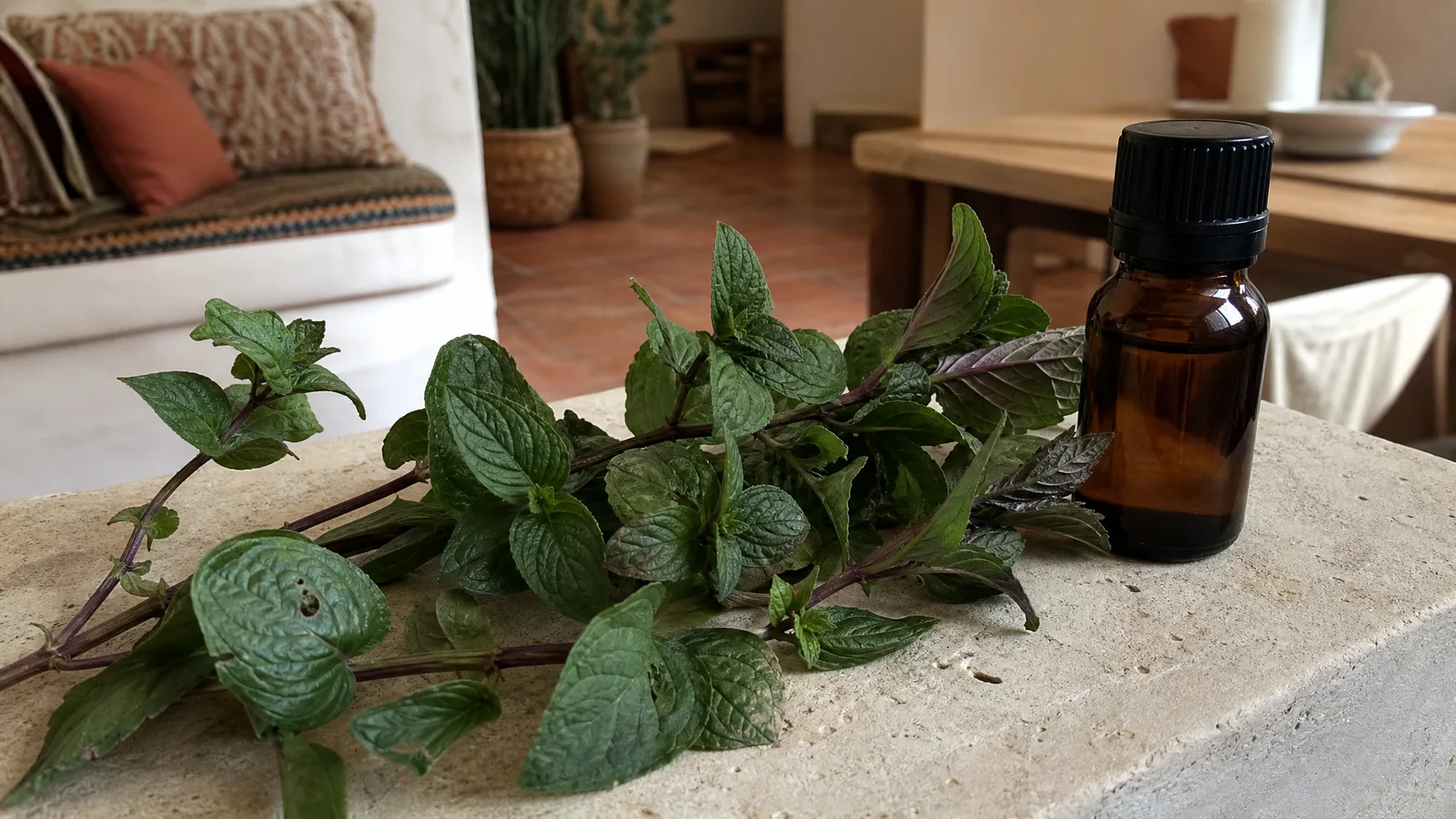
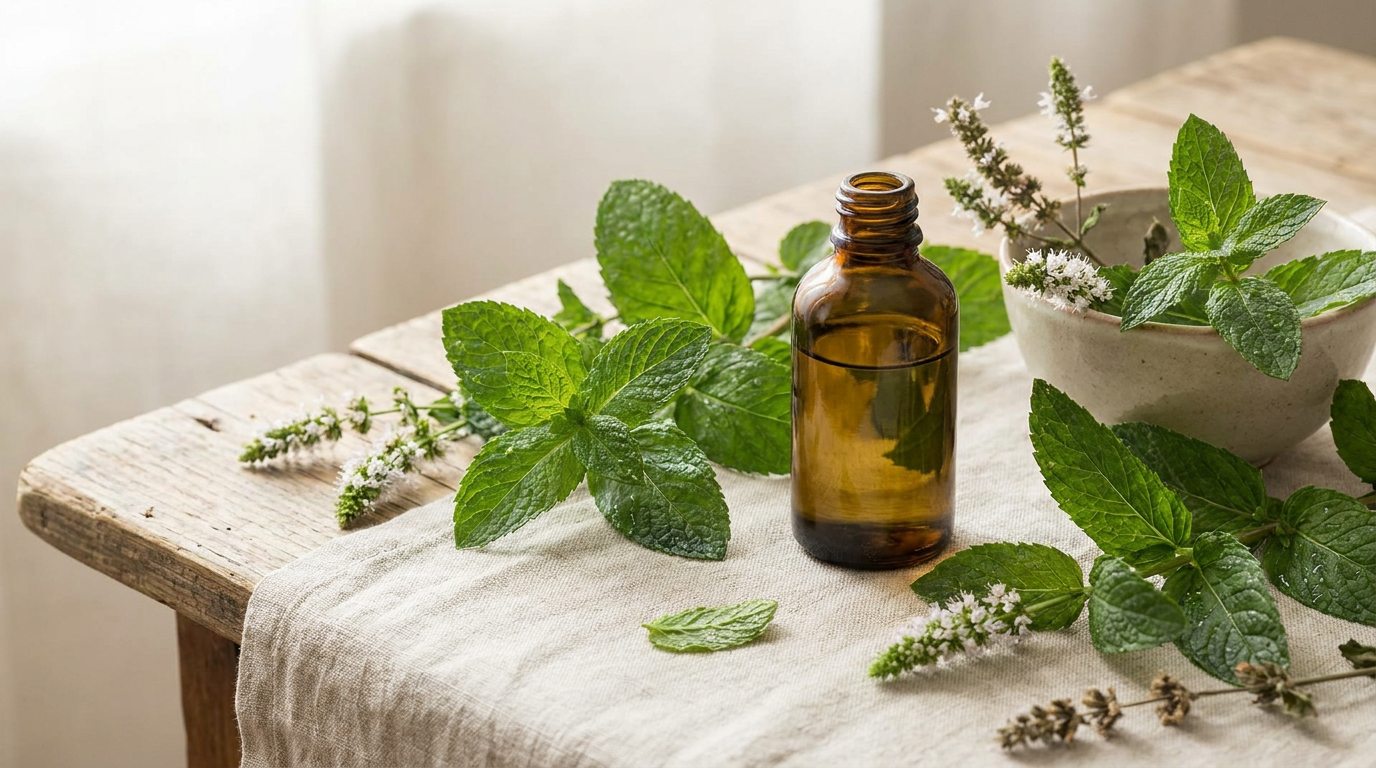
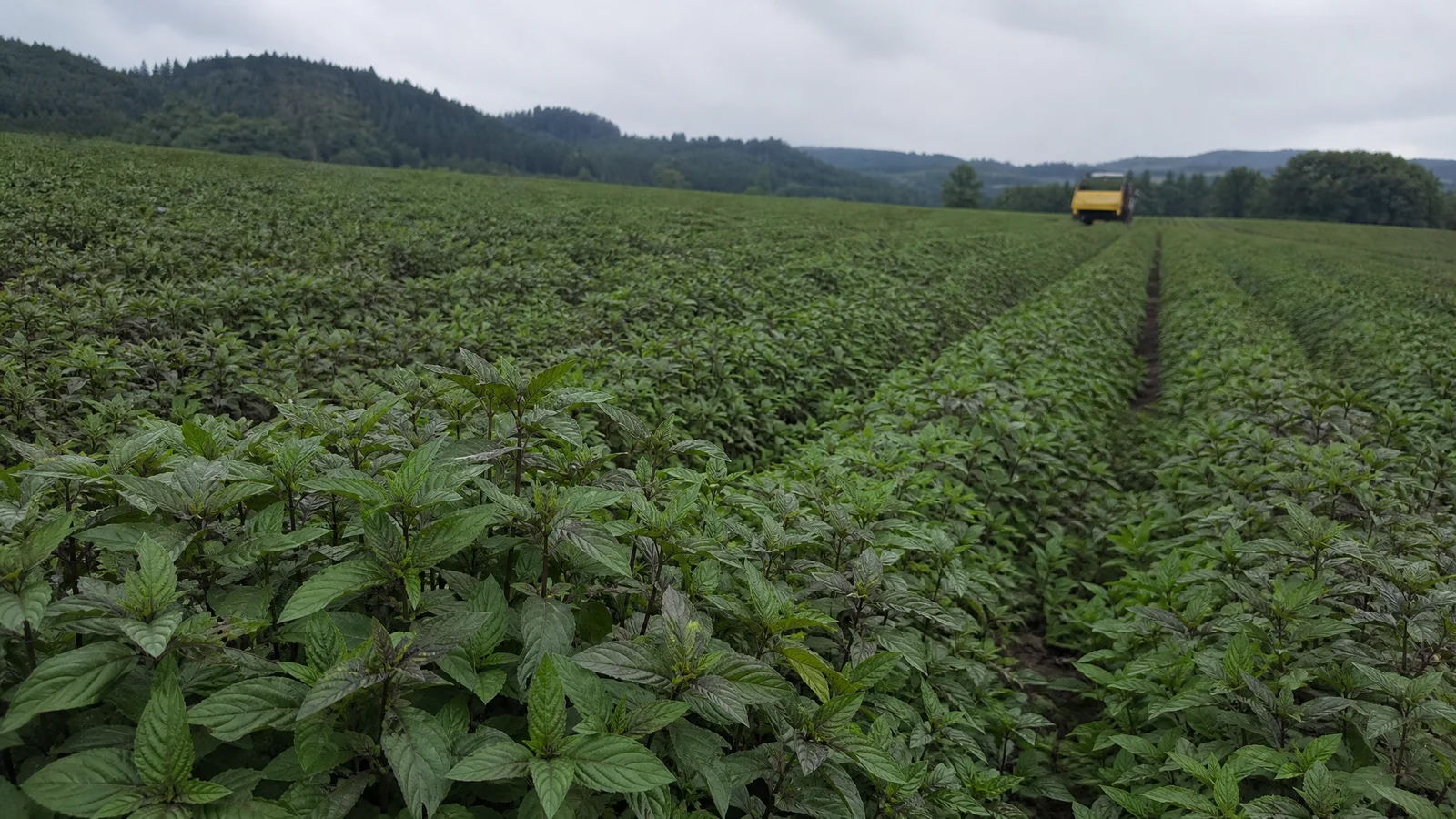
Peppermint is not a wild plant somebody stumbled across and named. It is a hybrid mint that does not set seed, grown from cuttings, and botanists are still debating exactly which wild mints made it. Everything cool, crisp and familiar about peppermint oil starts with that odd, sterile plant.
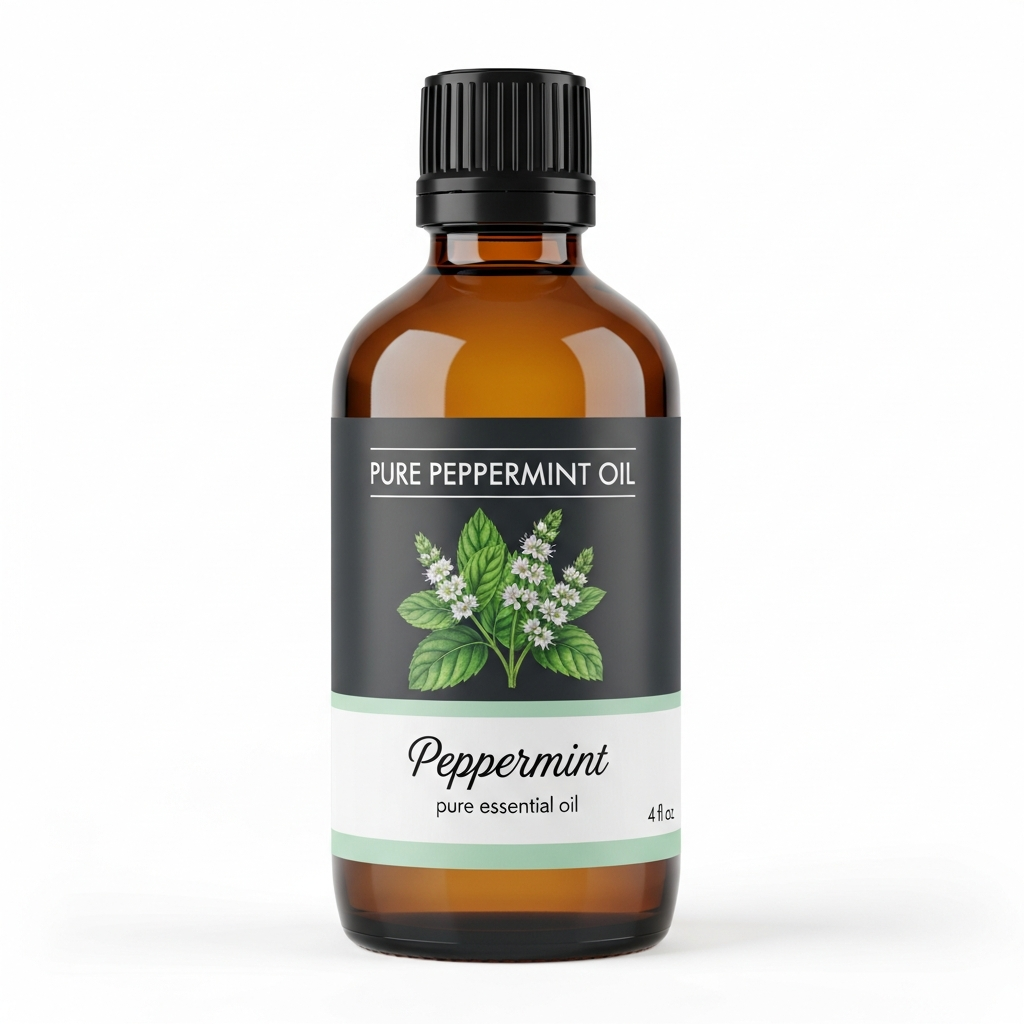
Peppermint Essential Oil
Our own Peppermint Essential Oil, in sizes from 0.5 oz to bulk.
From $10.99
Shop Now →A mint with a family mystery
A 2024 genome study of "Mitcham" peppermint, the best known commercial variety, reports that peppermint was long thought to be a natural cross between water mint (Mentha aquatica) and spearmint (M. spicata). It typically carries 72 chromosomes, and the authors say the favoured model, with four sets from water mint, "remains to be definitively proven". A 2019 review describes the second parent differently, as M. viridis, itself a cross of two other mints. The two accounts agree that water mint is in the family tree, and the Cosmetic Ingredient Review simply settles on the accepted name, Mentha x piperita.
The same genome paper calls Mitcham male sterile and clonally propagated, and the predominant variety of commercial mint oil in the United States. Reasoning from that, fields planted from cuttings of one clone are genetically uniform, so differences between two lots of oil are more likely to come from the field, the cut and the distilling than from the seed.
What distillation gives you
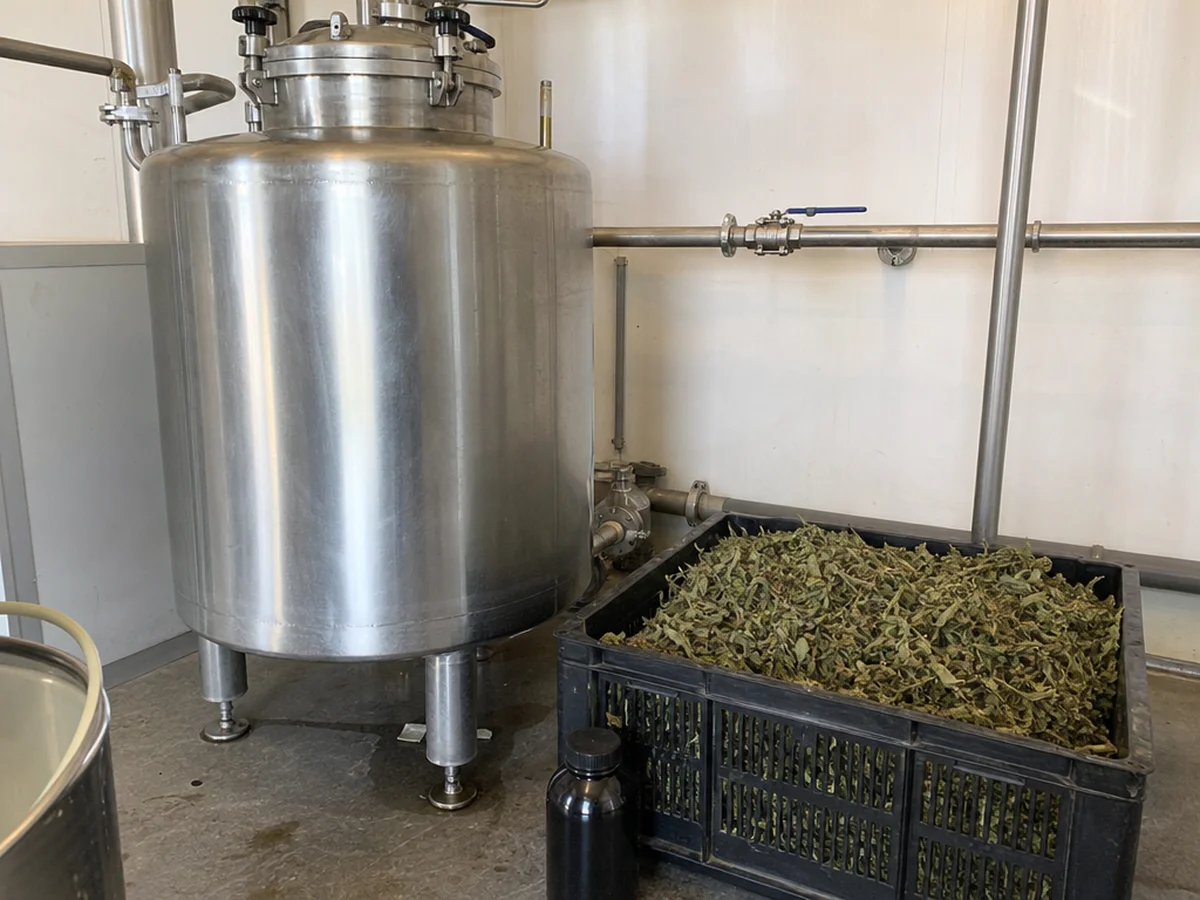
Steam distillation passes hot steam through the mint, carrying the aroma compounds away to be condensed and skimmed. Both of our oils are steam distilled from the leaves. The general yield for mint oils is small: a 2019 review gives 0.3 to 0.7 percent, without saying whether that is fresh or dry plant weight. Taking it at face value, one pound of oil needs roughly 140 to 330 pounds of herb (our arithmetic: 1 divided by 0.007, and by 0.003). That is why the oil is so concentrated, and why a drop goes so far.
What is in the bottle
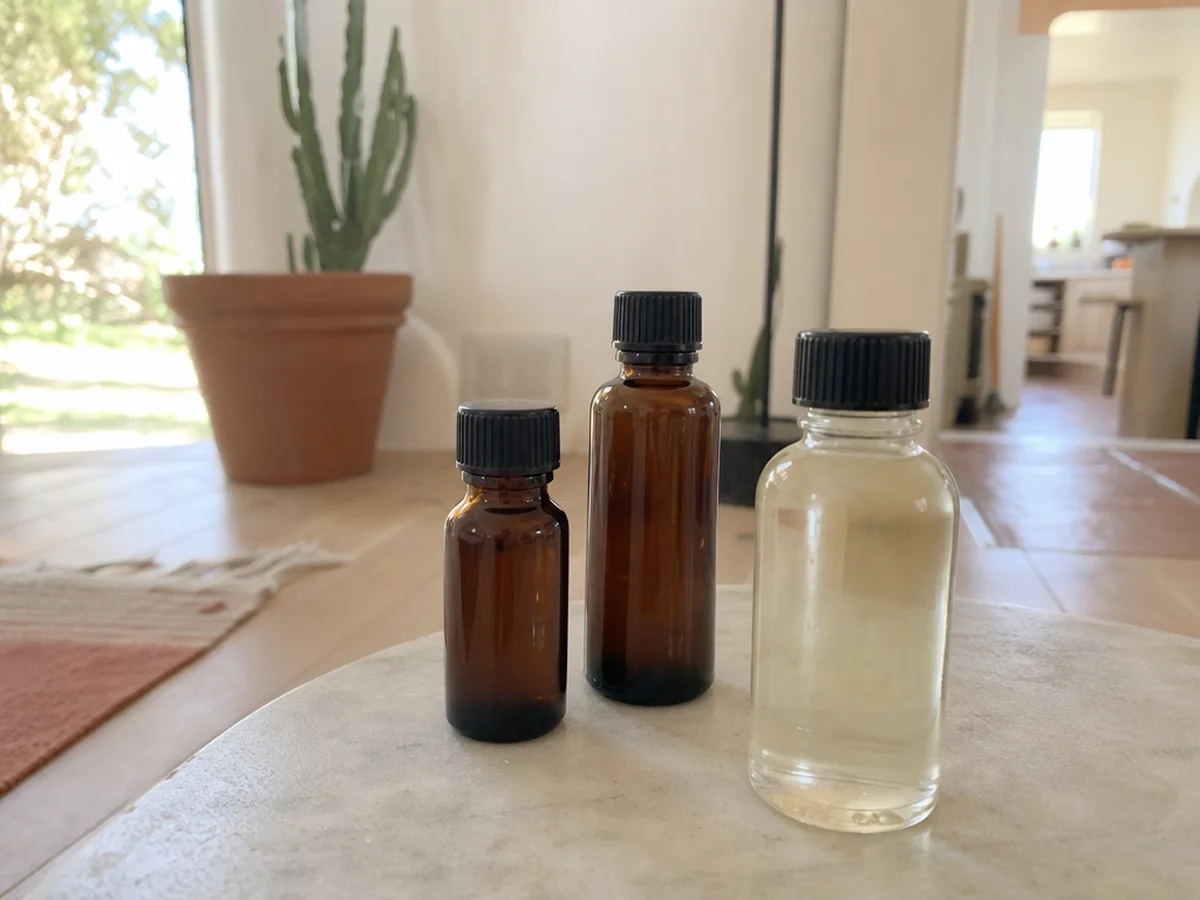
Peppermint oil is mostly menthol and menthone, which carry the cool, minty character, plus smaller amounts of compounds such as menthyl acetate, 1,8-cineole and menthofuran. The Cosmetic Ingredient Review lists menthol at 30 to 55 percent and menthone at 14 to 32 percent for Mentha piperita oil. Cornmint (Mentha arvensis) oil is typically more than 60 percent menthol, with menthone at 4 to 18 percent, according to a 2025 Nutrients review. These are ranges from the general literature, which is why a specific oil is best judged by a report on that lot. If you would like one, ask us in writing through the contact page before you order.
Two plants share one name
The words "peppermint oil" on a label do not tell you which species is inside. We offer both, as two clearly named oils, and our piperita versus arvensis comparison sets them side by side. Cornmint is also where a cheaper stand-in comes from: menthol is crystallised out of it, and the leftover dementholized oil smells much like peppermint and has been used as a substitute. Studies of market samples show why asking matters. A 2024 analysis of 36 commercial products found 53 percent failed the ISO specification, and a 2025 NMR study of 50 commercial peppermint oils found 42 percent adulterated. Both used anonymous market samples, so they show the issue exists without saying how often any one seller is affected. Our paperwork guide shows how to check what you buy.
Meeting the plant
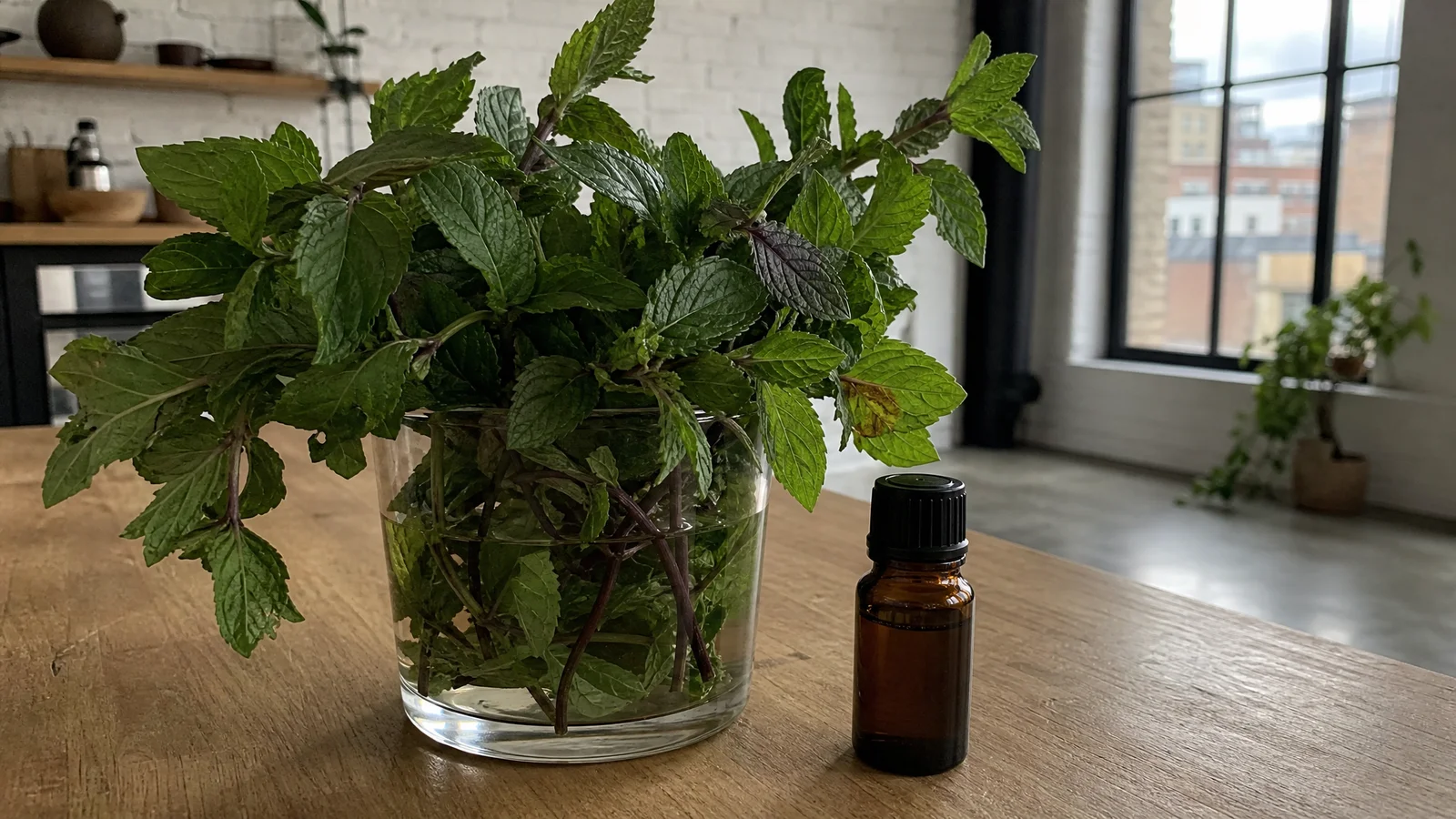
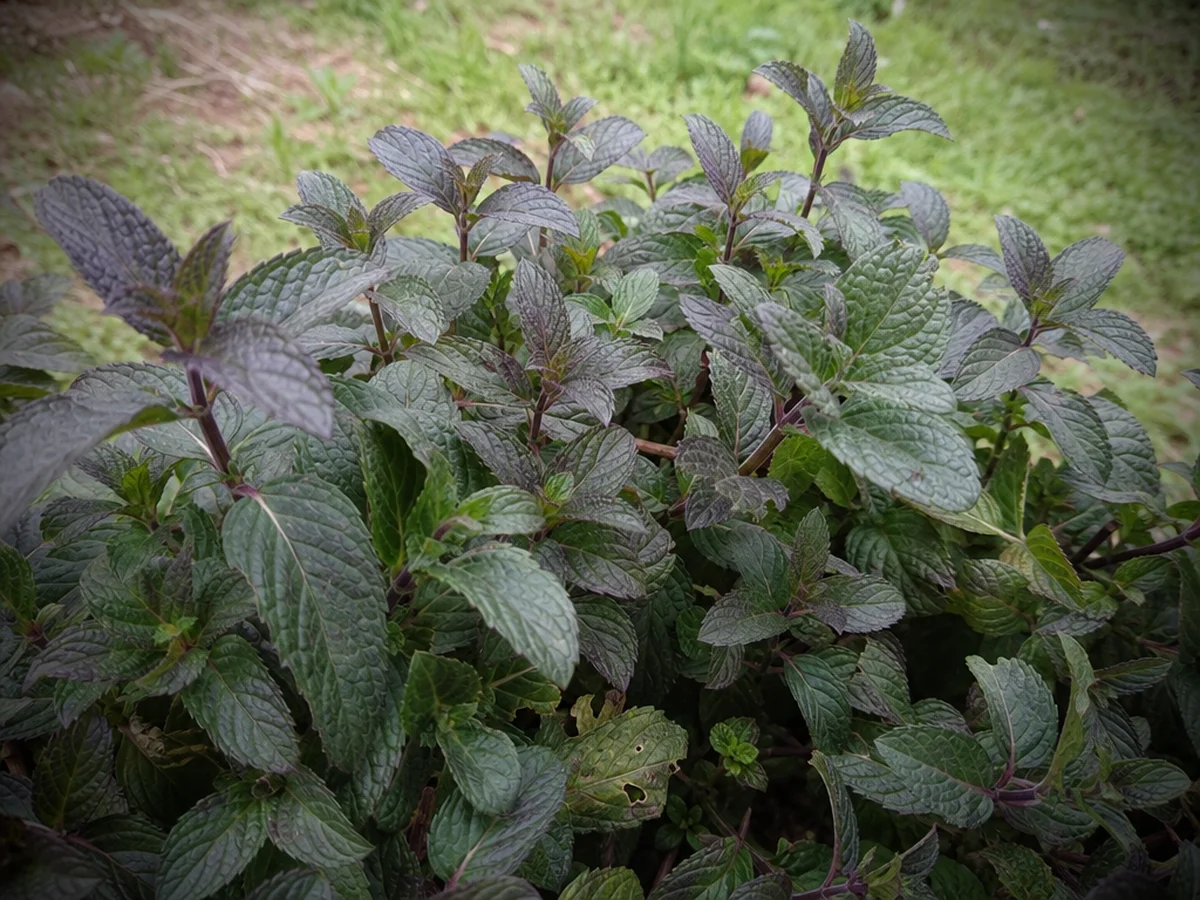
If you grow mint, or find a pot at a market, rub a leaf between your fingers and smell it. The scent is greener and softer than the oil, with the cool note present but gentle. That small gesture is the best way to understand what the distiller starts with and what a bottle of oil concentrates.
Then open a bottle of the oil and compare. You'll notice how much more intense and sharper the oil is, and how little of it you need. We love that contrast, and it is why we say a drop goes a long way: the leaf in your hand and the oil in the bottle are the same family of smell at completely different volumes.
Label names and the rules around them
On an ingredient list you will see "Mentha Piperita (Peppermint) Oil". In the United States FDA defines a cosmetic by its intended use, and cosmetics need no premarket approval, though retail cosmetics must carry an ingredient list. The food rules are separate: 21 CFR 182.20 lists peppermint among the essential oils generally recognised as safe for their intended use in food, which describes flavourings and is not a green light to swallow a bottle of aromatic oil. We sell ours for aroma and cosmetic use, never for internal use, and we explain the difference in can you ingest peppermint oil and in oil versus extract.
The US National Center for Complementary and Integrative Health says the research is small and mostly about irritable bowel symptoms using coated capsules, and that skin application can cause rashes and irritation. We suggest diluting to 0.5% to 2% in a carrier oil, patch testing first and keeping it off the faces of infants and young children. Our dilution guide does the sums.
So peppermint oil is a hybrid mint concentrated hundreds of times over, with a wide range of possible profiles. It is worth knowing the plant behind the cool.
It is also a lovely excuse to get curious about the plant itself. Grow a pot of mint on a sunny sill, or simply notice the fresh leaf in a drink, and the oil starts to make more sense: a big, bright, familiar smell packed tightly into a very small bottle.
Peppermint Essential Oil
Peppermint Essential Oil from our own shop, in sizes from 0.5 oz to bulk.
From $10.99
Shop Now →Sources & Further Reading
- A first look at the genome structure of hexaploid "Mitcham" peppermint (Mentha × piperita L.), Talbot SC, Pandelova I, Lange BM, Vining KJ, G3, 2024.
- Agrobiological Interactions of Essential Oils of Two Menthol Mints: Mentha piperita and Mentha arvensis, Kalemba D, Synowiec A, Molecules, 2019.
- Mentha Essential Oils: Unraveling Chemotype-Dependent Biosynthesis and Assessing Evidence for Health-Promoting Activities, Yu Y, Ma Y, Ouyang Z, Huang L, Nutrients, 2025.
- Amended Safety Assessment of Mentha piperita (Peppermint)-Derived Ingredients as Used in Cosmetics, Cosmetic Ingredient Review, 2018.
- Comprehensive quality assessment of peppermint oils and commercial products: An integrated approach involving conventional and chiral GC/MS coupled with chemometrics, Wang M and colleagues, Journal of Chromatography B, 2024.
- Characterization, differentiation, and adulteration detection of peppermint essential oil: An NMR approach, Zhao J, Wang M, Lee J, Ali Z, Khan IA, Journal of Pharmaceutical and Biomedical Analysis, 2025.
- FDA Authority Over Cosmetics: How Cosmetics Are Not FDA-Approved, but Are FDA-Regulated, US Food and Drug Administration.
- 21 CFR § 182.20 - Essential oils, oleoresins (solvent-free), and natural extractives (including distillates)., Legal Information Institute.
- Peppermint Oil: Usefulness and Safety, National Center for Complementary and Integrative Health, May 2025.