Menthol in Peppermint Oil: What Makes It Feel Icy
Open a bottle of peppermint oil and the first thing you notice is cold. Nothing in the bottle is cooler than the room, yet your nose, and any skin it touches, insists otherwise. That small trick is what people love about mint, and it has a surprisingly tidy explanation.
Peppermint Essential Oil
Our own Peppermint Essential Oil, in sizes from 0.5 oz to bulk.
From $10.99
Shop Now →A cold sensor that menthol happens to fit
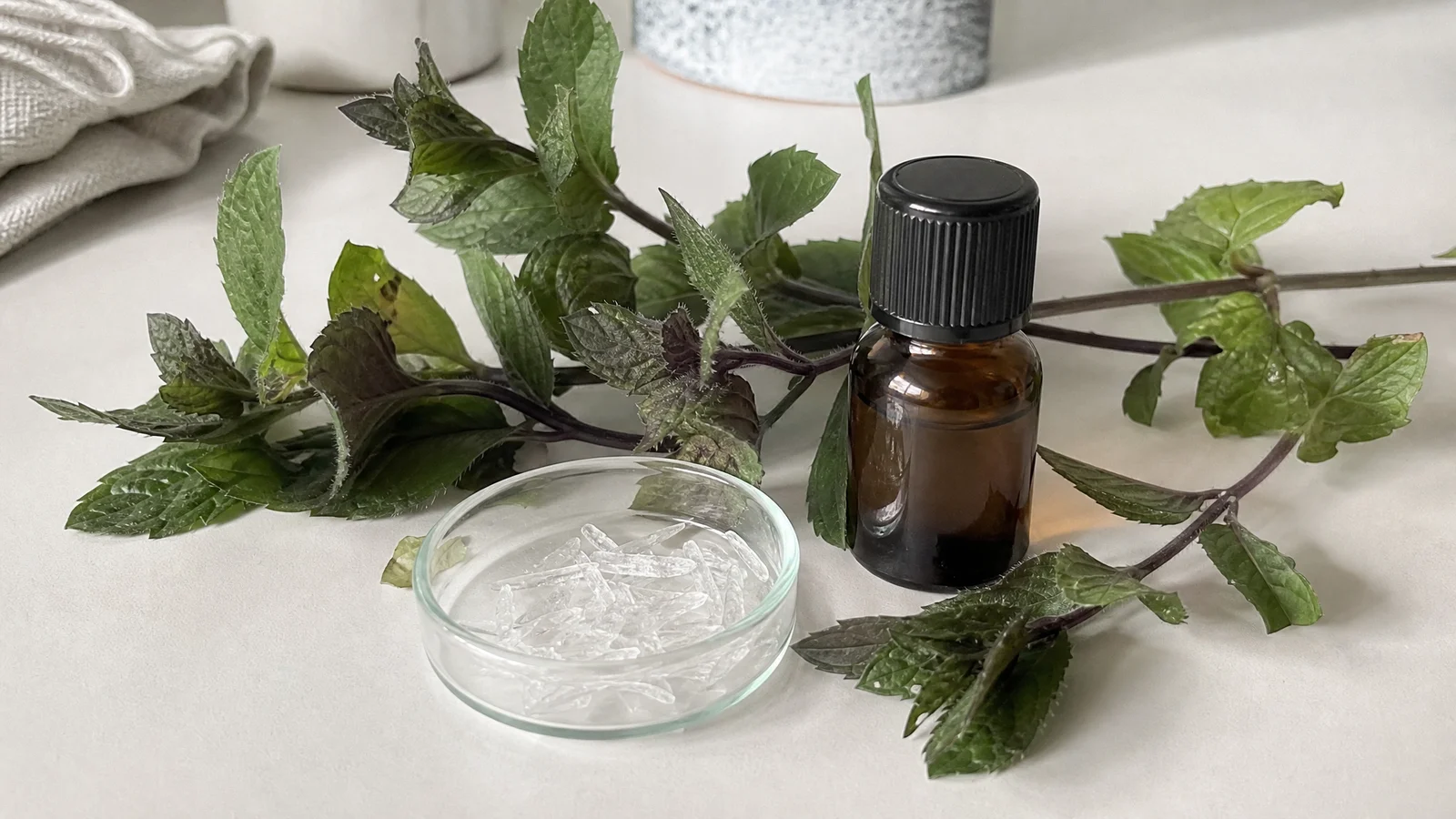
Your skin and the lining of your nose are dotted with nerve endings that report cold. In 2002 two groups independently identified the channel that does the reporting, a protein called TRPM8, and both found that menthol switches it on just as a drop in temperature does (Peier et al., Cell, 2002; McKemy et al., Nature, 2002). So the cold is a signal, not a temperature: menthol fires a cold sensor and the brain reads the message at face value.
It also tells you why mint is felt so strongly around the lips, the nostrils and the eyes, where those nerve endings sit close to the surface. That is the reasoning behind our advice to keep the oil away from the eyes and to dilute it well before it goes anywhere near skin; see our guide to where to apply peppermint oil.
What else is in the bottle
Menthol gets the headlines, but peppermint oil is a mixture of dozens of compounds. The European Food Safety Authority's feed panel published gas chromatography results for ten batches of peppermint oil from one applicant (EFSA, 2025). Menthol averaged about 43% of the chromatogram, menthone about 22%, with smaller shares of isomenthone, 1,8-cineole and menthyl acetate. Those five together made up roughly three quarters of the oil. Think of menthol as the lead singer and menthone as the harmony that rounds it out.
These are percentages of peak area from one set of batches, so treat them as a picture of what a typical peppermint oil looks like and not as the numbers for any particular bottle, ours included.
Two minor components deserve a mention because safety assessors watch them: pulegone and menthofuran. The Cosmetic Ingredient Review recommended a maximum dermal use level of 5.4% for peppermint oil, set from the pulegone and menthofuran content (CIR, 2018). Our own guidance, 0.5% to 2% in a carrier oil, sits comfortably underneath that.
Chemistry is easier to love when you can smell it. The numbers on a certificate are a map, and the bottle in your hand is the territory.
Two mints, two personalities
This is where the chemistry gets fun for anyone choosing an oil. Two different mints are sold as peppermint oil. Peppermint proper, Mentha piperita, runs roughly 20% to 60% menthol and 5% to 35% menthone. Cornmint, Mentha arvensis, is menthol-heavy, above 60%, with less menthone at 4% to 18% (Kalemba and Synowiec, Molecules, 2019).
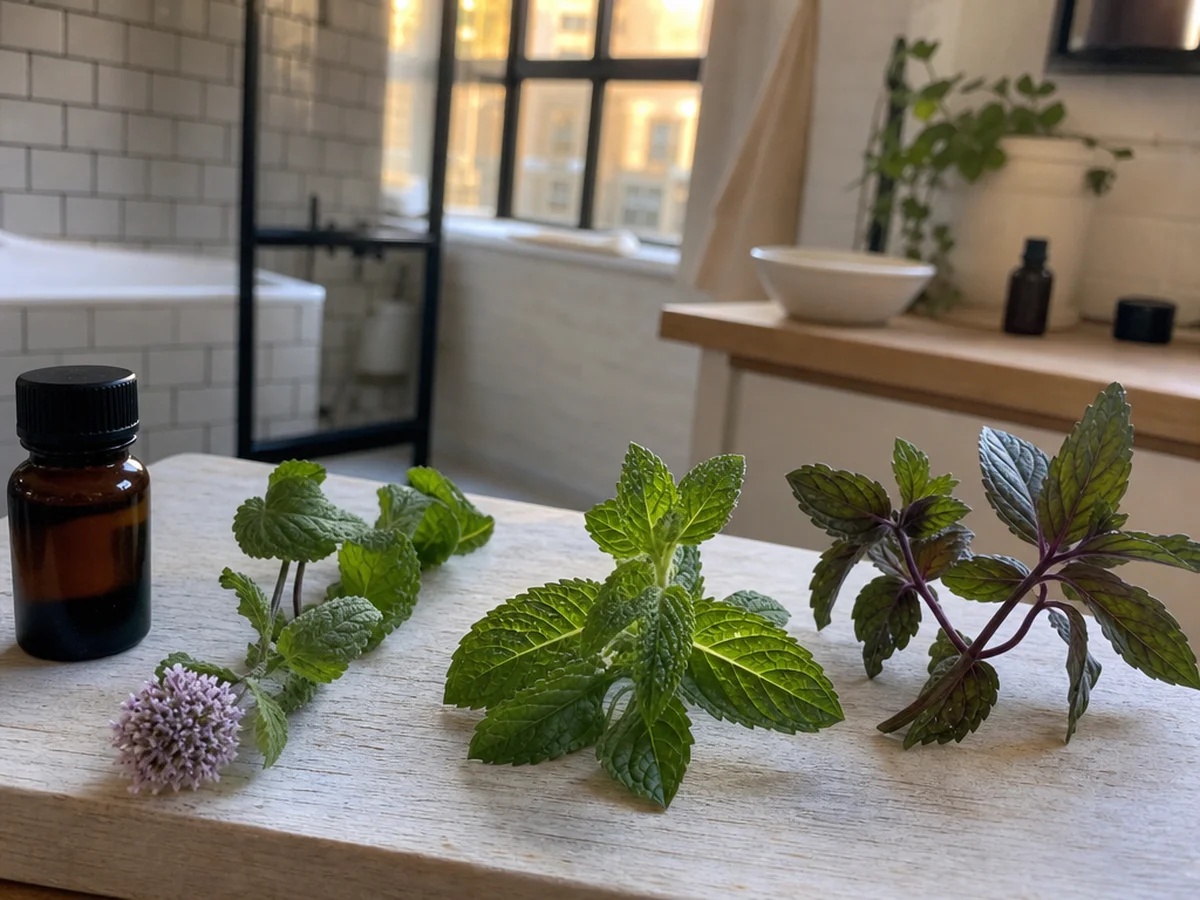
We sell both, and the difference shows up in the nose. Our Mentha piperita is crisp and cool with a faint candy-like sweetness underneath. Our Mentha arvensis is bold and sharply minty, with a strong menthol backbone. Reasoning from the numbers above, that is just what you would expect from a menthol-forward mint next to a more balanced one. The full side-by-side is in our piperita versus arvensis comparison.
Harvest timing moves the profile too. The CIR report notes that first-harvest oil tends to carry more cineole, isomenthone, menthofuran and pulegone, and less menthol and menthone, than later oil. Add species, weather and distillation (we walk through the still in how peppermint oil is made) and no two lots are identical.
What you will notice when you open the bottle
Hold a bottle of our piperita at arm's length and wave it gently. You'll notice the cool first, then a faint candy-like sweetness, then the green body of the mint. Our arvensis is a straighter, sharper mint with a strong menthol backbone. One is rounded and the other is brisk, and the quickest way to feel the difference is to put one drop of each on separate paper strips, label them, and sniff after a minute.
Your nose will tire quickly, which tempts people to add more. Step into fresh air for a moment and come back, and the mint will usually seem to return. Keep the bottle capped and upright between sniffs, because a lot of its fragrance is in the part that escapes.
How chemists tell the real thing from a stand-in
Because the profile is so characteristic, a gas chromatograph can read it like a fingerprint. A 2024 study compared 22 authentic peppermint oils with 36 commercial products; 53% of the products failed the ISO specification, and the ratio of menthone to isomenthone turned out to be a good indicator (Wang et al., J Chromatogr B, 2024). The practical lesson is that a number on a certificate means something only if you know what was measured, on which oil, in which lot.
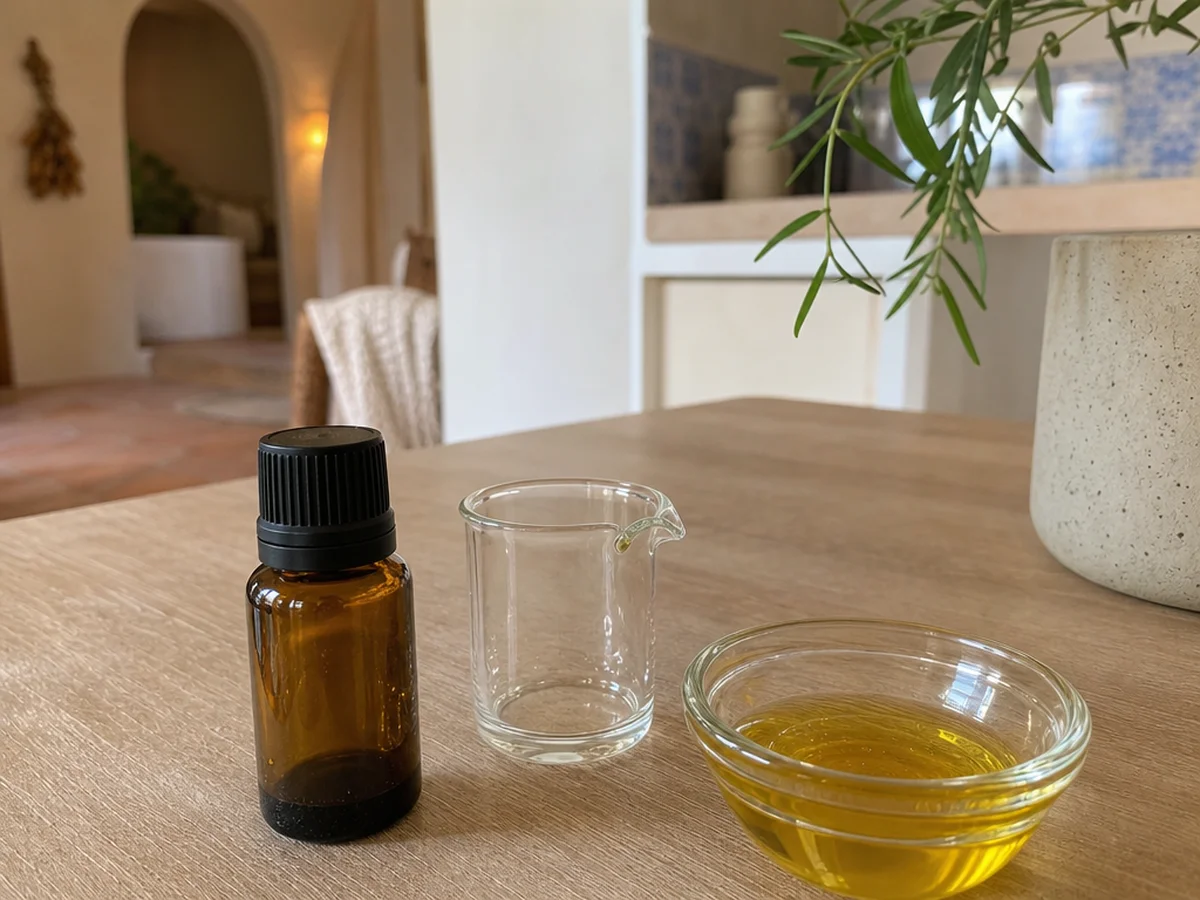
The Certificate of Analysis we publish lists the refractive index of a piperita sample, and our GC-MS report covers our cornmint oil by chemical family. If you need menthol, menthone and pulegone figures for the lot you are buying, ask us in writing through the contact page before you order, and we will tell you what we can provide.
Next time that cold hits you, you will know it is a nerve channel, a handful of molecules and a lot of plant doing the talking.
Peppermint Essential Oil
Peppermint Essential Oil from our own shop, in sizes from 0.5 oz to bulk.
From $10.99
Shop Now →Sources & Further Reading
- Peier AM et al., 2002. A TRP channel that senses cold stimuli and menthol. Cell
- McKemy DD, Neuhausser WM, Julius D, 2002. Identification of a cold receptor reveals a general role for TRP channels in thermosensation. Nature
- EFSA Panel on Additives and Products or Substances used in Animal Feed, 2025. Safety and efficacy of a feed additive consisting of an essential oil derived from the aerial parts of Mentha × piperita L. (peppermint oil) for use in all animal species (FEFANA asbl). EFSA Journal
- Cosmetic Ingredient Review, 2018. Amended Safety Assessment of Mentha piperita (Peppermint)-Derived Ingredients as Used in Cosmetics
- Kalemba D, Synowiec A, 2019. Agrobiological Interactions of Essential Oils of Two Menthol Mints: Mentha piperita and Mentha arvensis. Molecules
- Wang M et al., 2024. Comprehensive quality assessment of peppermint oils and commercial products: An integrated approach involving conventional and chiral GC/MS coupled with chemometrics. J Chromatogr B