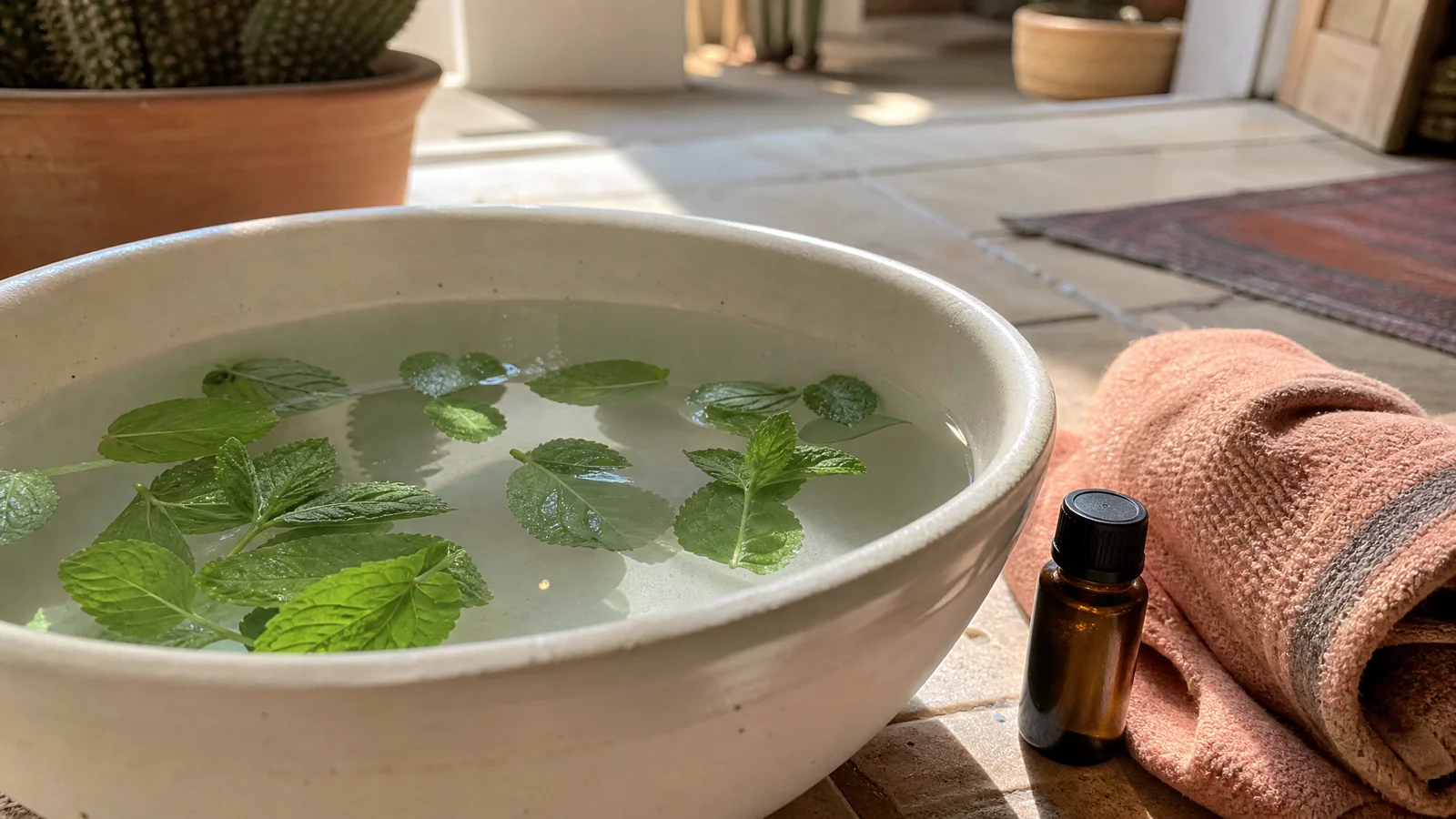
Peppermint Foot Soak and Body Oil for Hot Days
On a hot afternoon, few things feel better than cool feet or a light, minty body oil on warm arms and shoulders. Both are simple to put together with peppermint oil, and both rest on one habit: the oil goes into something it dissolves in before it goes anywhere near skin. This page gives two formulations, worked out from published guidance and arithmetic, with the numbers shown so you can adjust them.
Peppermint Essential Oil
Our own Peppermint Essential Oil, in sizes from 0.5 oz to bulk.
From $10.99
Shop Now →Why these are made with oil, not water
Peppermint oil and water do not mix. Menthol, the most water-friendly of its main ingredients, dissolves only about 456 to 490 milligrams per litre at 25 degrees Celsius according to PubChem, while the Cosmetic Ingredient Review notes the whole oil dissolves in most vegetable oils and in strong alcohol. Reasoning from that, a body mist made by shaking peppermint oil into water separates into droplets, so each spray lands a different dose, and anything with water in it needs a preservative if you keep it. A body oil has no water in it, so it needs neither, which is why we favour it for hot days. Premixing the oil into a carrier also gives you a foot soak where your skin meets a known, even dilution.
What "cool" really is
The chill of peppermint is a nerve signal. In 2002, McKemy, Neuhausser and Julius described a receptor in sensory neurons that responds to menthol and also to temperatures in the cool-to-cold range. Because one channel answers both, menthol can feel cold on warm skin without lowering the skin's temperature. If you are overheated, shade, water and rest do the real cooling, and peppermint adds a refreshing feel on top.
Formula one: a foot soak with the oil premixed
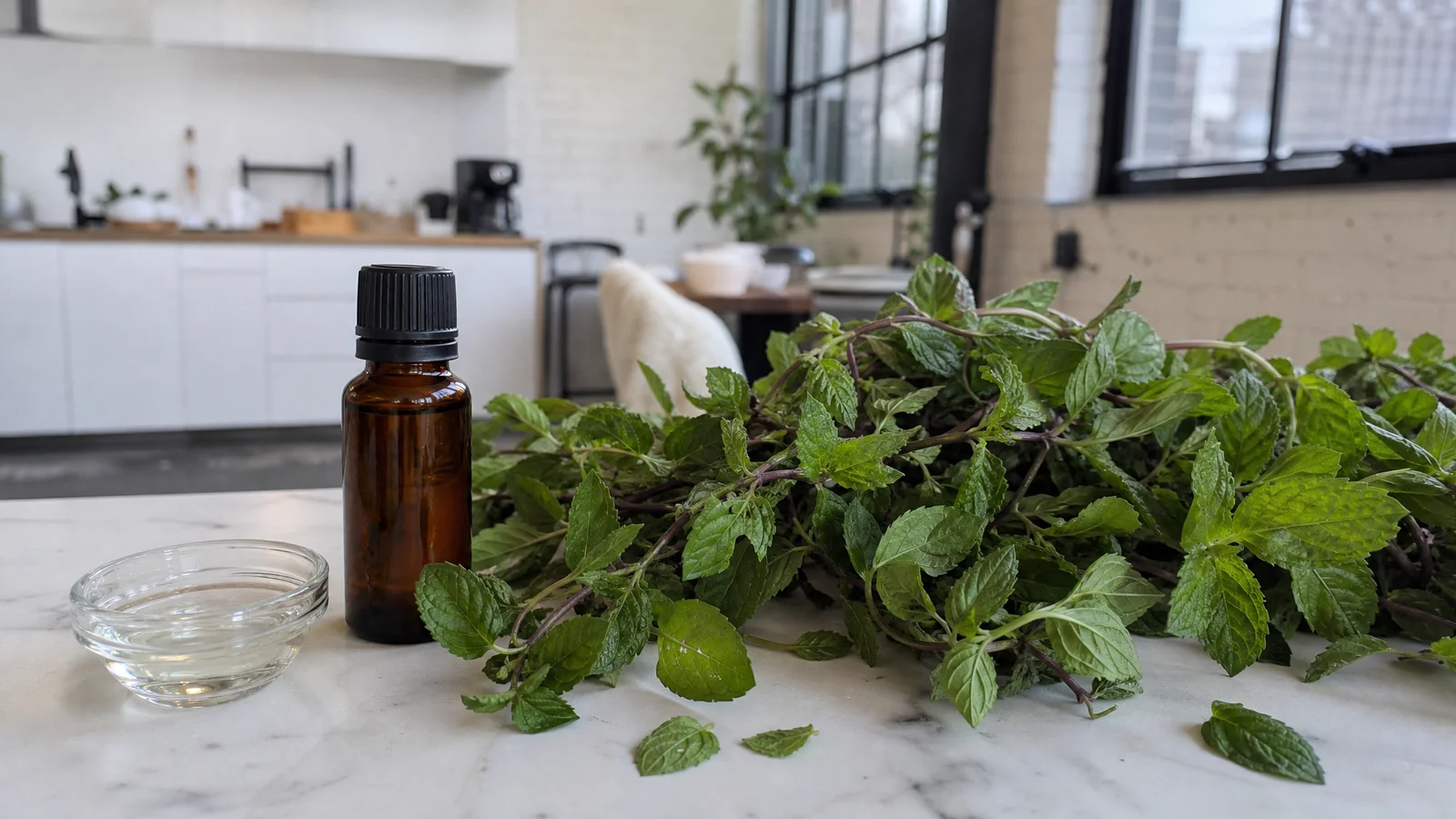
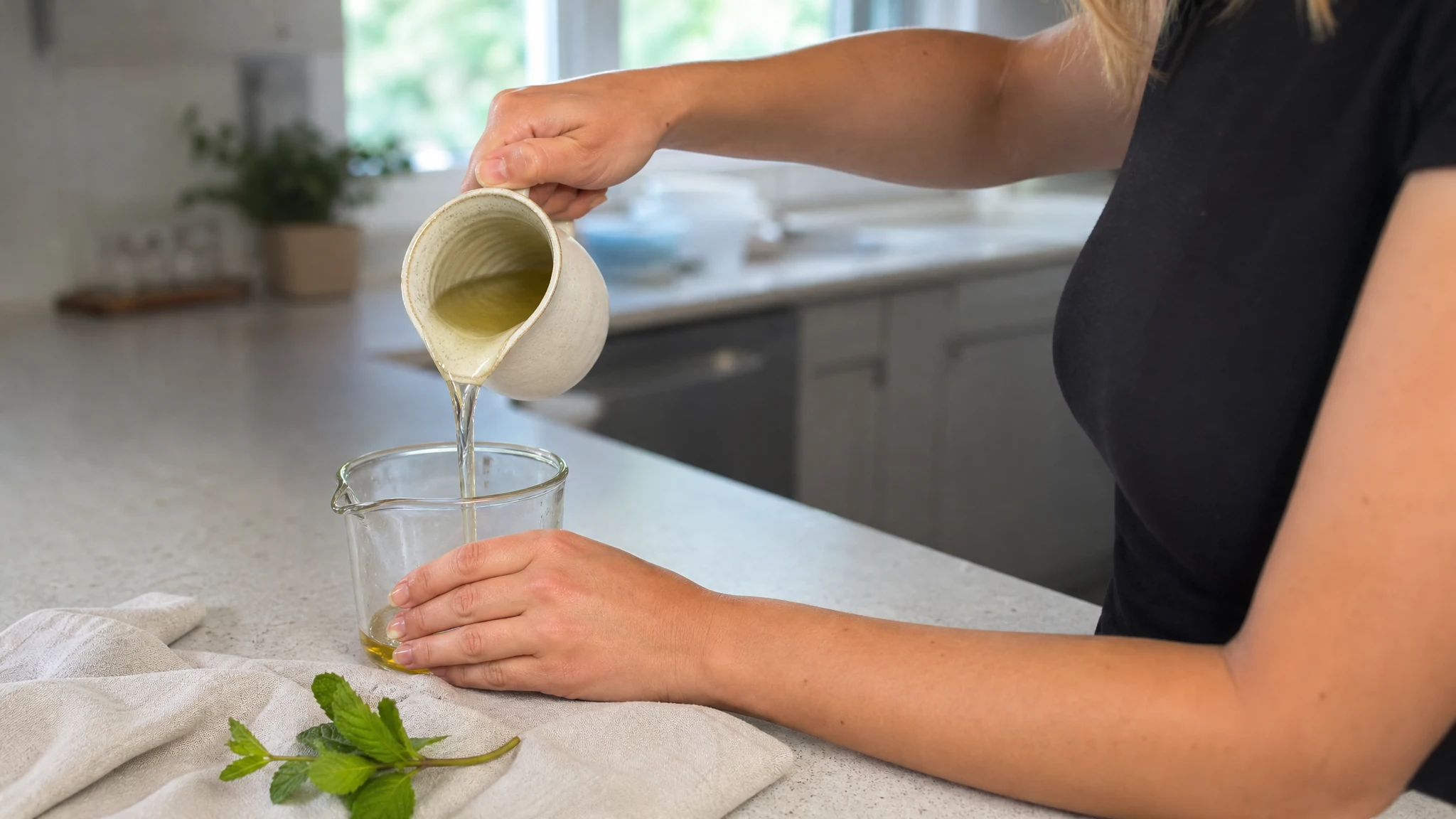
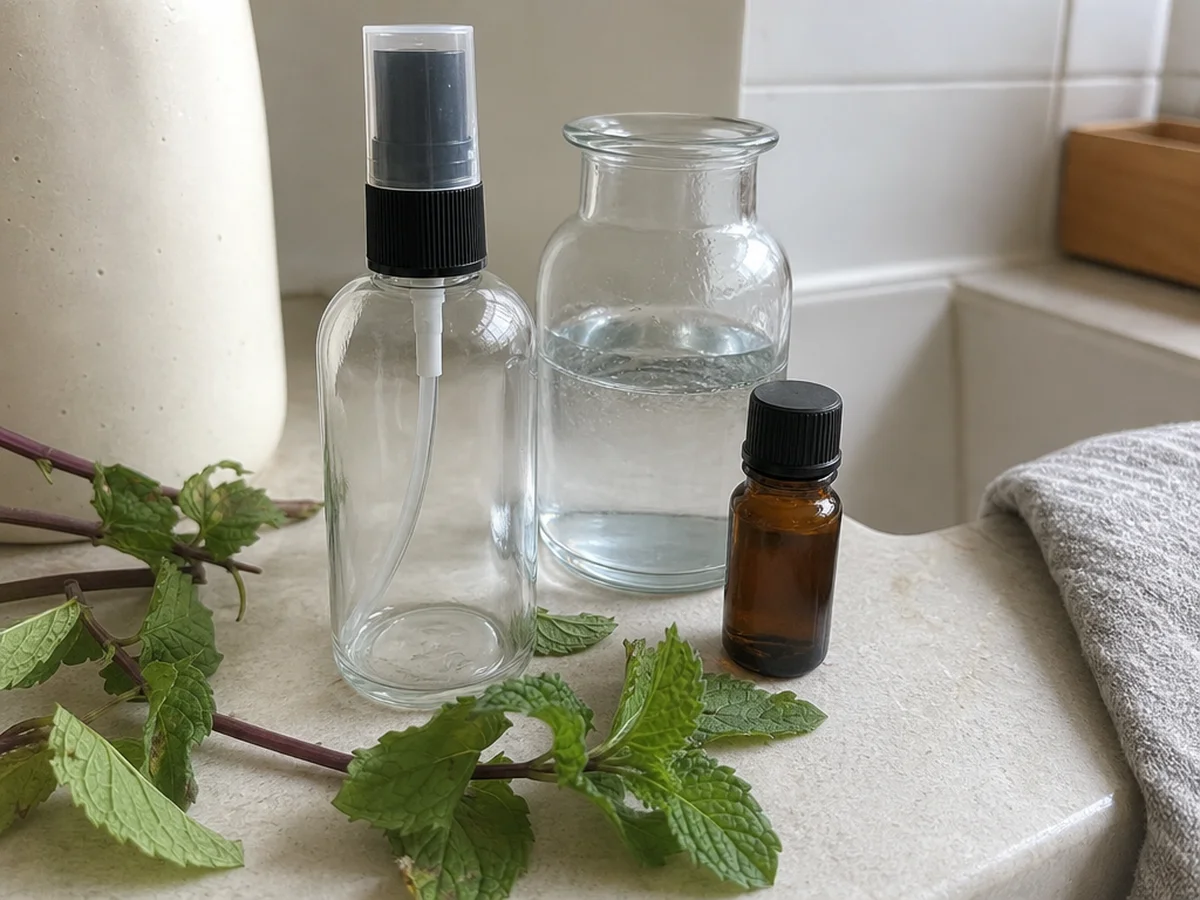
The trick is to avoid dropping neat peppermint into a basin, where it floats on the surface and coats your skin on the way in and out. Stir it into a carrier first.
- 30 ml (1 oz) carrier oil, such as jojoba or sweet almond, from a grocery, pharmacy or craft shop
- About 3 drops of peppermint oil, which is 0.15 ml and 0.5 percent (arithmetic at 20 drops per ml; droppers vary)
- One foot basin of warm water, roughly 4 litres
Stir the drops into the carrier in a small jar, pour the jar over the water, and soak. We start at 0.5 percent, the bottom of our 0.5% to 2% guidance, because warm, wet skin and a long soak are when irritation is most plausible. Carrier oil makes tubs and floors slippery, so rinse the basin and step out onto a mat. Skip the soak on broken or inflamed skin, and if you have diabetes or reduced feeling in your feet, check with your doctor or podiatrist first, since you might not notice irritation. Our carrier oil guide helps with choosing a base.
Formula two: a cooling body oil
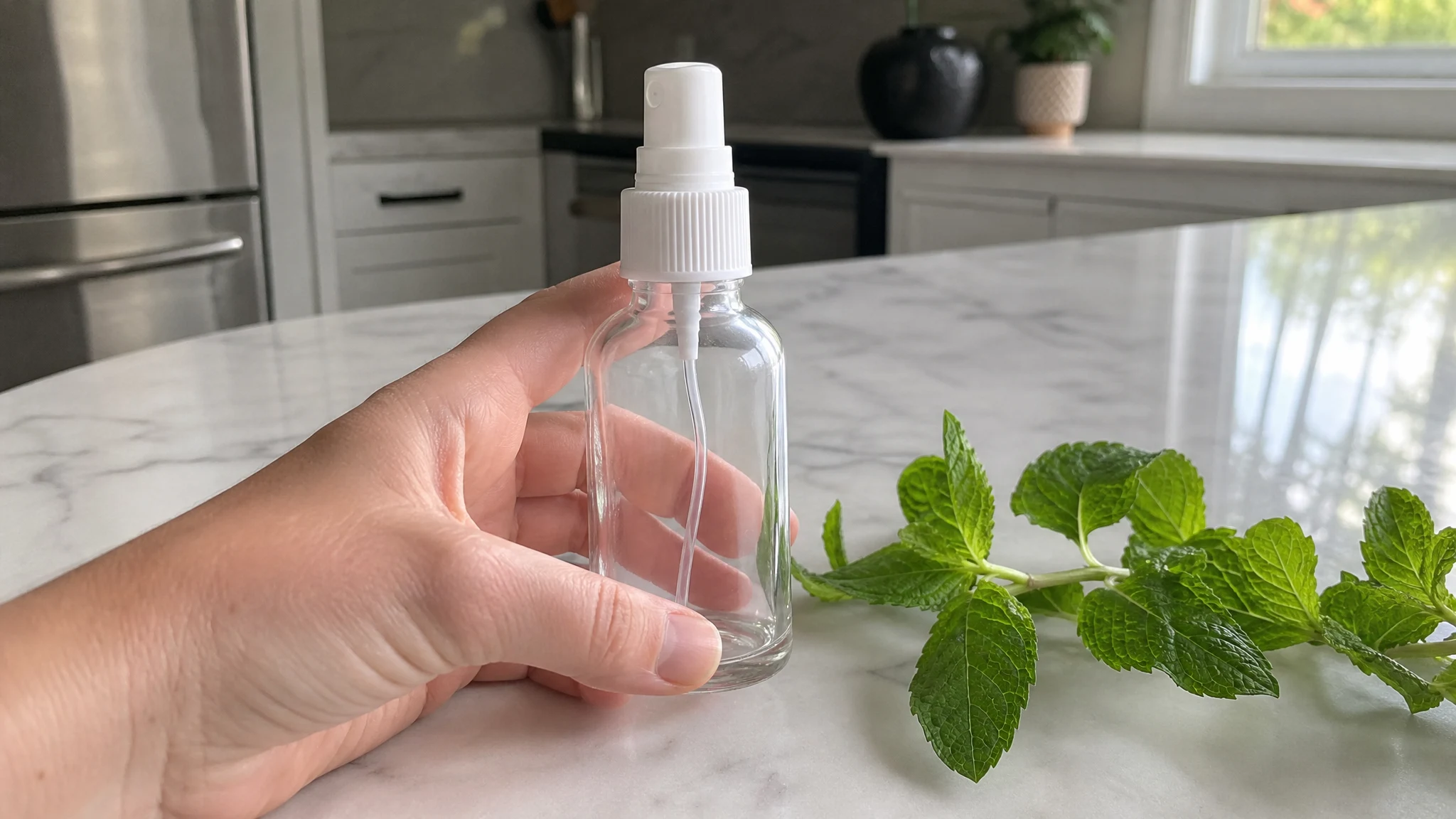
For hot days, mix the oil into a carrier and keep it in a small bottle. Here is the arithmetic for a 30 ml bottle:
| Strength | Peppermint oil in 30 ml | Approx. drops |
|---|---|---|
| 0.5% | 0.15 ml | 3 |
| 1% | 0.3 ml | 6 |
| 2% | 0.6 ml | 12 |
Our suggestion for a body oil is 0.5 percent, on arms, legs and shoulders, and not on the face or the front of the neck. A body oil covers a lot of skin and reapplying is easy, so keeping the strength low keeps the total in your hands. For perspective, the Cosmetic Ingredient Review reports a recommended dermal maximum of 5.4 percent for Mentha piperita oil, derived from its pulegone and menthofuran content, which it attributes to Tisserand and Young, along with a suggestion to avoid peppermint oil in cardiac fibrillation and G6PD deficiency. Our range sits well beneath it, though a published ceiling is not a promise that a given strength suits you.
The US National Center for Complementary and Integrative Health advises against peppermint oil on the face of infants and young children, so these are for adults, and the children page explains the face rule. For the same reason, keep the finished oil off any skin a cat might lick or rub against, and read the cat guide first.
Setting up the soak
A little preparation makes the soak feel like a treat. Lay a towel and a non-slip mat where you will sit, fill the basin with comfortably warm water, and keep your small jar of premixed carrier within reach. Sit somewhere you can stay for a few minutes without rushing. The cool, minty smell rises as the water warms, so you will notice the aroma before you notice anything else. When you finish, pat dry, rinse the basin with soap, and wipe down the jar before you put it away.
Patch test, then enjoy
The Cosmetic Ingredient Review's summary of the skin data is that two repeated patch tests, on about 100 volunteers each, found no reaction to 20 percent peppermint oil, while clinic patch tests at 2 percent turned up a small minority of reactions, more often in people whose skin was already inflamed. That is why we suggest a patch test. A common convention is to dab a little of the finished blend on the inner forearm, wait 24 hours, and go ahead only if nothing has changed. If skin reddens, itches or blisters, wash it off and ask a pharmacist or doctor.
Both of our oils work in these formulas. The 5.4 percent figure and the patch-test data were reported for piperita, and cornmint is typically richer in menthol, so with our Mentha arvensis stay at 0.5 percent. The same dilution logic runs through our sugar scrub and rollerball pages, and where to apply covers placement. Two modest preparations, a few drops each, and a cool feeling that lasts as long as the afternoon asks.
Peppermint Essential Oil
Peppermint Essential Oil from our own shop, in sizes from 0.5 oz to bulk.
From $10.99
Shop Now →Sources & Further Reading
- Amended Safety Assessment of Mentha piperita (Peppermint)-Derived Ingredients as Used in Cosmetics, Cosmetic Ingredient Review, 2018.
- Identification of a cold receptor reveals a general role for TRP channels in thermosensation, McKemy DD, Neuhausser WM, Julius D, Nature, 2002.
- (-)-Menthol, solubility section, PubChem, National Library of Medicine.
- Peppermint Oil: Usefulness and Safety, National Center for Complementary and Integrative Health, May 2025.