Peppermint Oil Spray: Why It Separates and How to Mix
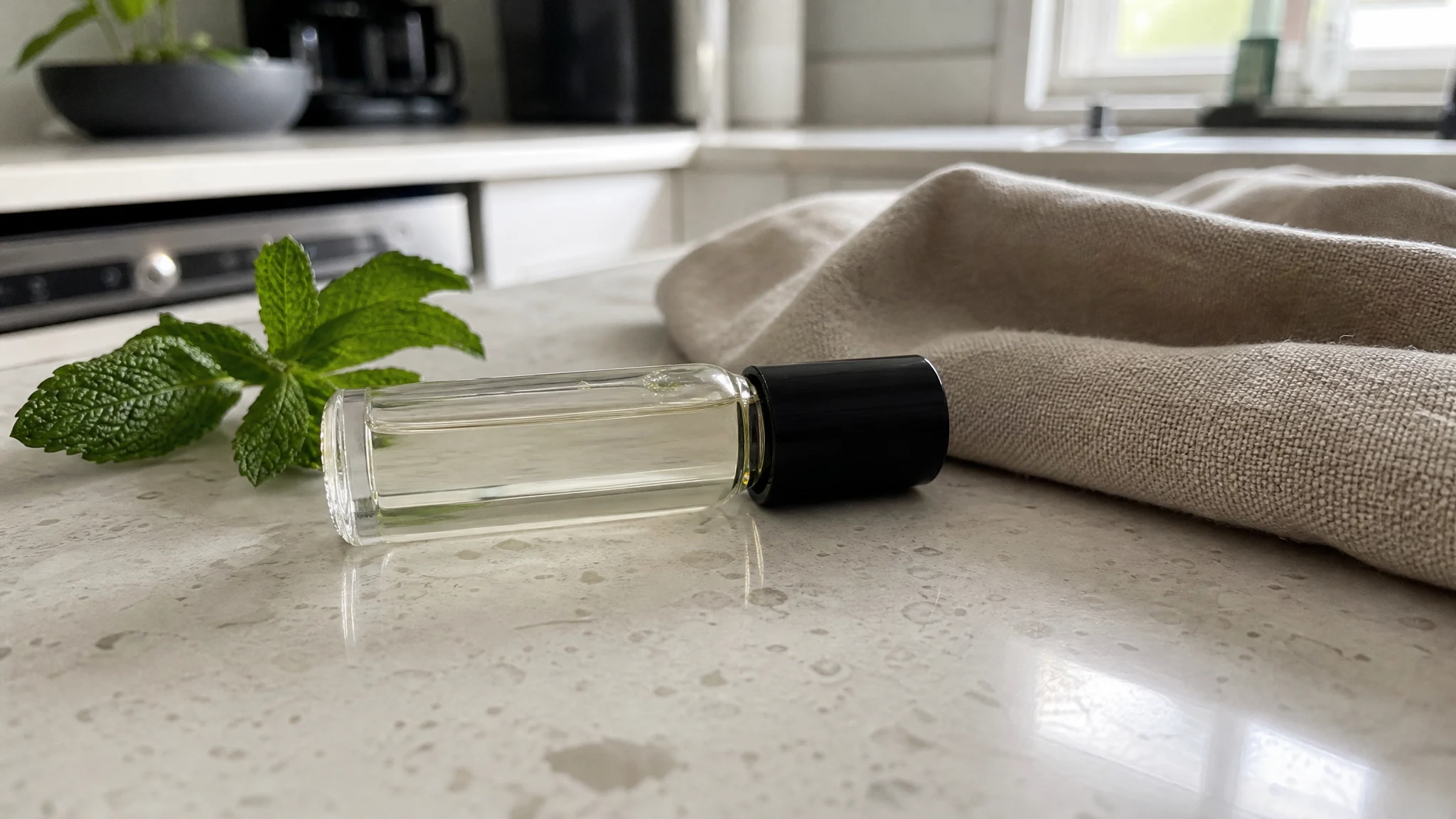
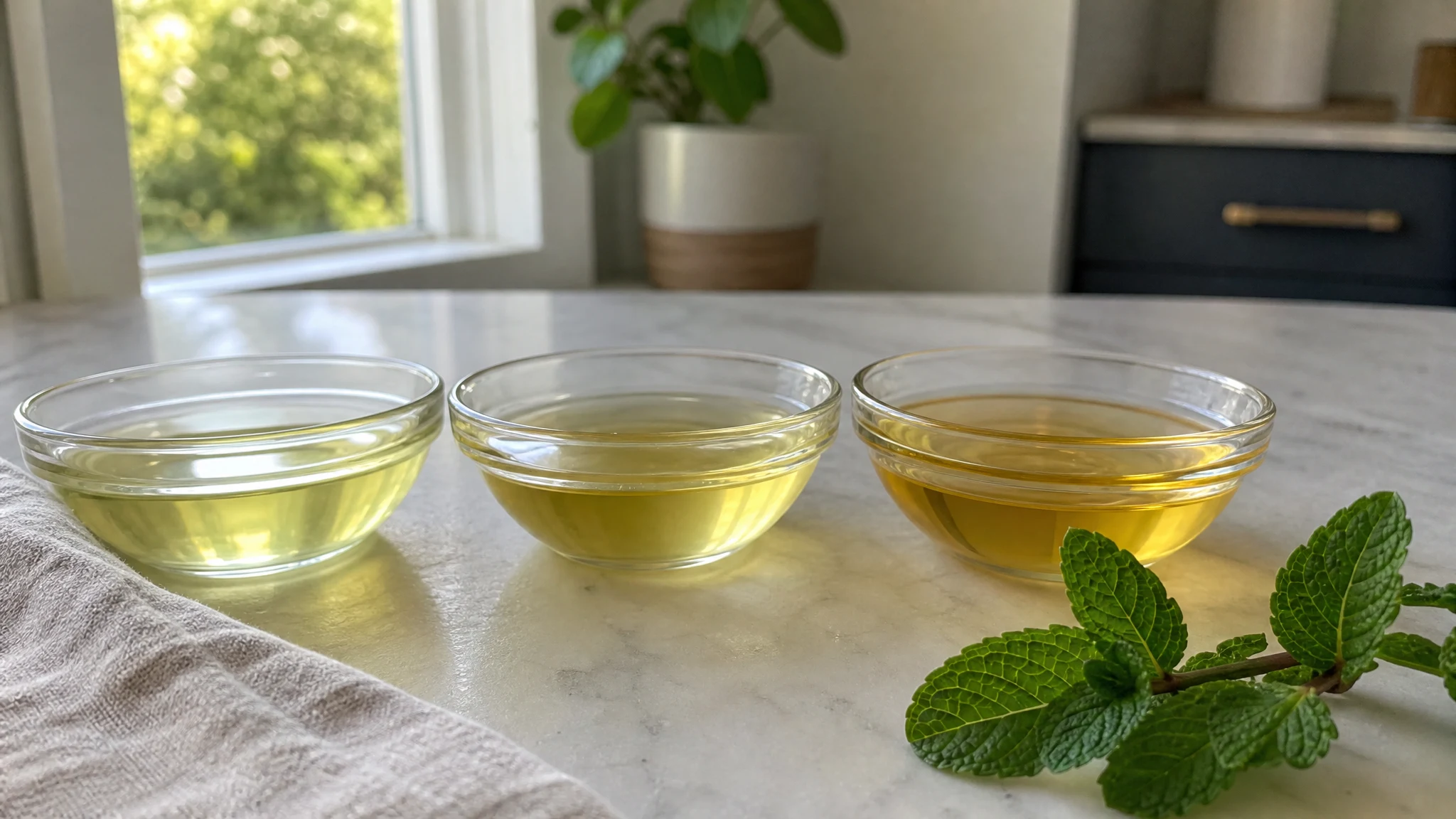
Shake a few drops of peppermint oil into a bottle of water and you get a cloudy moment, then a slow return to the surface as the oil gathers on top again. That tiny experiment explains nearly everything about peppermint sprays: the scent is wonderful, but the water and the oil want to live apart, and a good spray is mostly a matter of managing that.
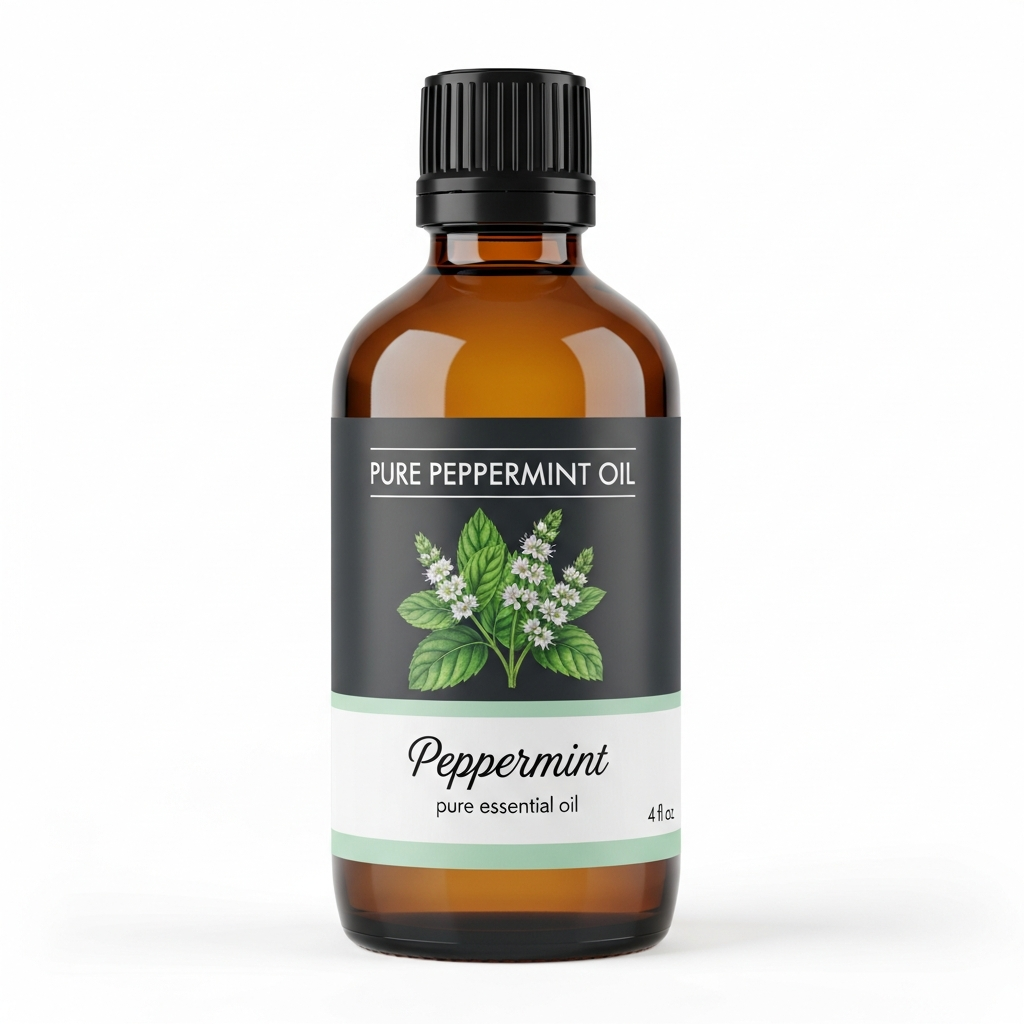
Peppermint Essential Oil
Our own Peppermint Essential Oil, in sizes from 0.5 oz to bulk.
From $10.99
Shop Now →Why the bottle separates
Menthol, the main aroma compound in peppermint oil, barely dissolves in water. PubChem lists its solubility at roughly 456 to 490 milligrams per litre at 25 C and describes it as slightly soluble in water, while the same record shows it dissolving freely in alcohol and in other oils. The United States Pharmacopeia criteria reproduced in the Cosmetic Ingredient Review (CIR) report tell the same story for the whole oil: it mixes into most vegetable oils and into 70% alcohol (one part oil in three parts alcohol), and it stays out of propylene glycol.
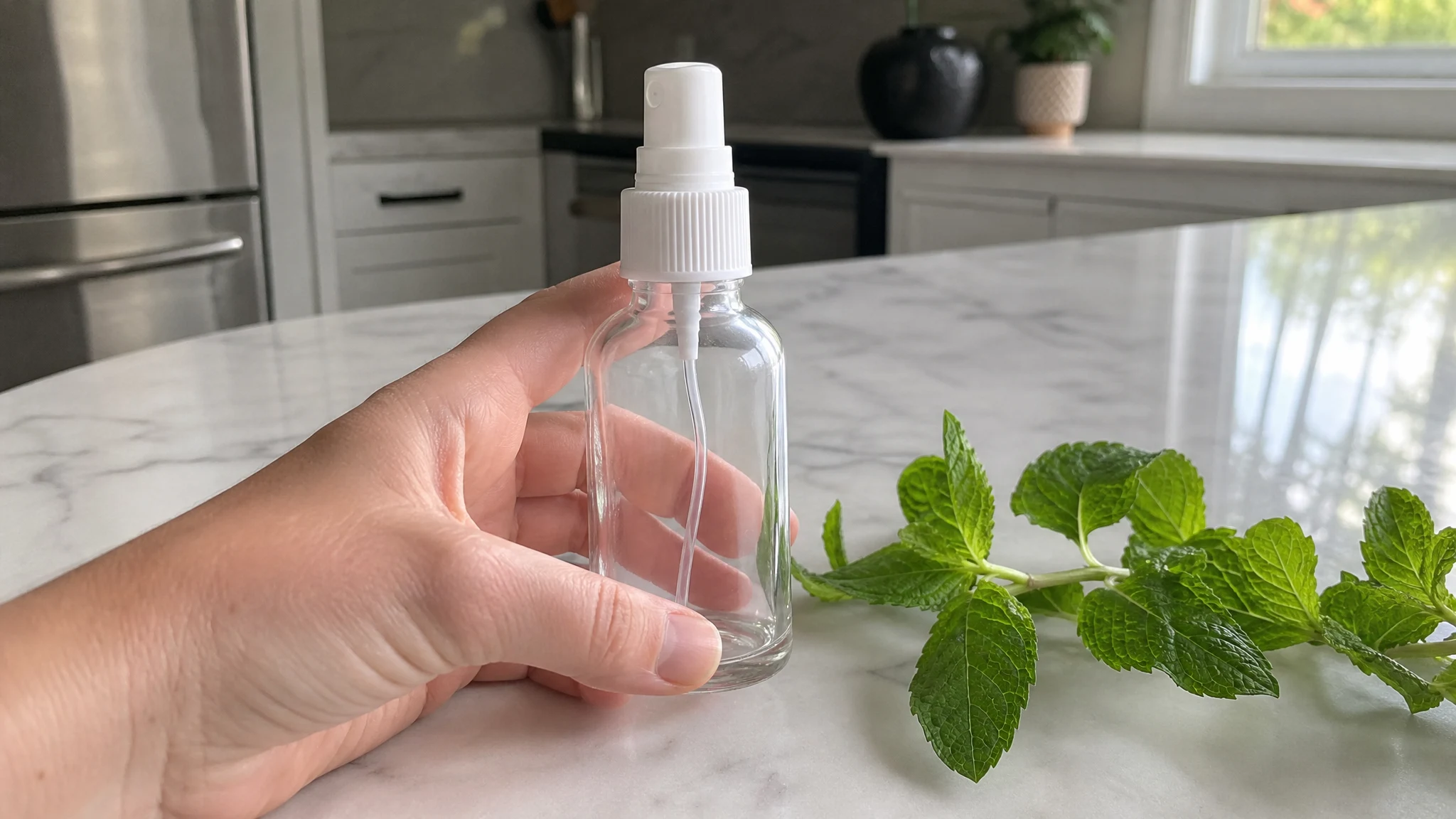
Reasoning from that, an oil-and-water trigger bottle behaves unevenly. The first pumps carry very little oil, the last pumps carry a lot, and an occasional droplet of nearly undiluted oil can land on a sofa arm, a leaf or a hand. The cure is not complicated: use a small bottle, shake it hard before every spray, and mix only what you will use in a few days. If you want a smoother result, dissolve the drops in a splash of high-proof alcohol before adding water, since alcohol is the middle ground the oil is happy with.
How much oil a spray needs
It helps to know the scale professionals work at. CIR lists reported maximum use levels for peppermint oil in finished products of 0.02% in pump hair sprays, 0.017% in aerosol hair sprays and up to 0.5% in foot sprays. Those are industry survey figures, not limits, but they show how little oil it takes to be noticed.
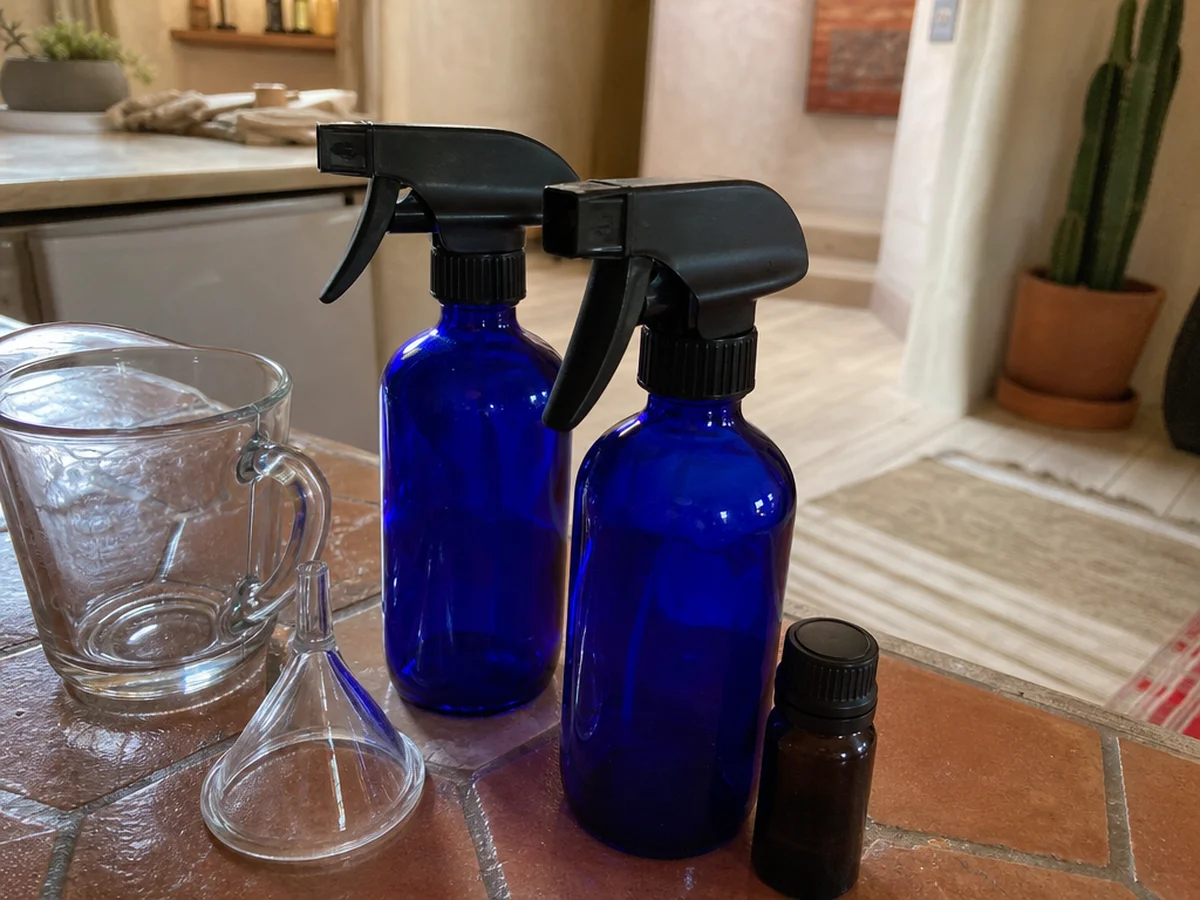
Here is the arithmetic for a 4 oz (118 ml) bottle, counting 20 drops to the millilitre, which varies from dropper to dropper:
| Strength | Oil in 118 ml | Drops, roughly |
|---|---|---|
| 0.5% | 0.59 ml | 12 |
| 1% | 1.2 ml | 24 |
| 2% | 2.4 ml | 47 |
Our own guidance for putting peppermint oil on skin is 0.5% to 2% in a carrier oil, with a patch test first, and for a spray we would start at the bottom of that range: about 12 drops in a 4 oz bottle. Peppermint is potent, and one drop where you would use three of a gentler oil is a good habit. You can always add a drop or two once you have smelled the first batch.
What you'll notice, and what to protect
The first spray into the air is usually the best one: a quick cool, sweet burst that is gone within a few minutes. If you reach for the bottle again and again to keep the scent going, the room will get stronger long before it gets nicer, so one or two sprays at a time is plenty.
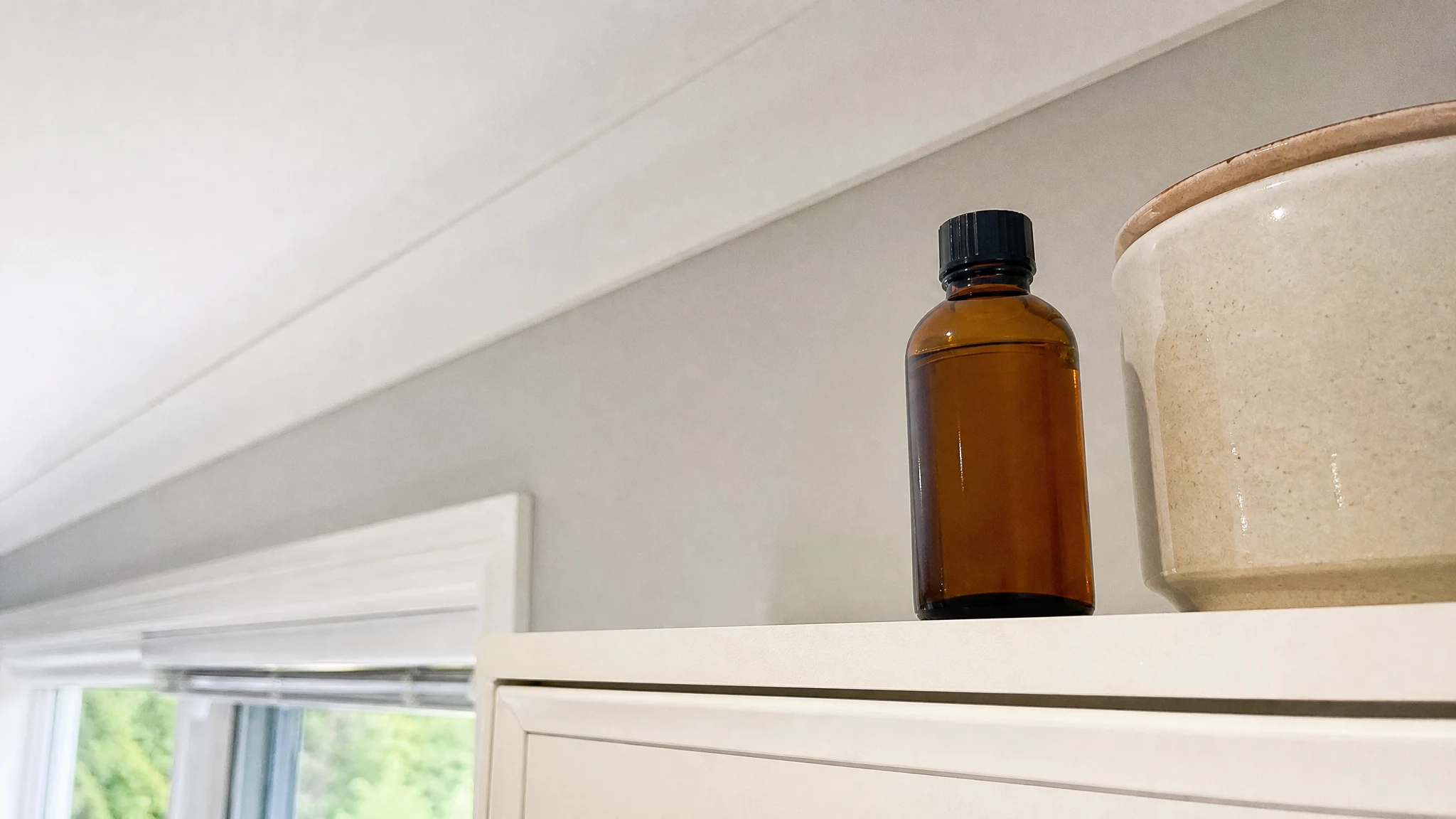
Oil can mark fabric, varnished wood and some painted finishes, so spray into the air rather than at a surface, and try a hidden spot first if you want to use it near furniture. Label the bottle with the date and the number of drops so you can repeat what you liked, and keep it somewhere cool and shaded between uses, like any other bottle of oil.
Two lovely alternatives to a trigger bottle
For a room, a few drops on a cotton pad, a wooden bead or a small ceramic dish gives a clean, cool mint scent with no bottle at all. Keep it where children and pets cannot reach it. A diffuser is the other route, and our diffuser drops guide covers how many drops suit a room.
For skin, a carrier oil is a better partner than water, which is why our foot soak and cooling body oil formulations are built on one. Our dilution guide turns any percentage into drops for any container size.
Breathing room, children and animals
A spray puts oil into the air as droplets, so it is fair to ask about breathing. CIR notes that 95% to 99% of the droplets from cosmetic sprays are larger than 10 micrometres and judged incidental inhalation at marketed use levels to be of no significant concern. Those levels are far below a trigger bottle at 1%, which is one more reason to go light, spray away from faces and keep it out of eyes. The European Food Safety Authority panel that assessed peppermint oil as a feed additive described it as an irritant to skin and eyes and a dermal and respiratory sensitiser, which is the same advice in regulatory language.

NCCIH advises against applying peppermint oil to the face of infants or young children, so we would not spray it where a baby sleeps. The ASPCA lists mint as toxic to dogs, cats and horses, with essential oils as the toxic principle, so the cautious choice is to keep sprays out of rooms where a pet lives. Our articles on cats and dogs go through the details.
A word about pest claims
Peppermint oil appears on the US list of active ingredients allowed in minimum-risk pesticide products under 40 CFR 152.25, and those products are exempt from registration. That is a regulatory category, not a finding that a spray keeps pests away, and the same section bars claims about controlling disease-carrying insects or rodents. We sell a fragrance oil, not a repellent. What the research says about specific pests is in our mouse repellent comparison and our bed bug article, and a licensed pest professional is the right call for an actual infestation.
Treated as what it is, a quick burst of cool, sweet mint, a peppermint spray earns its place on a shelf. Make it small, shake it well and enjoy the scent.
Peppermint Essential Oil
Peppermint Essential Oil from our own shop, in sizes from 0.5 oz to bulk.
From $10.99
Shop Now →Sources & Further Reading
- Cosmetic Ingredient Review. Amended Safety Assessment of Mentha piperita (Peppermint)-Derived Ingredients as Used in Cosmetics (2018).
- PubChem. (-)-Menthol, Solubility section.
- Legal Information Institute. 40 CFR 152.25 - Exemptions for pesticides of a character not requiring FIFRA regulation.
- EFSA Panel on Additives and Products or Substances used in Animal Feed. Safety and efficacy of a feed additive consisting of an essential oil derived from the aerial parts of Mentha × piperita L. (peppermint oil) for use in all animal species (FEFANA asbl), EFSA Journal 2025.
- NCCIH. Peppermint Oil: Usefulness and Safety.
- ASPCA. Toxic and Non-toxic Plants: Mint.